
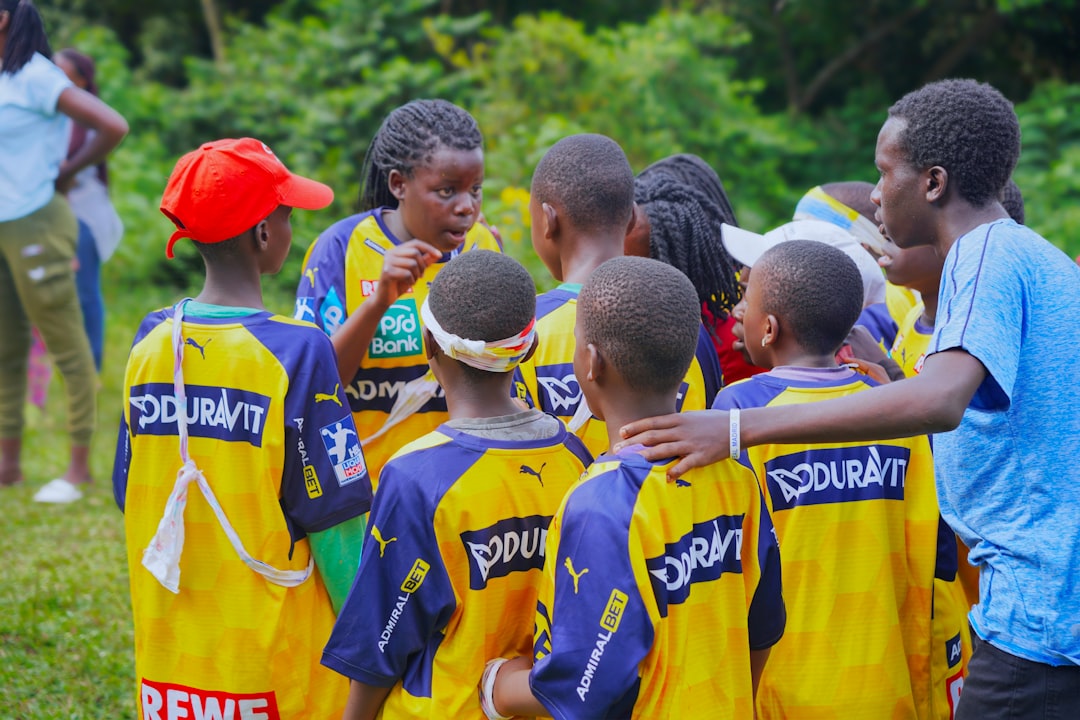
Why Youth Sports Development Programs Matter for Young Athletes
Youth sports development programs are structured training and coaching systems designed to help young athletes build physical skills, mental toughness, and life skills through sport — at every stage of their growth.
Here is a quick look at what these programs offer and who they serve:
| Age Range | Development Focus | Program Type |
|---|---|---|
| 4-6 | Basic motor skills, balance, fun | Multi-sport, free play |
| 7-8 | Coordination, game awareness | Recreational leagues |
| 9-11 | General athleticism, agility | Skill-based training |
| 12-14 | Strength, speed, sport-specific skills | Competitive clubs, academies |
| 15-18 | Tactical IQ, elite preparation | ODP, national pathways |
These programs do more than teach kids how to run, throw, or kick. They shape how young people grow — physically, emotionally, and socially.
Yet many families in the Knoxville area struggle to find a program that combines elite training with the right values and real expert guidance. That gap is exactly what this guide addresses.
I’m Kevin O’Shea — a Certified Strength and Conditioning Specialist, high school football coach, and co-founder of Triple F Elite Sports Training here in Knoxville, and my background in both athletic performance and behavioral health gives me a grounded perspective on youth sports development programs that goes beyond just reps and drills. In the sections ahead, we’ll break down everything you need to know to find the right path for your young athlete.
The Importance of Youth Sports Development Programs
When we talk about youth sports development programs, we aren’t just talking about keeping kids busy on a Saturday morning. We are talking about a vital foundation for a healthy life. Research from the Aspen Institute’s Project Play suggests that children who remain active in sports are more likely to have better physical health, higher academic achievement, and improved social-emotional skills.
Physical health is the most obvious benefit. In an age of screens, sports provide a necessary outlet for movement. But the character-building aspect is where the real magic happens. Athletes learn how to win with grace, lose with dignity, and work as a cohesive unit toward a common goal. These programs foster resilience; when a child misses a shot or loses a race, they are learning how to bounce back—a skill that serves them well in the classroom and, eventually, the workplace.
At Triple F, we believe in the journey From Playground to Podium. This means nurturing the whole person. We see sports as a vehicle for community impact. When a young person in Knoxville joins a development program, they aren’t just joining a team; they are entering a mentorship environment where life skills like discipline, empathy, and leadership are prioritized alongside vertical jump height.
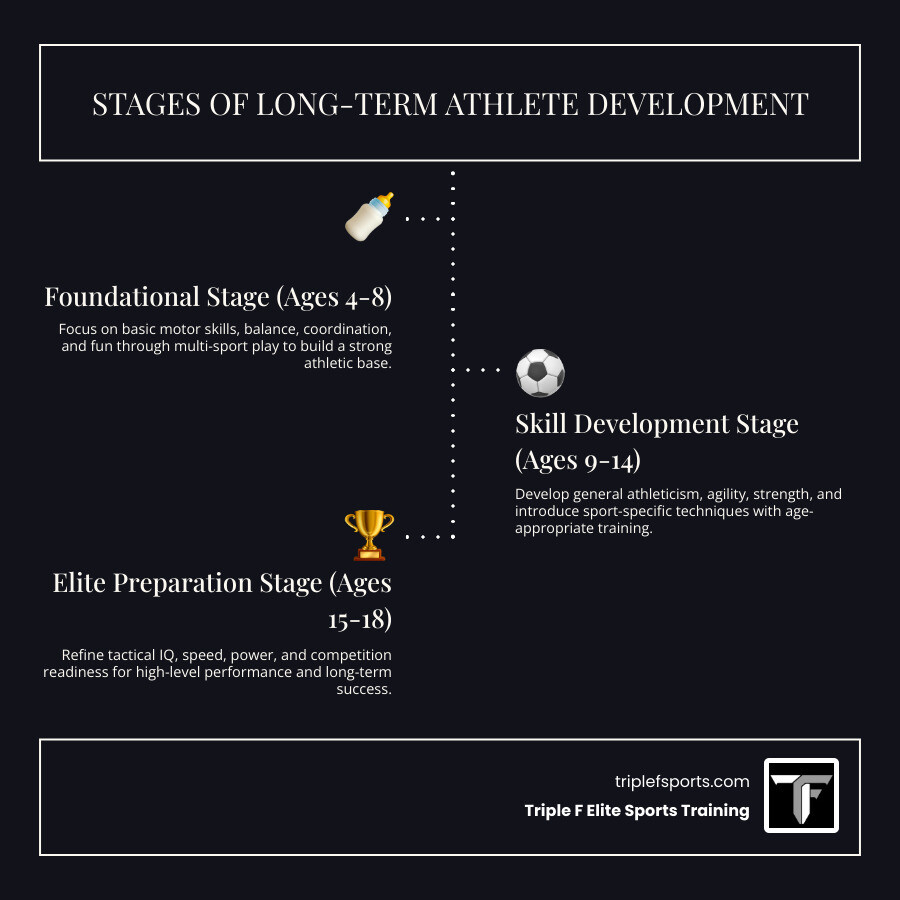
Age-Appropriate Training: A Roadmap for Growth
One of the biggest mistakes we see in youth athletics is treating a seven-year-old like a miniature pro athlete. This “too much, too soon” approach often leads to burnout or, worse, preventable injuries. Effective youth sports development programs must be rooted in developmental milestones.
The goal is to match the training to the child’s biological and emotional age. We utilize Skilled-Based Training to ensure that every drill serves a purpose. Before we ever add weight or high-intensity conditioning, we perform Youth Assessments to see how a child moves. Are their knees caving when they jump? Is their core stable?
A major focus during these formative years is neuromuscular training. This is essentially “teaching the brain” to talk to the muscles more efficiently. By establishing these neural pathways early, we help kids move more fluidly and safely, creating a “software” update for their physical “hardware.”
Foundational Skills in Youth Sports Development Programs
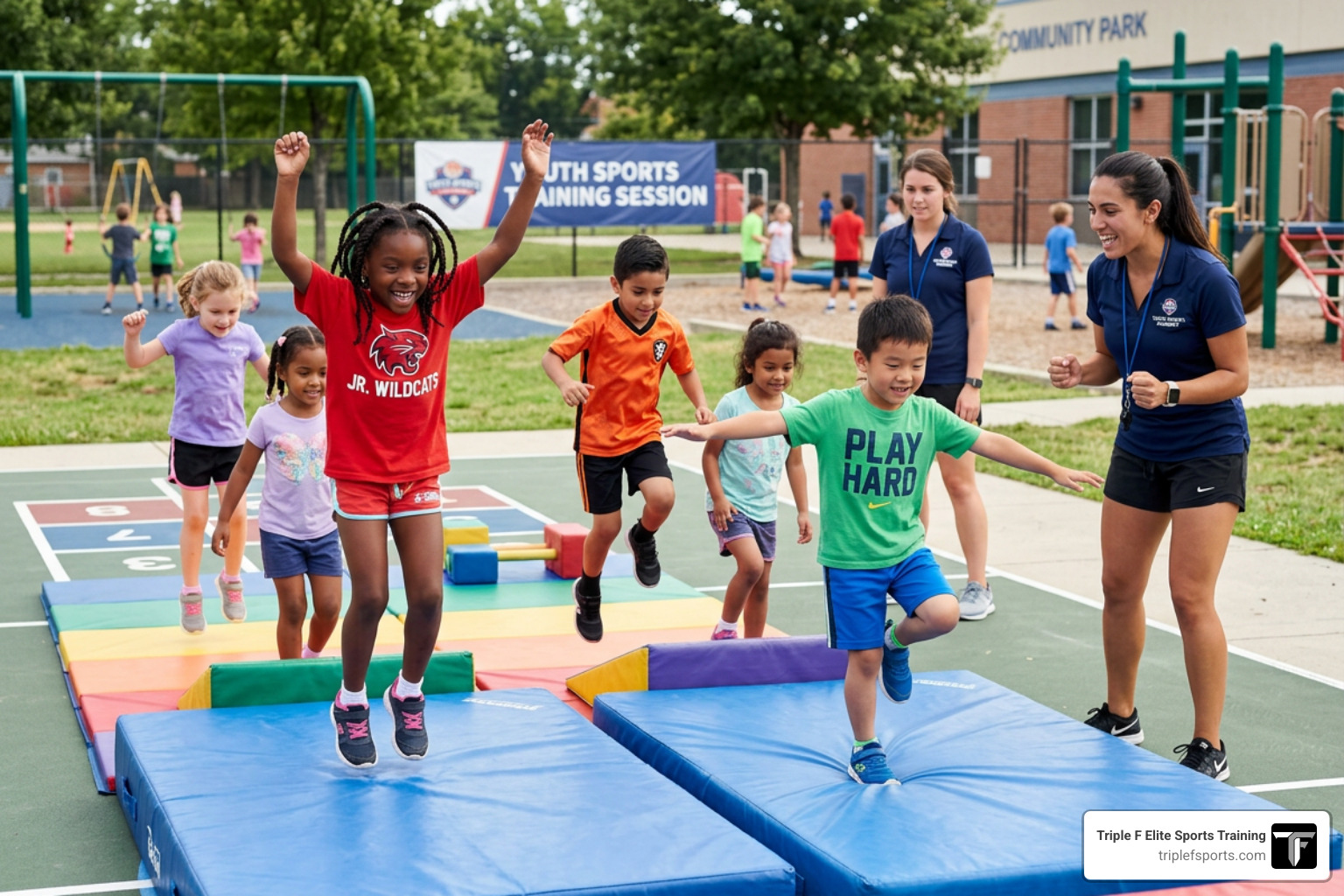
For our youngest athletes, ages 4 to 6, the focus is almost entirely on “learning to move.” At this stage, we are engineering joyful fundamentals. If it isn’t fun, they won’t want to come back, and if they don’t come back, they don’t develop.
Essential motor skills for this group include:
- Locomotor Skills: Running, hopping, skipping, and galloping.
- Stability Skills: Balancing on one leg, landing softly from a jump, and maintaining posture.
- Object Control: Basic throwing, catching, and kicking.
We often use Youth Flag Football Drills to teach these skills in a game-like setting. Instead of a boring lecture on “running mechanics,” we play tag or relay races that naturally encourage high knees and arm drive. This “stealth learning” builds a love for movement that lasts a lifetime.
Progression to Technical Mastery
As athletes move into the 9 to 12 age bracket, we enter what many experts call the “Golden Window” of motor learning. This is when coordination and general athleticism can be sharpened most effectively.
During this stage, we transition from general movement to more specific athletic applications. For example, we might use volleyball-inspired movements to Serve Up Success, focusing on hand-eye coordination and explosive jumping. This is also the time to introduce tactical IQ—helping athletes understand why they are making a certain move on the field or court, not just how to do it.
Navigating the Pathway: Multi-Sport vs. Elite Specialization
A common question we hear from Knoxville parents is: “Should my child focus on just one sport to get ahead?” The data is surprisingly clear on this. Early specialization—focusing on one sport before the age of 12—is often linked to higher rates of overuse injuries and mental burnout.
| Feature | Multi-Sport Sampling | Early Specialization |
|---|---|---|
| Injury Risk | Lower (balanced muscle use) | Higher (repetitive stress) |
| Skill Transfer | High (agility from soccer helps basketball) | Low (limited movement patterns) |
| Burnout Rate | Lower (variety keeps it fresh) | Higher (intense pressure) |
| Long-Term Success | Higher (broader athletic base) | Often peaks early |
We encourage “sampling” different sports. The agility learned in soccer makes a better football player; the hand-eye coordination from baseball helps on the volleyball court. However, as athletes reach middle and high school, they may begin looking at elite pathways.
Programs like the Olympic Development Program (ODP) are designed to identify high-potential players for national team consideration. For those in Knoxville looking to take that next step, our Future Pros Program provides the professional-grade strength and conditioning needed to compete at those elite levels.
Choosing the Right Youth Sports Development Programs
Finding the right fit for your family involves more than just picking the closest gym. You want a program that aligns with your values and provides a clear structure for growth.
When evaluating a program, consider:
- Coaching Quality: Do the coaches understand child development, or are they just “yellers”?
- Inclusivity: Does the program welcome athletes of all skill levels, or only the “star” players?
- Safety: Is there a focus on proper form and injury prevention?
- Values: Does the program emphasize sportsmanship and character?
Moving From Beginner to Pro is a marathon, not a sprint. The best programs prioritize the long-term health and happiness of the athlete over a plastic trophy at a weekend tournament.
Ensuring Safety and Long-Term Athletic Success
Safety is the non-negotiable cornerstone of any development program. At Triple F, we use science-based protocols to ensure that our athletes are building “bulletproof” bodies. This is especially critical during the Youth Training 12 to 18 years, when growth spurts can make athletes feel uncoordinated and prone to injury.
Injury prevention isn’t just about avoiding “the big one” like an ACL tear; it’s about managing the small, repetitive stresses that lead to shin splints or sore shoulders. We emphasize:
- Joint Health: Strengthening the muscles around the knees, ankles, and shoulders.
- Proper Progression: Never adding weight until the movement pattern is perfect.
- Recovery: Educating athletes on the importance of sleep, nutrition, and mobility.
Even national-level initiatives like the National Team Development Program emphasize that you cannot reach the elite level if you are sidelined by injury. By focusing on the “boring” stuff—like landing mechanics and core stability—we give our Knoxville athletes the best chance at a long, successful career.
Frequently Asked Questions about Youth Sports Development
What is the best age to start a development program?
While kids can start “playing” as early as 3 or 4, formal youth sports development programs usually see the most benefit starting around age 6 or 7. At this age, children have the attention span for basic instruction and the motor control to begin learning foundational skills.
How do these programs prevent athlete burnout?
Burnout happens when sports become a chore rather than a choice. We prevent this by keeping the variety high and the pressure low. By encouraging multi-sport participation and focusing on “joyful fundamentals,” we keep the flame of athletic passion alive. If a child is smiling, they are learning.
What role do parents play in an athlete’s success?
Parents are the “Chief Support Officers.” Your role is to provide the opportunity, offer encouragement regardless of the scoreboard, and model healthy behavior. The most successful athletes are those whose parents focus on the process (effort, attitude, grit) rather than the outcome (stats, wins, rankings).
Conclusion
Building a better athlete is a deliberate, multi-year process. It requires a village—coaches who care, parents who support, and a facility that understands the science of human movement. At Triple F Elite Sports Training, we are proud to be that village for the Knoxville community.
Our approach is professional and science-backed, but it is also Christ-centered. We believe every young person has a God-given potential, and our mission is to help them unlock it. Whether your child is just starting their journey or is preparing for college-level competition, we offer comprehensive performance training, on-site physical therapy, and even a dedicated volleyball club to meet their needs.
Ready to see the difference for yourself? We invite you to explore our Youth Memberships and take advantage of our offer for a free first session. Let’s start building a stronger, more confident athlete today.