
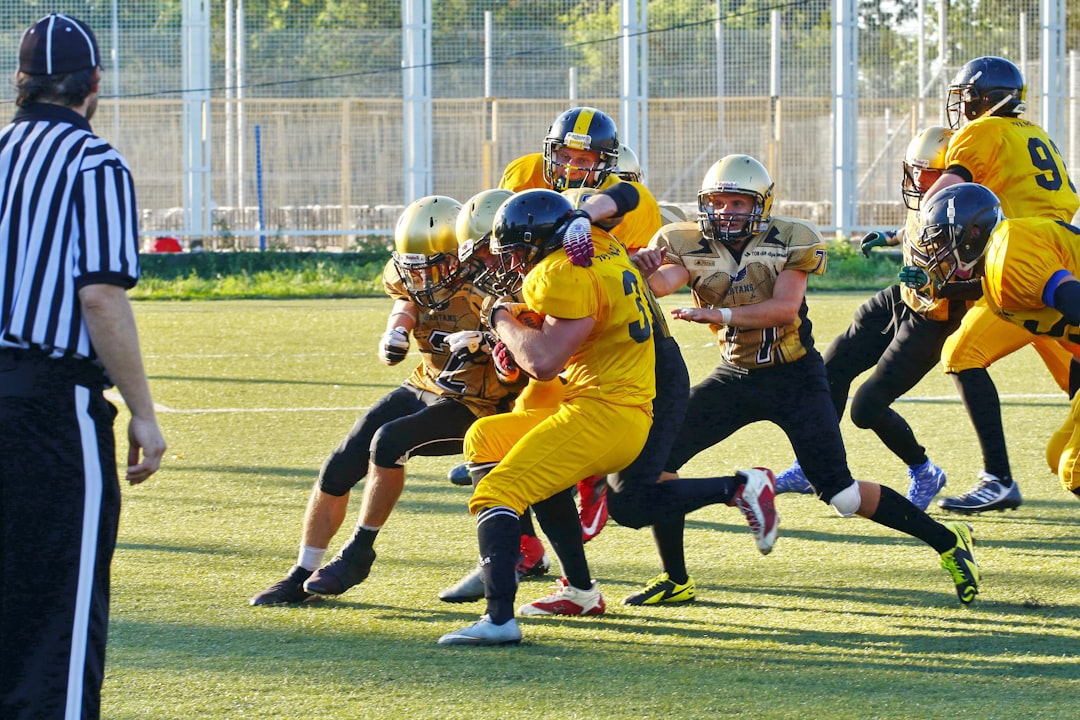
Why Football Drills for Young Players Set the Foundation for Long-Term Success
Football drills for young players are the building blocks of every great athlete’s journey — from their first snap to their first varsity start.
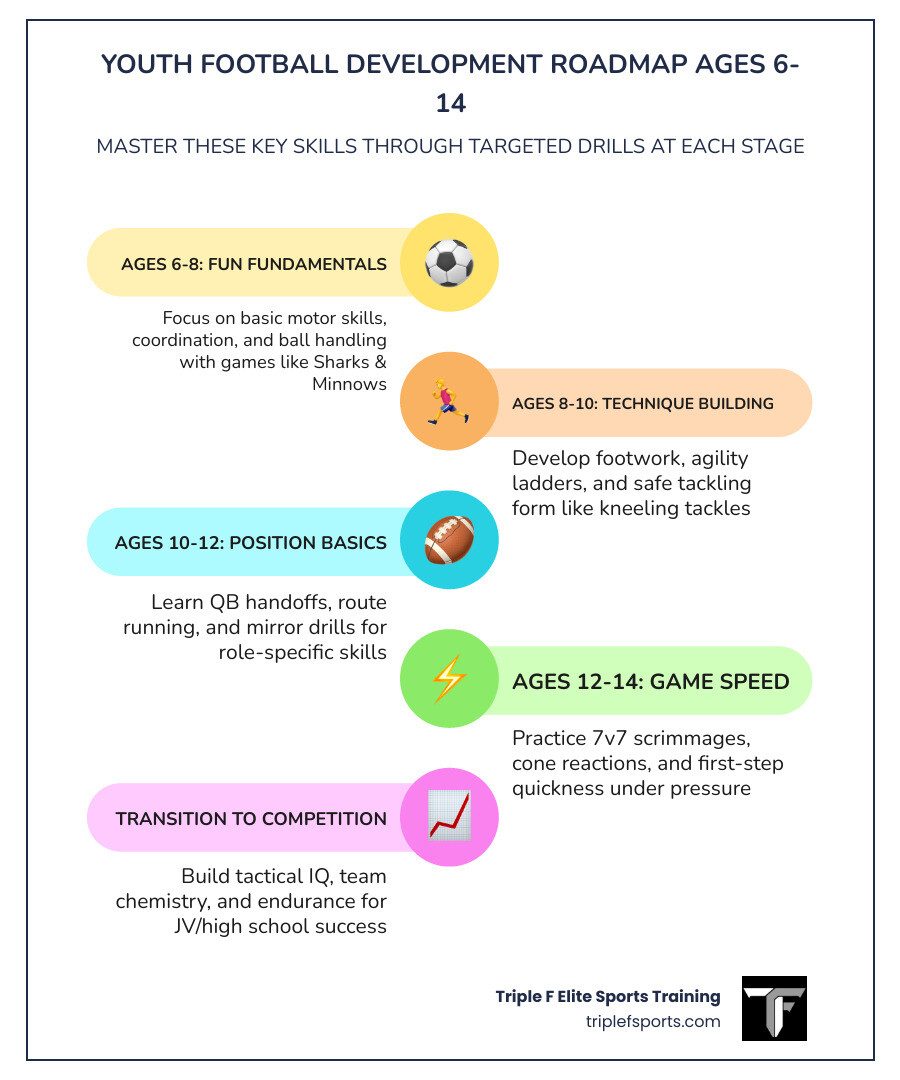
Here are the most effective football drills to get started with:
- In-and-Out Ladders – builds foot speed and coordination
- Cone Reaction Drill – sharpens defensive direction changes
- Kneeling Tackle – teaches safe, proper tackling form
- Mirror Dodge – develops linebacker footwork and agility
- 7v7 Flag Scrimmage – builds teamwork and game awareness
- Sharks and Minnows (football-adapted) – teaches ball protection under pressure
- Routes on Air – develops QB-to-receiver timing and chemistry
- Four Square Agility – improves multi-directional movement
Young athletes who master fundamentals early don’t just play better — they stay safer, build confidence faster, and make a smoother jump to higher levels of competition. Whether you’re coaching a 9-year-old learning to carry the ball or a 13-year-old preparing for JV tryouts, the right drills make all the difference.
One coach on Reddit summed it up well after wrapping up a tough middle school season: he ended the year with a flag tournament, pizza, and a locker cleanout — and the kids left fired up about next season. That’s what smart, fun, well-structured practice does for young players.
I’m Kevin O’Shea, a Certified Strength and Conditioning Specialist and high school Wide Receiver Coach who has spent years designing and running football drills for young players at every level. My experience — from coaching passing games at the high school level to athletic development training — shapes every recommendation in this guide.
Football drills for young players definitions:
Essential Football Drills for Young Players to Master Fundamentals
Mastering the fundamentals is the “alphabet” of athletic development. Before a player can execute a complex flea-flicker or a sophisticated zone blitz, they must possess the foundational motor skills that allow them to move efficiently on the field. For young athletes, this means focusing heavily on agility, coordination, balance, and ball security.
We believe that every practice should begin with a focus on movement quality. Whether you are running Youth Flag Football Drills: Fun, Effective Ways to Master the Game or preparing for full-contact middle school ball, the mechanics remain the same. Even concepts from other sports can be helpful; for instance, understanding Soccer Dribbling Basics can actually help a young running back understand how to keep their center of gravity low and their feet moving in tight spaces.
Building Agility with Football Drills for Young Players
Agility isn’t just about being fast; it’s about how quickly a player can change direction while maintaining control. This is where “first-step burst” is born. To develop this, we utilize several high-frequency drills:
- In-and-Out Ladders: This classic drill requires players to step into and out of ladder squares in a zig-zag pattern. It forces the brain to communicate rapidly with the feet, improving coordination.
- Four Square: Set up four cones in a square roughly 12 feet apart. Players must sprint, shuffle, backpedal, and sprint again based on the coach’s whistle. This mimics the multi-directional nature of a real football play.
- Cone Reaction: Space cones about 0.5 yards apart. Have the player backpedal, then on a visual cue, break forward to a specific cone. This is essential for defensive backs and linebackers.
When we look at elite performance, such as the movements taught in Wide Receiver Training by Amari Rodgers, we see that success comes down to shin angles. Training players to keep their shins at a 45–55° angle during acceleration allows for maximum power output. Even simple games like the Red Light, Green Light Soccer Drill can be adapted to football—players must “freeze” in a perfect athletic breakdown position, teaching them body control and responsiveness.
Position-Specific Football Drills for Young Players
As players move into middle school, we begin to introduce position-specific mechanics. However, we always encourage young athletes to try multiple roles to build a well-rounded “football IQ.”
- Quarterbacks & Centers: Focus on the “exchange.” A dropped snap is a drive-killer. We practice QB/Center exchanges and handoff timing daily.
- Linemen: Football is won at the line of scrimmage. We use Offensive Line Sports Training techniques to teach a wide base and low pad level. For the defense, Defensive Line Linebacker Sports Training focuses on “block destruction”—using hands to shed blockers and find the ball.
- Mirror Dodge: Pair a ball carrier and a defender. The defender must mirror the carrier’s lateral movements without crossing a designated line. This is the gold standard for linebacker development.
- Mirror Stalk Block: Essential for receivers. Use cones to set up a 5-yard space where the receiver must stay in front of a defender, simulating a downfield block.
Gamified and Fun Drills for Middle School Engagement
By the end of a long, grueling season, team morale can dip, especially if the win-loss column isn’t where the kids hoped it would be. This is the perfect time to pivot toward “fun” football drills for young players. Gamifying the experience keeps players engaged while they continue to build skills subconsciously.
A 7v7 “Skelly” (skeleton) scrimmage or a flag football tournament is an excellent way to end the year. We often let the players pick their own teams and even switch positions—letting the offensive linemen play QB for a day is a guaranteed way to boost spirits!
One of our favorite adaptations is the Sharks and Minnows Soccer Drill. In the football version, the “minnows” have footballs and must get from one end line to the other without a “shark” (defender) knocking the ball out or pulling their flag. This teaches incredible ball protection and spatial awareness.
| Drill Type | Best For | Contact Level | Fun Factor |
|---|---|---|---|
| Punt Catch Competition | Coordination/Hands | Non-Contact | High |
| Tug-of-War | Core Strength/Teamwork | Low Contact | Very High |
| Oklahoma Drill | Aggression/Form | Full Contact | Medium |
| Dizzy Punt | Laughs/Balance | Non-Contact | Extreme |
| 7v7 Flag Tourney | Game IQ/Speed | Non-Contact | High |
Adapting Soccer Classics for the Gridiron
Soccer coaches have spent decades perfecting drills for footwork and “heads-up” awareness. We can steal these for the gridiron to make our football drills for young players more dynamic.
- Pirates of the Pugg: This drill emphasizes “dribbling” (or in our case, running) through traffic. Players must navigate a crowded area while “pirates” try to strip the ball. It builds incredible vision and awareness of defensive transitions.
- Criss-Cross Dribbling Game: In the Criss-Cross Dribbling Game, teams must cross a central “traffic zone” to reach the opposite side. This teaches players to keep their heads up to avoid collisions—a vital safety skill in football.
- Ouch! Drill: Originally for U6 soccer, we adapt this by having coaches run around as “targets.” Players must try to “hit” the coach with a soft toss or tag them while maintaining ball security. It’s high-energy and keeps the focus on the coach’s movements.
- Down and Back: Using the Down and Back Dribbling Game format, we set up relay races where players must execute a specific footwork pattern (like high knees or shuffles) down the field and back.
Safety First: Prioritizing Player Wellness in Contact Drills
Safety is the non-negotiable foundation of our program. We don’t just want players to be fast; we want them to be durable. This starts with teaching proper form long before live contact begins.
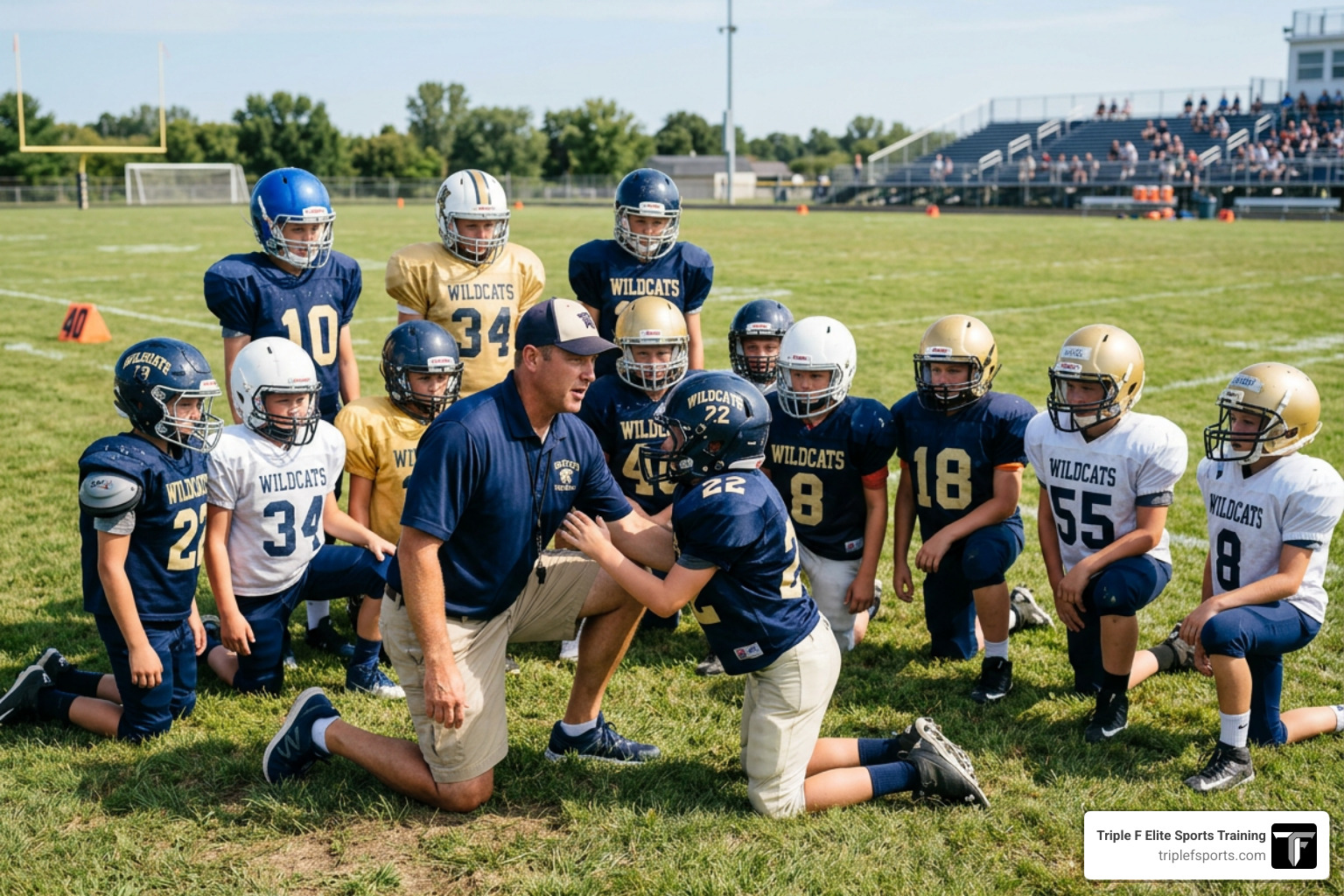
For offensive linemen, we look to the pros, incorporating elements of Offensive Line Training by Jon Feliciano. The focus is on “locking out” the arms and maintaining a wide, stable base. When it comes to tackling, we utilize the Kneeling Tackle drill. By having players start on their knees, we isolate the “hip explosion” and shoulder placement without the dangerous momentum of a full-speed run. This ensures they learn to “see what they hit” and keep their head out of the tackle.
Even our older athletes, including those in NFL Pre-Draft Training, focus on these same basics: neck strength, core stability, and proper pad level.
Essential Equipment for Safe Drills:
- Tackling Dummies: These allow for high-repetition tackling practice without the wear and tear on a teammate’s body.
- Step-over Bags: Great for teaching players to keep their feet moving through contact.
- Scrimmage Vests: Essential for organizing teams quickly and maintaining “vision” on the field.
Structuring the Perfect Youth Practice Session
A common mistake in youth football is running drills for too long. If a drill lasts 20 minutes, kids lose focus, and the quality of movement drops. We recommend the Play Burst Model. This means players execute a high-intensity movement (like a 5-yard burst or a specific route) for the duration of a real football play (about 4-6 seconds), followed by a brief rest or coaching correction. This builds “game-speed” conditioning without the “death marches” of old-school wind sprints.
We also take inspiration from the Tennessee Football: 2-Minute Drill presented by Craven Wings to teach late-game composure. Even for middle schoolers, practicing a “hurry-up” offense in a fun, low-pressure way builds tactical IQ.
The Ideal Practice Flow:
- Dynamic Warm-up (10 mins): High knees, butt kicks, and “Red Light, Green Light.”
- Individual Period (15 mins): Position-specific work (QB drops, O-Line steps).
- Group Period (15 mins): Dribbling at the Cone | SoccerXpert style agility or Mirror Dodge.
- Competitive/Fun Period (15 mins): 7v7 Flag or Sharks and Minnows.
- Cool Down & Character Talk (5 mins): Focus on the “Christ-centered” values of teamwork and effort.
Frequently Asked Questions about Youth Football Drills
How do you keep football drills engaging for players with low turnout?
Low turnout can actually be a blessing! It allows for more “reps” per player. To keep it engaging, we use position switching. If you only have 10 kids, run a 5v5 tournament where everyone has to play a new position every five minutes. Small-sided games increase the “touches” each player gets, which accelerates skill development much faster than a full 11v11 scrimmage where the ball might only go to two or three players.
What equipment is essential for running effective youth drills?
You don’t need a professional stadium to run great football drills for young players. The basics include:
- Disc Cones: For marking boundaries and agility paths.
- Footballs: Ideally one for every two players.
- Agility Ladder: For footwork development.
- Stopwatch: To time “bursts” and keep practice tempo high.
- Flags: Even for tackle teams, flag belts are great for “non-contact” days to keep the focus on footwork and “closing the gap.”
How should drill duration change based on a player’s age?
Cognitive development plays a huge role in how we structure our sessions.
- 5U (Ages 4-5): Keep drills to 3-5 minutes. At this age, it’s all about fun and basic motor skills.
- 8U-10U (Ages 7-10): Focus on 8-12 minute stations. This is the “golden window” for learning technique.
- 12U+ (Ages 11-14): Repetitions can last 10-15 minutes. These players can handle more complex instructions and higher repetition counts to build muscle memory for the jump to JV.
Conclusion
At Triple F Elite Sports Training in Knoxville, we are dedicated to more than just creating better football players; we are committed to building better people. Our Christ-centered approach ensures that every young athlete who walks through our doors is treated with respect and encouraged to reach their full athletic potential.
Whether you are looking for professional performance training, physical therapy to recover from an injury, or a competitive environment like our Knoxville Football Camp, we have the resources to help you succeed. We invite you to come see the Triple F difference for yourself — your first session is on us! Let’s get to work and build the next generation of Knoxville football stars together.