
Why Every Knoxville Athlete Needs a Baseline
Athletic assessments knoxville provide athletes with data-driven insights into their performance, helping them train smarter, prevent injuries, and reach their full potential. These assessments measure key athletic qualities like speed, power, agility, strength, flexibility, and movement patterns using advanced technology and scientific protocols.
At Triple F Elite Sports Training, we offer a comprehensive 9-quality assessment that covers everything from body composition and flexibility to speed and aerobic capacity. Whether you’re a competitive athlete trying to gain an edge, a weekend warrior looking to improve, or someone recovering from injury, athletic assessments give you the objective data you need to train with purpose.
Think about it this way: you wouldn’t drive cross-country without a map or GPS. Yet many athletes train without knowing their starting point or destination. Customized training programs based on accurate assessments can help athletes improve their speed, strength, and agility in ways they didn’t think were possible. That change starts with a clear baseline.
The science is clear. Athletes can lose 10% of their maximum speed in just 7 days without proper training. But how do you know what to train if you don’t know where you’re weak? That’s where assessments come in.
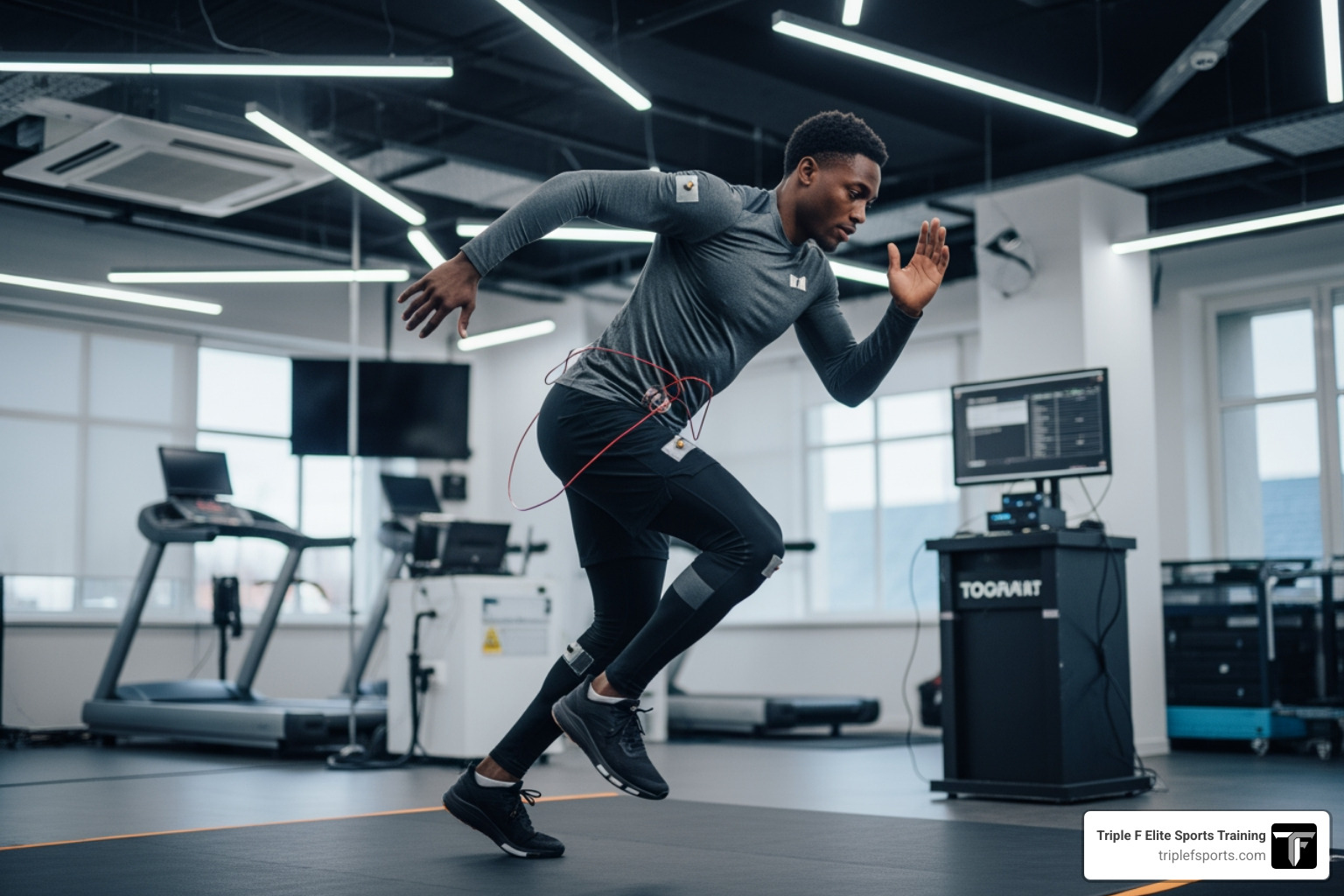
Modern athletic assessments use technology like AI-powered cameras, force plates, metabolic carts, and heart rate monitors to measure your body’s actual performance—not just how hard you feel like you’re working. These tools identify injury risks before they become problems, reveal muscle imbalances that limit performance, and show exactly which athletic qualities need the most work.
I’m Lee Smith, an 11-year NFL veteran and founder of Triple F Elite Sports Training in Knoxville. Throughout my career, I relied on world-class assessments and support staff to stay healthy and perform at the highest level—and now I’m bringing that same professional-level athletic assessments knoxville athletes can trust to our community. My goal is to help every athlete in the greater Knoxville area train with the same data-driven precision I experienced at the pro level.
Train with personalized programs based on data -> Re-assess to measure improvement and identify new goals -> Improve performance, prevent injuries, and achieve athletic potential, then return to Assess for continuous development – athletic assessments knoxville infographic pillar-4-steps” class=”aligncenter” src=”https://images.bannerbear.com/direct/4mGpW3zwpg0ZK0AxQw/requests/000/127/214/767/7gAk4KJj8Qm0r8eo6vwqxrD20/7b65963a596c7fcdb3bc67bc1d155929ea0bdc50.jpg” style=”display: block; margin-left: auto; margin-right: auto; max-width: 100%;” title=”Infographic showing the athletic assessment cycle: Assess baseline performance using technology and science -> Train with personalized programs based on data -> Re-assess to measure improvement and identify new goals -> Improve performance, prevent injuries, and achieve athletic potential, then return to Assess for continuous development – athletic assessments knoxville infographic pillar-4-steps”/>
What’s Measured? A Guide to Athletic Assessments
At Triple F Elite Sports Training, we believe that everything begins and continues with assessment. Why? Because accurate, reliable data is the cornerstone of true athletic development. Without understanding your current capabilities, limitations, and potential injury risks, any training program is just guesswork. Our comprehensive athletic assessments in Knoxville are designed to eliminate that guesswork, providing a clear baseline for every athlete.
Through these assessments, we aim to:
- Improve Performance: By identifying specific strengths to leverage and weaknesses to address, we can tailor training to improve speed, power, agility, and endurance.
- Reduce Injury Risk: Understanding biomechanical inefficiencies and muscle imbalances allows us to implement preventive strategies, keeping you on the field and out of the physical therapist’s office.
- Establish a Baseline: This initial snapshot of your athletic profile serves as a critical reference point, allowing us to accurately track progress and celebrate achievements over time.
- Create Personalized Training Plans: The data collected forms the foundation for individualized training programs that are far more effective than generic workouts.
Biomechanical & Movement Quality Assessments
One of the most crucial aspects of athletic assessments is understanding how your body moves. Our biomechanical and movement quality assessments are designed to analyze your movement efficiency, identify any imbalances, and pinpoint areas that could lead to injury or hinder performance.
Modern assessments leverage cutting-edge tools like AI-powered movement tracking and detailed video analysis to evaluate your body’s performance and biomechanics with speed and precision. This technology delivers insights on where your body may be at risk for injury, what muscles might be weak or overworked, and how you can move more efficiently.
Specific areas we scrutinize include:
- Running Mechanics: A detailed analysis of running mechanics looks at cadence, pelvic alignment, base of support, heel strike, and vertical displacement. A quicker cadence can reduce hip and knee loading, while proper pelvic alignment prevents discomfort. Ensuring an adequate base of support avoids painful conditions like tibial stress fractures. Even heel strike patterns are evaluated for energy efficiency.
- Squat and Jump Mechanics: These fundamental movements reveal a wealth of information about lower body strength, stability, and power. We analyze your form to identify any compensatory patterns or limitations.
- Postural Readiness Evaluation (P.R.E.): At Triple F, our P.R.E. is an 8-test mobility screening designed to determine joint function and identify any movement restrictions. This allows us to assess your flexibility and overall mobility, which are vital for both performance and injury prevention.
- Identifying Muscle Imbalances: Through these detailed movement analyses, we can uncover muscle imbalances that might be affecting your performance or increasing your risk of injury. Addressing these imbalances is key to building a resilient and high-performing athlete.
Comprehensive biomechanical assessments are key to identifying the root cause of problems, particularly for endurance athletes, challenging the notion that overuse injuries are inevitable.
Physiological & Performance Testing
Beyond how you move, we need to understand your physical capacity. Physiological and performance testing measures the raw engine of your athleticism. These tests provide quantifiable and repeatable measurements of your athlete status, helping us understand your endurance, strength, and power output.
Some key physiological assessments include:
- VO2 Max Testing: A VO2 Max test measures your body’s maximum capacity to use oxygen during exercise and is considered the gold standard for assessing aerobic capacity. A typical test takes roughly an hour, with the graded exercise portion averaging 8-12 minutes.
- Lactate Threshold (LT) Testing: This test identifies the exercise intensity at which lactate begins to accumulate rapidly in the blood, indicating the point of rapid fatigue. It’s crucial for athletes looking to improve their sustainable pace and endurance performance and generally takes about an hour and a half.
- Resting Metabolic Rate (RMR): RMR tests measure the number of calories your body burns at rest. This information is invaluable for tailoring nutrition plans for weight management or muscle gain.
- Body Composition: Body composition analysis (including age, biological age, gender, weight, height, and body fat percentage) gives a more complete picture of health and fitness than just a scale. This is part of our comprehensive assessment at Triple F.
At Triple F Elite Sports Training, we take a holistic approach, measuring 9 athletic qualities:
- Speed: We assess speed by running a 40yd Dash, which is segmented into 4 parts (0-5yd, 5-15yd, 15-30yd, and 30-40yd) for detailed profiling. Speed is the ultimate application of nearly every athletic quality.
- Power: Power, defined as FORCE x VELOCITY, is evaluated using tools like force plates and linear positional transducers to understand your output in movements like jumping and throwing.
- Agility: We assess agility by evaluating your deceleration and transition capabilities—often an overlooked yet critical component of athletic movement.
- Strength: We measure upper, lower, and total body strength, considering relative grade, load/velocity profile, and rate of force development.
- Elasticity: Also known as reactive strength, this is assessed by analyzing ground contact time, flight time, time to takeoff, braking impulse, and propulsive impulse during plyometric tasks.
- Aerobic Capacity: Using heart rate monitor technology during conditioning protocols, we evaluate your aerobic fitness, including Resting HR, HR Max, HR Recovery, and HR Avg.
By combining these biomechanical and physiological insights, we gain a truly comprehensive understanding of your athletic profile, allowing us to build a precise roadmap for your success.
The Science of Success: Technology’s Role in Modern Assessments
The days of simply guessing an athlete’s potential are long gone. Modern athletic assessments knoxville are driven by science and powered by technology, changing how we understand and improve performance. This data-driven approach provides objective measurements that were once reserved for elite professional athletes.
At the heart of this revolution is the integration of advanced technology:
- AI and Medical-Grade Sensors: Modern assessments can use AI-powered movement tracking with advanced medical-grade sensors and FDA-cleared technology. This allows for incredibly precise biomechanical evaluation, identifying injury risks, muscle imbalances, and areas for improved efficiency. The AI analyzes subtle movements that the human eye might miss, providing a deeper understanding of an athlete’s mechanics.
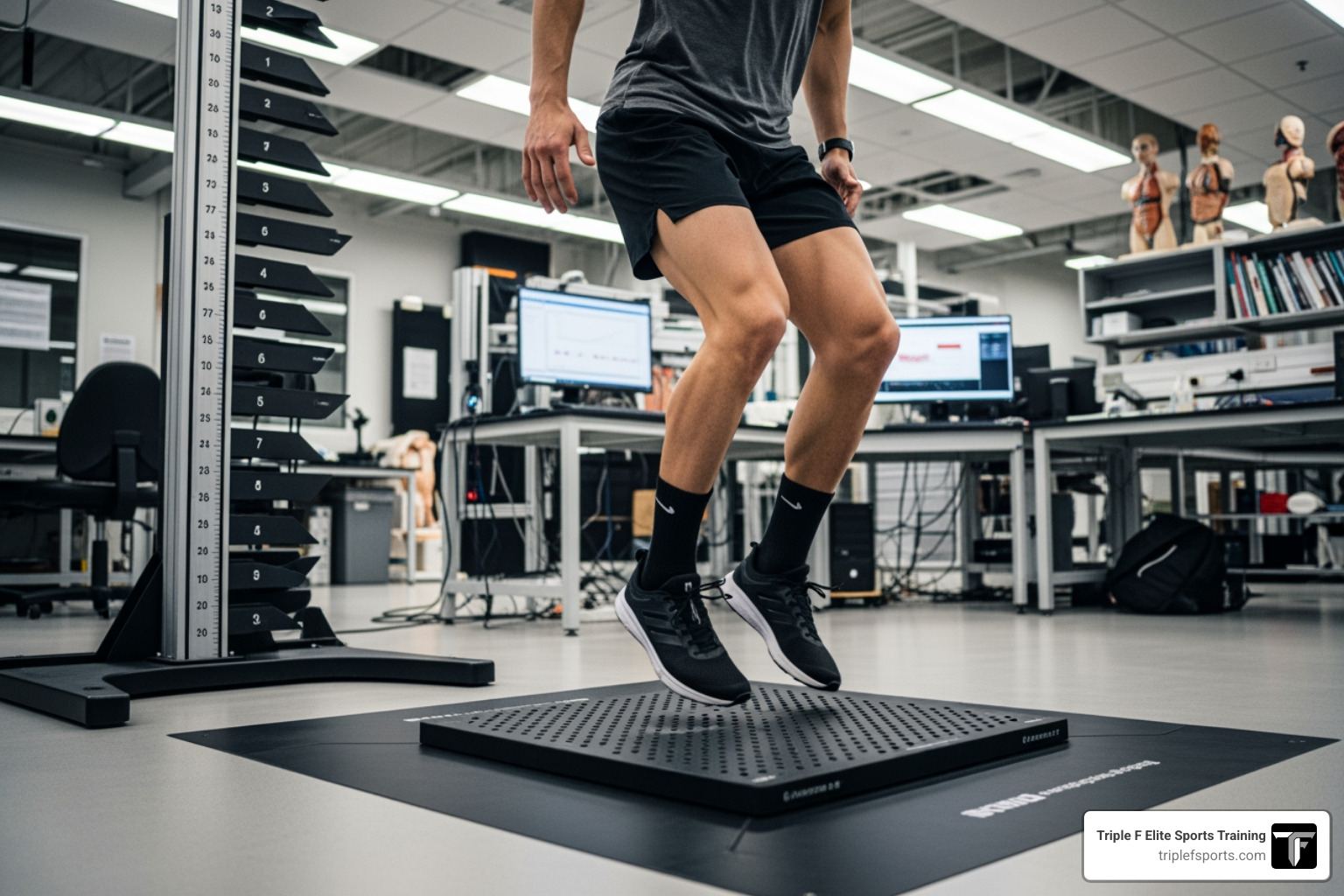
- Force Plates: These sophisticated tools, which we use at Triple F, measure the ground reaction forces generated during movements like jumps, landings, and sprints. They provide critical data on power output, rate of force development, and symmetry, helping us understand how efficiently an athlete applies force to the ground.
- Linear Positional Transducers: These devices measure displacement and velocity, providing accurate data on movement speed and acceleration during exercises. Paired with force plates, they allow for a complete picture of an athlete’s power profile.
- Heart Rate Monitors: Essential for assessing aerobic capacity and recovery, heart rate monitors track your body’s response to training stimuli. We use this technology to evaluate metrics like Resting HR, HR Max, HR Recovery, and HR Avg, helping us design effective conditioning programs.
- Video Analysis: Detailed video analysis allows coaches to analyze movements like running, squatting, and jumping in detail. This provides immediate visual feedback for athletes to understand and correct their form.
This technological arsenal ensures that our assessments are not only comprehensive but also highly accurate and repeatable. The goal is to quantify results, moving beyond subjective observations to provide tangible data that guides every aspect of your training and recovery. It’s about leveraging the best tools available to open up your full athletic potential.
The Assessment Process: From Data to Dominance
So, you’re ready to dive into athletic assessments knoxville and gain that competitive edge? Let’s walk through the typical process you can expect, from your initial inquiry to receiving personalized recommendations that will shape your training journey.
- Initial Consultation & Goal Setting: Your journey begins with a conversation. We’ll discuss your athletic history, current fitness level, specific goals (whether it’s improving speed for football, increasing endurance for a triathlon, or optimizing recovery post-injury), and any concerns you might have. This helps us tailor the assessment to your unique needs and ensures we’re measuring what matters most to you. A good process always starts with an evaluation to identify the root cause of any issues and explain the necessary steps.
- The Testing Session: This is where the magic happens! Depending on the type of assessment, you’ll undergo a series of tests designed to measure various athletic qualities.
- Biomechanics & Movement: This might involve performing specific movements like squats, jumps, and sprints while being recorded by high-speed cameras or wearing advanced sensors.
- Physiological & Performance: You could be on a treadmill or bike for VO2 Max or Lactate Threshold tests, or performing strength and power tests using force plates and linear positional transducers.
- Duration of Tests: The length of the session varies. Some tests might take only 15 minutes, while a VO2 Max test is roughly an hour, and a Lactate Threshold test about an hour and a half. Our comprehensive assessment at Triple F is designed to efficiently capture all 9 athletic qualities.
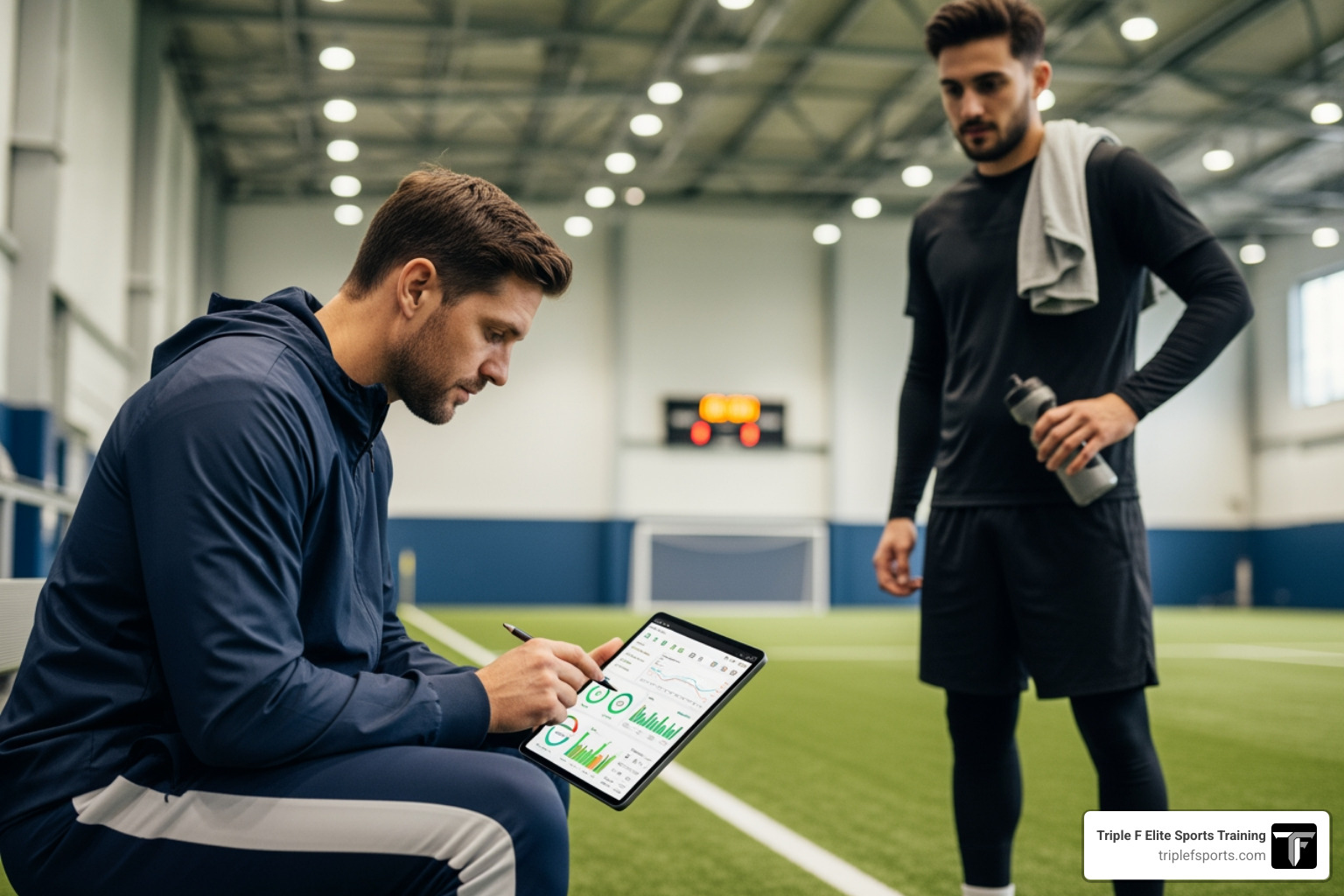
- Data Analysis & Custom Reports: Once the testing is complete, our specialists carefully analyze the data. This isn’t just about raw numbers; it’s about interpreting what those numbers mean for you. We’ll generate custom reports that break down your performance, highlight your strengths, pinpoint areas for improvement, and identify potential injury risks. At Triple F, we’ve developed our own in-depth reporting system to track progress for our members.
- Personalized Recommendations: This is arguably the most valuable part of the process. Based on your unique data, we’ll provide personalized recommendations for your training and recovery. This could include:
- Specific exercises to improve strength, mobility, or power.
- Adjustments to your running form or movement patterns.
- Custom conditioning protocols to improve aerobic capacity.
- Guidance on Nutrition strategies to fuel performance and recovery.
- Recommendations for Physical Therapy if specific imbalances or injury concerns are identified.
- A custom plan with instruction on strategies, techniques, and progression.
- Personalized recommendations for exercises to help improve strength, mobility, and recovery—based on real data.
Cost of Assessments: The investment in an athletic assessment can vary depending on the depth and type of testing. Our goal is to provide accessible, high-value assessments that give you the insights needed to reach your full potential.
Building Your Team: Professionals for Athletic Assessments Knoxville
Navigating the complexities of athletic performance and injury prevention requires more than just raw talent; it demands expert guidance and a comprehensive support team. In Knoxville, we are fortunate to have dedicated sports performance specialists and certified athletic trainers ready to help you optimize your athletic journey.
The Role of Sports Performance Specialists in Athletic Assessments Knoxville
Sports performance specialists play a pivotal role in translating assessment data into actionable training strategies. They are the architects of your personalized training plan, using the insights gained from assessments to build a stronger, more resilient athlete. Their expertise encompasses:
- Injury Risk Identification: By analyzing biomechanical data and movement patterns, specialists can identify subtle inefficiencies or imbalances that may predispose an athlete to injury. Experienced specialists are adept at diagnosing and treating a wide range of sports-related injuries, working to get athletes back to their peak.
- Customized Training Plans: General workouts yield general results. Performance specialists use assessment data to create truly individualized training programs that target specific weaknesses, improve strengths, and align with an athlete’s unique goals and sport demands.
- Rehabilitation Support: For athletes recovering from injury, specialists bridge the gap between physical therapy and full return to play. They ensure a safe and progressive return to sport, often working in conjunction with physical therapists.
- Certified Athletic Trainers (ATCs): These licensed health care professionals are indispensable members of the sports medicine team. Working under the direction of a licensed physician, ATCs optimize activity and participation for patients and clients. Their expertise covers five crucial domains:
- Injury/Illness Prevention and Wellness Protection: Proactively keeping athletes healthy.
- Clinical Evaluation and Diagnosis: Assessing injuries on the spot.
- Immediate and Emergency Care: Providing critical first response.
- Treatment and Rehabilitation: Guiding recovery and return to activity.
- Organizational and Professional Health and Well-being: Ensuring a safe and healthy athletic environment.
These specialists are your frontline defense against injury and your strongest allies in performance improvement. We encourage all athletes and parents to Learn more about sports injury prevention to understand the critical role these professionals play.
How Performance Coaches Use Athletic Assessments Knoxville Data
At Triple F Elite Sports Training, we pride ourselves on our assessment-based training methodology. Our performance coaches don’t just put you through a workout; they translate complex data into practical, progressive training. Everything we do is rooted in the objective insights gained from your athletic assessment.
Here’s how we leverage that data:
- Translating Data into Action: Your assessment report isn’t just a piece of paper; it’s a blueprint for your training. Coaches use this data to design every session, ensuring exercises are specifically chosen to address your unique profile. For example, if your assessment shows a deficit in reactive strength, your program will include targeted plyometric drills.
- Assessment-Based Training Levels: Based on your initial assessment results, we assign you to an appropriate training level. Triple F Elite Training Sports measures 9 athletic qualities and uses this data to assign athletes to training levels designed to meet their current needs. This ensures you’re always challenged appropriately, building a strong foundation before progressing to more advanced movements.
- Progress Tracking: We use in-depth reporting systems to continuously track your progress against your baseline. This allows both you and your coach to see tangible improvements, which as we know, are the best motivator! Regular re-assessments are crucial for verifying progress and making necessary adjustments to your program.
- Goal Achievement: Whether your goal is to increase vertical jump, shave seconds off your sprint time, or recover safely from an injury, the data from your assessments guides every step. Testing athletes at the beginning and end of programs is essential to assess symmetry, identify areas for improvement, and measure results.
- Neuromuscular Training: Our coaches focus on neuromuscular training, which means teaching your brain to send stronger, more precise signals to your muscles. This goes beyond just building muscle; it improves coordination, reaction time, and overall movement efficiency.
- Youth Development: For our younger athletes, assessments are especially vital. They ensure developmentally appropriate training, focusing on fundamental movement skills, strength, balance, and proprioception while prioritizing joint health and safety. Our Youth Training (12 to 18) programs exemplify this commitment to long-term athletic development.
The expertise of our performance coaches, combined with precise assessment data, creates a powerful synergy that optimizes your training, reduces injury risk, and propels you toward your athletic goals. If you’re looking for specialized support, you can also Find a certified athletic trainer via NATA for additional guidance.
Frequently Asked Questions about Athletic Assessments
We understand you might have questions about athletic assessments knoxville and how they fit into your fitness journey. Here are some of the most common inquiries we receive:
Who can benefit from an athletic assessment?
The beauty of athletic assessments is their universal applicability. They are not just for elite athletes!
- Competitive Athletes: Whether you’re a high school star, collegiate athlete, or aspiring professional, assessments provide the precise data needed to gain a competitive edge, fine-tune performance, and prevent injuries.
- Post-Injury Patients: For those recovering from an injury, assessments are crucial for optimizing recovery, identifying lingering weaknesses, and safely bridging the gap back to full activity.
- Fitness Enthusiasts: If you’re passionate about moving better, feeling stronger, and training smarter, assessments can open up new levels of understanding about your body. They help you identify how to improve movement patterns and prevent the overuse injuries that often plague dedicated fitness enthusiasts.
- Youth Athletes: For young, developing athletes, assessments establish a healthy baseline, ensure age-appropriate training, and proactively address imbalances before they become chronic issues. Our youth programs at Triple F prioritize this foundational approach.
- Anyone wanting to move better and feel stronger: If you desire to improve your physical capabilities, reduce daily aches, and maintain an active lifestyle, an athletic assessment provides invaluable insights for anyone who wants to move better, feel stronger, and stay active.
How often should I get re-assessed?
Establishing a baseline with an initial assessment is just the first step. To truly maximize your progress and adapt your training effectively, re-assessment is vital.
- Tracking Progress Over Time: Re-assessments allow us to objectively measure the improvements you’ve made. Seeing tangible data that confirms your hard work is incredibly motivating!
- Adjusting Training Programs Based on New Data: As your body adapts and strengthens, your needs change. A re-assessment helps us identify new strengths, pinpoint remaining weaknesses, and adjust your training program accordingly. What was effective six months ago might not be the most efficient approach now.
- Recommended Frequency: While it can vary based on your goals and training intensity, a common recommendation is to re-assess every 3-6 months. This provides enough time for significant adaptations to occur while also allowing for timely adjustments to your program. Many providers offer a reduced cost for retests to encourage continuous monitoring.
What’s the difference between a sports physical and an athletic assessment?
These two are often confused, but they serve very different, though complementary, purposes.
- Sports Physicals Clear for Participation: A sports physical is primarily a medical check-up. Its main goal is to ensure an athlete is healthy enough to participate in sports and to identify any underlying medical conditions that could pose a risk during physical activity. It’s about medical clearance, not performance optimization.
- Athletic Assessments Measure Performance: An athletic assessment, on the other hand, is focused squarely on performance metrics, biomechanics, and movement quality. It’s not about whether you can play, but how well you can play, and how to play better and safer. It digs into your speed, power, agility, flexibility, body composition, and movement patterns.
- Focus on Biomechanics & Identifying Strengths/Weaknesses: While a physical might check your range of motion, an athletic assessment goes much deeper, analyzing the quality of that motion, identifying muscle imbalances, compensatory patterns, and inefficiencies. It’s designed to pinpoint your specific athletic strengths and weaknesses, giving us the data needed to create a targeted training plan that improves your performance and reduces injury risk.
Think of it this way: a sports physical is like a safety inspection for your car, ensuring it’s safe to drive. An athletic assessment is like a performance diagnostic, telling you how to make your car faster, more efficient, and handle better on the track. Both are important, but they provide different types of crucial information.
Conclusion: Take the First Step to Release Your Potential
We’ve explored the diverse world of athletic assessments knoxville, from biomechanical analysis to physiological testing, and the cutting-edge technology that makes it all possible. We’ve seen how these data-driven insights are not just for elite athletes but can benefit anyone looking to improve their performance, prevent injuries, and train smarter.
The benefits are clear: objective data eliminates guesswork, personalized recommendations optimize your training, and continuous progress tracking keeps you motivated. In today’s competitive landscape, data-driven training isn’t just an advantage—it’s the modern standard. It empowers you with the knowledge to take control of your athletic journey, changing potential into undeniable performance.
At Triple F Elite Sports Training, our assessment-based methodology is designed to do just that. We’re committed to providing you with the same level of precision and personalized attention that I experienced at the professional level. We believe in helping every athlete open up their full potential, rooted in a Christ-centered approach that builds not just stronger bodies, but stronger character.
Don’t let guesswork hold you back. Take the first step towards understanding your true athletic edge.