
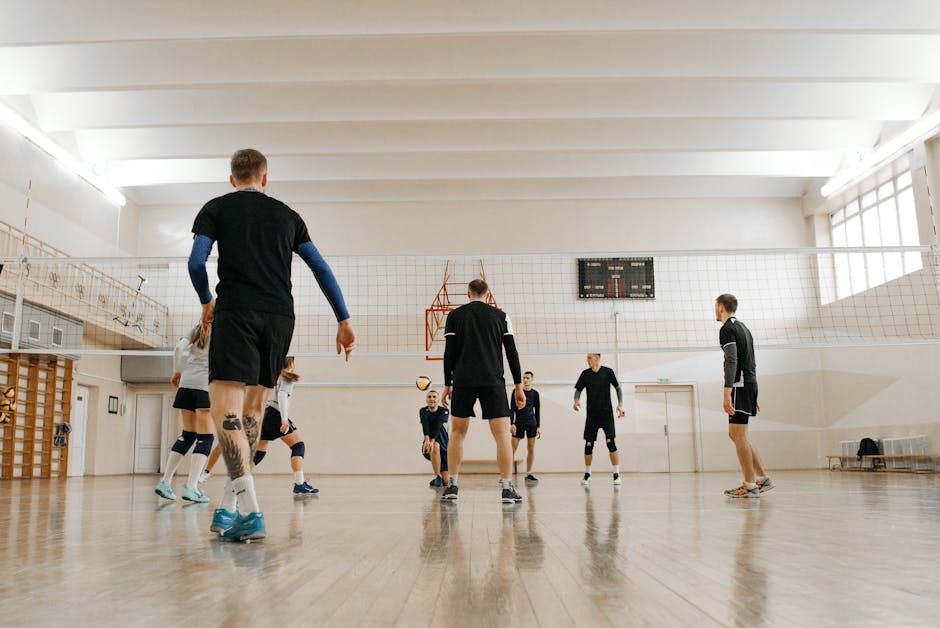
What Professional Volleyball Training Actually Looks Like (And How to Get There)
Professional volleyball training is a structured, multi-layered system that develops explosive power, tactical intelligence, position-specific skills, and mental toughness — all working together to prepare athletes for elite competition.
Here is what it covers at a glance:
| Training Component | Focus Area | Share of Elite Program |
|---|---|---|
| Tactics | Game strategy, rotations, scouting | ~45% |
| Technical Skills | Passing, setting, spiking, blocking | ~20% |
| Physical Conditioning | Strength, power, agility, endurance | ~20% |
| Psychological Prep | Mental toughness, focus, team chemistry | ~15% |
Source: Head Coach Giovanni Guidetti, 2014 Women’s World Championship
Whether you are a youth player just learning the basics or a competitive athlete chasing a college scholarship or professional contract, the path forward follows the same foundation: build the body, sharpen the skills, and develop the mind.
Professional volleyball is not just about jumping high or hitting hard. It demands a rare combination of anaerobic explosiveness, aerobic endurance, split-second decision-making, and relentless consistency. As Jordan Larson, one of the most decorated players in U.S. volleyball history, put it plainly: “It’s not going to be easy, but it’s worth it.”
This guide breaks down every layer of what it takes — from your first training session to your first professional contract.
I’m Kevin O’Shea, a Certified Strength and Conditioning Specialist with a background in athletic development and coaching, and I’ve built this resource to give athletes in the Knoxville area a clear, honest roadmap to professional volleyball training. Let’s get into it.
The Core Pillars of Professional Volleyball Training
To reach the professional level, an athlete must move beyond “just playing the game.” High-level volleyball is a sport of short, violent bursts. You aren’t running a marathon; you are performing hundreds of max-effort jumps and sprints over the course of two hours.
Our approach to professional volleyball training at Triple F Elite Sports Training focuses on building an “engine” that can handle these demands. We address the core physical requirements: explosive power, verticality, and anaerobic capacity.
Professional training addresses the intermittent nature of the sport—short rallies of 5 to 30 seconds followed by brief rest periods. This requires an elite anaerobic system. However, you also need an aerobic base to recover between those points. Research shows that it takes about six months of consistent aerobic training for fat-metabolizing enzymes to reach optimum levels, which is why we don’t wait until the season starts to build your engine.
If you are looking for a jumpstart, you can Download USA Volleyball Workout PDF Here. For those in the Knoxville area ready for hands-on instruction, we invite you to check out our Volleyball Clinics & Camps Knoxville.
Building Explosive Power and Verticality
In the pro stand, vertical jump isn’t just a stat—it’s your lifeline. Whether you are a middle blocker closing a gap or an outside hitter trying to beat a double block, your ability to achieve “triple-extension” (explosive extension of the hips, knees, and ankles) is paramount.
We utilize a Volleyball Workout Plan for Power, Speed & Jump Performance that prioritizes:
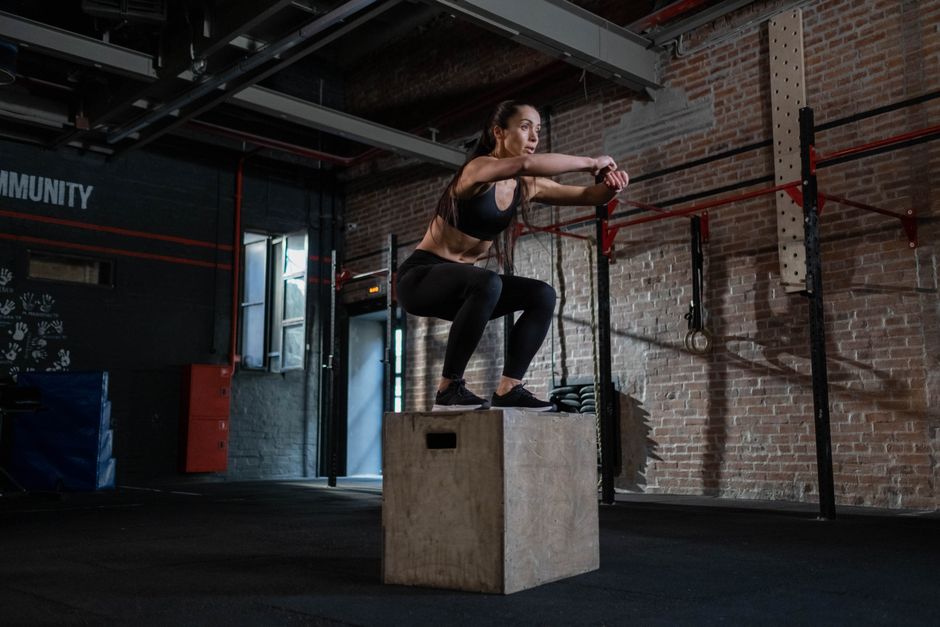
- Plyometrics: Exercises like box jumps and broad jumps teach the muscles to contract as quickly and forcefully as possible.
- Depth Jumps: These build reactive strength by teaching the body to absorb force upon landing and immediately transition into a powerful jump.
- Force Transfer: A strong core is essential not just for “abs,” but for transferring power from your legs through your torso and into your arm swing.
Speed and Agility in Professional Volleyball Training
Volleyball is a game of inches and milliseconds. Professional players must have exceptional “first-step speed” to reach a tipped ball or transition from a block to an approach.
Agility training isn’t just about running through a ladder; it’s about reaction time. We use Conditioning – USA Volleyball principles to improve:
- Lateral Quickness: Using cone shuffles and lateral bounds to mirror the defensive movements needed at the net or in the backcourt.
- Deceleration: Many injuries happen during the “stop,” not the “go.” We train athletes how to land and decelerate safely to protect their knees and ankles.
- Change of Direction: Developing the neurological pathways to switch directions instantly without losing balance.
Positional Specialization and Weekly Schedules
As athletes progress, professional volleyball training becomes highly specialized. A libero does not need the same vertical volume as a middle blocker, and a setter requires a different type of neurological conditioning than an opposite hitter.
| Position | Primary Training Focus | Key Physical Attribute |
|---|---|---|
| Setters | Neurological coordination, hand speed | Fast feet & decision making |
| Middle Blockers | Repeated jumping, lateral speed | Eccentric strength & reach |
| Outside/Opposite | Explosive power, high-volume hitting | Shoulder health & jump height |
| Liberos | Reaction time, floor defense | Low center of gravity & agility |
Tactical application takes up nearly 45% of a pro’s time. This includes scouting opponents and understanding rotations. If you are looking to join a team that prioritizes these details, explore our Volleyball Teams.
Tailoring Professional Volleyball Training by Position
Each role on the court has a unique “load.” For example, middle blockers often perform the most jumps per match. Their training must focus on repeated jump ability and the eccentric strength required to land safely dozens of times.
Setters, on the other hand, are the “quarterbacks.” Their professional volleyball training focuses on footwork patterns to get to the ball perfectly every time, combined with upper-body stability to maintain a clean set under pressure. Liberos and defensive specialists spend more time on “read-and-react” drills, focusing on a low-to-the-ground stance and explosive lateral bursts. You can find more about our specialized approach for each Volleyball Club Team on our site.
The Professional Weekly Training Routine
A typical week for a professional player is a grind. It is not uncommon to have “double-day” sessions where the morning is spent in the weight room and the afternoon is spent on the court.
A standard 90-minute professional practice might look like this:
- Dynamic Warm-up (15 min): Preparing the joints and heart rate.
- Technical Skills (20 min): High-repetition, position-specific work (e.g., setters working on transition sets).
- Tactical Application (30 min): Side-out drills or 6v6 scenarios with specific constraints.
- Scrimmage/Game Play (20 min): High-intensity play to simulate match conditions.
- Cool-down/Review (5 min): Stretching and film study notes.
Periodization and Long-Term Athletic Development
Athletes cannot maintain peak sport form for more than two months at a time. This is a scientific reality. Therefore, professional volleyball training uses “periodization”—the systematic planning of athletic training to reach the best possible performance during the most important competitions.
From Youth to the Professional Stand
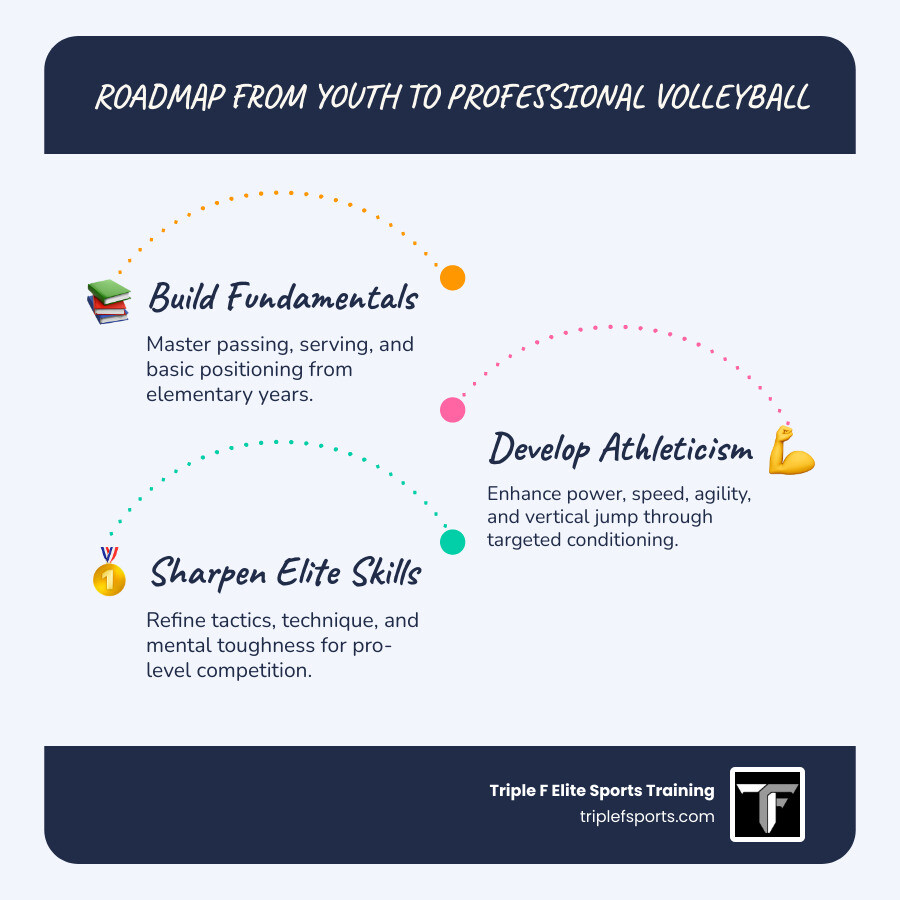
The journey to the pros starts long before the first contract is signed. We believe in a roadmap that respects the athlete’s age and development:
- Elementary School: Focus on fun and basic ball control. At this stage, hand-eye coordination and a positive attitude are the goals.
- Middle School: This is where we refine technique and introduce basic fitness. It’s about building “volleyball IQ.”
- High School: Recruitment becomes the focus. Athletes should be using The Complete Playbook for Girls High School Volleyball to navigate college scouting, highlight reels, and advanced training (3-4 sessions per week).
- College and Beyond: This is the “Big Leagues” of amateur sports. Players must eliminate all weaknesses and maintain professional-level social media and academic standards to attract pro scouts.
Indoor vs. Beach Volleyball Training
While the skills overlap, the training differs significantly. Beach volleyball is played in the sand, which provides natural resistance but lacks the “pop” of a hard court.
Beach pros must have incredible “environmental conditioning” to handle heat and wind. Because there are only two players, beach training emphasizes being a “universal player”—you must be able to pass, set, and hit with equal proficiency. For more on this transition, watch How to Pursue Pro Volleyball.
Recovery, Nutrition, and Injury Prevention
You can’t drive a Ferrari if the tires are flat and the tank is empty. Professional athletes treat recovery and nutrition with the same discipline they bring to the court.
One of the most vital stats we share with our athletes is that muscles are approximately 70% water. Even slight dehydration can lead to a massive drop in vertical jump and reaction time. Staying hydrated with cold water and electrolytes is a non-negotiable part of our program.
Nutrition for Elite Performance
Elite performance requires a specific fueling strategy. We encourage athletes to:
- Maintain an Aerobic Base: This helps the body become more efficient at utilizing fat for fuel during long matches.
- Caloric Intake: High-intensity training can burn thousands of calories; professional players need a balance of complex carbs for energy and protein for muscle repair.
- Recovery Shakes: Consuming protein and carbs within 30-45 minutes of a workout is critical for muscle synthesis.
Mental Preparation and Psychological Training
At the professional level, everyone can hit the ball. What separates the winners is “between the ears.” Mental toughness is the ability to maintain focus after a mistake or under the pressure of a match point.
We use visualization techniques and pressure-cooker drills to simulate the stress of a professional match. For coaches and players looking for deeper resources, we recommend the Member login for AVCA resources to access mental health workbooks and leadership training. Our Volleyball Staff at Triple F is dedicated to mentoring the “whole athlete,” not just the physical one.
Frequently Asked Questions about Professional Volleyball
How long does it take to reach peak sport form?
“Sport form” is the state of optimal readiness for maximal performance. It usually takes several weeks of specialized training to reach, and it can only be maintained for about two months. This is why we use “tapering” before major tournaments—reducing training volume while maintaining intensity to let the body fully recover.
What are the most common mistakes in volleyball training?
The biggest mistake is “playing into shape.” If you only play volleyball to get fit, you are inviting injury. Another common error is over-emphasizing jump height while ignoring landing mechanics. As we say, “Learn to land before you learn to fly.” Finally, many athletes ignore the need for an off-season, which leads to burnout and overuse injuries like patellar tendinitis (jumper’s knee).
How does professional conditioning differ from amateur programs?
Professional programs are highly specific. Amateur programs often use “steady-state” cardio like long-distance running. While a base is good, pros focus on anaerobic bursts. A pro’s conditioning involves max-effort movements for 10-20 seconds followed by a 2-3x rest period—mimicking the exact work-to-rest ratio of a real rally.
Conclusion
The path to the pro stand is paved with sweat, discipline, and the right guidance. At Triple F Elite Sports Training in Knoxville, we are committed to providing a Christ-centered environment where youth and adult athletes can unlock their full potential. From our state-of-the-art facility to our expert coaching staff, we provide the tools you need to transition from a beginner to an elite competitor.
Whether you’re looking to improve your vertical, sharpen your tactical IQ, or find a supportive club environment, we’re here to help. Start your professional journey at Triple F Sports today and claim your free first session. Let’s get to work.