
Why Hockey Injury Prevention Matters Before You Ever Hit the Ice
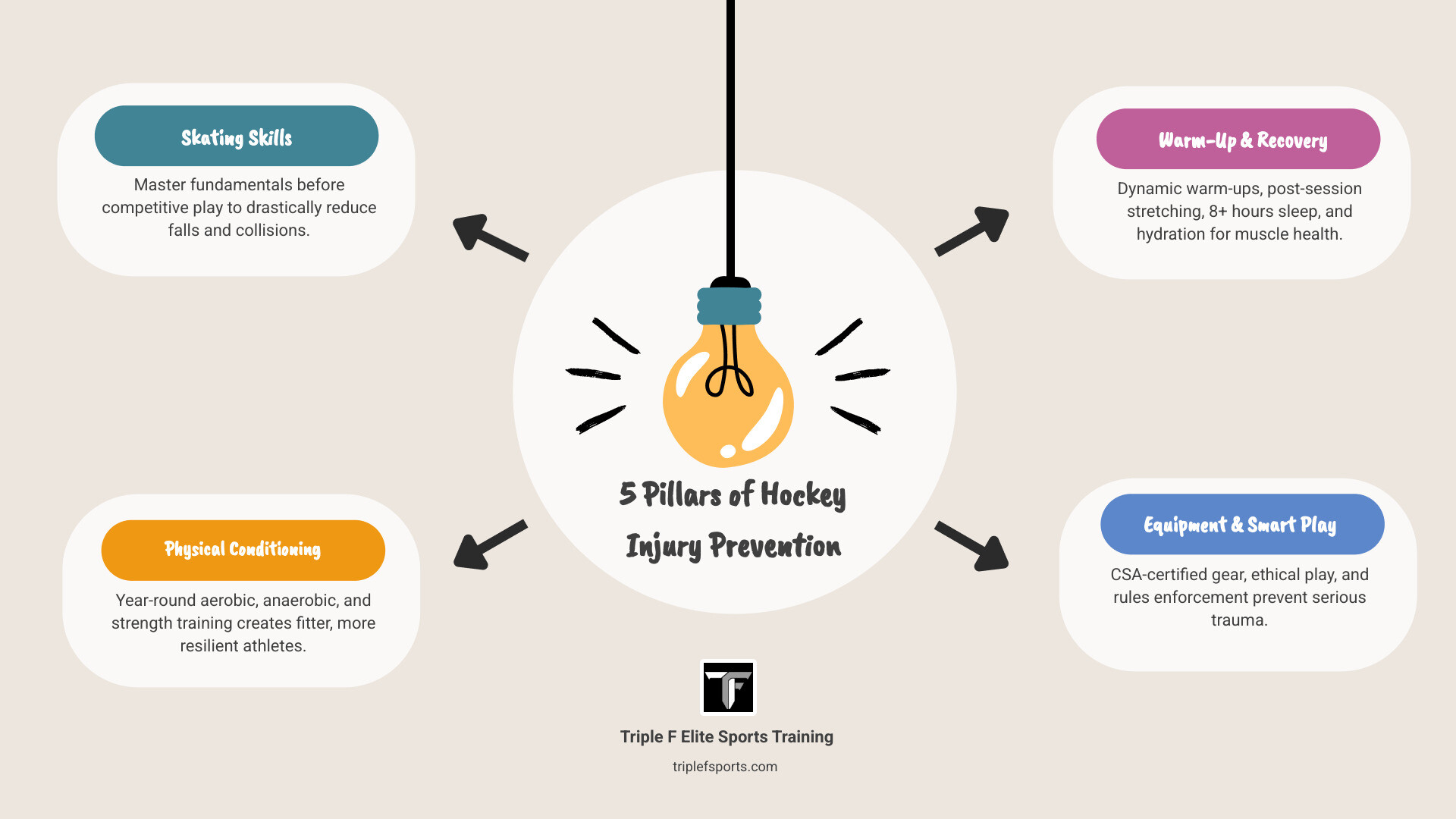
Hockey injury prevention is one of the most important things any player, parent, or coach can focus on. Here is a quick overview of the five core strategies that reduce injury risk:
- Master skating fundamentals – Players with strong basic skills crash and fall far less often.
- Condition year-round – Fit athletes get injured significantly less than unfit ones.
- Warm up and stretch properly – Cold muscles tear more easily; a 10-minute dynamic warm-up makes a real difference.
- Wear correctly fitted gear – Helmets, neck guards, and full facial protection prevent serious harm.
- Play smart and follow the rules – Ethical play and enforced rules cut injury rates, especially for younger athletes.
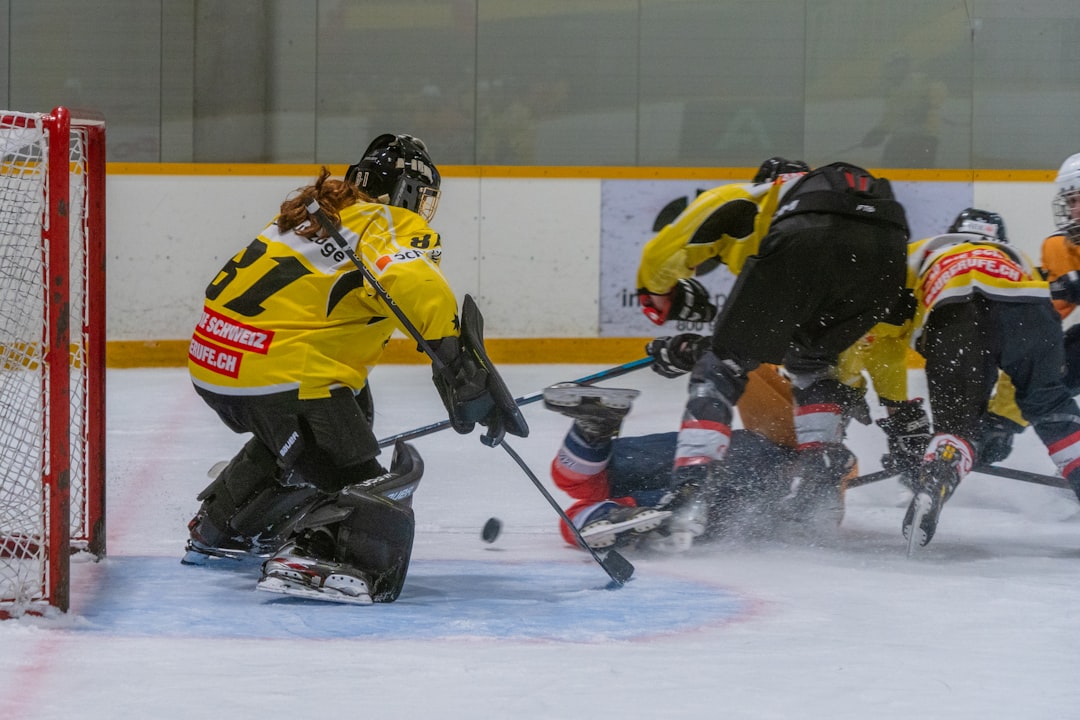
Hockey is thrilling. It is also one of the fastest, most physical sports on the planet, with players skating at over 25 mph and pucks flying past 100 mph. It is officially classified as a collision sport, meaning contact injuries are not accidents – they are built into the game.
With youth participation hitting record highs in 2025, more players than ever are exposed to those risks. Sprains, concussions, ligament tears, and overuse injuries are common across all ages and skill levels – not just the pros.
The good news? Most of these injuries are preventable.
I’m Kevin O’Shea, a Certified Strength and Conditioning Specialist with years of experience helping athletes train smarter and stay healthy, and hockey injury prevention is a core part of what I teach at Triple F Elite Sports Training in Knoxville. In the sections ahead, we will walk through exactly what causes injuries and what you can do to stop them before they happen.
Common Injuries and Underlying Causes
To stop an injury, we first have to understand how they happen. In hockey, we generally split injuries into two categories: contact and non-contact.
Contact injuries are what most people think of when they watch a game. These occur when a player hits the boards, a goalpost, another player, or is struck by a puck or stick. These often result in “trauma” injuries like fractures, shoulder dislocations, or concussions. According to research, upper extremity injuries account for roughly 44% of youth hockey injuries, with Acromioclavicular (AC) joint injuries representing about 50-51% of all shoulder issues in both amateur and elite players.
Non-contact injuries are often the result of “overuse” or sudden, explosive movements that the body isn’t prepared for. Think of a groin pull during a quick transition or a lower back strain from the repetitive forward-leaning stance of skating. Interestingly, adductor (groin) strains occur five times more frequently during on-ice training and pre-season games than during the regular season. This tells us that players often jump into high-intensity play before their bodies are fully conditioned.
Here is a breakdown of the most frequent injuries we see:
- Concussions: These represent between 18% and 66% of youth injuries requiring medical attention. They can happen from a direct hit to the head or a body check that causes the head to whip back and forth.
- MCL Sprains: The Medial Collateral Ligament in the knee is particularly vulnerable in hockey. MCL sprains comprise about 56.6% of all knee injuries in international hockey, often caused by “valgus stress”—that’s when the knee is pushed inward while the foot is planted or during a powerful push-off.
- Hip Impingement (FAI): This is a huge issue for hockey players, especially goalies. The repetitive mechanics of skating—abduction and external rotation—can lead to Femoroacetabular Impingement, where the hip bones don’t fit together perfectly, causing pain and labral tears.
- AC Joint Injuries: Falling onto the shoulder or being checked into the boards can easily separate the AC joint.
Contact vs. Non-Contact Injury Mechanisms
| Injury Type | Common Mechanism | Examples |
|---|---|---|
| Contact | Collisions with players, boards, or pucks | Concussions, shoulder dislocations, wrist fractures, “boot-top” lacerations |
| Non-Contact | Overuse, fatigue, or poor skating mechanics | Groin strains, MCL sprains, hip impingement (FAI), lower back pain |
For more detailed medical insights on these conditions, you can explore this Scientific research on hockey injury prevention.
Physical Conditioning for Hockey Injury Prevention
At our Knoxville facility, we always say that a fit athlete is a safer athlete. If your muscles are strong and your cardiovascular system is efficient, you can maintain proper form even when you’re tired in the third period. Fatigue is a major precursor to injury; when you get tired, your “skating posture” breaks down, and that’s when the groin pulls and knee twists happen.
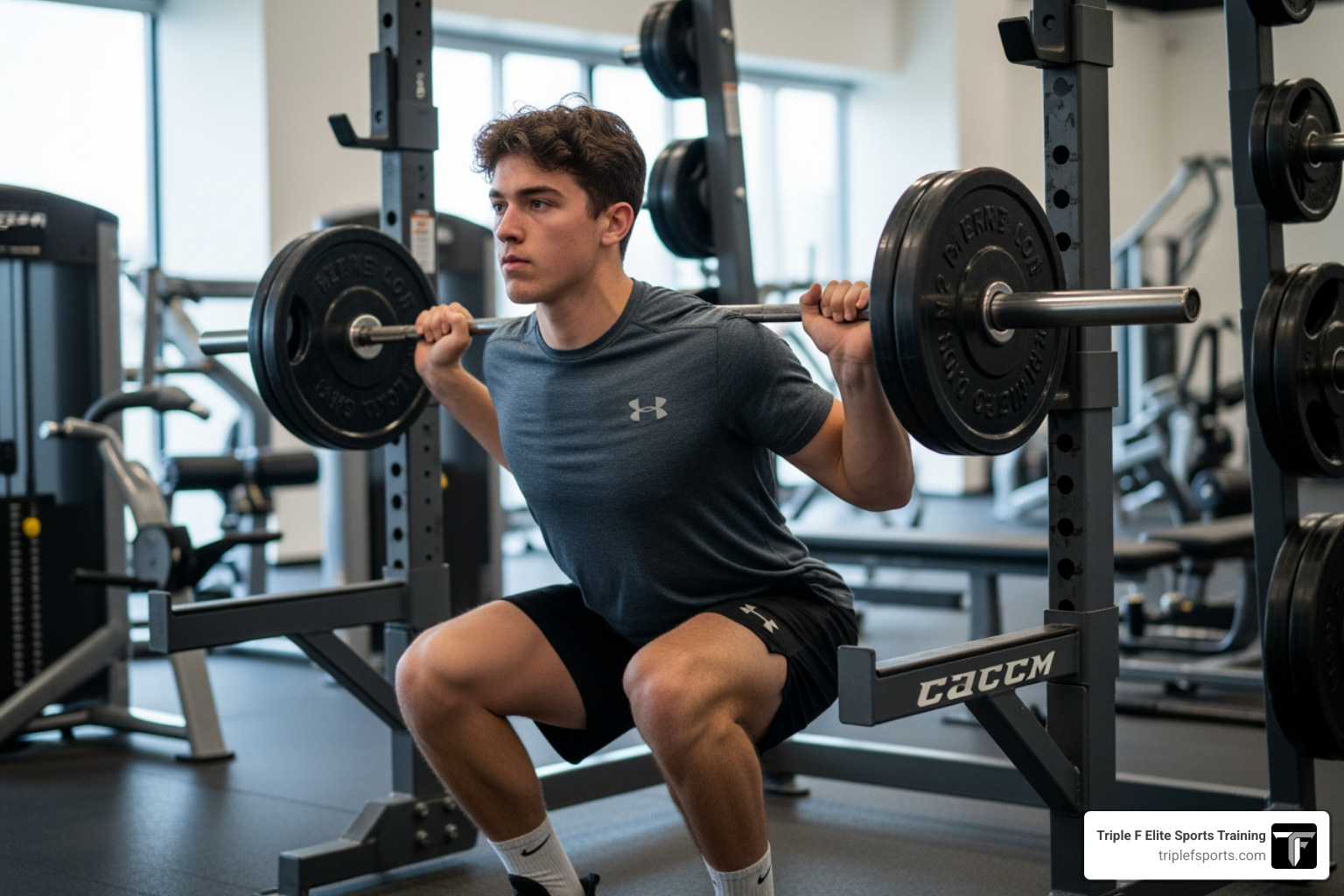
Neuromuscular training is one of the most effective tools in our arsenal. Research shows that regular participation in a balance training program with a resistance component can reduce the risk of all lower-body injuries by up to 50%. This involves teaching the brain and muscles to work together to stabilize joints, especially the knees and ankles.
Our approach to conditioning includes:
- Aerobic Conditioning: This provides the “base.” It helps you recover between shifts. We recommend working at 50-85% max exertion for longer intervals.
- Anaerobic Power: Hockey is a series of sprints. You need explosive power to move, but you also need the strength to absorb impacts.
- Core Stability: A strong core protects the spine and allows for better force transfer during shots and checks. It is also essential for preventing those nagging lower back strains.
If you are currently dealing with an injury or want a professional assessment of your movement patterns, you can learn more info about physical therapy at our clinic. We also have a specific guide on more info about preventing groin pulls, which is a must-read for anyone starting their pre-season training.
The Role of Flexibility and Cool-downs in Hockey Injury Prevention
Flexibility is about more than just being able to touch your toes; it’s about “joint mobility.” If your hips are tight, your lower back has to overcompensate, which leads to pain.
We advocate for a two-phase stretching approach:
- Dynamic Warm-up (Pre-game): Never stretch a “cold” muscle. Cold muscles are like frozen rubber bands—they snap. Instead, spend 10 minutes doing high knees, butt kickers, lunges, and leg kicks. This increases blood flow and “wakes up” the nervous system.
- Static Stretching (Post-game): This is the time to hold stretches for 15-30 seconds. Focus on the hip flexors, groins, hamstrings, and calves. This helps return the muscles to their resting length and reduces soreness.
The 8-Hour Sleep Rule This is a statistic that shocks most of our Knoxville athletes: getting less than 8 hours of sleep can increase your rate of injury by up to 70%! Sleep is when your body repairs the micro-tears in your muscles and resets your central nervous system. If you’re playing on a travel team and getting 6 hours of sleep, you are essentially stepping onto the ice with a “target” on your back.
Hydration Protocols Hydration isn’t just about not being thirsty; it’s about muscle function. Dehydrated muscles cramp and fatigue faster.
- Drink 17-24 ounces of water 2 hours before the game.
- Drink another 8 ounces right before puck drop.
- Aim for 7-10 ounces every 20 minutes of play.
For more resources on keeping young athletes safe, check out this Scientific research on youth sports safety.
Gear, Fit, and Environmental Safety Standards
You could be the fittest player in Tennessee, but if your helmet doesn’t fit, you aren’t protected. Protective equipment is your last line of defense.
Helmets and Facial Protection A helmet must be CSA-certified and fit snugly—if it shifts when you shake your head, it’s too big. While no helmet is “concussion-proof,” they are vital for preventing skull fractures. Furthermore, full facial protection is significantly more effective than half-shield visors. Research shows a massive reduction in dental and facial lacerations when players use full cages or shields.
The New Standard: Neck Guards In 2025, we are seeing a major push for mandatory neck guards in youth hockey. These are designed to prevent catastrophic injuries from skate blades. Along the same lines, Kevlar socks (cut-resistant socks) are becoming a standard recommendation to prevent “boot-top” lacerations.
Mouthguards Beyond protecting your teeth, a custom-fit mouthguard helps absorb the shock of a jaw impact, which may play a role in reducing the severity of certain types of head injuries.
Environmental Safety It’s not just about what you wear; it’s about where you play.
- Flexible Board Systems: Did you know that arenas with flexible board and glass systems reduce the risk of injury (including concussions and shoulder separations) by 30%? Traditional “rock-solid” boards don’t absorb any energy, meaning your body has to absorb it all.
- Ice Maintenance: Poorly maintained ice with ruts and “snow” buildup increases the risk of an edge catching and causing an ankle or knee tweak.
For more on equipment standards, visit this Scientific research on ice hockey safety.
Strategies for Youth Players and Overuse Prevention
Youth hockey players are not just “small adults.” Their bodies are still developing, which creates unique risks. Growth plate injuries are a major concern. Because the growth plates are the weakest part of a developing bone, a hit that might just bruise an adult could cause a fracture in a child.
The Body Checking Debate One of the most impactful statistics in hockey injury prevention is this: banning body checking for 11 and 12-year-olds (Pee Wee level) leads to a threefold reduction in injury and concussion risk. Many leagues, including USA Hockey, have moved the introduction of body checking to the Bantam level (ages 13-14) to allow players to master skating and “body contact” (which is different from checking) first.
Preventing Overuse and Burnout We see a lot of “year-round” hockey players in Knoxville. While we love the dedication, playing one sport 12 months a year is a recipe for overuse injuries.
- Multi-sport participation: We encourage our athletes to play soccer, baseball, or swim in the off-season. This develops different muscle groups and gives the “hockey muscles” (like the adductors) a chance to recover.
- Workload Monitoring: If a kid is playing on a school team, a travel team, and doing extra skills sessions, they are at high risk. We recommend at least one or two full rest days per week.
- The “Early Recognition” Rule: If a young player has persistent pain that doesn’t go away with a day of rest, don’t “tough it out.” That is a sign of an impending overuse injury.
You can find more info about managing these risks through more info about sports medicine.
Tailored Hockey Injury Prevention for Youth and Goalies
Goalies are the most specialized players on the ice, and their injury patterns reflect that. The “butterfly” technique, while effective, puts incredible stress on the hips and knees.
- Hip Mobility: Goalies need extreme internal rotation of the hip. If they don’t have this naturally, they will force the movement, leading to labral tears and FAI.
- Targeted Strengthening: Goalies need specific work on their core and hip stabilizers to handle the repetitive “up-and-down” nature of the position.
Coaching education is also vital. Coaches need to know how to teach “safe contact” and recognize the signs of a concussion. Furthermore, we shouldn’t ignore the mental side of the game. For athletes looking to stay sharp under pressure, check out more info about psychological skills for peak performance.
Smart Play, Ethics, and Return-to-Play Protocols
Injury prevention isn’t just physical; it’s cultural. When a team prioritizes “Fair Play,” injury rates drop.
Ethical Conduct Rules like “No Checking from Behind” are there for a reason—to prevent life-altering spinal injuries. Referees and coaches must have zero tolerance for hits to the head or dangerous boarding. When players respect each other and the game, everyone stays safer.
Safe Return-to-Play The most dangerous thing an athlete can do is return to the ice before they are ready. A “re-injury” is often much worse than the initial one.
- Concussion Protocol: A player must be 100% symptom-free at rest and during exertion before returning. They need clearance from a medical professional who specializes in concussions.
- The Milestone Approach: Before returning to a game, a player should be able to complete a full practice without pain, have a full range of motion, and have regained their pre-injury strength.
If you are currently recovering, we have resources on more info about bouncing back from injury to help you navigate the process safely.
Frequently Asked Questions about Hockey Injury Prevention
What are the most common injuries in youth hockey?
The most common youth injuries are concussions, fractures (especially in the wrist and collarbone), and ligament strains (like MCL tears). Overuse injuries, particularly in the hips and lower back, are also becoming more frequent as kids play hockey year-round.
How does sleep affect hockey injury risk?
Sleep is perhaps the most underrated tool in hockey injury prevention. Getting less than 8 hours of sleep can increase your injury risk by up to 70%. It impairs your reaction time, decreases your muscle recovery rate, and makes you more susceptible to fatigue-related mistakes on the ice.
When is it safe to return to play after a concussion?
It is only safe to return when a player is completely symptom-free (no headaches, dizziness, or light sensitivity) and has been cleared by a healthcare professional. They should follow a “graduated return-to-play” protocol, starting with light aerobic exercise and progressing to non-contact practice before full-contact games.
Conclusion
At Triple F Elite Sports Training in Knoxville, we believe that every athlete has the potential to reach the top of their game, but they can’t do that from the sidelines. Hockey injury prevention is about being proactive—training your body in the off-season, wearing the right gear, and playing with a “safety-first” mindset.
Whether you are a youth player just starting out or an adult in a local Knoxville league, our Christ-centered approach to athletic development is designed to help you stay strong, resilient, and on the ice. We offer comprehensive performance training and physical therapy tailored specifically to the needs of hockey players.
Ready to take your safety and performance to the next level? Come visit us in Knoxville and see how we can help you unlock your full potential. You can find more info about our sports medicine services online or stop by the facility to get started. Let’s keep the game fast, fun, and safe for everyone!