
What Are Performance Training Programs (And Why They Work)
Performance training programs are structured athletic development systems designed to improve sport-specific physical qualities — like speed, strength, power, agility, and injury resilience — beyond what general fitness routines can deliver.
Here is a quick breakdown of what they involve:
| Component | What It Means |
|---|---|
| Strength & Power | Building force production for explosive athletic movement |
| Speed & Agility | Training acceleration, deceleration, and change of direction |
| Recovery | Sleep, nutrition, and active recovery protocols |
| Data & Testing | Baseline assessments and progress tracking to guide programming |
| Sport-Specific Skill | Drills and techniques tailored to your position and sport |
Whether you are a youth athlete learning the basics or a high schooler chasing a Division I scholarship, the right program meets you where you are and pushes you toward where you want to go.
Success in athletics is rarely about raw talent alone. It comes from consistent, structured training that targets the right qualities at the right time. A well-designed performance program does exactly that — turning athletic potential into measurable results on the field, court, or track.
I’m Kevin O’Shea, a Certified Strength and Conditioning Specialist (CSCS), former college wide receiver at Franklin & Marshall, and high school football coach, and I have spent years working with athletes through performance training programs that develop both the body and the mindset. In this guide, I’ll walk you through everything you need to know to train smarter and reach your peak.
The Core Components of Elite Performance Training Programs
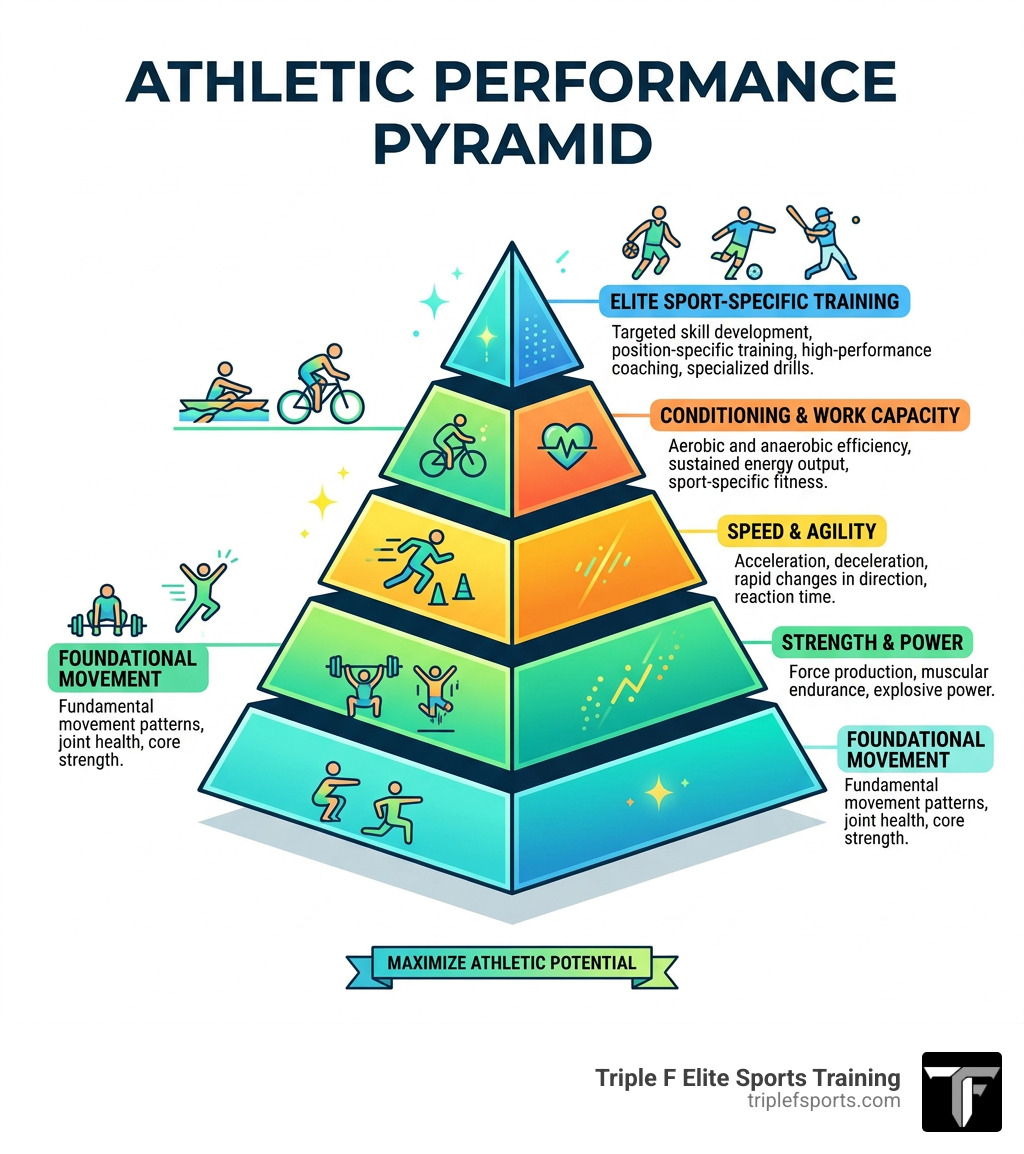
When we talk about elite performance training programs, we aren’t just talking about “working out.” We are talking about a calculated, scientific approach to human movement. At our Knoxville facility, we focus on the “Triple F” philosophy: Faith, Family, and Football (or whatever your sport may be), but the physical engine is built on several non-negotiable pillars.
Strength and Power
Strength is the foundation of all athletic movement. However, in sports, it isn’t just about how much you can bench press; it’s about how much force you can produce quickly. This is where power comes in. We utilize explosive movements, plyometrics, and Olympic lifting variations to ensure that the strength you build in the weight room translates to an explosive first step on the field.
Speed and Agility
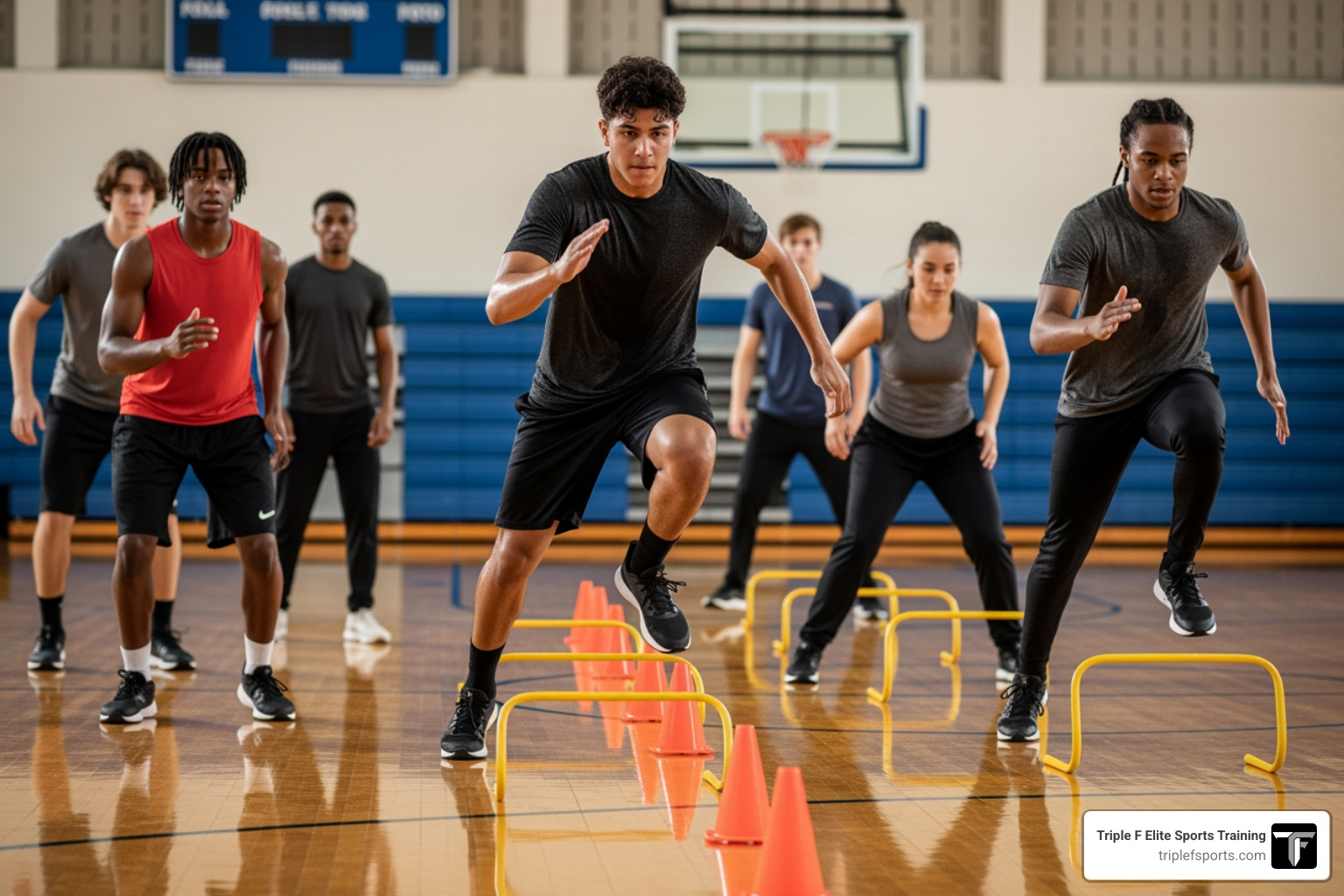
Speed is often the difference-maker between a benchwarmer and a starter. Effective programs focus on linear speed (sprinting in a straight line) and multidirectional agility. This involves mastering the mechanics of acceleration and deceleration. If you can’t stop on a dime, you can’t change direction effectively.
Force Plate and Motion Tracking Technology
Modern performance training has moved beyond the stopwatch. We use advanced tools like force plates to measure exactly how much power an athlete generates and whether they favor one leg over the other. This data allows us to create skilled-based-training protocols that address specific weaknesses before they become injuries.
Movement Efficiency and Metabolic Conditioning
An athlete who moves efficiently uses less energy. By correcting faulty movement patterns, we help athletes stay fresher for longer. Metabolic conditioning is then layered on top, ensuring the athlete’s energy systems are prepared for the specific work-to-rest ratios of their sport—whether that’s the short bursts of a baseball play or the sustained endurance of a soccer match.
Primary Focus Areas include:
- Acceleration and Top-End Speed: Refining stride length and frequency.
- Deceleration and Braking: Teaching the body to absorb force safely.
- Vertical and Broad Jump: Measuring and improving explosive lower-body power.
- Core Stability: Creating a rigid “trunk” to transfer power from the legs to the upper body.
Why Athletes Need Specialized Performance Training Programs
You might wonder, “Can’t I just go to a local commercial gym?” While general fitness is great for health, it rarely prepares you for the rigors of competitive sports. For serious athletes eyeing collegiate scholarships, elite performance training delivers the edge needed to outpace the competition.
Specialized programs focus on neuromuscular adaptation—training the brain to send stronger, faster signals to the muscles. This is why youth-assessments are so vital. By identifying an athlete’s baseline early, we can tailor a program that builds explosive power while respecting their current developmental stage.
Designing Effective Performance Training Programs for Longevity
The best ability is “availability.” A program that makes you faster but leaves you with a torn ACL is a failure. We prioritize injury reduction by focusing on joint health and biomechanical efficiency.
By incorporating defensive-line-linebacker-sports-training or adult-training techniques, we ensure that every athlete—from a 12-year-old beginner to a 40-year-old weekend warrior—is moving in a way that protects their joints. Staying informed is key, which is why we encourage athletes to watch latest performance topics from leading organizations like the NSCA to understand the “why” behind their mobility and strength work.
Periodization and Progression Across Age Groups
Athletic development is a marathon, not a sprint. You cannot train an 8-year-old the same way you train a pro athlete. A structured program uses “periodization”—the systematic planning of physical training—to ensure peak performance at the right time.
| Phase | Age Group | Primary Focus | Training Goal |
|---|---|---|---|
| Foundational | 8-12 | Coordination & Body Control | “Learning to Play” |
| Developmental | 12-15 | Form & Introduction to Loads | “Learning to Train” |
| Specialization | 16-18 | Max Strength & Sport-Specific Speed | “Training to Compete” |
| Elite/Pro | 18+ | Refinement & High-Level Power | “Training to Win” |
Youth Development (Ages 8-12)
At this stage, we focus on “physical literacy.” We want kids to enjoy moving. The focus is on balance, proprioception, and fundamental movement skills. We aren’t looking for max squats here; we are looking for perfect lunges and the ability to skip, jump, and land safely.
Developmental and High School (Ages 12-18)
As athletes enter the youth-training-12-to-18 window, we introduce more resistance. This is the “golden age” of strength gains. We start specializing based on the athlete’s primary sport, ensuring they have the durability to survive a long high school season. For those looking at the next level, our future-pros-program provides the structure needed to transition from high school standout to collegiate recruit.
Elite and Pre-Draft Training
For athletes at the highest levels, such as those in nfl-pre-draft-training, the training becomes highly individualized. We use data to manage “load”—ensuring the athlete is working hard enough to improve but not so hard that they overtrain or risk injury before a big combine or tryout.
Integrating Skill Work into Performance Training Programs
Physical tools are useless if you can’t apply them to your sport. This is why we bridge the gap between the weight room and the field through sport-skill integration.
Whether it’s wide-receiver-training-by-amari-rodgers or offensive-line-sports-training, we use position-specific drills to ensure that your new-found speed and strength actually help you catch more passes or hold a better block. Goal setting is a massive part of this process; click here to learn how setting clear, measurable goals can boost your skill development.
The Role of Nutrition, Recovery, and Data in Athletic Success
You can have the best performance training programs in the world, but if you go home and eat junk food and sleep four hours a night, you won’t see results. Training is the stimulus; recovery is where the actual “improvement” happens.
Nutrient Timing and Fueling
Think of your body like a high-performance sports car. You wouldn’t put low-grade fuel in a Ferrari. Athletes should aim to eat a balanced meal 2–3 hours before training to ensure they have the energy to perform. Post-workout, it is critical to refuel with protein and carbohydrates within 30–60 minutes to jumpstart muscle repair.
Hydration Guidelines
Dehydration is the fastest way to kill athletic performance. A simple rule of thumb: stay hydrated by aiming to drink half your body weight in ounces of water daily. If you weigh 160 pounds, that’s 80 ounces of water a day—more if you are training in the Tennessee heat!
Sleep and Recovery
Sleep is the ultimate legal performance enhancer. During deep sleep, your body releases growth hormones that repair tissue. We advocate for at least 8-9 hours for youth and developmental athletes. When combined with guidance from nutritionists, these recovery habits become a competitive advantage.
Data-Driven Testing and Progress Tracking
We don’t guess; we test. Modern programs use data to ensure progress. By using apps like MyFitnessPal for nutrition or platforms like BridgeAthletic and TrainHeroic for workout tracking, athletes can see their growth in real-time. This data-driven approach allows us to adjust the program on the fly, ensuring you never hit a plateau.
Professional Guidance and Facility Standards
Who you train with matters just as much as what you do. The “strength coach” title is often used loosely, but for elite results, you need a professional.
The Importance of Certification
Look for coaches who hold the NSCA-CSCS (Certified Strength and Conditioning Specialist) credential. This is the gold standard in the industry. It ensures your trainer understands exercise science, program design, and safety protocols. In fact, 100% of NBA, NFL, and MLB teams have NASM or NSCA-credentialed professionals on staff. If the pros trust these standards, you should too.
What a Performance Trainer Actually Does
A great trainer is part scientist, part motivator, and part mechanic. Their role includes:
- Assessing Baseline Performance: Finding out where you are starting.
- Correcting Movement Patterns: Ensuring you don’t build “strength on top of dysfunction.”
- Coordinating Care: Working with nutritionists and therapists to keep you healthy.
Finding the Right Facility in Knoxville
If you are looking to assess your athletic edge, you need a facility that offers more than just weights. You need a community. Whether you are looking for womens-only personal training or a high-intensity group environment, the facility should feel like a second home.
When discovering elite athletic training facilities, check for:
- Qualified Staff: Are they certified? Do they have experience with your sport?
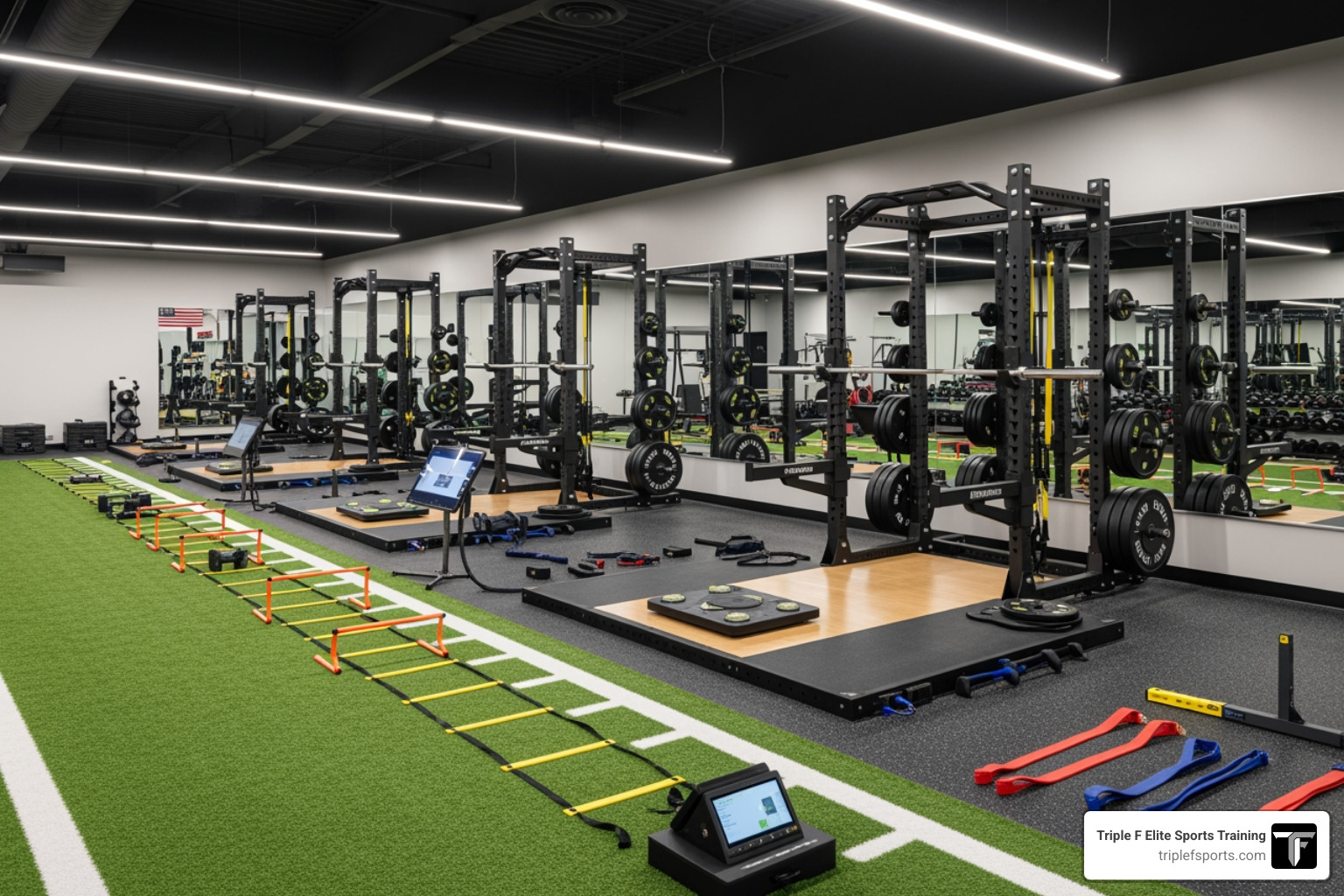
- Specialized Equipment: Do they have turf, racks, and force plate technology?
- Safety Protocols: Is the environment clean, organized, and focused on proper form?
Frequently Asked Questions about Athletic Development
What is the difference between sports performance and general fitness?
General fitness focuses on overall health, weight loss, and general muscle tone. It’s about looking good and feeling healthy. Performance training programs, however, are results-driven and sport-specific. They target attributes like reactive agility, explosive power, and specific energy systems. While a general fitness enthusiast might do a slow bicep curl, an athlete might do a medicine ball rotational throw to improve their baseball swing power.
How often should an athlete participate in performance training?
Training frequency depends on the athlete’s age and the time of year.
- Off-Season: 4–6 days per week. This is when the heavy lifting and biggest speed gains happen.
- In-Season: 2–3 days per week. The goal here is maintenance and injury prevention—keeping the strength you built in the off-season without wearing yourself out for game day.
- Youth Athletes: 2–3 days per week is usually plenty to build a foundation without burnout.
What role does data play in modern performance programs?
Data removes the guesswork. By using tools like sprint timers and force plates, we can see if an athlete is actually getting faster or if they are losing power due to fatigue. It also helps identify “asymmetries”—for example, if your left leg is 20% weaker than your right, you are at a much higher risk for a knee injury. Data allows us to fix that balance before it becomes a problem.
Conclusion
At Triple F Elite Sports Training, we believe that every athlete has a “peak” they haven’t reached yet. Our mission is to provide professional, Christ-centered athletic development that builds better athletes and better people. By combining expert coaching with a supportive, family-like atmosphere, we help Knoxville athletes unlock their full potential.
Whether you are looking to dominate on the football field, improve your vertical for basketball, or join our volleyball club, we have the tools and the expertise to get you there.
Ready to see the difference for yourself? Your peak performance starts here. Come visit us in Knoxville, meet our coaches, and take your first step toward elite performance. We’ll even give you your first session for free—because we’re confident that once you experience our culture, you’ll never want to train anywhere else.