
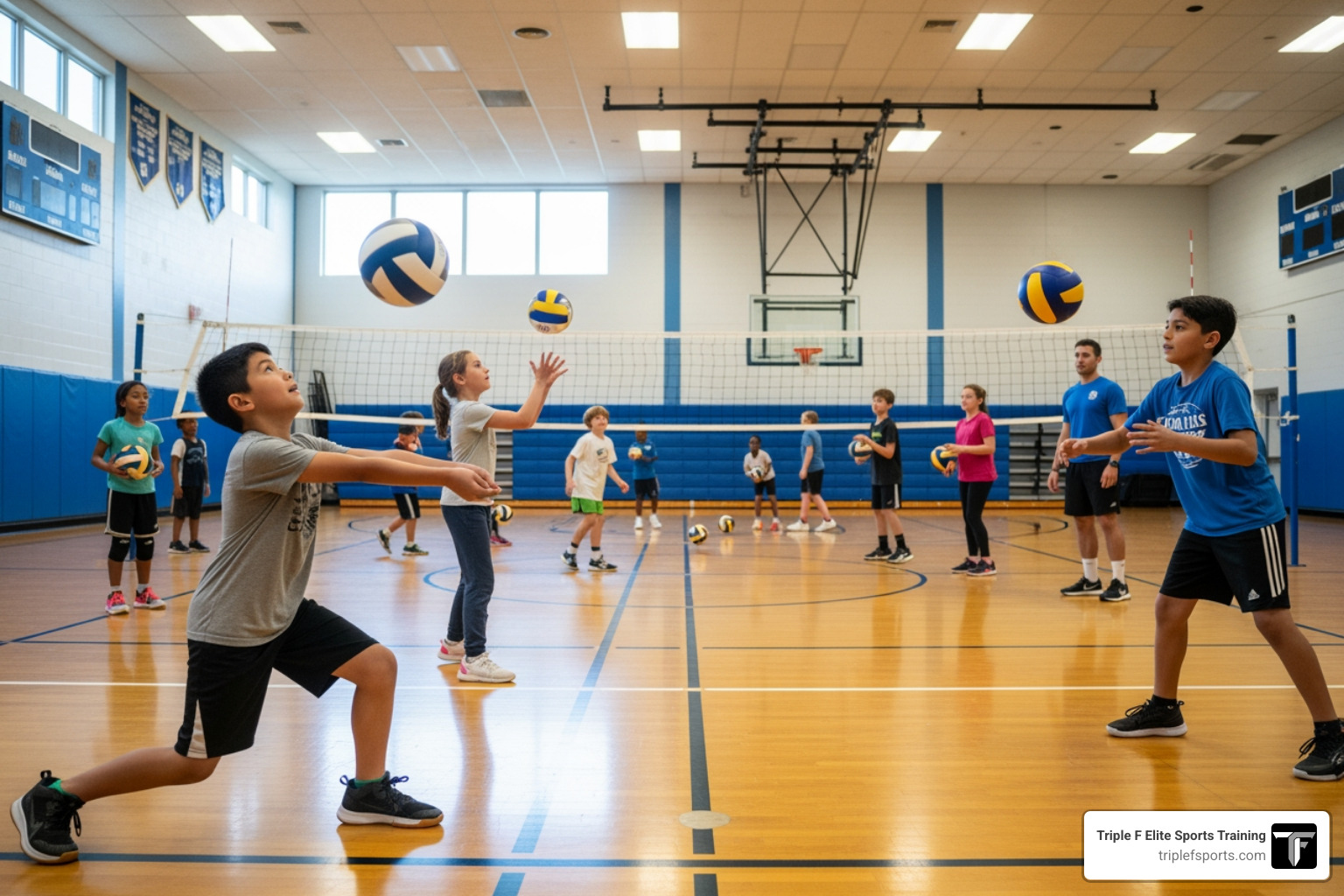
Why Volleyball Drills for 10-12 Year Olds Build Champions
Volleyball drills for 10-12 year olds should focus on mastering fundamental skills while keeping practice fun and engaging. Here are the essential drills every young player needs:
| Skill Area | Best Drills | Key Focus |
|---|---|---|
| Passing | Partner Toss and Pass, Wall Bumps, Pass to a Target | Forearm platform, body posture, footwork |
| Setting | Partner Setting, Wall Sets, Set to a Target | Hand shape, soft touch, using legs |
| Serving | Underhand Serve, Overhand Toss Practice, Serving to Zones | Consistent toss, arm swing, follow-through |
The ages of 10-12 are critical for building proper volleyball technique. At this stage, young athletes are developing the muscle memory and coordination that will serve them for years to come.
The right drills make all the difference. Kids at this age need exercises that challenge them without overwhelming them. They need to build confidence while learning correct form from the start.
I’m Lee Smith, and while my NFL career was in football, the principles of long-term athletic development apply across all sports—which is why at Triple F Elite Sports Training, we emphasize proper technique and foundational skills in our volleyball drills for 10-12 year olds. My experience with world-class training has taught me that building the right foundation early prevents injuries and creates lifelong athletes.
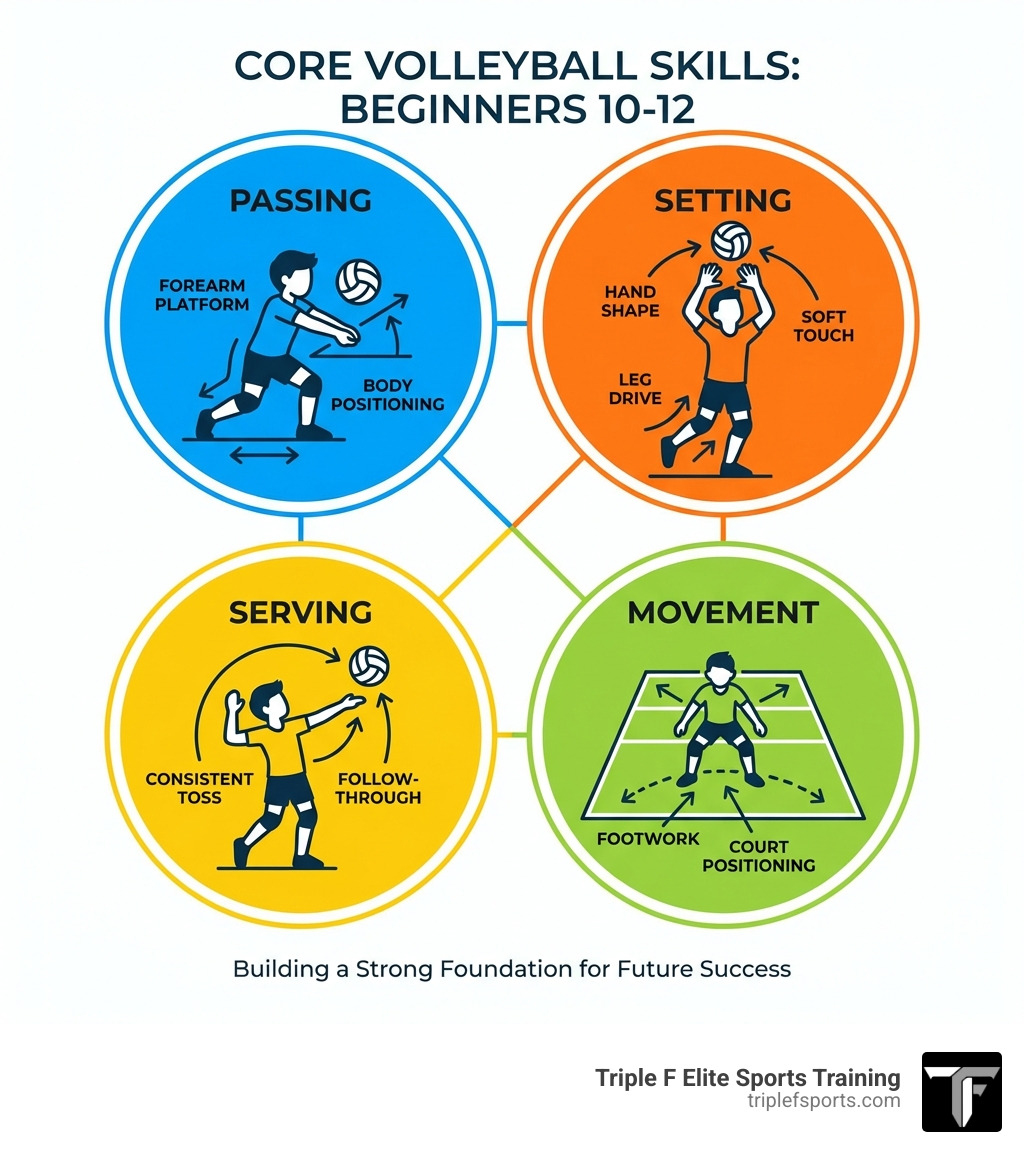
The Building Blocks: Why Fundamental Drills Matter at This Age
When we talk about volleyball drills for 10-12 year olds, we’re not just discussing how to hit a ball over a net. We’re laying the groundwork for a lifetime of athletic enjoyment and success. This age group is a golden window for skill acquisition, where young bodies are developing rapidly, and minds are eager to learn new movements. Focusing on fundamental drills during these formative years is paramount for several compelling reasons, and it’s a core philosophy we accept at Triple F Elite Sports Training in Knoxville.
First and foremost is the establishment of proper technique. Imagine trying to build a beautiful house on a wobbly foundation. It just won’t stand! The same goes for sports. If young athletes learn incorrect techniques early on, those habits become incredibly difficult to break later. For instance, a player who learns to pass with their arms bent will struggle to generate power and control as they grow, no matter how strong they become. Our dedicated coaches at Triple F Elite Sports Training carefully guide young players through each movement, ensuring they develop the correct form from day one. This proactive approach helps prevent the frustration of unlearning bad habits down the road.
This emphasis on correct form directly leads to developing muscle memory. Muscle memory is essentially your body’s ability to perform a movement without conscious thought. When a young player repeats a passing drill with the correct forearm platform hundreds of times, their muscles “remember” that movement. On the court, in the heat of a game, they won’t have to think, “Bend knees, platform out.” Their body will instinctively react, allowing them to focus on strategy and teamwork. This automaticity is a cornerstone of advanced play, and it’s built brick by brick through consistent, well-designed volleyball drills for 10-12 year olds.
Beyond physical development, these foundational drills are crucial for building confidence. Success breeds confidence, and when young players successfully execute a pass or a serve using proper technique, they feel a surge of accomplishment. This positive reinforcement encourages them to keep practicing, to take risks, and to accept challenges. We believe in celebrating every small victory, every improved touch, and every moment of effort. At Triple F Elite Sports Training, we create a supportive, Christ-centered environment where young athletes feel empowered to try new things and grow without fear of failure.
Crucially, proper technique is also the best defense against injury prevention. Poor form puts undue stress on joints, muscles, and ligaments. For growing bodies, this can lead to chronic pain or acute injuries that can sideline a young athlete and even discourage them from continuing in the sport. By teaching safe and effective movement patterns, we help protect our athletes. Our comprehensive performance training and physical therapy services, available right here in Knoxville, underline our commitment to the holistic well-being of every athlete. We’re not just training volleyball players; we’re training healthy, resilient individuals.
Finally, focusing on fundamentals contributes to long-term athletic development. Youth sports are not just about winning the next game; they’re about fostering a love for physical activity, teaching life lessons, and developing well-rounded individuals. The skills learned in volleyball—coordination, agility, teamwork, strategic thinking—are transferable to many other sports and aspects of life. As the American Academy of Pediatrics highlights, organized sports for children and preadolescents offer numerous benefits, from improved physical fitness to improved social skills and self-esteem. You can read more about the benefits of youth sports participation and see how our approach at Triple F Elite Sports Training aligns perfectly with these principles. By investing in foundational volleyball drills for 10-12 year olds, we are investing in their future, both on and off the court.
Fun and Effective Volleyball Drills for 10-12 Year Olds
Now that we understand why foundational drills are so important, let’s dive into the how. Our approach to volleyball drills for 10-12 year olds at Triple F Elite Sports Training emphasizes a balance between skill progression, clear instructions, and plenty of positive feedback. We want every child to leave practice feeling like they’ve learned something new, had a blast, and can’t wait to come back!
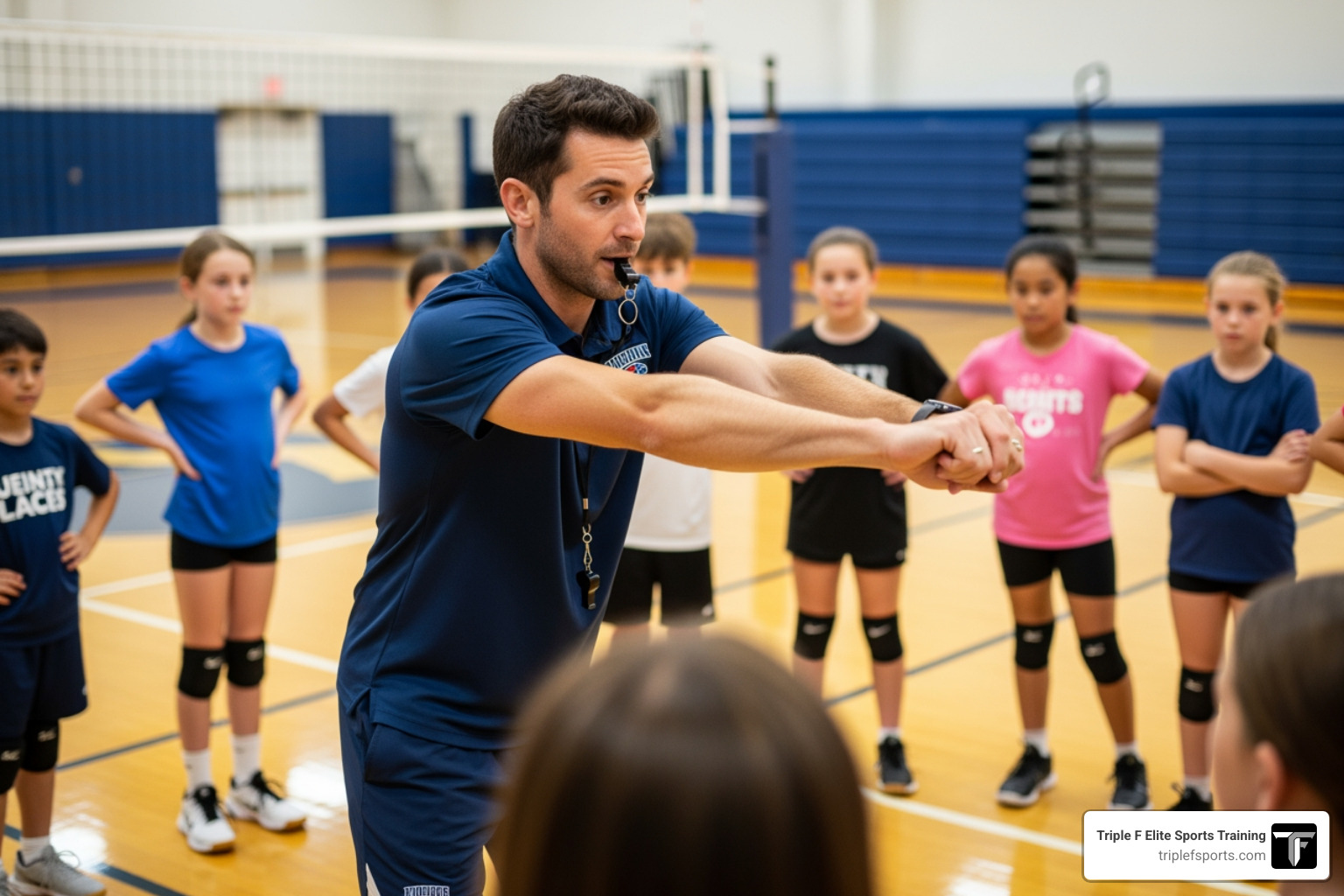
Foundational Passing Drills
Passing is often considered the most important skill in volleyball because it’s the first touch that sets up the entire offensive play. Without a good pass, it’s tough to get a good set, and without a good set, it’s tough to get a good hit. For 10-12 year olds, the focus is on creating a solid forearm platform, maintaining good body posture, and developing efficient footwork to get to the ball.
-
Partner Toss and Pass:
- How it works: Players pair up, facing each other about 10-15 feet apart. One player gently tosses the ball underhand to their partner, who then passes it back using their forearms.
- Key Focus: Emphasize getting into a ready position (knees bent, weight forward), creating a flat, stable platform with their forearms, and shrugging their shoulders to direct the ball. The toss should be easy to handle, allowing the passer to focus solely on their technique.
- Why it’s great: It allows for high repetitions in a low-pressure environment. Partners can give immediate, gentle feedback to each other, reinforcing good habits.
-
Wall Bumps:
- How it works: This is a fantastic solo drill. Players stand a few feet from a wall and pass the ball against it, aiming for consistency in height and direction.
- Key Focus: Maintain a consistent platform and body position. Encourage players to “absorb” the ball’s force by slightly bending their knees as it makes contact, then extending to send it back. The goal isn’t power, but control and rhythm.
- Why it’s great: Wall bumps build individual ball control and muscle memory without needing a partner or coach for every touch. It’s perfect for at-home practice, too!
-
Pass to a Target:
- How it works: Set up a target (a hoop, a designated spot on the floor, or even a coach) about 15-20 feet away. Players take turns passing tossed balls towards the target.
- Key Focus: Introduce the concept of aiming and directional control. Players need to adjust their body angle and platform direction to guide the ball. Emphasize moving their feet to get behind the ball before forming their platform.
- Why it’s great: This drill adds an element of purpose and accuracy, preparing players for passing to a setter in a game situation. It helps them understand the relationship between their body angle and the ball’s trajectory.
Beginner Setting Drills
Setting is the art of precisely placing the ball for an attacker. For 10-12 year olds, the focus is on developing soft, controlled hands, a proper hand shape, and using their legs to generate power and height.
-
Partner Setting:
- How it works: Two players face each other, 5-10 feet apart. One player tosses the ball high to their partner, who then sets it back.
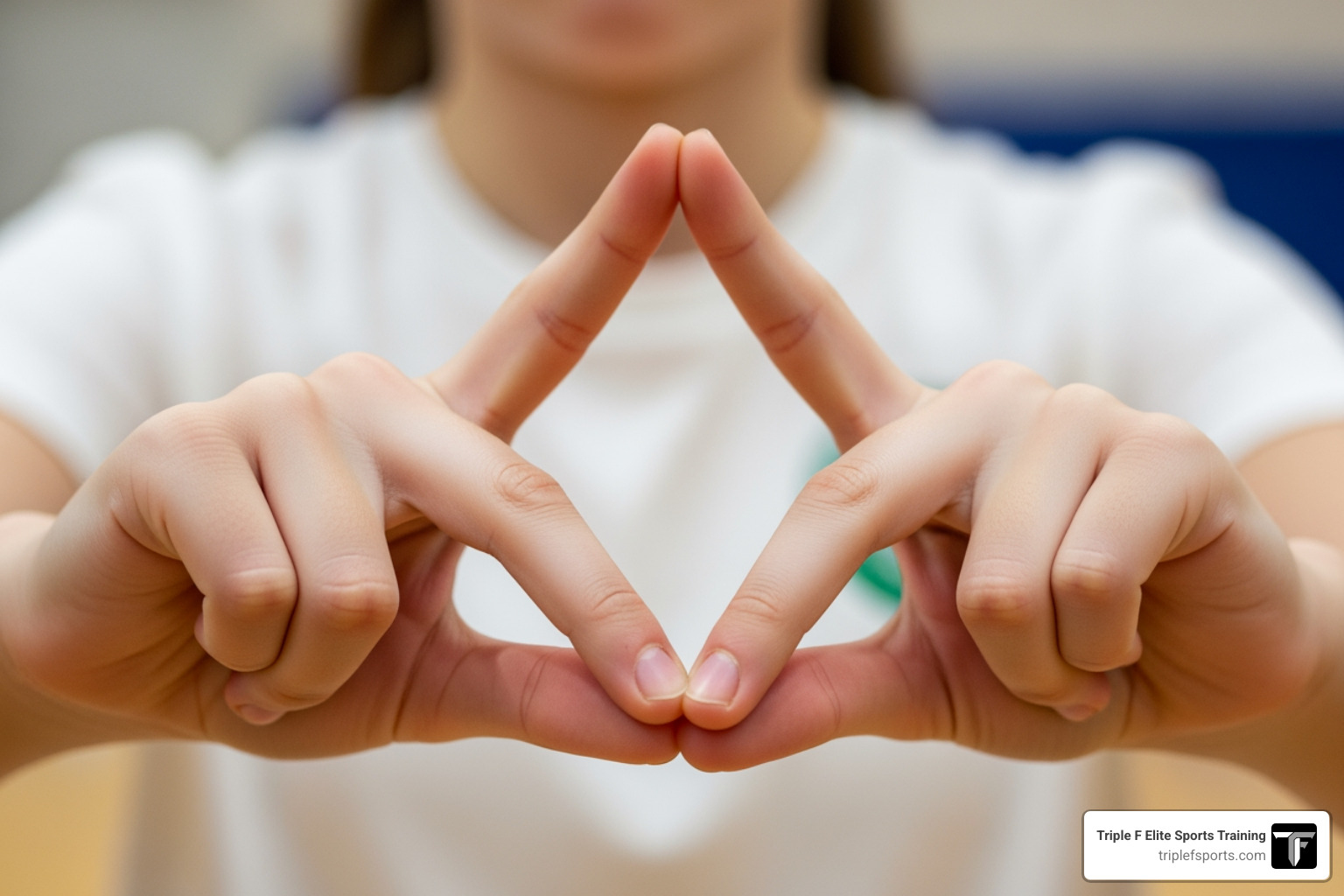
- Key Focus: Emphasize forming a “diamond” or “triangle” with their thumbs and index fingers, positioned above their forehead. They should push up with their legs and extend their arms fully, keeping their hands open and soft. The goal is a high, soft set.
- Why it’s great: This drill allows players to get many repetitions of the setting motion in a controlled environment, focusing on the feel of the ball and the correct hand contact.
-
Wall Sets:
- How it works: Players stand close to a wall (1-2 feet) and set the ball straight up against it, aiming for consistent height and touch.
- Key Focus: Maintaining the correct hand shape and using only their fingers and wrists for control. The closer they are to the wall, the more precise their touch needs to be.
- Why it’s great: Like wall bumps, wall sets are excellent for individual practice, building finger strength and touch control. It’s a fantastic way to improve consistency without needing a partner.
-
Set to a Target:
- How it works: Set up a target (a hula hoop, a spot on the floor, or a coach) about 10-15 feet from the player. A coach or partner tosses a ball to the player, who then sets it towards the target.
- Key Focus: Combining the correct setting technique with directional control. Encourage players to “square up” to their target before setting, using their feet to get into position.
- Why it’s great: This drill introduces the strategic element of setting—placing the ball where an attacker can hit it. It helps young players develop court awareness and decision-making skills.
Key Serving Drills
Serving is the only skill in volleyball where a player has complete control over the ball to start a rally. For 10-12 year olds, consistency and proper contact are key, whether they’re learning an underhand or an overhand serve.
-
Underhand Serve:
- How it works: Players stand at the serving line (or closer, if needed) and practice hitting the ball with an underhand swing.
- Key Focus: Hold the ball out in front with one hand, swing the other arm like a pendulum, and make contact with the flat, firm part of the hand or fist. Emphasize stepping forward with the opposite foot as they swing. The goal is to get the ball over the net consistently.
- Why it’s great: This is the easiest serve to learn and provides immediate success, building confidence for young players. It establishes the fundamental concept of contacting the ball to send it over the net.
-
Overhand Toss Practice:
- How it works: Players stand and practice tossing the ball consistently to the same spot above their hitting shoulder, without actually hitting it. They should catch the ball or let it bounce.
- Key Focus: The toss is the foundation of an effective overhand serve. It should be consistent in height, arc, and placement. Encourage players to toss the ball high enough so they can get their hitting arm fully extended to make contact.
- Why it’s great: This drill isolates the most challenging part of the overhand serve, allowing players to master the toss before adding the hitting motion. We often joke that a good toss is half the serve!
-
Serving to Zones:
- How it works: Divide the opposing court into zones (e.g., left, middle, right, or specific areas). Players practice serving, trying to land the ball in designated zones.
- Key Focus: Introduce strategy and aiming. For underhand serves, players can adjust their body angle. For overhand serves, the toss and arm swing direction become crucial.
- Why it’s great: This drill adds a competitive and strategic element to serving, making it more engaging than simply trying to get the ball over. It prepares them for game situations where serving to weak spots or specific players is advantageous. At Triple F Elite Sports Training, we love to see the gears turning as young athletes start to think strategically!
Keeping It Fun: How to Gamify Practice
Let’s be honest, even the most effective volleyball drills for 10-12 year olds can become monotonous if not presented in an engaging way. This age group thrives on interaction, challenge, and a sense of play. That’s why at Triple F Elite Sports Training, we integrate gamification into our practices. Making drills feel like games keeps energy levels high, fosters friendly competition, and reinforces teamwork without players even realizing they’re working hard!
One of the best ways to keep young athletes engaged is through friendly competition. Simple challenges, like “who can make 5 passes in a row to the target?” or “which team can get the most successful serves in 2 minutes?” can transform a routine drill into an exciting contest. These mini-competitions not only make practice more fun but also encourage players to push themselves and focus on precision. We always emphasize that the competition is about personal improvement and team spirit, not just winning.
Teamwork is a fundamental aspect of volleyball, and gamified drills naturally promote it. Players learn to communicate, support each other, and work towards a common goal. This is especially true in our Christ-centered environment, where we teach that lifting up your teammates is just as important as lifting the ball.
Crucially, positive reinforcement is the secret sauce. High-fives, cheers, encouraging words from coaches and teammates—these fuel young athletes’ desire to participate and improve. We celebrate effort, progress, and good sportsmanship just as much as a perfectly executed skill.
Here are a couple of our favorite gamified volleyball drills for 10-12 year olds:
-
Queen of the Court:
- How it works: This is a classic for a reason! Divide players into two teams. One team (the “Queen”) starts on one side of the net, and the other team (the “Challengers”) starts on the other. A coach initiates a rally by tossing a ball to the Queen’s side. If the Queen’s team wins the rally, they stay on the court. If the Challengers win, they become the new Queen, and the previous Queen’s team goes to the back of the Challenger line. You can play to a certain number of points or for a set time.
- Why it’s great: Queen of the Court is incredibly versatile. You can modify the rules (e.g., only allowing three touches, requiring a set before an attack) to focus on specific skills like passing, setting, or defense. It’s , highly engaging, and naturally encourages communication and strategic thinking. It’s a fantastic way to integrate all the individual skills learned into a mini-game format.
-
Pepper:
- How it works: This is a small-group or partner drill that simulates continuous play. Two or three players stand a few feet apart. One player initiates by passing the ball to another, who sets it back to the first player, who then “hits” it (often a controlled down ball or tip) to the third player, who then passes it back, and so on. The goal is to keep the ball off the ground and maintain continuous touches.
- Why it’s great: Pepper is excellent for developing consistent ball control, quick reactions, and communication within a small group. It flows naturally and helps players develop a “feel” for the game’s rhythm. It’s a fun way to practice passing, setting, and controlled attacking in a dynamic setting.
At Triple F Elite Sports Training, our youth training philosophy centers around fostering both athletic excellence and character development. We believe that through fun, challenging, and Christ-centered sports experiences, young athletes in Knoxville can truly open up their full potential. You can learn more about our youth training philosophy and how we integrate these principles into every practice. By blending effective drills with engaging game-like scenarios, we ensure that every session is not just productive, but also a joyful experience.
Frequently Asked Questions About Youth Volleyball Training
As experts in athletic development, we often get asked similar questions about training young volleyball players. Here, we address some of the most common inquiries regarding volleyball drills for 10-12 year olds, offering insights that guide our practices at Triple F Elite Sports Training in Knoxville.
How long should practice be for this age group?
For 10-12 year olds, we generally recommend practice sessions lasting between 60-90 minutes. This duration strikes a perfect balance: it’s long enough to cover essential skills and get in plenty of repetitions, but not so long that young athletes become fatigued or lose focus. Their attention spans are still developing, and we want to maximize engagement throughout the entire session.
A well-structured practice for this age group always includes a proper warm-up at the beginning to prepare their bodies for activity and reduce injury risk. This might involve light cardio, dynamic stretching, and some volleyball-specific movements. We also prioritize hydration breaks throughout the session, especially here in Tennessee where it can get warm, ensuring our athletes stay energized and healthy. Finally, a cool-down with static stretching helps with recovery and flexibility. The key is always quality over quantity; a focused, energetic 60-minute practice is far more beneficial than a distracted, overly long one.
What are the best solo volleyball drills for 10-12 year olds?
Solo drills are invaluable for building individual ball control and allowing players to get extra repetitions outside of team practice. They empower young athletes to take ownership of their development. For volleyball drills for 10-12 year olds that can be done alone, we highly recommend:
- Wall Bumps: As mentioned earlier, this is fantastic for developing a consistent passing platform and forearm control. Players can practice sending the ball against a wall and receiving it with their platform repeatedly.
- Wall Sets: Similarly, standing a few feet from a wall and setting the ball straight up against it helps refine hand shape, soft touch, and finger strength. It’s all about precision and control.
- Serving Toss Practice: This is often overlooked but incredibly important. Simply practicing the consistent toss for an overhand serve, without even hitting the ball, builds the muscle memory for a good foundation. Players can toss the ball up and catch it, or let it bounce, focusing solely on the height and placement of their toss.
These drills emphasize self-practice and repetition, which are critical for skill mastery. They allow players to work at their own pace, focusing on their specific areas for improvement, and can be done almost anywhere with a ball and a wall!
How do I adapt volleyball drills for 10-12 year olds with different skill levels?
It’s common to have a range of skill levels within any group of 10-12 year olds, from absolute beginners to those with some experience. At Triple F Elite Sports Training, our coaches are adept at adapting volleyball drills for 10-12 year olds to meet individual needs, ensuring everyone is challenged appropriately and feels successful. Here’s how we do it:
- Simplify movements: For beginners, we might break down complex movements into smaller, manageable steps. For instance, instead of a full passing drill, we might start with simply learning to form the platform and contacting a tossed ball.
- Lower the net or use modified equipment: A lower net (or even a rope strung across the court) can make serving and hitting feel more achievable for newer players. We might also use lighter, softer balls (like beach balls or trainer balls) to reduce fear of impact and make ball control easier.
- Focus on one skill at a time: Instead of trying to combine multiple skills too early, we isolate one skill (e.g., just passing, just setting) until a player gains confidence and proficiency. This helps prevent overwhelm and allows for targeted improvement.
- Individualized feedback: Our coaches provide personalized feedback, tailoring their instructions and encouragement to each child’s progress. What works for one player might not work for another, so attentive observation and customized guidance are key. We believe in nurturing each athlete’s unique journey.
- Vary the challenge: For more experienced players, we can increase the difficulty by adding more complex targets, requiring faster reactions, introducing game-like scenarios, or increasing the speed/force of the ball.
Our goal is to create an inclusive and dynamic learning environment where every child, regardless of their starting point, feels supported and motivated to grow. This individualized approach is a hallmark of our comprehensive performance training in Knoxville.
Conclusion: From First Serve to Lifelong Passion
As we’ve explored, volleyball drills for 10-12 year olds is about much more than just learning a sport. It’s about building a strong foundation, both physically and mentally, that will serve young athletes for years to come. We’ve seen how focusing on foundational passing, setting, and serving skills, combined with engaging, gamified practice methods, can transform learning into an exciting and rewarding journey.
We’ve emphasized the critical importance of proper technique for developing muscle memory, building confidence, and preventing injuries, all of which contribute to a child’s long-term athletic development. Our goal at Triple F Elite Sports Training in Knoxville is to foster a love for the game that extends far beyond the court. We believe in the power of encouragement and sportsmanship, teaching valuable life lessons alongside athletic prowess.
For us, it’s about helping young athletes find their passion, empowering them with skills, and instilling values that will make them successful in all aspects of life. Watching a child progress from their very first hesitant serve to confidently executing a perfect pass is truly one of the most rewarding experiences.
If you’re in the Knoxville area and looking for a place where your child can develop their volleyball skills in a professional, Christ-centered, and supportive environment, we invite you to experience the Triple F Elite Sports Training difference. Our dedicated coaches and comprehensive facilities are designed to help every athlete open up their full potential. We’re confident that your child will thrive in our volleyball club, learning the game while building character and confidence.
Ready to see your child “Serve Up Success” and ignite a lifelong passion for volleyball? We offer a free first session so you can experience our unique approach firsthand. Come visit our facility in Knoxville and let us help your child take their first (or next!) step in their athletic journey. Unlock your child’s potential at our Knoxville volleyball club today!