
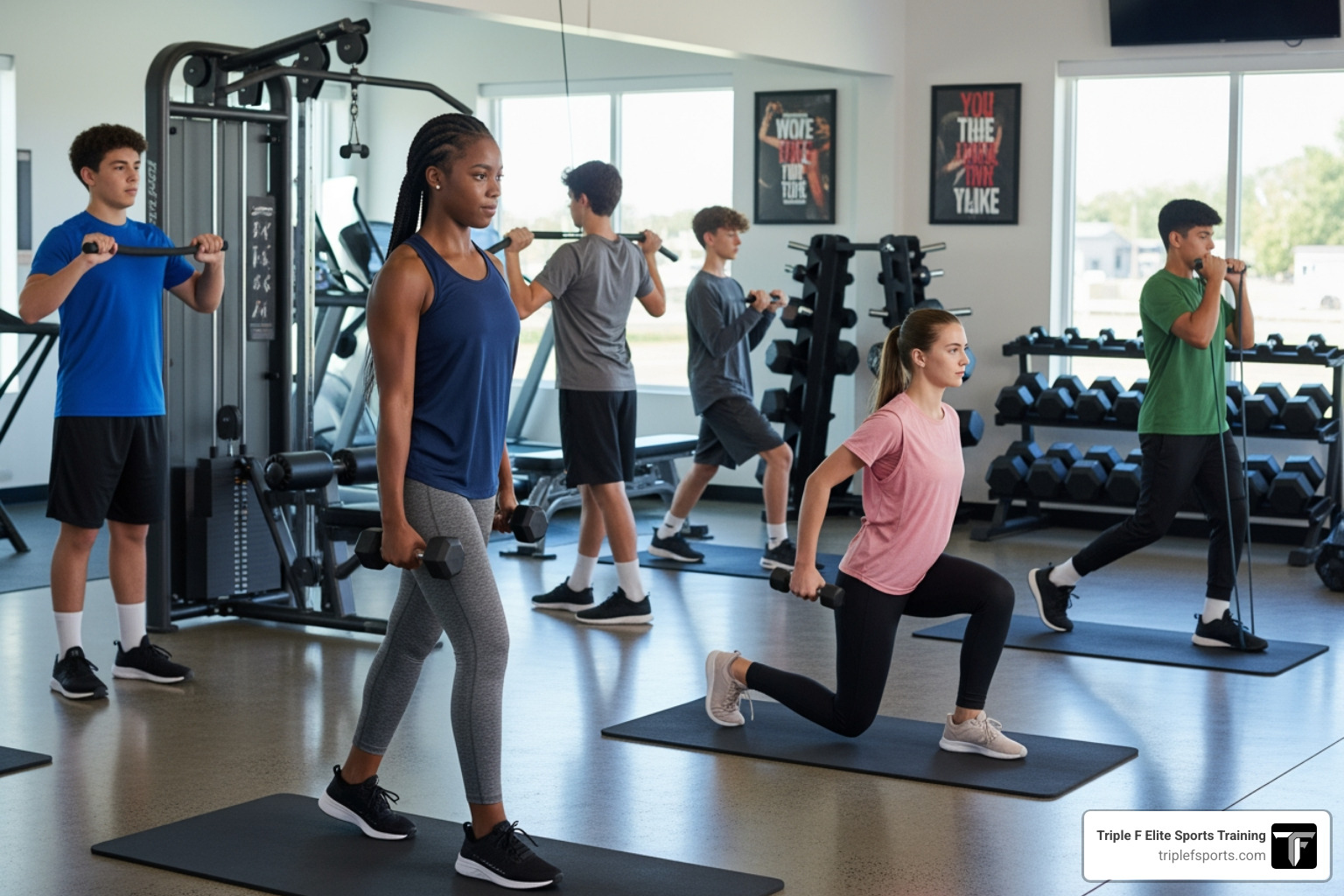
Why Resistance Training for Teens is a Game-Changer
Resistance training for teens is a scientifically-backed method to build strength, prevent injuries, and boost confidence through structured exercises using bodyweights, resistance bands, free weights, or machines. Here’s what you need to know:
Key Benefits:
- Strength Gains: 30-50% increase in strength after just 8 weeks
- Injury Prevention: Lower sports injury rates through stronger bones, tendons, and ligaments
- Safer Than You Think: Properly supervised programs have injury rates of only 0.035 per 100 participant hours—safer than many team sports
- Mental Health Boost: Improved self-esteem, body confidence, and discipline
Safety Requirements:
- Professional supervision and proper technique
- Start with bodyweight exercises before adding resistance
- Focus on 8-15 repetitions with 1-3 sets
- Train 2-3 days per week on non-consecutive days
- Avoid maximal lifts and competitive weightlifting until skeletal maturity
If you’re watching your teen struggle with confidence, wondering if strength training is safe, or confused by conflicting advice on social media, you’re not alone. Less than one in three youth are physically active on a regular basis, while obesity rates have quadrupled in adolescents over the last 30 years. The good news? Resistance training offers a proven path forward—but only when done correctly.
The fear that lifting weights will “stunt growth” or damage young bodies has been thoroughly debunked by modern research. In fact, studies show that well-supervised resistance training programs are safer than playing soccer, football, or basketball. The real risks come from improper form, lack of supervision, and programs designed without understanding how young bodies develop.
Your teen’s body is primed for strength development. Research demonstrates that youth and adolescents show greater strength gains compared to adults when starting resistance training, thanks to neural adaptations and the synergistic effects of natural growth. Between ages 8 and 11, children’s bodies are especially ready to develop strength, speed, agility, and coordination—making this a golden window for building foundational athletic skills.
But strength training isn’t just about muscles. Teens who participate in properly designed programs experience improved body composition, better cardiovascular health, stronger bones with higher bone strength index (BSI), and a significantly lower risk of fractures. For overweight adolescents, resistance training offers a less intimidating entry point to physical activity, with shorter exercise bouts and rest periods that improve compliance compared to traditional aerobic training.
The mental health benefits are equally compelling. Young athletes who engage in supervised resistance training develop improved self-efficacy, body positivity, and confidence—benefits similar to those seen in team sports participation. They learn discipline, goal-setting, and the value of consistent effort, building habits that extend far beyond the weight room.
The challenge? Navigating the flood of misinformation from uncredentialed social media influencers who promote programs not optimized for growing bodies. These programs can lead to frustration, ineffective workouts, and even dangerous practices like supplement misuse or body dysmorphia. The solution is understanding the fundamental principles of safe, effective resistance training designed specifically for adolescent development.
As Kevin O’Shea, a Certified Strength and Conditioning Specialist with years of experience coaching high school athletes and developing youth training programs, I’ve seen how proper resistance training for teens transforms not just their athletic performance, but their entire approach to health and fitness. At Triple F Elite Sports Training, we’re committed to providing young athletes with evidence-based programs that prioritize safety, proper progression, and long-term development.
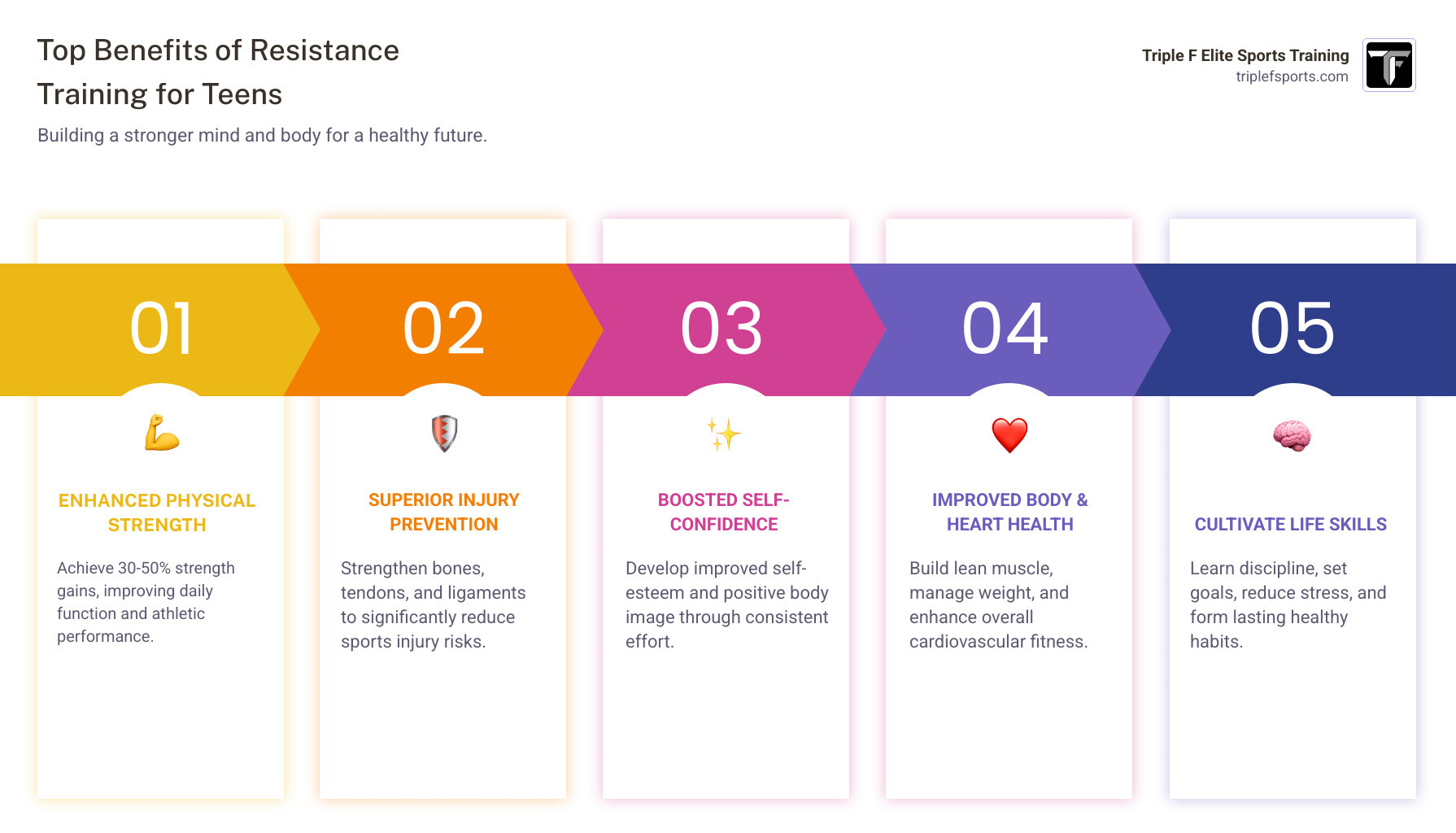
The “Why”: Unpacking the Benefits of Resistance Training for Teens

When we talk about resistance training for teens, we’re not just discussing bigger muscles. We’re talking about a holistic approach to physical and mental development that can lay a foundation for a healthier, more confident future. The benefits extend far beyond the gym, impacting academic performance, social interactions, and overall well-being.
One of the most striking findings from research is that youth and adolescents starting resistance training show increased gains in strength compared to adults undergoing initial resistance training. This is due to the synergistic effects of neural adaptations and central nervous system maturation during these formative years. This means teens are uniquely positioned to benefit significantly from a well-structured program.
Physical Gains and Injury Resilience
The physical advantages of resistance training for teens are numerous and well-documented:
- Increased Muscle Strength: Studies consistently show that well-designed strength training programs of at least 8 weeks’ duration can increase strength by a remarkable 30% to 50%. This isn’t just about lifting heavy objects; it translates to improved performance in sports and daily activities.
- Improved Athletic Performance: Stronger muscles mean greater power, speed, agility, and coordination. Whether your teen is on the soccer field, basketball court, or track, improved strength directly contributes to better jumps, faster sprints, and more efficient movement patterns. We see this in our specialized Sport Skill training at Triple F Elite Sports Training, where foundational strength underpins all athletic development.
- Stronger Bones: Resistance training plays a crucial role in bone health. It increases bone strength index (BSI) and mineral content, which is vital during adolescence when bones are still developing. This increased BSI is correlated with a decreased risk of fracture, protecting teens from common sports-related bone injuries. Soccer players with 4+ hours of resistance training per week, for instance, have shown significantly greater gains in bone content.
- Stronger Tendons and Ligaments: Beyond bones, resistance training strengthens the connective tissues that support joints. This leads to increased tendon stiffness and overall joint stability, making teens more resilient to the stresses of sports and physical activity.
- Reduced Sports Injury Rates: This is a big one! Contrary to outdated beliefs, properly supervised resistance training for teens actually decreases injury rates. By strengthening accessory muscles and improving overall body control, it helps prevent injuries during practice and competition. One study found the rate to be around 0.035 injuries per 100 participant hours in resistance training, significantly lower than the injury rates seen in contact sports like rugby (0.800 per 100 participant hours).
- Improved Body Composition: Research has shown that teens aged 13 to 19 who lift weights have better body composition, meaning a healthier ratio of muscle to fat. This is particularly beneficial for managing weight and promoting long-term health.
- Better Cardiovascular Health: Regular participation in strength training improves cardiac (heart) health, body composition, and bone mineral density, and decreases cholesterol levels. It’s a comprehensive boost for their entire system.
The Department of Health and Human Services recommends that school-age children get 60 minutes or more of daily activity, and as part of this, muscle- and bone-strengthening exercises are suggested at least three days a week. Resistance training for teens fits perfectly into these guidelines. For further scientific backing on youth athletic development, you can explore this research.
Mental Strength and Confidence
The benefits of resistance training for teens aren’t just skin deep. The mental and emotional gains are just as, if not more, impactful:
- Improved Self-Concept and Body Positivity: Engaging in a physical activity that visibly improves strength and fitness can dramatically boost a teen’s self-perception. For overweight and obese adolescents, studies have shown significant increases in physical strength and self-esteem after resistance training, even if body composition changes aren’t drastic initially. This positive feedback loop fosters a healthier body image and sense of accomplishment.
- Discipline and Goal Setting: Learning to follow a structured workout program, track progress, and work towards specific strength goals instills invaluable discipline. Teens learn the importance of consistency and perseverance, skills that transfer to academics and other areas of life.
- Stress Reduction: Like other forms of exercise, resistance training can be a fantastic outlet for stress and anxiety. The focus required during a workout can provide a mental break, and the endorphins released contribute to an improved mood.
- Building Healthy Habits for Life: Starting resistance training for teens early helps cement physical activity as a normal, enjoyable part of life. This early exposure to structured exercise, proper form, and healthy habits increases the likelihood of lifelong fitness adherence, combating the declining physical activity rates we see in youth.
Safety First: Mitigating Risks and Debunking Myths
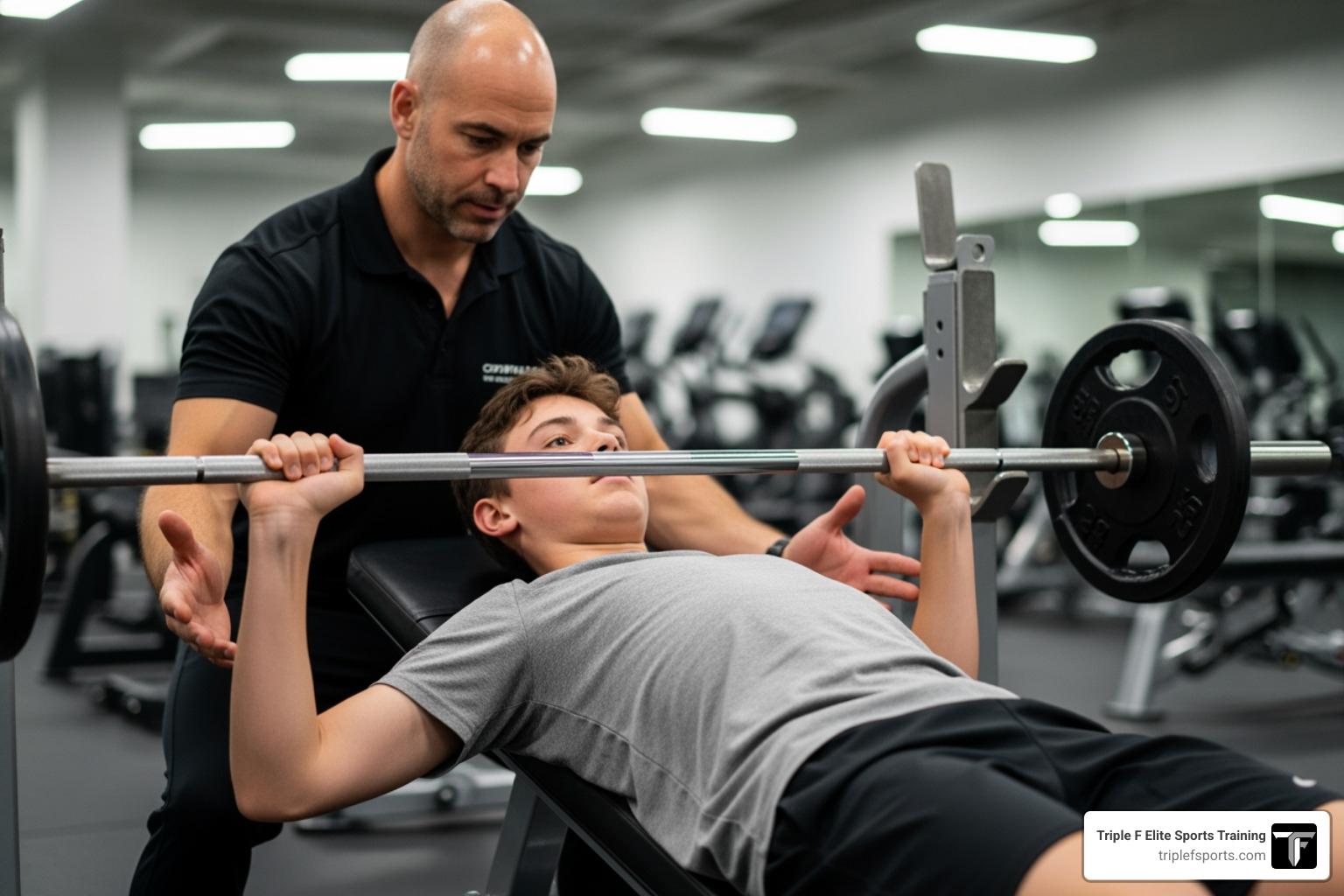
When we talk about resistance training for teens, the first question many parents ask is, “Is it safe?” We understand these concerns. Historically, there were fears that weightlifting could “stunt growth” or cause damage to growth plates. However, modern scientific research has largely debunked these myths.
- Growth Plate Safety: Growth plates are areas of cartilage at the ends of long bones that eventually harden into bone. The concern was that heavy lifting could damage these plates, leading to stunted growth or deformities. However, extensive prospective studies with proper supervision have demonstrated no increased incidence of physeal (growth plate) injury in children weightlifting. In fact, when done correctly, resistance training for teens is considered safer for growth plates than many popular youth sports like soccer, football, and basketball. The injuries that were reported in older studies were almost always linked to improper form, excessive weight, or lack of supervision, not the activity itself.
- Debunking the “Stunting Growth” Myth: Let’s be clear: supervised, age-appropriate resistance training for teens does not stunt growth. Instead, by strengthening bones and muscles, it supports healthy development. The belief stemmed from isolated incidents of injury due to improper practices, not from the physiological effects of resistance training itself.
The real risks associated with resistance training for teens stem from:
- Improper Form: Poor technique is the leading cause of injury. Lifting with incorrect posture or movement patterns places undue stress on joints, muscles, and connective tissues.
- Overtraining: Doing too much, too soon, or without adequate rest can lead to fatigue, decreased performance, and increased injury risk.
- Unsupervised Lifting: Without a knowledgeable guide, teens are more likely to use improper form, attempt weights that are too heavy, or perform exercises unsafely.
This is why professional guidance is not just recommended, it’s essential. At Triple F Elite Sports Training, we emphasize comprehensive Youth Assessments to understand each teen’s individual needs and ensure a safe starting point.
Key Principles of Safe Resistance Training for Teens
To ensure a safe and effective experience, we adhere to several key principles:
- Maturity Over Age: While some general guidelines exist, the decision to start resistance training for teens should be based more on a child’s emotional maturity and ability to follow directions than their chronological age. Most young athletes can maintain proper balance and postural control by around 7 or 8 years of age, making this a suitable time to begin basic bodyweight exercises.
- Proper Supervision: A qualified adult, such as a certified strength and conditioning specialist (CSCS), coach, or personal trainer experienced with youth, should always supervise training sessions. A coach-to-student ratio of 1:10 or less is ideal for ensuring individual attention and safety.
- Technique Over Weight: This is perhaps the most crucial rule. Perfecting form with bodyweight or very light resistance before adding significant weight is paramount. We always prioritize flawless movement patterns over the amount of weight lifted.
- Gradual Progression: Start light and increase resistance incrementally, typically by no more than 5-10% per week, and only when the teen can complete the prescribed repetitions with perfect form. Maximal lifts (attempting to lift the absolute heaviest weight possible for one repetition, or 1RM) are generally discouraged until skeletal maturity is reached.
- Listening to Your Body: Teens should be taught to differentiate between healthy muscle soreness and pain. If any sharp pain, joint discomfort, or a “pop” occurs, they should stop immediately and report it to their supervisor or a trusted adult. Our Physical Therapy services can provide expert guidance in these situations.
- Adequate Rest and Recovery: Muscles grow and repair during rest. Teens should train major muscle groups on non-consecutive days, allowing at least one full day (48-72 hours) of rest between sessions for the same muscle groups.
General Strength Training vs. Powerlifting and Bodybuilding
It’s important to understand the distinctions between different forms of resistance training, as not all are appropriate for growing bodies.
| Training Type | Primary Goal | Intensity & Focus | Safety for Teens |
|---|---|---|---|
| General Strength Training | Overall fitness, functional strength, injury prevention, athletic development | Light to moderate weights, bodyweight, proper form, controlled movements, endurance | Highly Recommended: Safe and beneficial when supervised and progressive. |
| Powerlifting | Lifting maximum weight in three specific lifts (squat, bench press, deadlift) | Maximal loads, 1-rep max attempts | Not Recommended: High risk of injury to growth plates and soft tissues due to maximal loads. |
| Bodybuilding | Increasing muscle size and definition, aesthetic focus | High volume, moderate weights, isolation exercises, often extreme diets | Not Recommended: Focus on aesthetics can lead to unhealthy body image and practices, maximal lifts still a risk. |
For teens, our focus is squarely on general strength training. This emphasizes functional strength – the ability to perform everyday movements and sport-specific actions efficiently and safely – rather than simply lifting the heaviest weight possible or achieving extreme muscle size.
We strongly advise against competitive powerlifting, Olympic lifting, or bodybuilding for children and adolescents until they reach skeletal maturity. These activities often involve maximal lifts or ballistic movements that can place excessive stress on still-developing bones and joints.
Furthermore, we must address the dangers of performance-enhancing drugs, particularly anabolic steroids. These substances carry severe health risks, including stunted growth (ironically!), liver damage, heart problems, and significant psychological side effects. We advocate for a natural, healthy approach to development, prioritizing proper training, nutrition, and rest.
Your Blueprint for a Safe and Effective Program
Now that we understand the “why” and “how” of safe resistance training for teens, let’s build a blueprint for a successful program. The key is to start smart, progress gradually, and make it enjoyable!
Starting with Bodyweight and Foundational Movements
Before any weights are introduced, mastering bodyweight exercises is crucial. This allows teens to learn proper movement patterns, build core stability, and develop body awareness without the added risk of external loads. Foundational movements are the building blocks for all more complex exercises.
- Warm-ups and Cool-downs: Every session should begin with a dynamic warm-up (5-10 minutes) to increase blood flow, heart rate, and prepare muscles for activity. This could include jumping jacks, arm circles, leg swings, and light jogging. The session should conclude with a cool-down (10-15 minutes) involving light aerobic activity and gentle static stretching to improve flexibility and aid recovery.
- Creating a Balanced Routine: A comprehensive fitness program for teens should include more than just resistance training. Incorporate cardiovascular exercise (like running, swimming, or biking) and flexibility work (stretching, foam rolling) to create a well-rounded athlete.
Here are 10 Recommended Starter Exercises that form an excellent foundation for resistance training for teens:
- Bodyweight Squats: Stand with feet shoulder-width apart, chest up. Lower your hips as if sitting in a chair, keeping your back straight.
- Push-ups (on knees or toes): Start in a plank position, lower your chest towards the floor, then push back up.
- Plank: Hold a rigid body position, supported on your forearms and toes, engaging your core.
- Lunges: Step forward with one leg, lowering your hips until both knees are bent at approximately a 90-degree angle.
- Bird-Dog: On hands and knees, extend one arm forward and the opposite leg backward, keeping your core stable.
- Glute Bridge: Lie on your back with knees bent, feet flat. Lift your hips off the floor until your body forms a straight line from shoulders to knees.
- Resistance Band Rows: Anchor a resistance band, grab the ends, and pull them towards your torso, squeezing your shoulder blades.
- Resistance Band Pull-Aparts: Hold a resistance band with both hands in front of you, arms extended. Pull the band apart by squeezing your shoulder blades together.
- Calf Raises: Stand tall and slowly raise up onto the balls of your feet, then lower back down.
- Wall Sit: Lean against a wall with your knees bent at a 90-degree angle, holding the position as if sitting in an invisible chair.
How to Structure Your Workouts
Once basic movements are mastered, we can structure a progressive resistance training for teens program:
- Frequency: Aim for 2-3 days per week. This allows sufficient time for muscle recovery and adaptation.
- Non-Consecutive Days: Schedule workouts on non-consecutive days (e.g., Monday, Wednesday, Friday) to ensure adequate rest for muscle groups.
- Duration: The actual lifting portion of the workout should last between 20-30 minutes. Including warm-ups and cool-downs, a full session might be 30-45 minutes.
- Sets and Reps: For beginners, 1-2 sets of 10-15 repetitions per exercise are a great starting point. As strength improves, teens can progress to 2-3 sets of 8-15 repetitions. Advanced teens might work with 5 sets of 6-10 repetitions. The focus is always on controlled movements and good form.
- Working All Major Muscle Groups: A balanced program should include exercises that target all major muscle groups: arms, legs, back, chest, shoulders, and core. This ensures comprehensive development and helps prevent muscular imbalances.
Fueling for Success: The Role of Nutrition and Hydration
Just like building a house requires quality materials, building a strong, healthy body requires proper fuel. Nutrition and hydration are non-negotiable components of effective resistance training for teens.
- Importance of a Balanced Diet: A diet rich in whole foods – fruits, vegetables, lean proteins, and complex carbohydrates – provides the essential nutrients for growth, energy, and recovery.
- Macronutrients for Growth: Teens, especially those who are physically active, have higher caloric and macronutrient needs.
- Protein for Muscle Repair: Protein is the building block of muscle. Adequate protein intake is crucial for muscle repair and growth after resistance training. Lean meats, poultry, fish, eggs, dairy, beans, and lentils are excellent sources.
- Complex Carbs for Energy: Carbohydrates are the body’s primary fuel source. Complex carbohydrates (like whole grains, oats, brown rice, and sweet potatoes) provide sustained energy for workouts and replenish glycogen stores afterward.
- Healthy Fats: Essential fats (found in avocados, nuts, seeds, and olive oil) are vital for hormone production, nutrient absorption, and overall health.
- Staying Hydrated: Water is critical for all bodily functions, including regulating body temperature, transporting nutrients, and lubricating joints. Teens should drink plenty of water throughout the day, especially before, during, and after workouts.
- Why Supplements Are Unnecessary: For most teens, performance-enhancing supplements are not only unnecessary but can also be harmful. A balanced diet provides all the nutrients needed to support growth and progress in resistance training for teens. We strongly advise against any supplements that promise quick fixes or extreme results, as they often come with health risks and can foster an unhealthy reliance. At Triple F Elite Sports Training, we offer comprehensive Nutrition programs to educate teens and parents on how to fuel their bodies optimally through whole foods.
Frequently Asked Questions about Teen Strength Training
We know you have questions, and we’re here to provide clear, evidence-based answers about resistance training for teens.
At what age can a teen start resistance training?
The proper age for a teen to start resistance training for teens is less about a specific number and more about their individual readiness. We focus on:
- Emotional and Physical Readiness: Can they follow instructions, understand the importance of proper form, and listen to their body?
- Ability to Follow Directions: This is a key indicator. If a teen can consistently pay attention and replicate movements accurately, they are likely ready for basic training.
- General Guideline of Age 7-8 for Basic Exercises: Most young athletes can maintain proper balance and postural control by around this age. At this stage, training should focus on bodyweight exercises and developing fundamental movement patterns, making it a safe and beneficial starting point.
- Importance of Starting with Bodyweight and Mastering Form: Regardless of age, the journey should always begin with mastering exercises using only their body weight. Once form is perfect, light resistance can be gradually introduced.
How can teens spot bad fitness advice on social media?
The digital world is awash with fitness information, but not all of it is credible or safe for growing bodies. Here’s how teens can differentiate between credible advice and potentially harmful information:
- Uncredentialed Influencers: Be wary of advice from individuals who lack recognized certifications (like CSCS, ACE, ACSM) or formal education in exercise science or sports medicine. A flashy physique doesn’t equal expert knowledge, especially concerning adolescent development.
- Promises of Quick Fixes: If it sounds too good to be true, it probably is. Rapid muscle gain, extreme weight loss, or instant performance boosts are unrealistic and often promoted through unsafe methods or products.
- Promotion of Unsafe Exercises or Supplements: Any advice encouraging maximal lifts without proper supervision, dangerous exercise techniques, or the use of performance-enhancing supplements should be immediately questioned and avoided.
- Importance of Seeking Advice from Certified Professionals: Always cross-reference information with reputable sources like the American Academy of Pediatrics (AAP), the National Strength and Conditioning Association (NSCA), or certified coaches and trainers experienced with youth. At Triple F Elite Sports Training, our Skilled Based Training programs are designed and led by certified experts who prioritize your teen’s safety and long-term development.
What are the best resources to get started?
Finding the right guidance is crucial for a safe and effective resistance training for teens journey. Here are some excellent resources:
- School Sports Coaches: Many school coaches have experience in basic strength and conditioning for their athletes.
- Certified Personal Trainers (CSCS): Look for trainers who hold certifications from nationally recognized organizations like the National Strength and Conditioning Association (NSCA), the American Council on Exercise (ACE), or the American College of Sports Medicine (ACSM). These professionals have specialized knowledge in designing programs, especially for youth.
- Youth-Focused Training Programs: Facilities like Triple F Elite Sports Training offer programs specifically designed for young athletes, focusing on age-appropriate exercises, proper form, and safe progression. Our Youth Memberships provide access to expert-led training custom to teen development.
- Reputable Health Organizations: Organizations like the American Academy of Pediatrics (AAP) and the National Strength and Conditioning Association (NSCA) provide evidence-based guidelines and position statements on youth resistance training.
Conclusion
We’ve explored how resistance training for teens is not just safe, but incredibly beneficial for their physical health, athletic performance, and mental well-being. From building stronger bones and reducing injury risk to boosting self-esteem and fostering lifelong healthy habits, the advantages are clear when the training is done correctly.
The key takeaways are simple: prioritize safety through proper form, expert supervision, and gradual progression. Understand that general strength training is distinct from powerlifting or bodybuilding, and that for teens, the former is the path to choose. Fuel the body with good nutrition and hydration, and always be critical of fitness advice found online.
At Triple F Elite Sports Training in Knoxville, we are dedicated to helping young athletes build a strong foundation for a lifetime of health and performance through our Christ-centered approach. We believe in open uping each athlete’s full potential by providing comprehensive performance training, physical therapy, and expert guidance. We invite you to experience the difference for yourself.
Are you ready to empower your teen with the strength, confidence, and resilience they need to thrive?