

Why 1 on 1 Fitness Coaching Is the Fastest Path to Real Results
1 on 1 fitness coaching is a personalized training approach where a certified coach works exclusively with you — building a custom program around your goals, fitness level, and lifestyle.
Here’s what it gives you at a glance:
- Personalized programming — workouts built for your body, not a generic template
- Expert form coaching — real-time corrections that prevent injury and improve performance
- Accountability — consistent check-ins that keep you on track past week 3
- Faster progress — no wasted sessions, every workout has a purpose
- Adaptability — your plan adjusts as you improve or face setbacks
Whether you’re a youth athlete chasing your next level, an adult returning after years away from the gym, or someone who’s been grinding for months without results — 1-on-1 coaching cuts through the guesswork.
Many people work out consistently for years and still don’t see the progress they expect. The missing piece is almost never effort. It’s direction.
I’m Kevin O’Shea, a Certified Strength and Conditioning Specialist with a background in athletic development, high school football coaching, and behavioral health — and I’ve seen how 1 on 1 fitness coaching transforms not just bodies, but mindsets. In this guide, I’ll walk you through everything you need to know to find the right coach and make it work for you.
Easy 1 on 1 fitness coaching word list:
Why 1 on 1 Fitness Coaching Outperforms Group Classes
If you’ve ever stood in the back of a crowded HIIT class wondering if your knees were supposed to cave in during a lunge, you’ve experienced the primary limitation of group fitness: the “one-size-fits-all” approach. While group classes offer energy and community, they often lack the precision required for significant physical transformation.
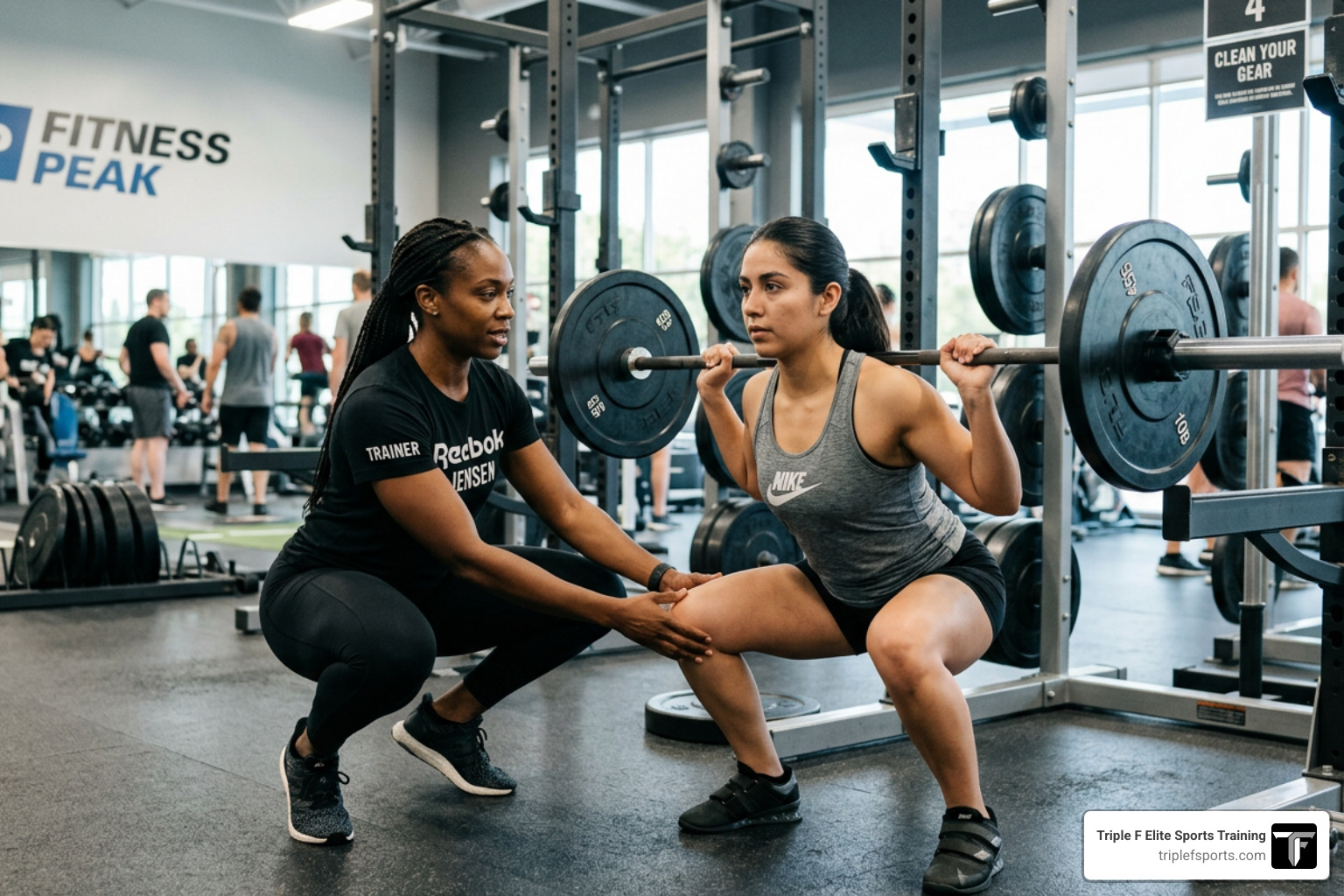
In 1 on 1 fitness coaching, the spotlight is entirely on you. This undivided attention means your coach notices the smallest details—a slight rounding of the back during a deadlift or a shallow breath during a heavy press—and corrects them instantly. This doesn’t just prevent injury; it ensures you are actually recruiting the muscles you’re trying to build.
Furthermore, a personal coach provides a personalized roadmap. In a group setting, the workout is written for the “average” person in the room. But you aren’t average. You might have a desk job that makes your hip flexors tight, or a shoulder injury from high school baseball. 1 on 1 fitness coaching adapts the exercise to your anatomy, not the other way around.
| Feature | 1-on-1 Coaching | Group Fitness | DIY Online Programs |
|---|---|---|---|
| Customization | 100% Tailored | Minimal | None (Generic) |
| Form Correction | Real-time, constant | Occasional/None | Self-monitored |
| Accountability | High (Appointment based) | Moderate (Social) | Low (Self-driven) |
| Injury Risk | Lowest (Expert oversight) | Moderate | High (No oversight) |
| Progress Tracking | Detailed Biometrics | General | Manual |
For those looking for adult training in Knoxville, the shift from a generic class to a private session is often the catalyst that finally breaks a long-term plateau. It moves you from “just sweating” to “training with intent.”
The Core Benefits of Personalized Training
The benefits of having a coach in your corner extend far beyond the hour you spend in the gym. It is about the integration of exercise science, behavioral psychology, and lifestyle management.
Injury Prevention and Longevity The most common reason people quit the gym isn’t laziness—it’s pain. Pushing too far, too soon, or with poor mechanics leads to the “yo-yo cycle” where you train for three weeks and then sit out for three weeks with a tweaked back. A qualified coach understands the science of progression. They know when to push you and, more importantly, when to pull back. By focusing on mobility and stability alongside strength, we ensure you stay in the game for the long haul.
The Power of Habit Building We’ve all seen the “all-or-nothing” mentality. People start a program on Monday with 100% intensity and burn out by Friday. 1 on 1 fitness coaching focuses on sustainable habits. We help you navigate the “messy middle” of a fitness journey—the weeks where motivation dips and life gets busy. Having a reliable partner who understands your lifestyle challenges makes consistency much easier to maintain.
Scientific research consistently shows that personalized guidance leads to better health outcomes. For instance, structured physical activity is linked to improved cardiovascular health and mental well-being, as noted in discussions on how cycling can improve overall health. When you add a coach to that equation, the adherence rates skyrocket.
For those recovering from specific setbacks or looking to optimize their physical health, our sports medicine resources provide a deeper look into how professional oversight keeps athletes performing at their peak.
Tailored Programming in 1 on 1 Fitness Coaching
A true coaching program isn’t just a list of exercises; it’s a living document. We use biofeedback—data like sleep quality, stress levels, and heart rate—to adjust your training in real-time. If you had a stressful day at work and only slept four hours, hitting a personal record on the squat rack might not be the best move for your central nervous system. A coach makes that call for you.
We also offer specialized environments, such as women’s only personal training, to ensure every client feels comfortable and supported in their specific training environment. This level of customization ensures that the gym remains a place of empowerment, not intimidation.
Addressing Specific Needs and Recovery
One of the greatest strengths of 1 on 1 fitness coaching is its ability to handle “outlier” cases that group classes simply cannot accommodate.
- Injury Recovery (The ACL Bridge): Transitioning from physical therapy back to full-speed sports is a dangerous gap. Our coaching helps bridge that gap, focusing on stability, power, and confidence-building to prevent re-injury.
- Senior Fitness: At age 60, 70, or beyond, the goals shift toward balance, bone density, and functional independence. A coach provides the safety net needed to lift weights effectively at any age.
- Endurance Sports: Whether you are training for your first 5K or a triathlon, a coach can balance your strength work with your road miles to ensure you don’t overtrain.
- Youth Development: For younger athletes, we focus on foundational movements and “pre-hab” to set them up for a lifetime of success. Explore more about our youth training for ages 12 to 18.
How to Choose the Right Coach for Your Goals
Choosing a coach is a significant decision. You aren’t just hiring an instructor; you’re choosing a partner in your health. The “best” coach on paper might not be the best coach for you if your personalities don’t mesh.
Coaching Styles and Fit Do you respond better to a “drill sergeant” who demands perfection, or a “cheerleader” who focuses on positive reinforcement? Some coaches are highly technical and love explaining the “why” behind every movement, while others focus more on the psychological side of motivation. During your initial consultation, pay attention to how they listen. A great coach should ask more questions than they give answers in the beginning.
Experience and Specialization If your goal is to increase your vertical jump for basketball, you probably shouldn’t hire a coach who specializes exclusively in marathon prep. Look for someone whose experience aligns with your specific objectives. In Knoxville, we emphasize a Christ-centered approach to athletic development, focusing on the whole person—body, mind, and spirit.
When considering the long-term commitment, it’s helpful to look at different adult memberships to see which structure fits your schedule and budget.
What to Look for in 1 on 1 Fitness Coaching Experts
When vetting a potential coach, look for the following “green flags”:
- Credible Certifications: Look for organizations like NASM, NSCA, or ACSM. These require rigorous testing and continuing education.
- Assessment-First Approach: If a trainer tries to put you under a heavy barbell on day one without checking your mobility or history, that’s a red flag. A professional starts with an assessment.
- Communication: They should be accessible and responsive. Whether it’s through a dedicated app or weekly check-ins, you should never feel like you’re “guessing” what to do next.
- Education-Minded: A great coach wants to teach you how to eventually do this yourself. They should be explaining the mechanics so you build “gym IQ” over time.
Understanding the Investment: Costs and Structure
Personal training is an investment in your future self. While the price point is higher than a standard gym membership, the “cost per result” is often much lower because you aren’t wasting months on ineffective routines.
Pricing Factors In the industry, rates can vary wildly. Some virtual sessions start as low as $30, while premium, in-person 1 on 1 fitness coaching in specialized facilities can range from $75 to over $125 per session. Factors that influence this include:
- Session Length: Typically 30 or 60 minutes.
- Trainer Expertise: High-level specialists often command higher rates.
- Commitment: Many coaches offer discounts for 3-month or 6-month commitments.
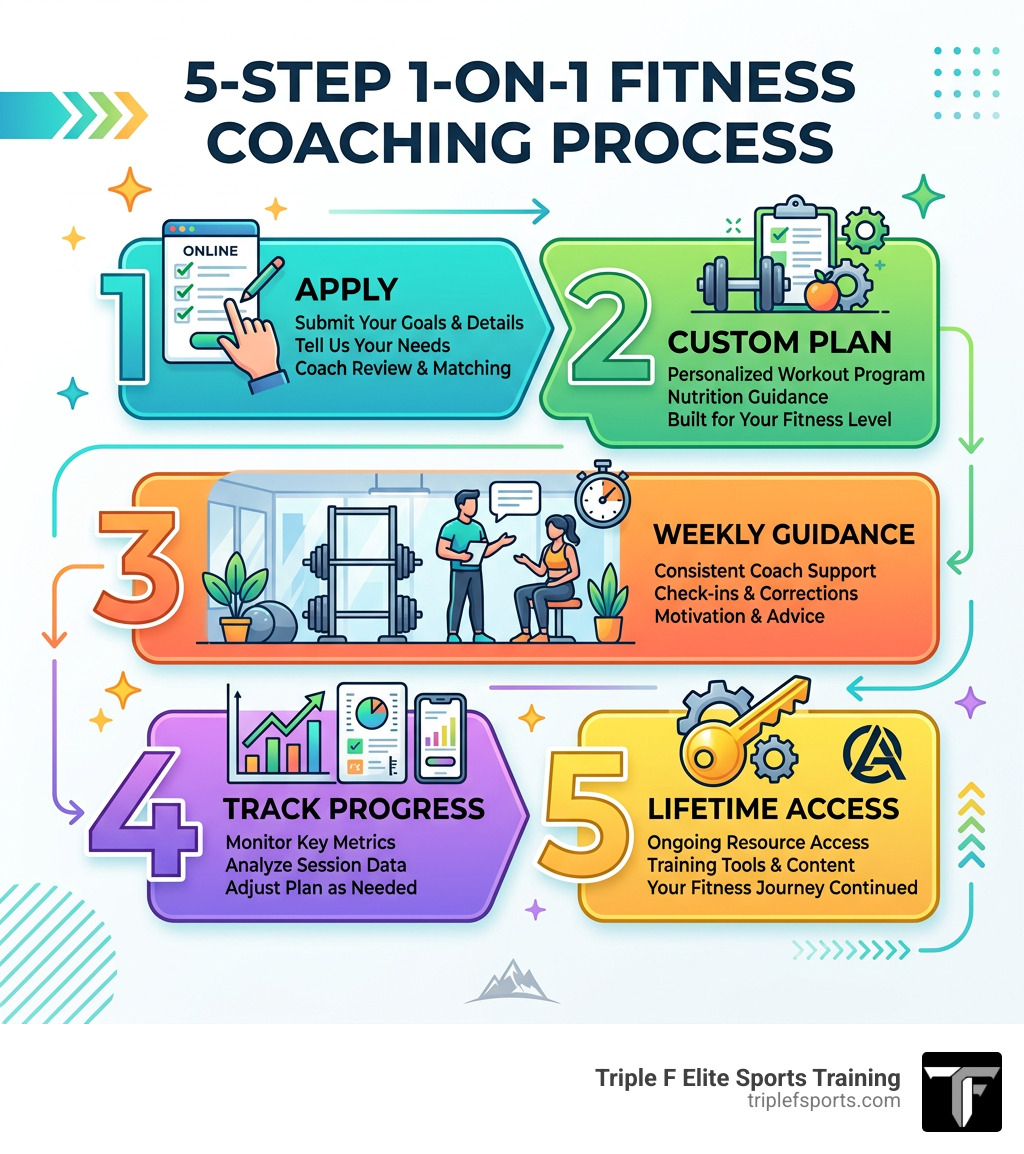
The Structure of a Program A typical coaching relationship begins with a deep-dive assessment. We look at your health history, previous injuries, and current movement patterns. From there, we build your “Program Design Roadmap.” This isn’t just a workout; it’s a schedule that includes your training sessions, recovery days, and habit tracking.
To help you decide if this path is right for you, we offer adult membership free sessions so you can experience the facility and the coaching style before making a financial commitment.
Nutrition and Holistic Wellness Integration
You cannot out-train a poor diet. This is a hard truth in the fitness world. However, there is a significant difference between a “trainer giving a meal plan” and a qualified nutrition coach providing evidence-based guidance.
Registered Dietitians vs. Nutritionists In many places, the title “nutritionist” is unregulated. A Registered Dietitian (RD), however, has completed extensive schooling, clinical practice, and a national exam. If you have medical conditions like high cholesterol or are dealing with Relative Energy Deficiency in Sport (RED-S)—a serious condition where an athlete’s energy intake doesn’t match their output—consulting an RD is essential.
Flexible Dieting and Macros For general body composition goals, many coaches utilize “flexible dieting.” Instead of a rigid list of “good” and “bad” foods, we focus on macronutrient targets (protein, fats, and carbs). This allows you to enjoy social events and favorite foods while still hitting the numbers required for your goals. It’s about building a relationship with food that lasts a lifetime, not a 30-day “challenge” that you’ll eventually quit.
If you are looking to take your performance to the next level, our nutrition coaching provides the expert guidance needed to fuel your workouts and your recovery effectively.
Frequently Asked Questions about Personal Training
How much does 1-on-1 coaching typically cost?
Rates generally fall between $35 and $125 per session, depending on the coach’s experience and the length of the session. Monthly online coaching packages often range from $200 to $500, offering a more affordable way to get personalized programming and accountability.
Do I need prior gym experience to start?
Absolutely not. In fact, starting with a coach is the best way for beginners to begin. It ensures you learn the correct form from day one, preventing the development of bad habits that could lead to injury later on. We meet you exactly where you are, whether that’s your first time touching a dumbbell or you’re a seasoned athlete.
What is the difference between a trainer and a qualified nutrition coach?
A personal trainer primarily focuses on your physical movements, exercise programming, and gym performance. A nutrition coach (ideally a Registered Dietitian) focuses on fueling, metabolic health, and dietary habits. While many trainers have basic nutrition knowledge, complex dietary needs should always be handled by a specialist.
Conclusion
At the end of the day, 1 on 1 fitness coaching is about more than just sets and reps. It’s about having a dedicated partner who is objectively supporting your goals and understands your lifestyle. It’s about “spiraling up”—using early successes to build the confidence needed for a lifelong transformation.
At Triple F Elite Sports Training in Knoxville, we are committed to helping you unlock your full potential through professional, Christ-centered athletic development. Whether you are a youth athlete or an adult looking to reclaim your health, we invite you to unlock your potential with skilled-based training.
Stop restarting every Monday. Put a coach in your corner and start finishing what you start.