
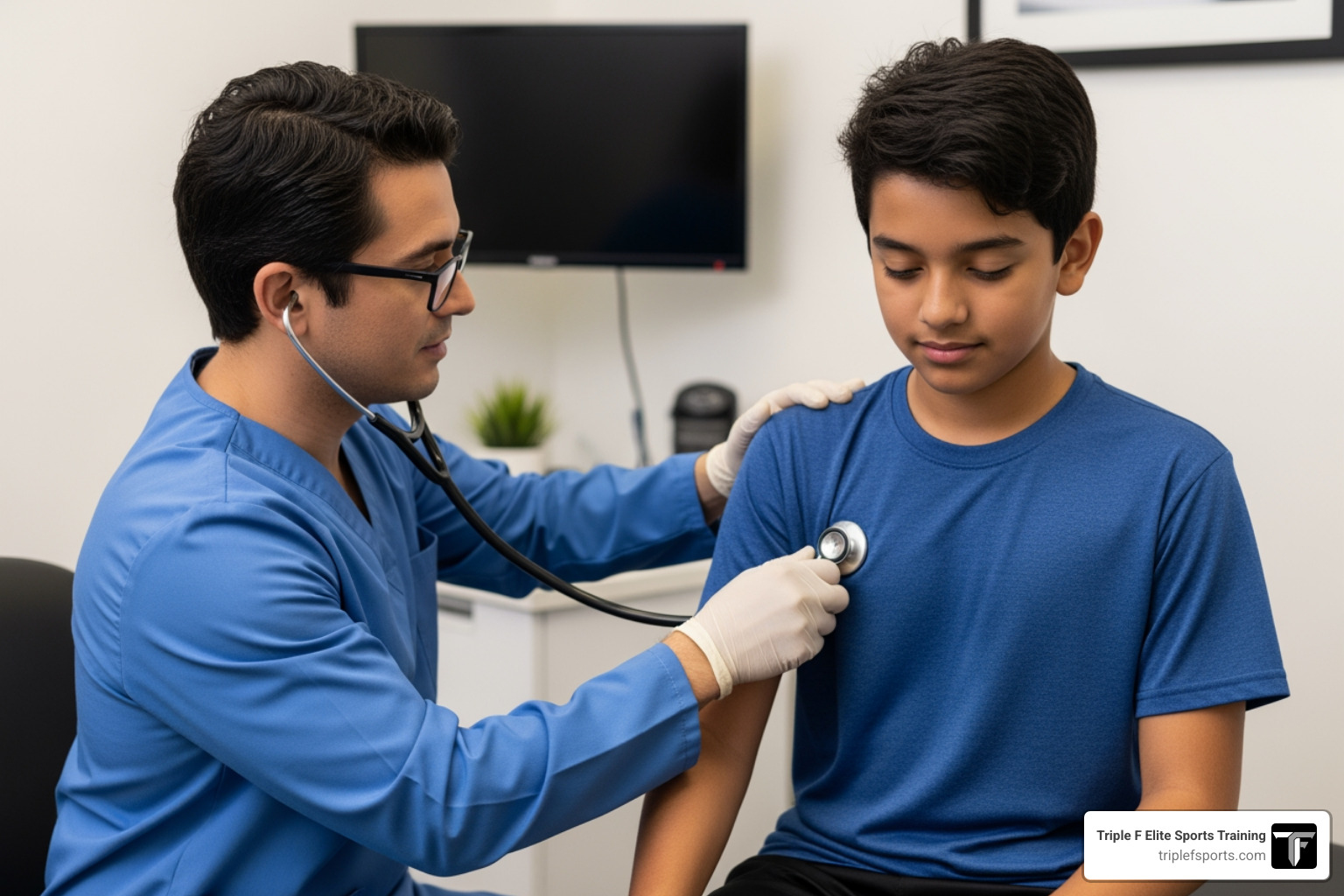
Your Guide to the Youth Sports Physical
A youth sports physical is a pre-participation medical evaluation designed to ensure your child can safely play sports. Here’s what you need to know:
Key Facts About Youth Sports Physicals:
- Purpose: Screens for health conditions that could affect safe participation in sports
- Timing: Schedule at least 6 weeks before the sports season begins
- Validity: Usually good for one year
- Requirement: Most states require one before students can play school sports
- Components: Medical history review and physical examination
- Outcomes: Cleared to play, cleared with conditions, or further evaluation needed
Watching your child step onto a field or court for the first time fills you with excitement—and maybe a few butterflies. You want them to experience all the benefits of youth sports: the cardiovascular health, the life skills, the friendships. But before they can compete, most states require something important: a sports physical.
This medical evaluation isn’t just another box to check. It’s a crucial safety measure that protects your young athlete from hidden health risks and sets them up for success on and off the field. The preparticipation physical evaluation (PPE) examines everything from heart health to joint flexibility, looking for any issues that might interfere with performance or increase injury risk.
I’m Kevin O’Shea, a Certified Strength and Conditioning Specialist with over a decade of experience in athletic development and high school coaching, and I’ve seen how a thorough youth sports physical serves as the foundation for a safe and successful athletic journey. At Triple F Elite Sports Training, we believe that proper medical clearance is the first step in developing young athletes who are not just physically prepared, but ready to thrive.

What is a Youth Sports Physical and Why is it Crucial?
A youth sports physical, officially known as a Preparticipation Physical Evaluation (PPE), is a specialized health check-up designed specifically for young athletes. Its primary goal is to determine if it’s safe for your child to participate in sports. Think of it as a pre-flight check for their body before they hit the field or court!
Why is this so important? Well, for starters, most states actually require students to have a sports physical before they can play school sports. This isn’t just bureaucracy; it’s a vital step in injury prevention and ensuring safe participation. By identifying any underlying health conditions that could interfere with sports performance or increase the risk of injury, we can help keep young athletes safe. It’s about catching potential problems early, whether it’s an undiagnosed heart condition, uncontrolled asthma, or a musculoskeletal issue that could lead to injury down the line.
The American Academy of Pediatrics (AAP) strongly encourages these evaluations as part of routine health supervision. As they note, millions of children participate in sports, and the PPE is a key component to ensure their safety during practice and competition. For parents, this translates to invaluable peace of mind, knowing that a medical professional has given their child the green light. It can also lead to recommendations for training tips, specific exercises, or even physical therapy to proactively prevent injuries, giving your child an edge similar to professional athletes who rely on medical care to stay at their best.

For more detailed information on the Preparticipation Physical Evaluation, you can refer to the AAP’s official guidelines.
What are the main components of a youth sports physical?
A comprehensive youth sports physical typically involves two main parts: a thorough medical history review and a physical examination.
-
Medical History: This is where you, as a parent, play a crucial role. Before the examination, you’ll likely be asked to fill out a detailed medical history form. It’s incredibly important to answer these questions honestly and thoroughly. We encourage athletes or their families to fill out a medical history form before the examination that includes standard elements important to consider in evaluating the patient’s eligibility to participate in sports. The questions cover a wide range of topics, including:
- Personal Medical Conditions: Has your child ever had asthma, diabetes, a sickle cell trait, or other chronic conditions?
- Family Health History: Are there any heart conditions, sudden deaths, or other serious illnesses in your family? This can be vital for identifying hereditary risks.
- Previous Injuries: Any concussions, sprains, fractures, or other significant injuries? This helps assess vulnerability and previous recovery.
- Allergies: Known allergies to medications, food, or environmental factors.
- Medications: A list of all prescription medications, over-the-counter drugs, and even supplements your child is taking.
- Exercise-Related Symptoms: Has your child ever experienced passing out, dizziness, chest pain, or breathing trouble during exercise?
- Specific Questions: For boys, questions about testicle pain; for girls, questions about menstrual periods.
- Substance Use: Questions about smoking, vaping, alcohol, drugs, diet pills, or steroids are also included, as these can significantly impact an athlete’s health and safety.
Being open and honest here is key. Your medical history helps the doctor understand potential risks and tailor the physical exam. You can find examples of these forms in the AAP’s official PPE History Form (English)-rev.pdf), which is designed to cover all necessary elements.
-
Physical Examination: This is the hands-on part where the doctor checks your child’s body. It’s a system-based examination that typically includes:
- Height and Weight: To track growth and development.
- Blood Pressure and Pulse: To assess cardiovascular health.
- Vision Test: To ensure clear sight is not an impediment to safe play.
- Heart and Lungs Check: The doctor will listen for any unusual sounds that could indicate a heart murmur or breathing issues.
- Musculoskeletal Screening: This is a crucial part for athletes. The doctor will check joints, muscles, and bones for strength, flexibility, range of motion, and any signs of instability or previous injury. This helps identify issues that could lead to sprains, strains, or other injuries during sports.
It’s worth noting that these examinations should be conducted in a private setting, not in a locker room or gymnasium, to ensure the athlete’s confidentiality and comfort.
What are the potential outcomes?
After the medical history and physical examination, the doctor will make a determination regarding your child’s eligibility to play sports. The outcomes generally fall into a few categories:
- Cleared for participation: This is the most common outcome, meaning the doctor found no significant health risks that would prevent your child from playing their sport safely.
- Cleared with recommendations: Sometimes, the doctor might clear your child but with specific advice. For example, they might adjust asthma medicines so a child can breathe more easily when running, or recommend specific stretches or exercises to improve flexibility and prevent injury. We might even suggest visiting our Sports Medicine specialists for a deeper dive into injury prevention strategies.
- Further evaluation needed: If the doctor identifies a potential concern that requires more investigation, they might ask for additional tests, a follow-up exam, or a consultation with a specialist. For instance, if blood pressure is high, they might want to recheck it. The goal here isn’t to stop participation, but to ensure everything is thoroughly checked before giving the green light.
- Activity restriction: In some cases, a doctor might recommend that an athlete avoid certain sports or activities due to a significant health risk. For example, an athlete with a history of concussions might be advised against playing contact sports like football but could be cleared for non-contact sports like tennis. The primary goal is always the athlete’s long-term health and safety.
If a problem is found, it’s not necessarily the end of your child’s athletic dreams. Often, these issues can be managed with treatment, medication adjustments, or by choosing a different sport that’s better suited to their health profile. The entire process is about ensuring your child can enjoy the benefits of sports as safely as possible.
When, Where, and How Often Should Athletes Get a Physical?
Timing, location, and frequency are crucial considerations for the youth sports physical. We want to make sure your young athlete is ready to go well before the season kicks off!

When should a young athlete get a sports physical, and how often?
The general recommendation is to schedule your child’s youth sports physical at least 6 weeks before their sports season starts. Why so early? This gives us ample time to evaluate the athlete and treat any medical conditions found during the visit. If a follow-up appointment, additional tests, or specialist consultation is needed, that 6-week buffer prevents a last-minute scramble and ensures your child isn’t sidelined unnecessarily. Imagine the disappointment of missing the first few practices because you waited until the week before tryouts!
Regarding frequency, sports physicals are usually good for 1 year. This means your child will need a new one annually if they plan to continue participating in school or organized sports. While this is a general rule, it’s always wise to check with your child’s school or sports league, as state laws can vary regarding the exact frequency and validity period. Even if the physical is valid, if there are any significant changes in your child’s health history—a new injury, a concussion, or a new diagnosis—it’s always best to inform their doctor and potentially get an updated evaluation.
How does a youth sports physical differ from a regular annual physical?
While both are important for a child’s overall health, a youth sports physical has a distinctly different focus from a regular annual physical. Think of it this way: a regular annual physical is like a general health check-up for the whole house, whereas a sports physical is a specialized inspection of the house’s foundation and structural integrity, specifically looking for anything that might cause problems during an earthquake (or, in this case, a soccer match!).
| Feature | Sports Physical (PPE) | Annual Physical (Well-Child Visit) |
|---|---|---|
| Primary Focus | Safe sports participation, injury risk assessment | Overall health, growth, development, preventative care |
| Key Emphasis | Cardiovascular health, musculoskeletal system | Immunizations, developmental milestones, general wellness |
| Depth of Examination | Detailed history of sports injuries, exercise symptoms, musculoskeletal screening | Broader health concerns, chronic disease management |
| Typical Requirement | Required by schools/leagues for sports participation | Recommended for all children annually |
| Outcome | Clearance for sports (with/without restrictions) | General health recommendations, prescriptions, immunizations |
A youth sports physical is heavily geared towards sports-specific health. It digs deep into the musculoskeletal system, checking for old injuries, assessing strength, flexibility, and balance, and looking for any vulnerabilities that could lead to new injuries. It also pays close attention to cardiovascular health, specifically looking for conditions that could pose a risk during intense physical activity.
A regular annual physical, on the other hand, is a broader wellness check. It focuses on overall growth and development, immunizations, general health screenings, and managing any existing chronic conditions.
Can they be combined? Often, yes! Many families find it convenient to schedule their child’s annual physical and youth sports physical at the same time. When you call to make the appointment, just let your child’s primary care provider know that you need both. This allows the doctor to cover all bases—general health and sports-specific safety—in one visit. It’s a smart way to streamline healthcare and ensure your child is fully prepared for both healthy living and athletic endeavors. While convenient care clinics in Knoxville offer sports physicals, it’s ideally best to have it conducted by your child’s primary care provider who knows their medical history best.
Beyond the Physical Exam: The Broader Benefits of Youth Sports
While the youth sports physical ensures physical readiness, the benefits of youth sports extend far beyond just a healthy body. We’re talking about a holistic development package that shapes young individuals into well-rounded, resilient, and socially adept people.
The mental health impact of sports, for instance, cannot be overstated. A 2021 survey by Project Play and Utah State University found that one in four youth sports parents said their child’s mental health suffered when sports were lost during COVID-19. Conversely, returning to sports improved children’s physical fitness, emotional control, and social well-being. Research also indicates that physically inactive children are twice as likely to experience mental health problems. The camaraderie, the challenge, the joy of movement—these all contribute to a robust mental landscape. When adults engage with children in sports, it even releases oxytocin, a hormone associated with trust and relationship building, which can counteract stress and anxiety. You can find more comprehensive research on the mental health benefits of sports from the Aspen Project Play.
Beyond the immediate mental boost, sports are a powerful crucible for social development and character building. The youth sports community in Knoxville, including parents, schools, athletes, and coaches, has shown tremendous resilience, continuing to provide opportunities for engagement despite challenges.
What are the benefits of youth sports participation beyond physical health?
Youth sports participation is a master class in life skills. Here at Triple F Elite Sports Training, we see how kids develop far more than just athletic prowess.
- Leadership Skills: Being part of a team often means taking turns leading, whether it’s calling out plays or simply motivating a teammate. These experiences build confidence and the ability to guide others.
- Time Management: Juggling practices, games, homework, and social life is a skill many adults struggle with! Young athletes learn to prioritize and organize their time effectively.
- Sportsmanship: Winning gracefully and losing with dignity are invaluable lessons. Learning to respect opponents, officials, and teammates fosters a strong moral compass.
- Accountability: Every player has a role, and understanding that your actions (or inactions) affect the whole team teaches personal responsibility.
- Reduced Loneliness and Improved Self-Esteem: High school athletes are less likely to smoke cigarettes and suffer from loneliness and low self-esteem compared to non-athlete peers, according to research used for the Healthy Sport Index. The sense of belonging, achievement, and shared purpose that comes with being on a team is a powerful antidote to feelings of isolation.
These are the fundamental life skills that contribute to a better quality of life, not just for the children themselves, but for those around them. For more on these multifaceted advantages, check out this article on The Benefits of Youth Sports.
How can parents and communities support youth participation in sports?
We believe that fostering youth participation in sports is a community responsibility. It’s not enough to just enroll a child; we all need to be active advocates for the young members of our society.
- Encouragement and Positive Role Modeling: Your enthusiasm is contagious! Encourage your child’s efforts, celebrate their small victories, and model a healthy, active lifestyle yourself. Playing organized sports isn’t enough to keep children and youth healthy; encourage daily activity like walking or cycling.
- Coaching and Volunteering: If you have the time and passion, consider coaching a local team or volunteering for a sports organization in Knoxville. Your involvement can make a huge difference in creating positive experiences for young athletes.
- Advocating for Inclusive Programs: We need to ensure that all kids have equal access and opportunities to be active and healthy. This means advocating for programs that are inclusive of diverse backgrounds, abilities, and socioeconomic statuses.
- Promoting Green Spaces: Support initiatives that integrate more green spaces into local communities. Access to safe, engaging outdoor environments is crucial for unstructured play and physical activity.
- Investment in After-School Programs: Advocate for investment in after-school programs that offer sports and physical activities, providing safe and structured environments for kids to be active.
- Broaden Access, Opportunity, and Inclusiveness: We all need to do our part to help all kids participate in sports by broadening access, opportunity, and inclusiveness. This involves making sports more accessible, affordable, and welcoming to everyone.
By taking these steps, we can collectively ensure that youth sports continue to be a vibrant and beneficial part of growing up in Knoxville.
Advanced Considerations for the Developing Athlete
Beyond the initial clearance from a youth sports physical, there are deeper considerations for developing athletes, particularly concerning physical activity guidelines, managing chronic illnesses, and building foundational athletic skills. These elements are crucial for long-term health, performance, and injury prevention. We also offer Physical Therapy services to support athletes through recovery and optimize performance.
What are the recommended physical activity guidelines for different age groups?
Ensuring children and teens get enough physical activity is vital, not just for sports performance but for overall health. The guidelines vary by age, focusing on a mix of intensity and type of activity.
-
Children (5-12 years): This age group needs at least 60 minutes of moderate-to-vigorous-intensity physical activity every day.
- Moderate-intensity activities make children sweat more and breathe harder but still allow them to talk. Examples include brisk walking, playground activities, or bike riding.
- Vigorous-intensity activities make children sweat and feel “out of breath,” challenging their heart and lungs. Examples include running, swimming laps, or playing competitive sports.
- Additionally, children should engage in vigorous-intensity activities and activities that strengthen muscle and bone at least 3 days a week. This could be jumping, climbing, or playing sports that involve resistance.
-
Teens (13-17 years): Similar to younger children, teens also need at least 60 minutes of moderate-to-vigorous-intensity physical activity every day.
- They should also include vigorous-intensity activities and activities that strengthen muscle and bone at least 3 days a week. This is crucial for their developing bodies to build strength and resilience.
Organized sports aren’t the only way to meet these guidelines. Encourage your child to be active every day through walking, cycling, playing in a neighborhood park, or even helping with household chores that involve physical movement. For comprehensive guidelines, you can refer to resources like the Canadian 24-Hour Movement Guidelines.
Are there specific considerations for children with chronic illnesses?
Having a chronic illness doesn’t automatically exclude a child from sports. In fact, regular physical activity can often be incredibly beneficial! However, it does require careful planning and communication, starting with the youth sports physical.
- Doctor Consultation is Key: Before starting any new physical activity or sport, it is absolutely essential to consult with your child’s doctor. They can provide specific guidance based on the child’s condition and help create a safe activity plan.
- Activity Modification: Many activities can be modified to suit a child’s needs.
- For children with Asthma, activities that strengthen the lungs, like swimming, can be very beneficial. It’s crucial to have an asthma action plan and ensure coaches are aware of triggers and medication use.
- For Juvenile Idiopathic Arthritis (JIA), activities like water exercise can be gentle on joints. Flexibility, strength training, and weight-bearing activities are often recommended when the condition is stable.
- Children with Hemophilia might benefit from activities like cycling or swimming, which build muscle strength without high impact.
- For conditions like Cystic Fibrosis (CF), hiking, swimming, and running are often encouraged, but specific activities like scuba diving might be contraindicated.
- Creating a Safety Plan with Coaches: Once cleared by a doctor, communicate openly with coaches and school staff. Provide written instructions regarding any specific health concerns, medication administration (e.g., inhalers for asthma, insulin for diabetes), and emergency contacts. Ensure they know what to do in case of an exacerbation or emergency during practice or a game.
The goal is to empower children with chronic illnesses to participate safely and enjoy the many benefits of sports, with appropriate medical oversight and support.
What is the role of foundational athletic skills in injury prevention?
At Triple F Elite Sports Training, we understand that a strong foundation is crucial for everything, from lifting weights to running a marathon. This principle is especially true for young athletes. Foundational athletic skills are the building blocks for all sports, enabling children to move with confidence, play safely, and enjoy physical activity for years to come.
What are these foundational skills? We often categorize them into:
- Locomotor skills: Running, jumping, hopping, skipping.
- Object control skills: Throwing, catching, kicking, dribbling.
- Stability skills: Balancing, twisting, bending, posture control.
Why are these “game-changers”? Without them, children might struggle to progress, lose confidence, or, most critically, get injured. When children learn proper movement patterns early, they develop muscle memory that protects them as they grow. Poor movement patterns learned in youth can lead to overuse injuries, acute injuries, and long-term joint problems. For example, a child who can’t run efficiently will struggle in soccer, and one who can’t balance well will have trouble in gymnastics or skating.
Our approach focuses on:
- Agility, Balance, Coordination (ABC’s): Developing these aspects from a young age is paramount. A well-coordinated athlete is less likely to stumble or land awkwardly, reducing injury risk.
- Proper Form: We emphasize correct technique in all movements. This isn’t just about performance; it’s about making sure the body moves efficiently and safely, minimizing stress on joints and muscles.
- Reducing Overuse Injuries: By building a broad base of physical literacy and encouraging multi-sport participation, we help prevent the specialization that can lead to overuse injuries. We focus on long-term development rather than immediate results.
- Identifying and Correcting Imbalances: Our certified trainers can identify movement compensations and imbalances that might predispose an athlete to injury. Through targeted exercises and our science-backed training methods, we help correct these issues, building a stronger, more resilient athlete.
We believe that professional guidance is invaluable here. Our specialized programs, like those we offer for youth, help break down complex movements and ensure proper progression, making training challenging but not frustrating. Building these foundational skills is an investment in your child’s athletic future, helping them avoid injuries and enjoy sports for a lifetime. To learn more about how we assess and develop these crucial skills, explore our Youth Assessments.
Take the Next Step in Your Athletic Journey
After a successful youth sports physical, the real training begins. Ensuring your child builds on a foundation of strength, proper movement, and skill is the key to a long and successful athletic career. At Triple F Elite Sports Training, we focus on developing young athletes with science-backed programs that improve performance and reduce injury risk. We believe in building not just great athletes, but great individuals. To see how our Christ-centered approach can help your young athlete excel, we invite you to explore our youth training programs for ages 12 to 18.