
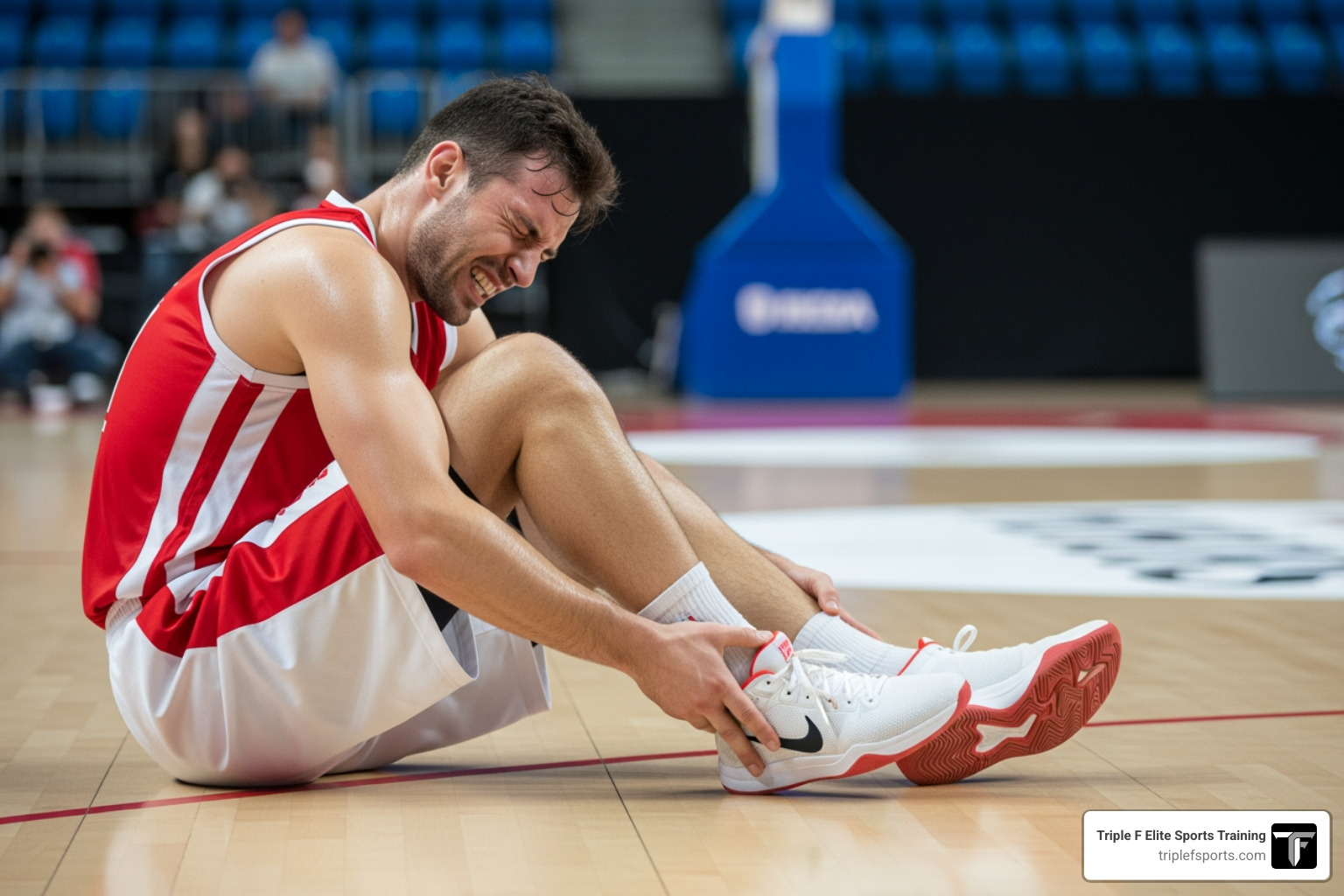
That Telltale “Pop” and the Path Back to Play
Ankle sprain physical therapy is a structured program to restore strength, mobility, and stability after an ankle injury. It progresses through phases of pain control, motion restoration, strengthening, and return to activity.
Quick Guide to Ankle Sprain Recovery:
- Initial Care (Days 1-3): Apply RICE protocol (Rest, Ice, Compression, Elevation) to reduce swelling.
- Early Phase (Days 3-14): Begin gentle range-of-motion exercises like ankle alphabets.
- Strengthening Phase (Weeks 2-6): Add resistance band exercises and balance training.
- Advanced Phase (Weeks 6+): Progress to sport-specific drills and plyometrics.
- Timeline: Grade 1 sprains heal in 1-3 weeks, Grade 2 in 3-6 weeks, Grade 3 may take several months.
A simple misstep can lead to the sharp pain and swelling of a sprained ankle, one of the most common musculoskeletal injuries for active people. The good news is that with proper rehabilitation, most people return to their activities stronger than before. Research shows that treatment emphasizing function over immobilization leads to faster recovery and a lower risk of re-injury.
The path to full recovery requires a systematic approach to address swelling, restore mobility, rebuild strength, and retrain ankle stability. Skipping these steps can lead to chronic instability, persistent pain, and recurring injuries, which affect up to 40% of patients.
I’m Kevin O’Shea, a Certified Strength and Conditioning Specialist at Triple F Elite Sports Training. I’ve seen how proper ankle sprain physical therapy transforms a frustrating setback into an opportunity to come back stronger.
First Steps: Understanding Your Ankle Sprain
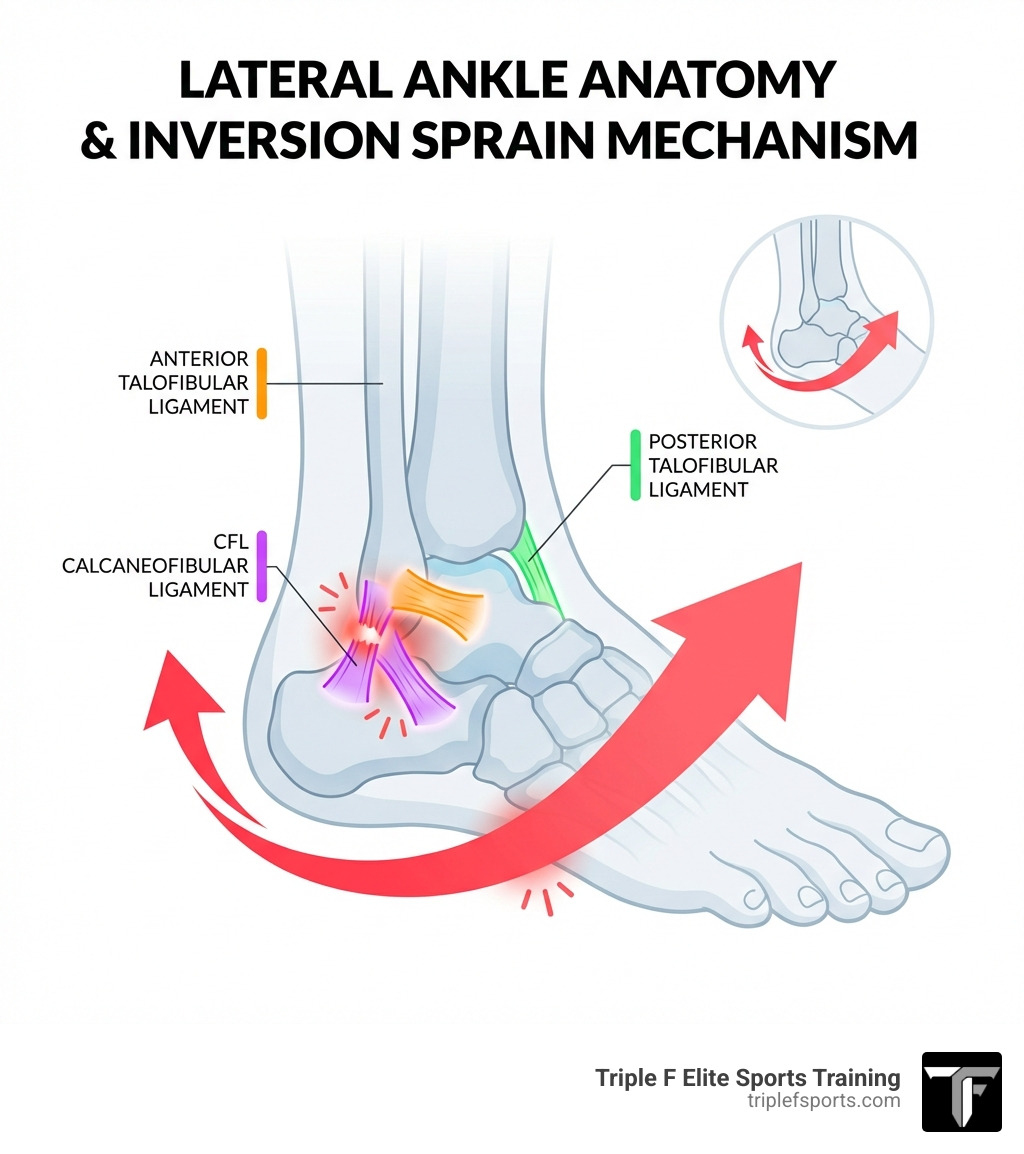
Ankle sprains are common orthopedic injuries that occur when ligaments—the strong tissues connecting bones—are stretched or torn. This often happens when you twist your ankle.
The most frequent type is an inversion injury, where the foot rolls inward, stressing the outer (lateral) ligaments. Less common are eversion injuries (foot rolls outward) and syndesmotic sprains (high ankle sprains), which injure the ligaments connecting the lower leg bones and are often seen in contact sports.
What are the Grades of Ankle Sprains?
Ankle sprains are classified into three grades based on ligament damage. Understanding the grade helps create an effective ankle sprain physical therapy plan and estimate recovery time.
| Grade of Sprain | Description of Ligament Damage | Symptoms | Typical Recovery Time |
|---|---|---|---|
| Grade 1 (Mild) | Ligament is stretched, with microscopic tears. | Mild pain, tenderness, slight swelling. Minimal bruising. You can usually bear weight and walk, though with some discomfort. Ankle feels stable. | 1-3 weeks |
| Grade 2 (Moderate) | Partial tearing of the ligament. | Moderate pain, swelling, and bruising. Difficulty bearing weight and walking. Mild to moderate instability in the joint. | 3-6 weeks |
| Grade 3 (Severe) | Complete tear or rupture of the ligament. | Severe pain, significant swelling and bruising. Inability to bear weight. Obvious instability, and sometimes a “pop” sound at the time of injury. | Up to several months (6-12 weeks or longer), potentially requiring surgery in rare cases. |
Red Flags: When to Seek Immediate Medical Attention
While many sprains can be managed conservatively, seek immediate medical attention for these red flags:
- Inability to bear weight: You cannot take four steps on the injured foot.
- Obvious deformity: The ankle or foot has an abnormal shape.
- Popping sound at time of injury: A “pop” can signal a severe tear or fracture.
- Numbness or tingling: This may indicate nerve involvement.
- Severe pain and swelling: Excessive pain or swelling that doesn’t improve with RICE treatment.
Doctors use the Ottawa ankle rules to determine if an X-ray is needed to rule out a fracture, which helps reduce unnecessary imaging. For more details, review this resource: Information on when to see a doctor for a sprained ankle.
Immediate Care and Modern Treatment Approaches
Once a fracture is ruled out, the focus shifts to managing acute symptoms. The traditional first step has been the RICE regimen.
Applying the RICE Regimen for Acute Sprains
RICE stands for:
- Rest: Avoid painful activities, especially in the first 24 hours.
- Ice: Apply an ice pack (wrapped in a towel) for 15-20 minutes several times a day to reduce pain and swelling. Avoid heat.
- Compression: Use an elastic wrap to gently compress the ankle and control swelling, ensuring it’s not too tight.
- Elevation: Keep your ankle liftd above your heart to help drain excess fluid.
While RICE is a good start, modern care often uses the POLICE principle (Protection, Optimal Loading, Ice, Compression, Elevation). The key difference is “Optimal Loading,” which favors carefully controlled movement over complete rest.
Functional Treatment vs. Immobilization
Historically, ankle sprains were treated with prolonged immobilization (casts, strict rest). However, research now strongly supports functional treatment, which uses controlled movement and supportive devices (braces, taping) to restore function.
Benefits of functional treatment include:
- Faster Return to Activity: Patients get back to normal activities sooner.
- Reduced Stiffness and Weakness: Early movement helps maintain joint mobility and muscle strength.
- Better Long-Term Outcomes: Physical therapy focused on functional restoration reduces the risk of chronic instability and re-injury.
- Stimulates Healing: Appropriate stress on the ligaments promotes stronger healing.
Immobilization is now reserved for severe (Grade 3) sprains or fractures, and even then, it’s typically for less than four weeks. For most sprains, functional rehabilitation begins almost immediately. This shift is a cornerstone of modern ankle sprain physical therapy. For more on the science, see this review: Scientific research on functional treatment for ankle sprains.
Your Roadmap to Recovery: Ankle Sprain Physical Therapy Phases
Recovering from an ankle sprain is a carefully planned journey. Our ankle sprain physical therapy programs are structured into goal-oriented phases to ensure a safe return to full function. This systematic approach mirrors the body’s natural healing stages.

Phase 1: The Protective Phase (Pain and Swelling Control)
- Goal: Minimize pain and swelling, protect the ligaments, and improve weight-bearing. This phase typically lasts for the first few days to a week.
- Treatments: Continue with POLICE principles. Gentle manual therapy may be used to control pain.
- Exercises: Gentle, pain-free range-of-motion exercises are vital to prevent stiffness and promote healing.
- Ankle Alphabets: While seated, trace the letters of the alphabet with your big toe for 2-3 minutes.
- Side-to-Side Knee Swing: Seated with your foot flat, gently move your knee side to side for 2-3 minutes.
- Dorsiflexion/Plantarflexion: Gently point your toes up and down within a pain-free range.
- Exercises to Avoid: Avoid any movements that cause sharp pain, such as aggressive stretching or high-impact activities.
Phase 2: Restoring Motion and Early Strengthening in Ankle Sprain Physical Therapy
- Goal: Regain full, pain-free range of motion (ROM) and begin early strengthening. This phase typically starts a few days to two weeks post-injury.
- Exercises:
- Range-of-Motion: Continue with ankle alphabets and add ankle circles in both directions.
- Stretching (pain-free): Start Achilles tendon stretching within 48-72 hours.
- Seated Calf Stretch: Sit with your leg straight and use a towel to gently pull your toes toward you. Hold for 15-30 seconds; repeat 2-4 times.
- Standing Calf Stretches: Facing a wall, step the injured leg back. For the gastrocnemius, keep the back knee straight. For the soleus, bend the back knee slightly. Hold each for 15-30 seconds; repeat 2-4 times.
- Isometric Strengthening: Contract muscles without moving the joint. Push your foot against an immovable object (like your other foot or a wall) for inversion, eversion, and dorsiflexion. Hold for 6 seconds; repeat 8-12 times.
- Towel Scrunch: Sit with your foot on a towel and use your toes to scrunch it toward you. Repeat 8-12 times.
Phase 3: Building Strength and Proprioception
- Goal: Increase muscle strength and endurance, and retrain proprioception (your body’s sense of joint position). This phase begins around 2-6 weeks post-injury.
- Exercises: Strengthening the muscles around the ankle is vital for stability.
- Resistance Band Exercises: Once you can stand without pain, perform exercises for dorsiflexion, plantarflexion, inversion, and eversion. Do 2-3 sets of 10-12 reps.
- Eversion: Loop a band around your foot and turn it outward against resistance.
- Inversion: Loop the band and turn your foot inward.
- Dorsiflexion: Anchor the band to pull your foot down; pull your toes up.
- Plantarflexion: Anchor the band to pull your foot up; push down like pressing a gas pedal.
- Heel Raises: Start with two legs, then progress to single-leg raises. Aim for 25 reps on the injured side.
- Balance and Proprioception: Re-educating your ankle’s control system is key to preventing re-injury.
- Single-Leg Balance: Stand on your injured leg for up to 30 seconds. To progress, close your eyes or stand on an unstable surface like a pillow.

Phase 4: Advanced Ankle Sprain Physical Therapy and Return to Activity
- Goal: Prepare for a full return to sport and normal activities by optimizing power, speed, and agility. This phase usually starts 6+ weeks post-injury.
- Exercises:
- Proprioception Training: Use wobble boards or balance discs, progressing from two feet to one, and adding challenges like closing your eyes or tossing a ball.
- Agility Drills: Use ladders and cones for drills like figure-eights and shuttle runs to improve body awareness and change of direction.
- Plyometrics: Build explosive power with jumping and hopping. Start with double-leg hops and progress to single-leg hops and box jumps.
- Sport-Specific Progression: Gradually return to your sport: start with brisk walking, then jogging, running, backward running, pattern running (circles, figure-eights), and finally, sport-specific drills like cutting and pivoting.
- How to Progress Safely: Progression is always guided by pain levels. Ensure you can perform each step pain-free with good form before advancing.
Beyond the Basics: Advanced Recovery and Prevention
Even after your ankle feels healed, long-term management is critical to avoid recurrent sprains. Proper ankle sprain physical therapy makes you less likely to suffer from long-term instability and re-injury.
Preventing Future Sprains: Bracing, Taping, and Prophylactic Exercises
Since a previous sprain is a major risk factor for a future one, prevention is key.
- Ankle Bracing: Braces provide mechanical stability and improve proprioception (joint position sense), helping your muscles react faster to prevent a twist. Studies show braces can significantly reduce injury rates with minimal impact on performance. Common types include semi-rigid and lace-up braces.
- Kinesiology Taping: Taping can also improve proprioceptive feedback to improve your ankle awareness.
- Continued Exercises: This is the most crucial long-term strategy. Persistent strengthening and balance exercises maintain the stability you regained in physical therapy.
Managing Chronic Ankle Instability
Sometimes, a sprain leads to Chronic Ankle Instability (CAI), characterized by recurring sprains and a feeling of the ankle “giving way.” CAI can result from a mix of issues:
- Neural Deficits: Impaired proprioception and slower muscle reaction times.
- Muscular Weakness: Weakness or poor endurance in the supporting ankle muscles.
- Mechanical Laxity: Ligaments healing in a lengthened, less stable position.
How Physical Therapy Helps: Our ankle sprain physical therapy program addresses these issues with advanced proprioceptive and neuromuscular control exercises. We also focus on strengthening the hip and core, as stability starts proximally.
When to Consider Surgical Options: Surgery is rare for an acute sprain. However, it may be an option for persistent CAI if a dedicated 3-6 month physical therapy program fails to restore stability. The Broström procedure, a ligament repair, is a common and highly successful surgical option.
Frequently Asked Questions about Ankle Sprain Recovery
Here are answers to common questions we hear from our patients in Knoxville.
How do age, previous injuries, and activity level affect my recovery?
These factors significantly influence your recovery timeline and ankle sprain physical therapy plan.
- Age: Older adults may heal more slowly due to natural declines in tissue repair and proprioception (joint position sense).
- Previous Injuries: A history of ankle sprains is a major risk factor for recurrence, as each injury can leave behind scar tissue and compromise proprioceptive feedback.
- Activity Level: An athlete requires a more rigorous, sport-specific rehabilitation program to regain power and agility compared to someone with a sedentary lifestyle. Personalized plans are crucial.
What are the best stretches for my calf after an ankle sprain?
Stretching your calf is vital for regaining ankle mobility. Once acute pain subsides (usually after 48-72 hours), you can begin these pain-free stretches, holding each for 15-30 seconds and repeating 2-4 times.
- Seated Calf Stretch: Sit with your leg straight and use a towel to gently pull your toes toward you.
- Standing Gastrocnemius Stretch: Face a wall, step your injured leg back, and keep the knee straight while leaning forward.
- Standing Soleus Stretch: In the same position, slightly bend the knee of your back (injured) leg to target the deeper soleus muscle.
Can I recover from an ankle sprain without physical therapy?
While a mild Grade 1 sprain might heal with self-care, avoiding professional ankle sprain physical therapy carries significant risks, especially for more severe sprains.
- Risks of Skipping PT: Without targeted rehab, you have a higher risk of incomplete recovery. Up to 40% of patients experience residual issues like chronic pain, instability, and a higher chance of re-injury. An untreated sprain can lead to Chronic Ankle Instability (CAI), where the ankle repeatedly “gives way.”
- The Value of Professional Guidance: A physical therapist provides a structured, progressive program custom to your goals. They identify and correct subtle deficits in strength and balance that you might miss, ensuring a safer, faster, and more complete recovery. Research shows that effective physical therapy significantly reduces injury risk.
In short, investing in proper rehabilitation is investing in your long-term ankle health and preventing future setbacks.
Conclusion: Step Forward with Confidence
The journey from a painful ankle sprain back to full activity is possible with targeted rehabilitation. By understanding your injury, embracing functional treatment, and following the structured phases of ankle sprain physical therapy, you can build a strong foundation for recovery. This roadmap helps restore motion, build strength, and retrain balance, while long-term strategies like bracing and continued exercise help prevent re-injury.
At Triple F Elite Sports Training in Knoxville, we empower you not just to recover, but to come back stronger. Our professional, Christ-centered approach integrates expert physical therapy with comprehensive performance training. We are here to guide you through the physical and mental challenges of injury.
Don’t let an ankle sprain lead to chronic issues. Take a proactive step towards a complete and resilient recovery. Explore our services at Triple F Elite Sports Training—your first session is always free. We’d love to partner with you on your path back to peak performance.