Why Zone Blocking Transforms Offensive Line Performance
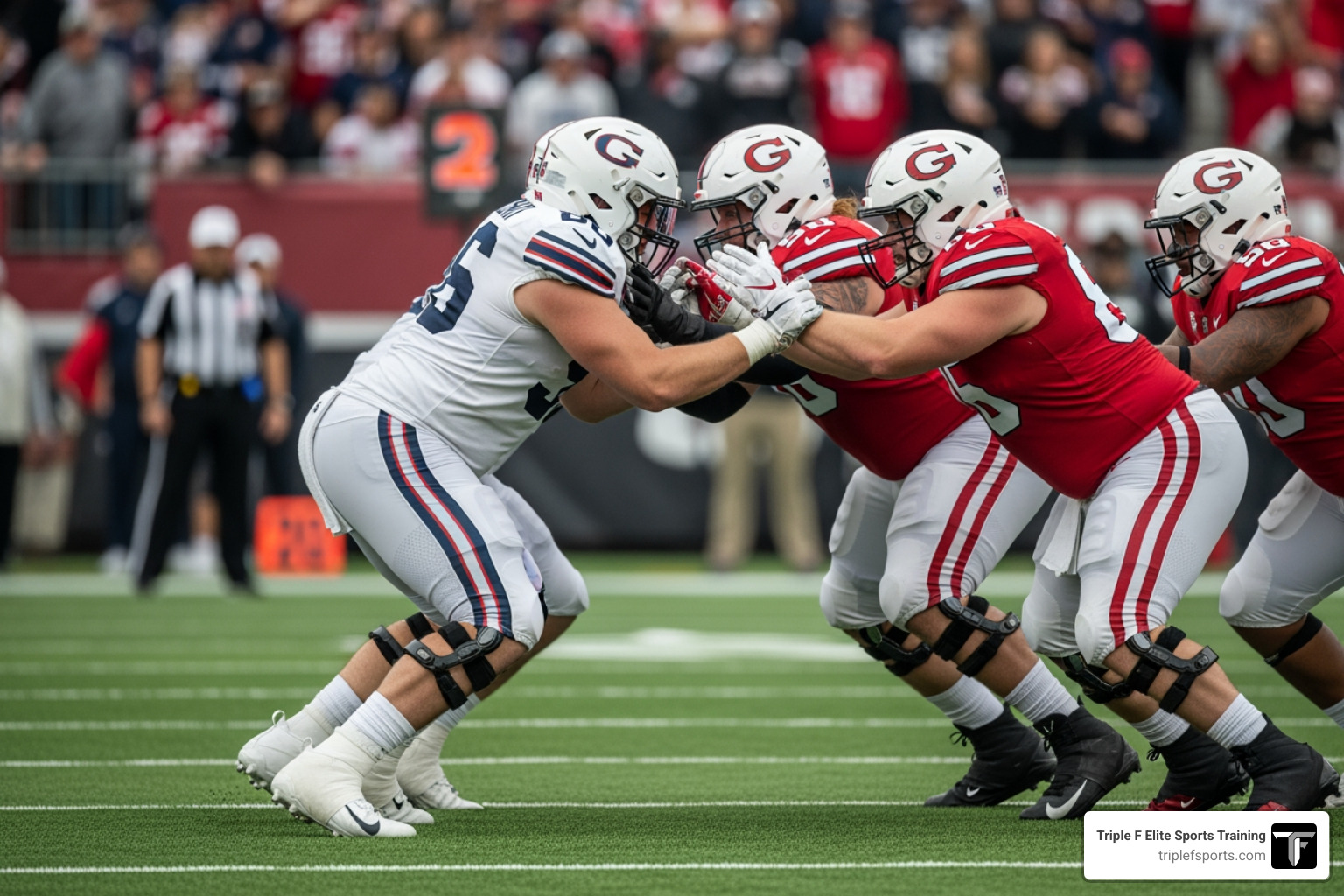
Zone blocking offensive line schemes are the foundation of modern run-game success, where linemen block areas rather than specific defenders. Here’s what you need to know:
Core Principles:
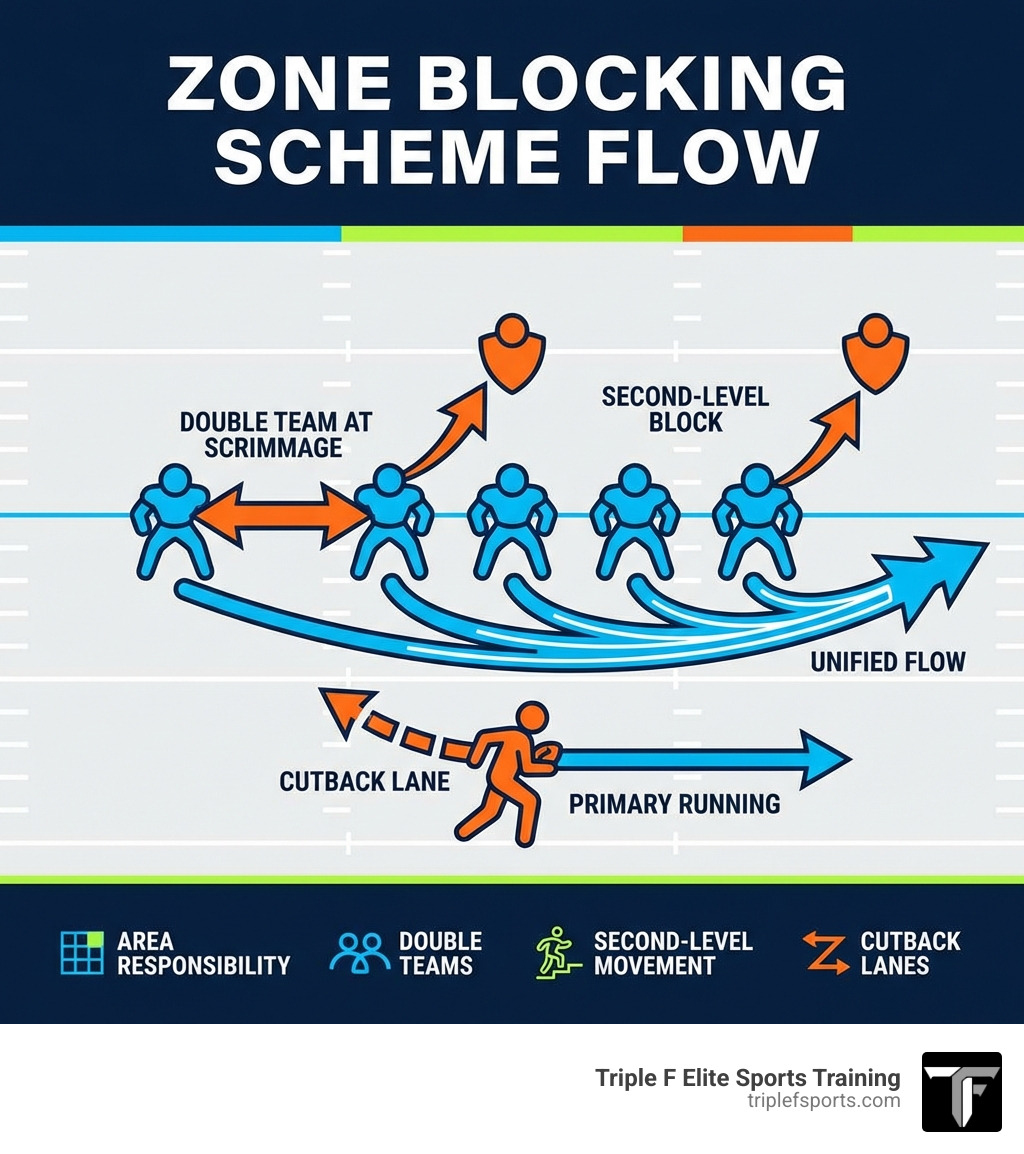
- Area Responsibility – Linemen block “zones” on the field, not individual defenders.
- Double Teams – Two linemen initially work together at the point of attack.
- Second-Level Movement – One lineman peels off to block linebackers while the other finishes the down lineman.
- Unified Flow – The entire offensive line moves in tandem to one side of the field.
- Cutback Lanes – Backside blocks prevent pursuit and create running opportunities behind the play.
Key Differences from Man Blocking:
- Zone blocking adapts to defensive movement instead of following pre-assigned defenders.
- Rules stay consistent regardless of defensive stunts or shifts.
- Emphasizes athleticism and lateral quickness over raw power.
- Creates natural double-team opportunities at the line of scrimmage.
The zone blocking offensive line scheme emerged in the 1990s as a strategic counter to defensive “slant and angle” schemes. Its beauty lies in adaptability: if a defender moves out of a zone, the lineman passes him off to a teammate while maintaining the blocking lane.
I’m Kevin O’Shea, a Certified Strength and Conditioning Specialist at Triple F Elite Sports Training in Knoxville. I help athletes understand the strategic elements that translate to on-field success, including the intricacies of zone blocking techniques that create explosive plays.
Zone Blocking vs. Man and Gap Schemes
Understanding the fundamental differences between blocking schemes is crucial for offensive line play. The zone blocking offensive line scheme is distinct in its philosophy and execution.
What is the fundamental difference between zone blocking and man/gap blocking schemes?
In traditional man blocking, each lineman is responsible for a specific defender. This requires raw power to move opponents one-on-one. Rules can become complicated if the defense stunts or blitzes. Zone blocking, however, tasks linemen with blocking an area. The line flows in unison, and responsibilities develop dynamically. This consistency simplifies the learning process.
Gap blocking often uses pulling linemen to create a numbers advantage. If a guard is pulling, it’s likely a gap scheme (like “Counter”). If the guard stays home and flows with the line, it’s likely a zone block.
| Feature | Zone Blocking | Man Blocking | Gap Blocking |
|---|---|---|---|
| Primary Goal | Block an area/zone, create seams for RB | Block a specific defender one-on-one | Create specific lanes, often with pulling linemen |
| Assignments | Dynamic, based on defender’s movement in a zone | Pre-determined, defender-specific | Pre-determined, defender-specific, leverage-based |
| Linemen Flow | In unison to one side of the field | Individual engagement | Individual engagement, often with pulling linemen |
| Double Teams | Integral, initial double-team with one peeling off | Less common as a primary tactic | Can occur, but often involves specific angles |
| Pulling Linemen | Generally absent | Generally absent | Common, especially from the backside |
| Rules Change | Consistent, regardless of defensive front | Can change with stunts/blitzes | Can change with stunts/blitzes |
| Key Attribute | Athleticism, coordination, agility | Raw power, strength | Leverage, power, technique |
While modern zone blocking gained traction with the 1990s Denver Broncos, the concept dates back to Vince Lombardi’s Packers. For a deeper dive into its origins, explore Origin of the Species: Zone Blocking.
Mechanics of the Zone Blocking Offensive Line
Executing a zone blocking offensive line play requires coordinated movement and precise footwork. The first step is always a lateral “zone step” to gain leverage.
Covered vs. Uncovered Linemen:
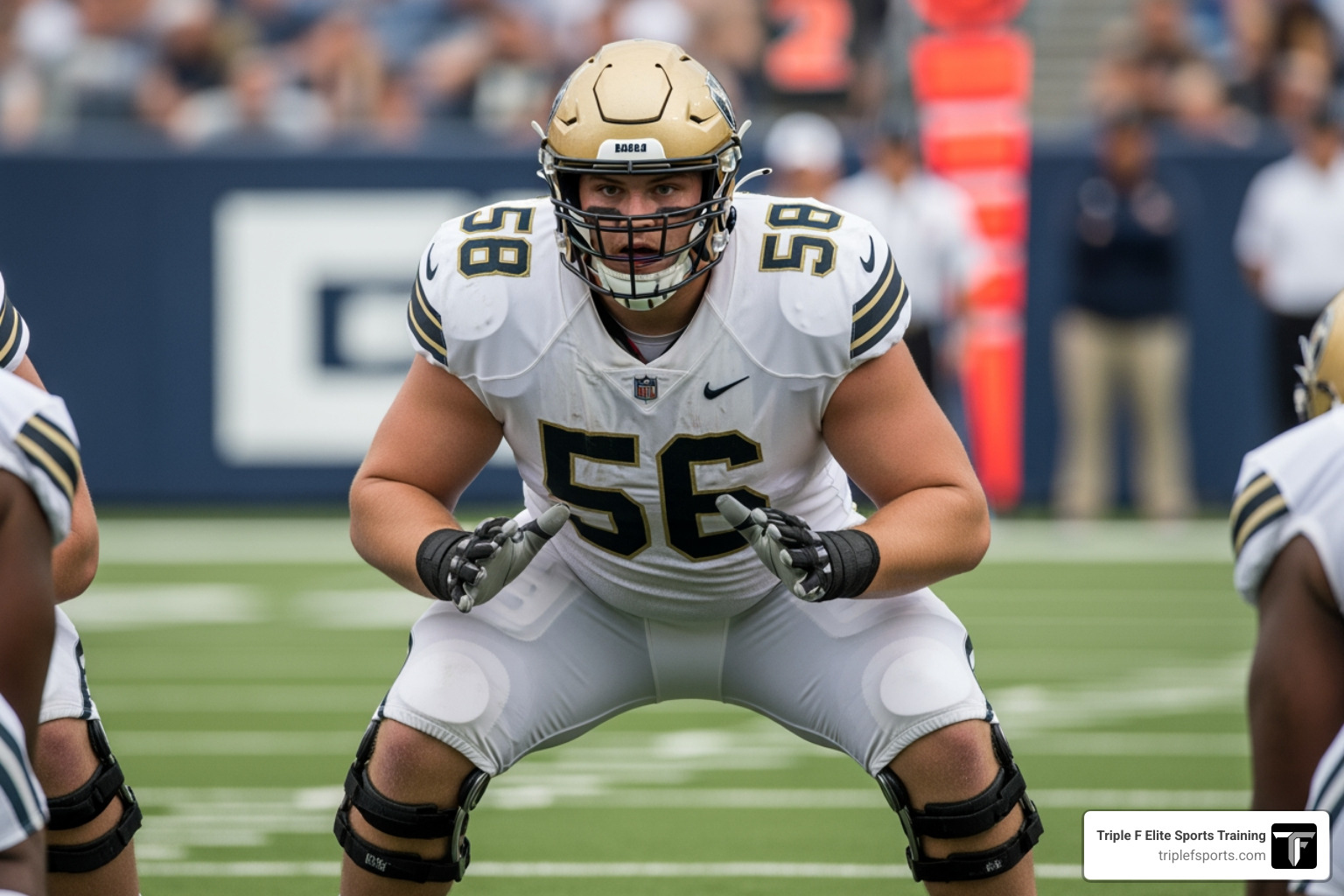
- Covered Linemen: Have a defender directly over them or in an adjacent gap. They take a lateral step to gain outside leverage and drive the defender laterally.
- Uncovered Linemen: Have no defender directly over them. They take an oblique step to assist a teammate, creating a double-team before potentially moving to the second level.
Key Principles:
- Stay Hip-to-Hip: Prevents defensive penetration during double teams.
- Keep Shoulders Square: Allows linemen to peel off to the second level without losing balance.
- Maintain Eye Discipline: Both linemen in a double team must watch the linebacker to react to his movement.
Mastering the Triple Zone Combination Block
The “triple zone combination block” is a frontside block between the tackle and tight end. It is essential for controlling the edge. For in-depth coaching, see this Offensive Line Training System Mastering the triple zone combination block.
- Communication: The tight end makes a “triple” call.
- Check Step: Both take a short, controlled step for leverage.
- Tight End: Gets vertical, keeps shoulders square, and stays ready to peel to the linebacker.
- Tackle: Aims for the playside number of the defender, covering inside-out for inside zone or outside-in for outside zone.
Identifying Responsibilities
Linemen use pre-snap reads to identify defensive techniques (0-technique over center, 3-technique outside guard, etc.). Communication calls like “Single,” “Double,” or “Triple” zone reaffirm who is working together. The decision of who blocks the linebacker is fluid; if a defensive end pinches inside, the guard takes him, and the tackle moves to the second level. This adaptability ensures no defender goes unblocked.
Athleticism and Evolution: The Modern Lineman
Modern zone blocking offensive line schemes prioritize agility over brute force. We look for players who are “light on their feet” and can move laterally to reach the second level. Training programs like our Youth Training (12 to 18) focus on these foundational athletic traits.
Evolution of the Scheme:
While popularized by Alex Gibbs and Mike Shanahan in the 1990s, zone blocking has evolved. Data shows a 12% decline in zone usage at the FBS level since 2018 as gap schemes gain popularity. However, it remains a staple in the NFL. In 2024, teams like the Commanders and Eagles relied heavily on Inside Zone, while the Niners and Texans used Outside Zone. The Seattle Seahawks under Pete Carroll even developed hybrid schemes, blending zone principles with power-oriented personnel to maximize versatility.
Strategic Advantages and Pass Protection
Advantages:
- Simplicity: Consistent rules regardless of the defensive front.
- Adaptability: Linemen can “pass off” defenders during stunts.
- Double Teams: Naturally creates movement at the point of attack.
- Versatility: Provides multiple cutback lanes for running backs.
Disadvantages:
- Athleticism Demands: Requires high foot speed and agility.
- Practice Intensity: Demands immense repetition for perfect coordination.
- Blitz Vulnerability: Can be susceptible to well-timed blitzes if communication fails.
Zone Pass Protection:
In “zone-locking” pass protection, linemen protect areas rather than specific rushers. This is highly effective against twists and stunts. By maintaining a cohesive pocket and stopping initial penetration, the line gives the quarterback a clean platform. However, it requires consistent reps to ensure smooth “pass-offs” and avoid unblocked blitzers.
The Controversy of Cut Blocking
Cut blocking involves blocking a defender below the waist to prevent pursuit or create cutback lanes. While legal within specific parameters, it is controversial due to injury risks. Proponents argue it is a legitimate use of leverage, while critics focus on player safety. For a zone blocking offensive line, it remains a vital tool for backside cutoff when executed correctly.
The Running Back’s Perspective: Vision and Cutbacks
A running back’s success in a zone scheme depends on vision and decisiveness. At Triple F Elite Sports Training, including our NFL Pre-Draft Training, we teach backs to read defensive flow rather than hitting a predetermined hole.
Key Landmarks:
- Inside Zone: Vertical path between guard and center; look for cutbacks behind the center.
- Outside Zone/Stretch: Aim for the outside shoulder of the tackle or tight end to stretch the defense horizontally.
- Bounce vs. Bend: The back must decide in a split second whether to “bounce” outside or “bend” back inside based on the line’s movement.
Decisive cuts are mandatory. A back who hesitates in a zone scheme will struggle to find the seams created by the offensive line.
Frequently Asked Questions about Zone Blocking
What is the main difference between inside and outside zone?
Inside Zone (IZ) targets a vertical path, usually between the guard and center, aiming for vertical movement. Outside Zone (OZ) or “stretch” aims for the perimeter, stretching the defense horizontally to create a wall or a frontside lane.
Why do zone blocking schemes prefer smaller, more athletic linemen?
Athletic linemen excel at lateral movement, which is required to reach zones and cut off defenders. They are also better at the balance and coordination needed to engage in a double-team and then smoothly peel off to block a linebacker.
How does a lineman know when to leave a double team for a linebacker?
It is a split-second decision based on eye discipline and movement. Once the down lineman is controlled and the linebacker “declares” his path by filling a gap or flowing over the top, the designated offensive lineman releases to engage him.
Conclusion
The zone blocking offensive line is a strategic cornerstone of modern football. By prioritizing athleticism, coordination, and area responsibility, it allows offenses to adapt to any defensive look. While it requires rigorous practice and a visionary running back, the results are explosive running lanes and a cohesive unit.
At Triple F Elite Sports Training in Knoxville, we develop athletes with both the physical traits and the high-level football IQ needed to dominate. Whether you are a youth player or a pro, our Offensive Line Sports Training programs are designed to open up your full potential. Join us to master the nuances of the game and lift your performance on the gridiron.