
Why Every Athlete Needs a Structured Training Program
An athlete workout program is more than a list of exercises—it’s a comprehensive training system that develops athletic muscle through absolute strength, power production, mobility, and neurological output for sport-specific performance. Unlike traditional bodybuilding routines that isolate muscles, an effective athlete program integrates explosive movements, functional strength patterns, and recovery strategies to build a body that performs as well as it looks.
Key Components of an Athlete Workout Program:
- Block periodization – Conditioning, strength, and power phases that build on each other
- 4-day training split – Lower body, upper body, athletic day, and speed/impulse work
- Olympic lifting movements – Snatches, cleans, and jerks for explosive power
- Plyometric training – Depth jumps, bounds, and unilateral work for coordination
- Strategic recovery – Mobility protocols, nutrition planning, and adequate rest days
The difference between athletic training and typical gym routines is clear: athletic muscle combines strength with speed, power with coordination, and size with functionality. As one coach puts it, “We are all athletes even without a playing field—athletes in life.” This philosophy recognizes that whether you’re competing on Friday nights or simply want to move better in daily activities, training like an athlete builds a resilient, capable body.
Many athletes still follow outdated bodybuilding blueprints from 40 years ago, treating the body as isolated parts rather than an integrated system. Elite multi-sport athletes like Bo Jackson and Michael Jordan succeeded through movement-based training that emphasized versatility over specialization. The reality is simple: you don’t need to lift heavy every single day to see results. A well-structured 4-day split provides the “goldilocks zone” of training intensity and recovery for both competitive athletes and fitness enthusiasts.
I’m Kevin O’Shea, a Certified Strength and Conditioning Specialist with experience coaching high school athletes and developing performance training programs that integrate physical and mental fitness. Throughout my career, I’ve seen how a properly designed athlete workout program transforms not just performance metrics, but confidence, resilience, and overall quality of life.
The Core Pillars of an Effective Athlete Workout Program
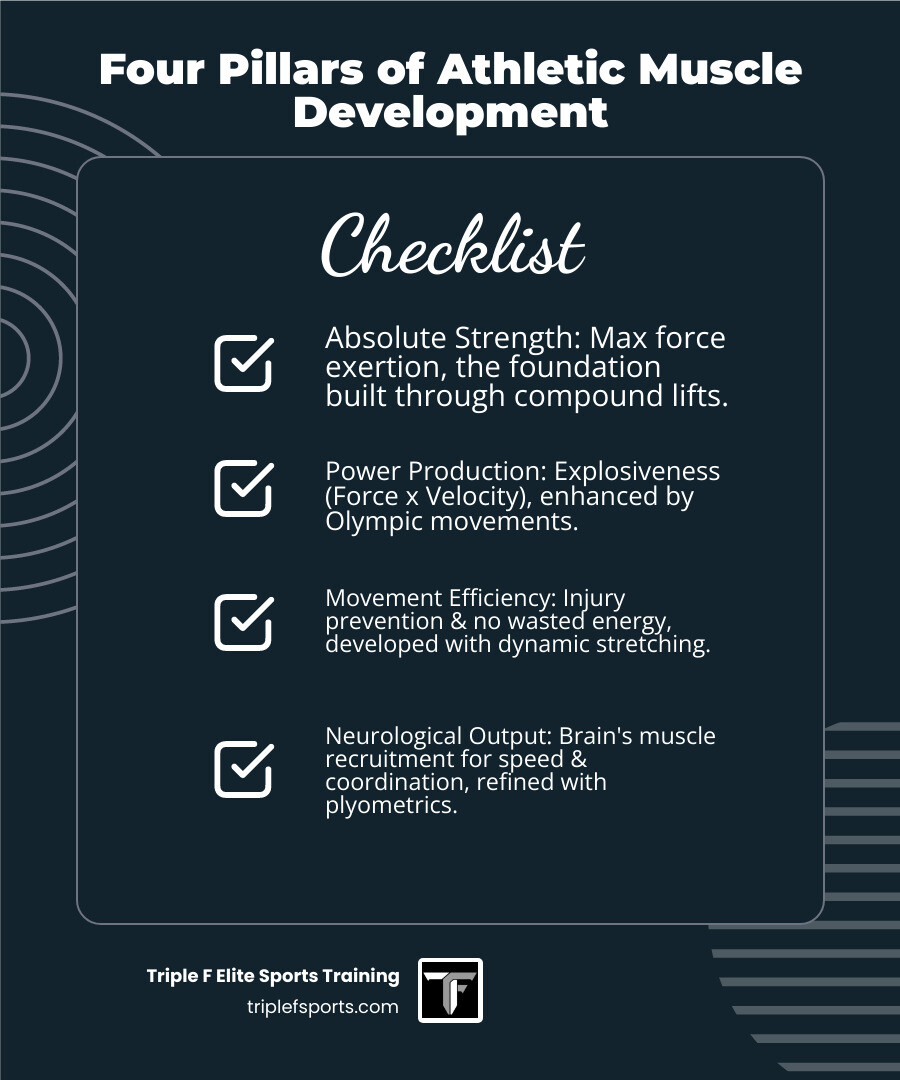
When we talk about an athlete workout program, we aren’t just talking about getting “jacked.” We are talking about enhancing the body’s ability to produce force rapidly and efficiently. This starts with neurological output—the brain’s ability to recruit motor units and fire muscles in the correct sequence.
An athlete with high neurological output can jump higher and sprint faster, even if they have the same muscle mass as a bodybuilder. To achieve this, our programs prioritize absolute strength (the maximum force you can exert) as the foundation, which then allows for greater power production (force x velocity). We also focus heavily on movement efficiency, ensuring that no energy is wasted during complex sport-specific movements. At Triple F Elite Sports Training, we believe that understanding your starting point is vital, which is why we use Youth Assessments to tailor the journey for every individual.
Designing Your Athlete Workout Program with Block Periodization
To avoid plateaus and overtraining, we use block periodization. This method divides training into focused phases, each lasting about 4 weeks.
- Conditioning Phase (Block 1): Focuses on higher volume and lower intensity (70-85% 1RM) to build a work capacity base.
- Strength Block (Block 2): Intensity increases (80-90% 1RM) while volume drops. This is where we build the “engine.”
- Power Development (Block 3): The final peak, focusing on moving weights as fast as possible (90-95% 1RM for low reps) and maximizing the nervous system.
| Feature | Absolute Strength Training | Athletic Power Training |
|---|---|---|
| Primary Goal | Move the heaviest weight possible | Move weight with maximum speed |
| Movement Speed | Slow and controlled | Explosive and rapid |
| Key Exercises | Squat, Bench, Deadlift | Cleans, Snatches, Jumps |
| Rest Periods | 3-5 Minutes | Full recovery for peak output |
For those looking to dive deeper into these phases, the Triple F Weightlifting Program for Athletes provides a structured roadmap for these transitions.
Integrating Plyometrics into Your Athlete Workout Program
If you want to “release your inner athlete,” you cannot ignore plyometrics. Plyometric training involves the stretch-shortening cycle—the ability of a muscle to transition from a rapid eccentric (lengthening) contraction to a powerful concentric (shortening) contraction. This is the secret sauce for a higher vertical leap and improved explosive power.
However, it’s not just about how high you can jump; it’s about how well you can land. Deceleration skills are critical for injury prevention. Learning to absorb force safely through Skilled Based Training ensures that your joints remain healthy while your performance sky-rockets.
The 4-Day Split: Balancing Power and Recovery
One of the most common questions we hear is, “How many days should I train?” For the majority of athletes, a 4-day split is the “Goldilocks zone.” It provides enough training frequency to hit every major muscle group twice a week while allowing the central nervous system (CNS) to recover. Heavy lifting is taxing on more than just your muscles; your brain and nerves need time to reset to maintain high-quality output.
Day 1 and 2: Building the Foundation
The first half of the week focuses on the “big rocks.”
- Day 1 (Lower Body): We prioritize compound lifts like the trap-bar deadlift. The trap bar is often safer for athletes as it allows for a more upright torso, reducing shear force on the spine while still allowing for heavy loading of the hip hinge.
- Day 2 (Upper Body): We focus on movements like the behind-the-neck jerk or overhead press. These aren’t just for show; they build shoulder stability and the ability to transfer force from the ground through the core and into the arms.
Interested in seeing how this feels in person? We offer an Adult Membership – Free Session to help you get started on the right foot.
Day 3 and 4: Athleticism and Impulse Development
The second half of the week shifts from “slow” strength to “fast” power.
- Day 3 (Athletic Day): This day is dedicated to balance, coordination, and unilateral (single-leg) jumps. We use PVC walks and depth drops to bound to improve body control.
- Day 4 (Speed and Impulse Day): This is where we tie everything together. Impulse production is about how quickly you can generate force. We use rapid-fire cleans and sprint mechanics to ensure that the strength built on Days 1 and 2 translates directly to the field. Developing this Sport Skill is what separates a gym-goer from a true competitor.
Essential Exercises for Athletic Muscle and Speed
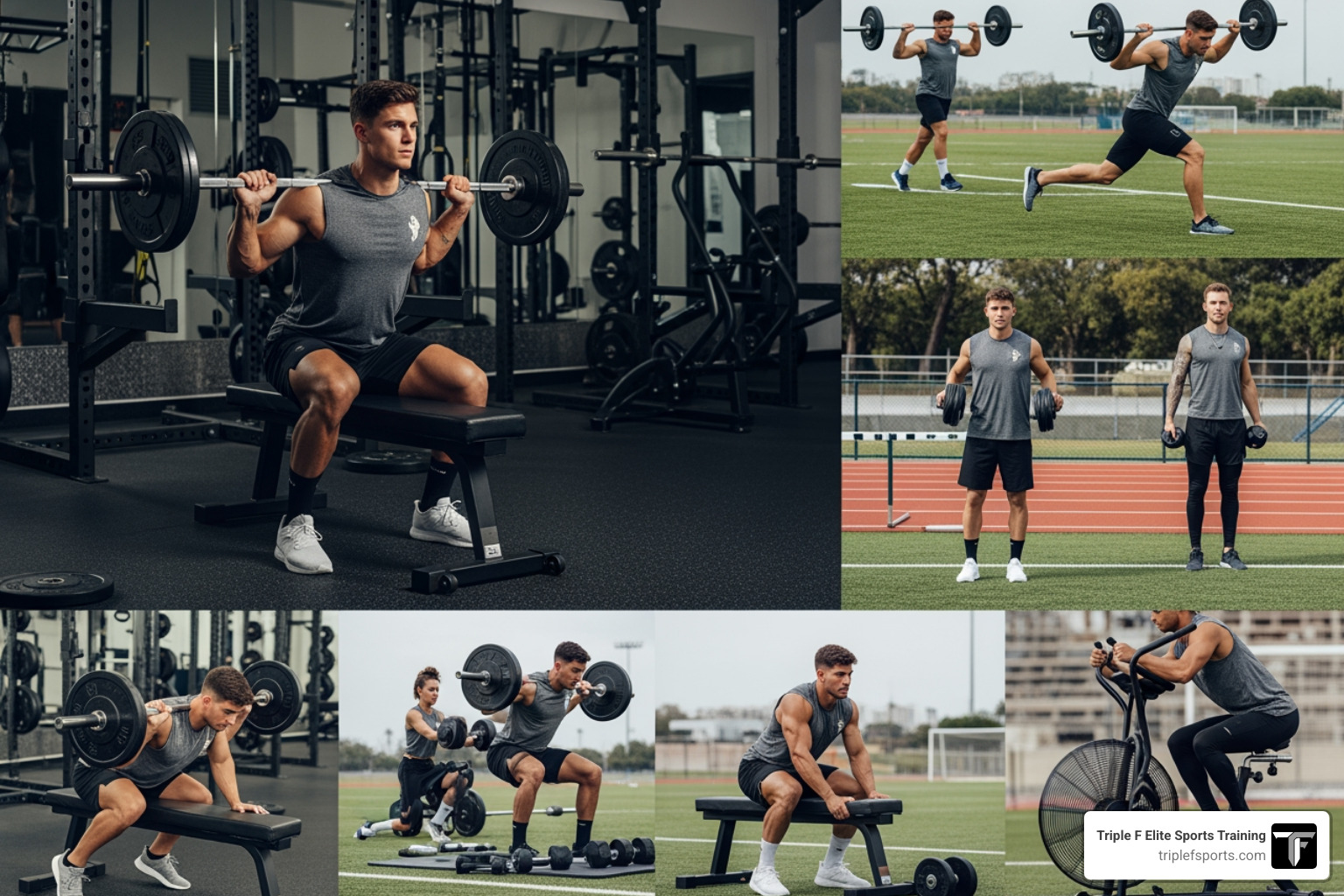
To build an athletic physique, you must accept the barbell, but you must do so with a purpose. Olympic lifting movements like snatches and hang cleans are staples of any elite athlete workout program. These movements require total-body coordination and force production that traditional isolation exercises simply cannot match.
Lower Body Power and Impulse
Your glutes, hamstrings, and quads are the “engine room” of athleticism.
- Squat Variations: Front squats are particularly effective for athletes because they demand an upright posture and intense core engagement.
- Romanian Deadlifts (RDLs): Essential for building the posterior chain and “healthy hamstrings.”
- Reverse Hypers: A fantastic accessory for lower back health and glute development.
- Rapid Fire Cleans: These teach the body to cycle through movements quickly, improving neural drive.
For athletes in the trenches, our Offensive Line Sports Training focuses specifically on the explosive “get-off” power required for the position.
Upper Body Functional Strength
Upper body training for athletes should focus on “push, pull, and carry” patterns.
- Dumbbell Bench Press: Allows for a greater range of motion and challenges stabilizers more than a barbell.
- Pennsylvania Press: A unique variation that builds incredible overhead stability.
- Pull-ups: The ultimate test of relative upper body strength.
- Face Pulls: A crucial “pre-hab” exercise to balance out all the pushing and keep the shoulders healthy.
- Dynamic Trunk Control: Exercises like hanging leg lifts or drop-catch plank rows ensure your core can handle the “chaos” of sport.
Position-specific work, such as our Defensive Line/Linebacker Sports Training, emphasizes these functional upper-body patterns to help players shed blocks and make plays.
Holistic Performance: Nutrition, Recovery, and Injury Prevention
You can have the best athlete workout program in the world, but if you aren’t eating or sleeping right, you’re just spinning your wheels. Athletic training is a 24/7 commitment. We manage this through progressive overload—gradually increasing the stress placed on the body—and intensity management, ensuring you don’t burn out before the season starts.
Mobility and Pre-hab Protocols
Every session must begin with a dynamic warm-up. We aren’t just “stretching”; we are priming the nervous system.
- Spiderman Lunges with Thoracic Rotation: These open up the hips and mid-back, two areas that are notoriously tight in athletes.
- Ramp-up Sets: Never jump straight into your working weight. Use 2-3 lighter sets to “grease the groove” and prepare your joints for the load.
Our Sports Medicine team emphasizes these protocols to ensure that our athletes spend more time on the field and less time on the trainer’s table.
Recovery Strategies for Longevity
Recovery is where the actual “gains” happen.
- Nutrition: Athletes should generally aim for a caloric surplus if they want to build muscle, with a high protein intake (at least 1 gram per pound of bodyweight). Check out our Nutrition resources for more specific guidance.
- Sleep Hygiene: Aim for at least 8 hours of sleep. This is when your body releases growth hormones and repairs tissue.
- Soft-Tissue Work: Foam rolling and mobility drills help maintain tissue quality.
- ACL Bridge Program: For those recovering from surgery, our Physical Therapy department offers a specialized bridge program to transition safely back into high-intensity training.
Frequently Asked Questions about Athlete Training
What defines “athletic muscle” compared to bodybuilding?
Bodybuilding focuses on hypertrophy (size) and aesthetics through isolation. Athletic muscle focuses on the function of that muscle. It encompasses absolute strength, mobility, and the ability to produce power. An athlete might not have 20-inch biceps, but their muscles are “elastic” and “explosive,” capable of sprinting and jumping with high neurological output.
How do I tailor a general program to my specific sport?
While the foundations of strength and power are universal, you can customize by adjusting the “accessory” work. For example, a volleyball player might add more vertical-specific plyometrics, while a football player might focus more on heavy sled pushes and lateral agility. We recommend scaling back the base program slightly when sport-specific practice intensity increases.
Can beginners start an athletic workout program safely?
Absolutely! In fact, it’s better to learn “movement-based” training early rather than having to unlearn bad habits later. Beginners should focus on mastering form with light weights and prioritizing fundamental movements like squats, hinges, and pulls.
Conclusion
At Triple F Elite Sports Training in Knoxville, we are dedicated to helping you reach your full performance potential. Our athlete workout program isn’t just about lifting weights; it’s about a Christ-centered development approach that builds character alongside physical prowess. Whether you are a youth athlete just starting out or an adult looking to reclaim your athleticism, our facility offers the expert coaching and community support you need.
Ready to see the difference for yourself? Join us for Skilled Based Training and let’s start crafting your perfect training program today. Knoxville athletics is about to reach a new level—are you coming with us?