
What Is Auto Accident Physical Therapy — and Do You Need It?
Auto accident physical therapy is a structured, hands-on rehabilitation program designed to help you recover from injuries caused by a car crash — reducing pain, restoring movement, and preventing long-term damage.
Here’s a quick overview of what it involves:
| What It Treats | How It Helps | When to Start |
|---|---|---|
| Whiplash, neck and back pain | Reduces pain and restores mobility | As soon as your doctor clears you |
| Soft tissue injuries, sprains | Rebuilds strength and flexibility | Ideally within days of the accident |
| Herniated discs, joint injuries | Prevents chronic pain and stiffness | Before symptoms become permanent |
| Concussions, balance issues | Restores neurological function | Early intervention yields best results |
Nearly 6 million car accidents happen every year in the United States, leaving roughly 2.5 million people with injuries. Many of those injuries feel manageable at first — then get worse weeks later. That’s because some damage, especially to soft tissue and the spine, doesn’t fully show up right away.
The good news? Most car accident injuries respond very well to physical therapy — especially when treatment starts early.
I’m Kevin O’Shea, a Certified Strength and Conditioning Specialist with a background in athletic development and behavioral health, and at Triple F Elite Sports Training I’ve seen how a structured recovery program can get athletes and everyday people back to full function after an auto accident physical therapy setback. Whether you’re a competitive athlete or just want to get back to daily life without pain, this guide walks you through exactly what to expect.
Auto accident physical therapy word list:
- Ankle sprain physical therapy
- Sports medicine Knoxville
Why You Need Auto accident physical therapy After a Collision
When you’re involved in a car accident, your body undergoes a massive amount of force in a very short window of time. Even a “minor” fender bender can snap the neck forward and back with enough intensity to tear micro-fibers in your muscles and ligaments. This is why auto accident physical therapy isn’t just for people who have broken bones; it’s for anyone who wants to ensure their body heals correctly.
The Science of Whiplash and Neck Mobility
Whiplash is the most common injury reported after a motor vehicle accident. It occurs when the soft tissues of the neck are stretched beyond their normal range of motion. According to a study published in the journal Spine (2018), patients who underwent a structured physical therapy regimen over eight weeks saw a 35% improvement in neck mobility and a significant reduction in pain. Without professional intervention, these injuries can lead to chronic headaches and restricted movement that lasts for years. You can read more about vestibular rehabilitation and head injuries to understand how these forces impact your internal balance systems.
Preventing Chronic Pain and Soft Tissue Damage
Soft tissue damage—like strains in the back or tears in the shoulder—is incredibly common because the seatbelt and airbag, while life-saving, apply concentrated pressure to specific areas of the body. If these tissues heal with excessive scar tissue or in a “guarded” (tense) position, you may develop chronic pain.
At Triple F, our physical therapy services focus on breaking down that scar tissue and restoring the natural glide of your muscles. By addressing these issues early, we help prevent long-term complications like degenerative disc disease. In fact, research from Medscape suggests that individuals who skip physical therapy after a crash are significantly more likely to suffer from spinal degeneration later in life.
Restoring Mobility through Non-Invasive Healing
The NHTSA car accident statistics remind us that millions are injured annually, but many of these victims rely solely on pain medication. While Vitamin I (Ibuprofen) has its place, it doesn’t fix a mechanical problem. Auto accident physical therapy is a non-invasive alternative that addresses the root cause of the pain rather than just masking the symptoms. It’s about teaching your body how to move again safely.
Common Techniques in Auto accident physical therapy
We use a variety of specialized tools and techniques to get you back on your feet. No two accidents are the same, so no two treatment plans should be the same either.
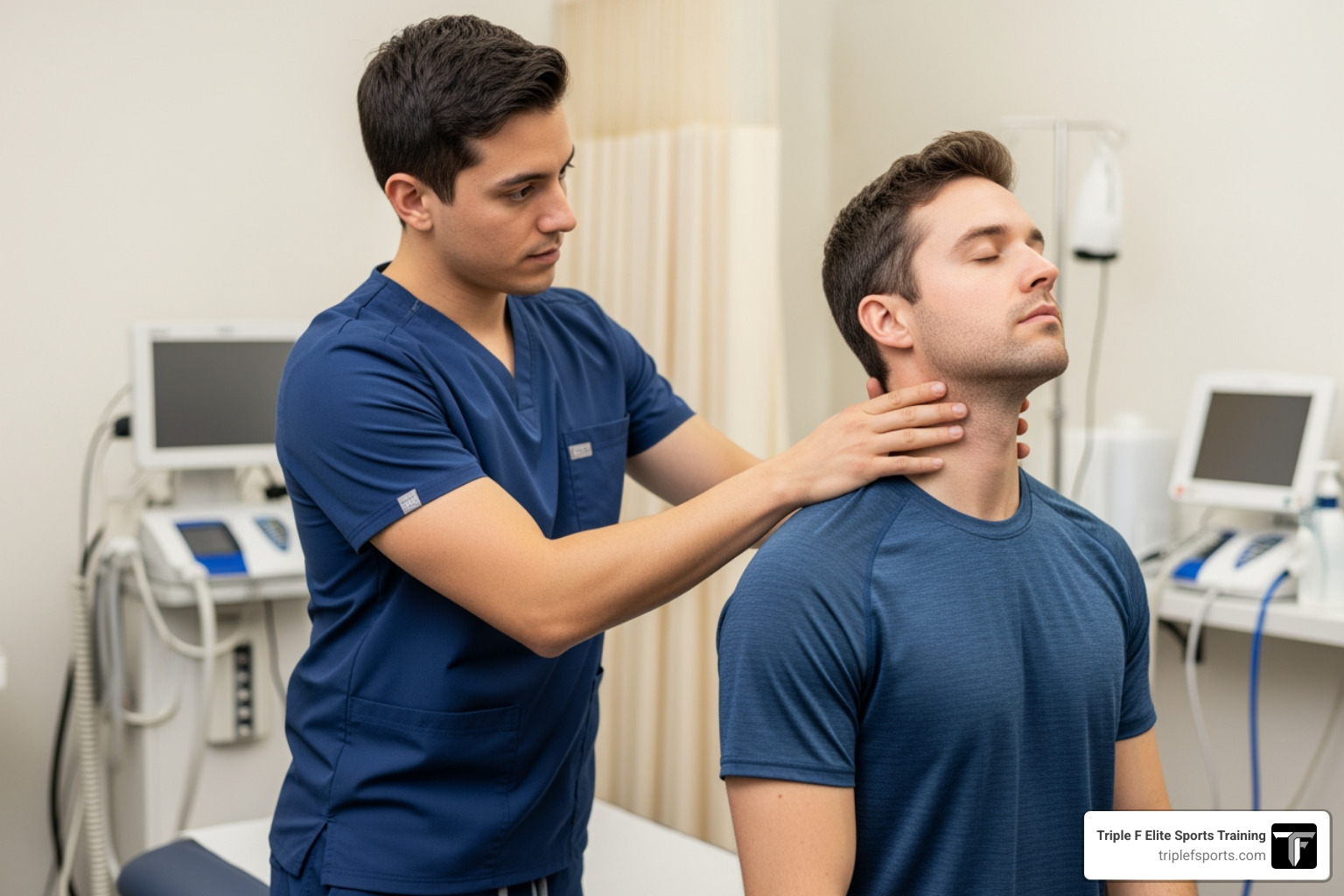
- Manual Therapy: This is the “hands-on” part. We use joint and soft tissue mobilizations to increase flexibility and decrease the “locked-up” feeling that follows an accident.
- Functional Electrical Stimulation (FES): If you’ve suffered nerve damage or extreme muscle weakness, FES uses small electrical currents to help your muscles contract and regain strength.
- Ultrasound Therapy: This uses sound waves to generate deep heat within the tissues, promoting blood flow and speeding up the cellular repair process.
- Gait Training: If your accident affected your hips, knees, or ankles, gait training helps reteach your body the proper mechanics of walking to prevent secondary injuries in your spine.
- Vestibular Rehabilitation: For those dealing with dizziness or vertigo after a concussion, this specialized therapy helps recalibrate the inner ear and brain connection.
Addressing Specific Injuries: Whiplash, Back Pain, and Concussions
Different injuries require different “playbooks.” For example, back pain from a herniated disc often requires spinal decompression or traction. Research on herniated disc relief shows that reducing pressure on the spinal column can restore mobility and often eliminate the need for invasive surgery.
Concussions are another major concern in Knoxville car accidents. We use balance training and neuromuscular re-education to help patients regain their cognitive and physical footing. If you’re an athlete, this is where our expertise in sports medicine really shines, as we understand the specific demands of returning to high-impact activity.
What to Expect During Your Recovery Journey
Starting auto accident physical therapy can feel a bit overwhelming, especially if you’re still dealing with the stress of insurance adjusters and car repairs. Here is exactly how we handle the process at Triple F.
The Initial Evaluation
Your first session is all about discovery. We’ll sit down and talk about the accident—not just where it hurts now, but where you felt the impact and what your daily life looks like. We’ll perform:
- Medical History Review: Understanding any pre-existing conditions.
- Range of Motion Testing: Seeing exactly how far you can move your neck, back, and limbs without pain.
- Strength Assessment: Identifying muscles that have “shut down” due to pain or trauma.
- Functional Testing: Can you sit, stand, and walk comfortably?
The Recovery Timeline
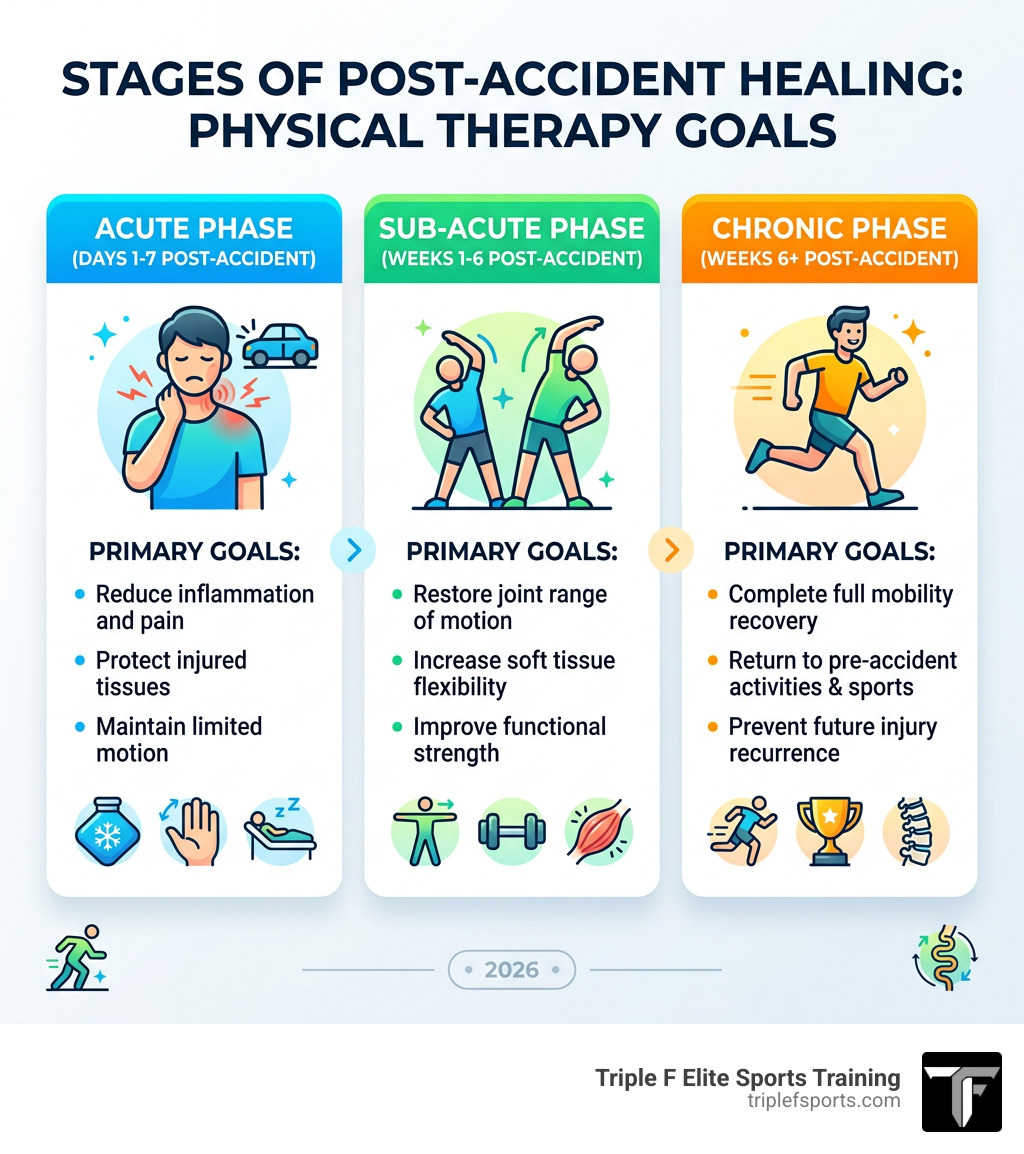
Recovery isn’t a straight line; it’s a series of phases. While most minor injuries show significant improvement within 2 to 3 weeks, a full recovery typically takes 6 to 12 weeks. More severe cases involving fractures or neurological damage may take six months or longer.
| Phase | Duration | Focus |
|---|---|---|
| Acute Phase | Days 1–14 | Reducing inflammation, pain management, and gentle movement. |
| Sub-Acute Phase | Weeks 2–6 | Restoring range of motion and beginning light strengthening. |
| Chronic/Functional Phase | Weeks 6+ | Returning to full activity, sports-specific training, and long-term prevention. |
The Patient-Therapist Relationship
We believe in a “we” approach. You aren’t just a passive recipient of care; you’re an active participant. We set realistic goals together—whether that’s being able to lift your toddler without back pain or getting back on the volleyball court.
Navigating Insurance and Legal Claims
One of the most stressful parts of a car accident is the paperwork. However, attending auto accident physical therapy is actually one of the best things you can do for your legal or insurance claim.
Documentation is Key
If you are pursuing a settlement, insurance companies need “proof” of your injury. A physical therapist’s initial evaluation and subsequent progress notes provide an objective, medical record of your limitations and the work required to fix them. Skipping therapy can actually weaken your claim, as insurance adjusters may argue that your injuries weren’t serious enough to require professional care.
Understanding PIP and Med Pay
In many cases, your own auto insurance includes Personal Injury Protection (PIP) or Medical Payments (Med Pay) coverage. In Tennessee, these often cover 100% of your physical therapy costs up to a certain limit, regardless of who was at fault for the accident. This means you can often start treatment with no out-of-pocket expense. If the accident was the other person’s fault, their insurance or a legal settlement should eventually cover these costs as well.
Proving Medical Necessity
Our team is experienced in providing the specific documentation needed to prove that your treatment is medically necessary. We track your progress with standardized tests that show exactly how your function is improving, which is vital for settlement negotiations.
Maximizing Results with Auto accident physical therapy at Home
What you do in the clinic is only half the battle. To see the best results, you need to be consistent with your Home Exercise Program (HEP). These exercises are designed to reinforce the gains we make during your sessions.
Essential Home Exercises
- Chin Tucks: These are the gold standard for whiplash recovery. Sit tall and gently tuck your chin straight back (making a “double chin”). This strengthens the deep neck flexors and takes the strain off the larger, overworked muscles.
- Shoulder Squeezes: While sitting or standing, squeeze your shoulder blades together as if you’re trying to hold a pencil between them. This helps correct the “hunched” posture that often comes with back pain.
- Heel Slides: If you have lower back or hip pain, lie on your back and slowly slide one heel toward your buttocks, then back out. This is a great way to introduce therapeutic exercise without overstressing the spine.
- Side-to-Side Neck Rotations: Gently turn your head to one side until you feel a light stretch, hold for 5 seconds, and repeat on the other side. Never force the movement!
The Importance of Consistency
Think of these exercises like a prescription. You wouldn’t take just half of your antibiotics, right? Doing your stretches every day helps keep the tissues supple and prevents the “stiffening” that often happens overnight or after a long day at work.
Frequently Asked Questions about Auto Accident Recovery
When should I start physical therapy after a car accident?
The short answer: As soon as possible. Ideally, you should be evaluated within 72 hours of the accident. While you might need a few days of rest if you have a severe concussion or a fracture, early intervention for soft tissue injuries helps manage the inflammatory phase and prevents the “guarding” reflex where your muscles lock up. Always get clearance from an ER doctor or your primary care physician first to rule out life-threatening issues.
Is physical therapy covered by insurance after an accident?
Yes, in the vast majority of cases. Most Tennessee auto policies have Med Pay or PIP that covers physical therapy. If you were not at fault, the other driver’s insurance is responsible. We can help you navigate the coordination between your health insurance and auto insurance to ensure your focus remains on healing, not bills.
How long does physical therapy typically take for car accident recovery?
While every person is different, the standard “tissue healing” timeline for muscles and ligaments is about 6 to 8 weeks. Most of our patients attend sessions 2 to 3 times per week. If you have a more complex injury, like a herniated disc or a post-concussion syndrome, we may work together for 3 to 6 months to ensure you don’t have a relapse of symptoms.
Conclusion
Recovering from a car accident is a marathon, not a sprint. At Triple F Elite Sports Training in Knoxville, we take a holistic, Christ-centered approach to your recovery. We don’t just want to “fix” the pain; we want to unlock your full potential and get you back to the activities—and the people—you love.
Whether you’re dealing with a lingering ache from a fender bender or a major injury that has sidelined your athletic career, we are here to help you bounce back stronger. Our team of experts understands the unique stresses of auto accident physical therapy and is ready to build a personalized plan just for you.
Don’t let a car accident dictate your future mobility. Schedule your physical therapy evaluation with us today and take the first step toward a full recovery.