
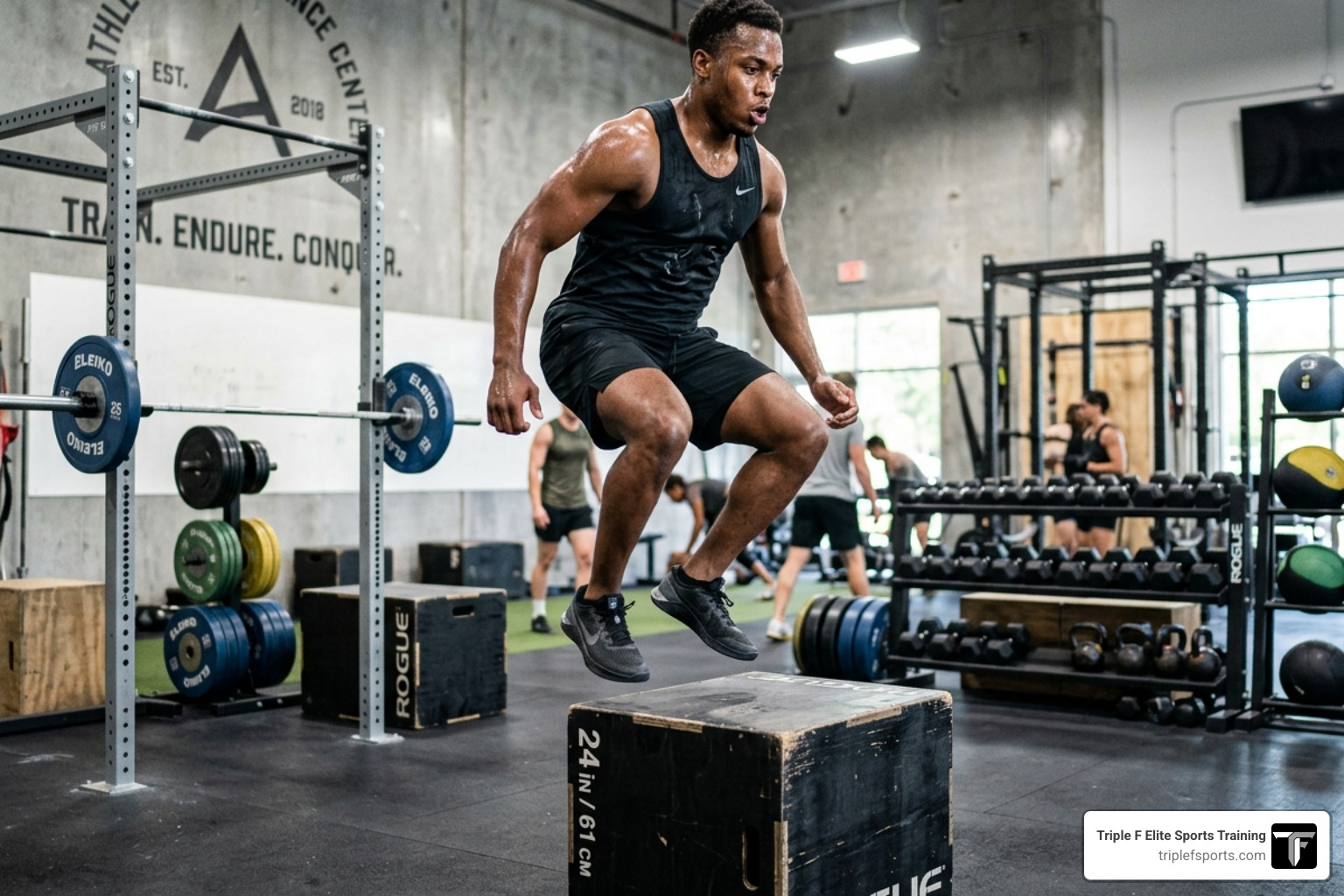
Why Finding the Right Sports Training Gym Can Change Everything
A sports training gym is a specialized facility designed to improve athletic performance — not just general fitness. Here’s a quick look at what separates a true sports performance gym from a standard health club:
| Feature | Sports Training Gym | Standard Gym |
|---|---|---|
| Programming | Sport-specific, periodized | General fitness |
| Coaching | CSCS-certified performance coaches | Personal trainers (varied) |
| Equipment | Plyometric stations, turf, specialty racks | Cardio machines, basic weights |
| Testing | Performance assessments, symmetry testing | Rarely offered |
| Recovery | Cold plunge, compression, red light therapy | Sometimes basic sauna |
| Age programs | Youth through professional tiers | Mostly adult general |
Whether you’re a youth athlete trying to make the varsity team or an adult looking to perform at your peak, the facility you train in matters. A lot.
The difference between average results and elite results often comes down to three things: the right environment, the right coaching, and a program built specifically for you.
Finding that combination in one place — especially in a city like Knoxville — isn’t always easy. This guide breaks down exactly what to look for, what elite sports performance training actually looks like, and how to evaluate your options.
I’m Kevin O’Shea, a Certified Strength and Conditioning Specialist, former college wide receiver, and high school football coach who has built his career around elite athletic development at a sports training gym environment. My background spans behavioral health, on-field coaching, and performance training across multiple levels of competition. In the sections ahead, I’ll walk you through everything you need to know to find the right fit for your goals.
Sports training gym word roundup:
Why Choose a sports training gym Over a Standard Fitness Center?
When you walk into a “big box” gym, you see rows of treadmills and people working out to look better in a mirror. While there is nothing wrong with general fitness, an athlete has different requirements. At a sports training gym, the goal isn’t just aesthetics; it’s about how you move on the field, court, or track.
Choosing a specialized facility means stepping into an environment where every piece of equipment and every square foot of turf is designed for Your Peak Performance Starts Here: Discovering Elite Athletic Training Facilities. Unlike standard fitness centers, these gyms prioritize performance metrics over bicep curls. We utilize individualized assessments to find your specific “power leaks”—those tiny hitches in your movement that slow you down or increase your risk of injury.
Elite facilities also lean heavily on neuromuscular training. This isn’t just about making muscles bigger; it’s about teaching the brain to send stronger, more precise signals to those muscles. Through evidence-based protocols developed over decades of sports science research, we help athletes unlock explosive speed and coordination that a standard gym simply isn’t equipped to handle.
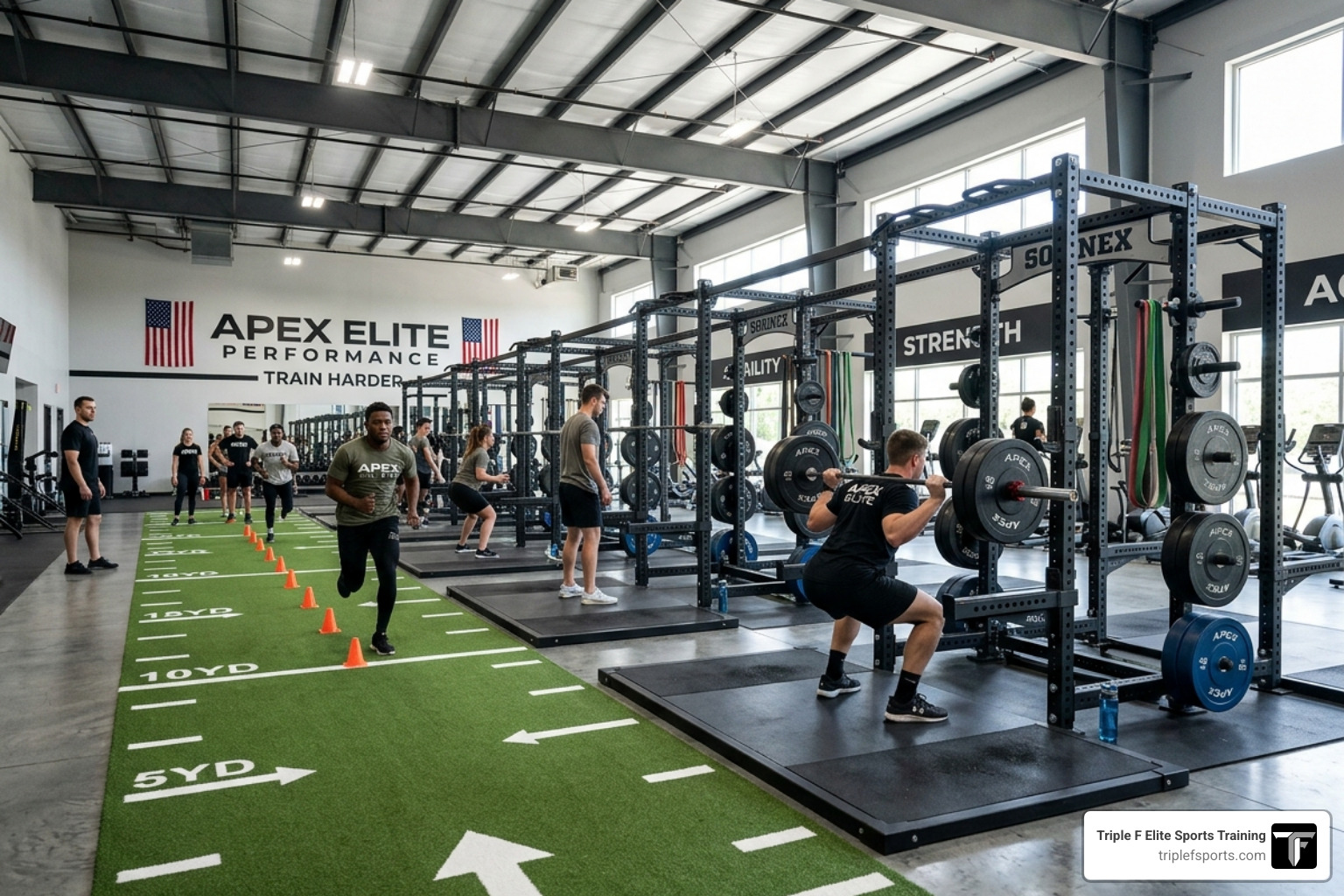
Specialized Equipment in a sports training gym
The tools of the trade are vastly different in a performance setting. You won’t find many “selectorized” machines that keep you sitting down. Instead, we focus on Skilled-Based Training and Sport Skill development using tools like:
- Super Treadmills: These aren’t your average jogging machines. They allow for overspeed training and incline work that forces the body to adapt to higher velocities than it could achieve on flat ground.
- Plyometric Stations: Dedicated areas for jumping and landing safely, which are essential for building explosive power.
- Hit Walls and Turf: Large open spaces for Offensive Line Sports Training where athletes can engage in sled pushes, medicine ball throws, and lateral agility drills.
- Elite Iron: High-performance racks equipped with calibrated plates and specialty bars (like safety squat bars or trap bars) that allow for safer, more effective heavy lifting.
Professional Coaching Standards in a sports training gym
In a standard gym, a trainer might have a weekend certification. In a sports training gym, the standards are significantly higher. We look for coaches with CSCS (Certified Strength and Conditioning Specialist) credentials and real-world D1 or professional experience.
This level of expertise is critical when coaching complex movements. Whether it’s Defensive Line Linebacker Sports Training or position-specific work like Wide Receiver Training by Amari Rodgers and Offensive Line Training by Jon Feliciano, the coach must understand the bio-mechanical demands of the sport. Professional athlete mentoring ensures that technical mastery is passed down to the next generation of competitors.
The Four Pillars of Human Performance: A Holistic Approach
Elite performance isn’t just about what you do during the 60 minutes you’re in the gym. To truly excel, we advocate for a holistic approach often referred to as the “Four Pillars.” This methodology, which you can Learn more about Exos methodology, ensures that every aspect of an athlete’s life supports their goals.
- Mindset: Performance starts between the ears. Mindset training involves building resilience, focus, and the “unwavering determination” required to push through difficult sessions.
- Nutrition (Fueling): You can’t out-train a bad diet. We provide fueling strategies based on Scientific research on sports nutrition to ensure athletes have the energy for high-intensity work and the nutrients for muscle repair. This often includes body composition analysis to track progress accurately.
- Movement: This is the “gym” part—improving movement efficiency, energy system development (cardio for your specific sport), and raw strength.
- Recovery: Regeneration is where the gains actually happen. A top-tier sports training gym will emphasize sleep, hydration, and active recovery protocols to keep athletes healthy year-round.
Tailored Programs for Every Stage of Athletic Development
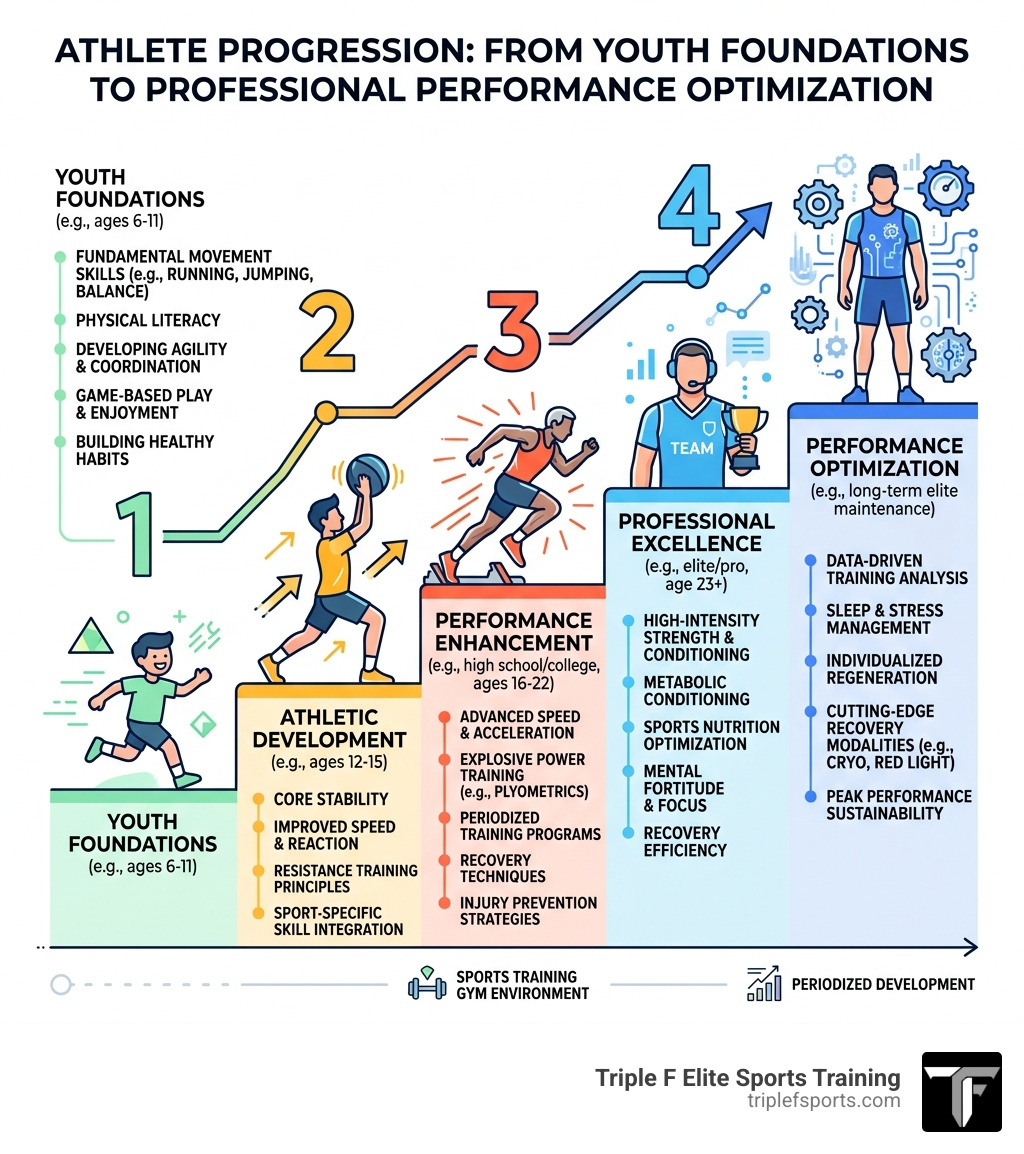
An 11-year-old soccer player should not be training the same way as a 22-year-old NFL prospect. One of the hallmarks of a great facility is its ability to offer age-appropriate progressions. We structure our programs to meet athletes exactly where they are in their journey.
| Athlete Level | Primary Focus | Key Goal |
|---|---|---|
| Youth (Grades 6-8) | Foundational Movement | Coordination, Confidence, Fun |
| High School | Strength & Explosiveness | Youth Training 12 to 18 for College Recruiting |
| College/Pro | Optimization & Specificity | NFL Pre-Draft Training and Performance Peak |
| Adults | Functional Health | Adult Training for Longevity and Performance |
The impact of this tiered approach is clear. Systems like these have supported 743 NFL draft picks (including eight No. 1 overall selections) and dozens of Olympic medalists. By starting with youth foundations and progressing toward professional optimization, we ensure that the body is never overloaded too early, reducing the risk of burnout and injury.
Maximizing Results Through Advanced Facilities and Recovery
The best sports training gym isn’t just a room full of weights; it’s a high-performance laboratory. When you are looking for The Ultimate Playbook: Finding Your Perfect Elite Sports Club, look for a facility that offers more than just a place to sweat.
Top-tier gyms often span 20,000+ square feet and feature 80+ world-class machines. But the real magic happens in the recovery zone. Modern performance centers now include:
- Infrared Saunas and Cold Plunges: To manage inflammation and speed up muscle recovery.
- Red Light Therapy: To assist with cellular repair and skin health.
- Compression Gear: Utilizing technology like Normatec to flush out metabolic waste after a hard leg day.
- Turf Zones and Posing Rooms: While turf is for speed work, posing rooms are increasingly popular for athletes (especially bodybuilders) to check symmetry and track physique changes under professional lighting.
Some facilities even offer 24/7 access and on-site nutrition cafes, making it easier for busy athletes to fit their training and fueling into a hectic schedule.
Injury Prevention and the Path to Return-to-Performance
The best ability is availability. You can’t win if you’re sitting on the sidelines. A major differentiator for a sports training gym is the integration of injury prevention into every session.
We use biomechanical testing to identify imbalances before they become injuries. This includes:
- Stability and Proprioception Work: Teaching the body to stay balanced under duress.
- Joint Health: Focusing on the mobility of ankles, hips, and shoulders.
- Symmetry Assessments: Ensuring the left side of your body is as strong and functional as the right.
For those already dealing with an injury, we offer a “Return-to-Performance” pathway. This bridges the gap between traditional physical therapy and full-speed competition. Our ACL recovery protocols, for example, involve rigorous return-to-play testing to ensure the athlete is truly ready to handle the cutting and jumping required in their sport. This care integration ensures that when you return, you aren’t just “healed”—you’re better than you were before.
Frequently Asked Questions about Sports Training
What is the difference between a sports training gym and a regular gym?
A regular gym provides the equipment for general exercise. A sports training gym provides a system. This includes sport-specific programming, elite coaching, advanced performance testing, and recovery tools that you won’t find at a neighborhood fitness center.
How do sports performance programs prevent injuries?
By focusing on “pre-hab.” We strengthen the small stabilizer muscles, improve joint mobility, and teach proper landing and deceleration mechanics. By correcting movement compensations, we take the stress off your ligaments and put it on your muscles, where it belongs.
At what age should a youth athlete start specialized training?
Most experts agree that around age 10-12 (middle school) is an ideal time to start. At this stage, the focus is on “Youth Foundations”—improving coordination, balance, and basic strength. It’s about building a broad athletic base that will support specialized sport skills later in high school.
Conclusion
Finding the right sports training gym is about more than just finding a place to lift weights; it’s about finding a partner in your athletic journey. At Triple F Elite Sports Training in Knoxville, we take pride in offering professional, Christ-centered athletic development that serves everyone from young beginners to seasoned pros.
Our Knoxville performance center is designed to be a one-stop shop for the serious athlete. With physical therapy integration, expert coaching, and tailored programs for all ages, we are dedicated to helping you unlock your full potential. Whether you’re looking for explosive speed, injury rehabilitation, or a supportive community to push you further, we invite you to experience the difference for yourself.
Ready to see what you’re truly capable of? Start your elite training journey today with a free first session and join a community that is as committed to your goals as you are.