
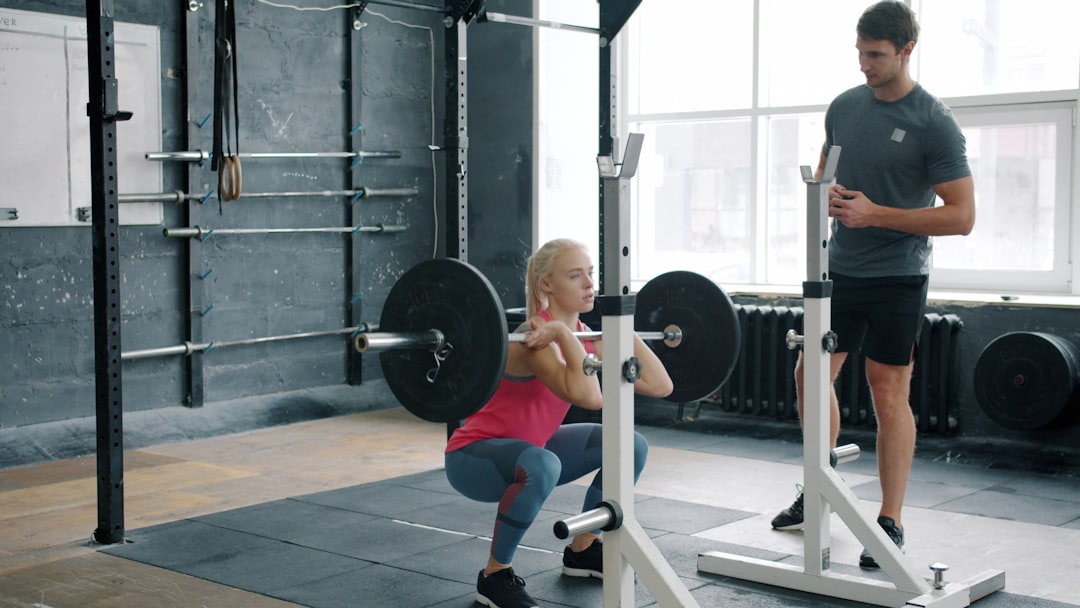
Why Strength and Conditioning for Teens Is One of the Best Investments in Your Athlete’s Future
Strength and conditioning for teens is safe, effective, and backed by science — when done right. Here’s a quick summary of what you need to know:
- Safe? Yes. Properly supervised strength training does not stunt growth or damage growth plates.
- When to start? As soon as a teen can follow instructions and control their own bodyweight.
- How often? 2-3 sessions per week, on non-consecutive days.
- What to focus on? Movement patterns (squat, hinge, push, pull, carry), not heavy lifting.
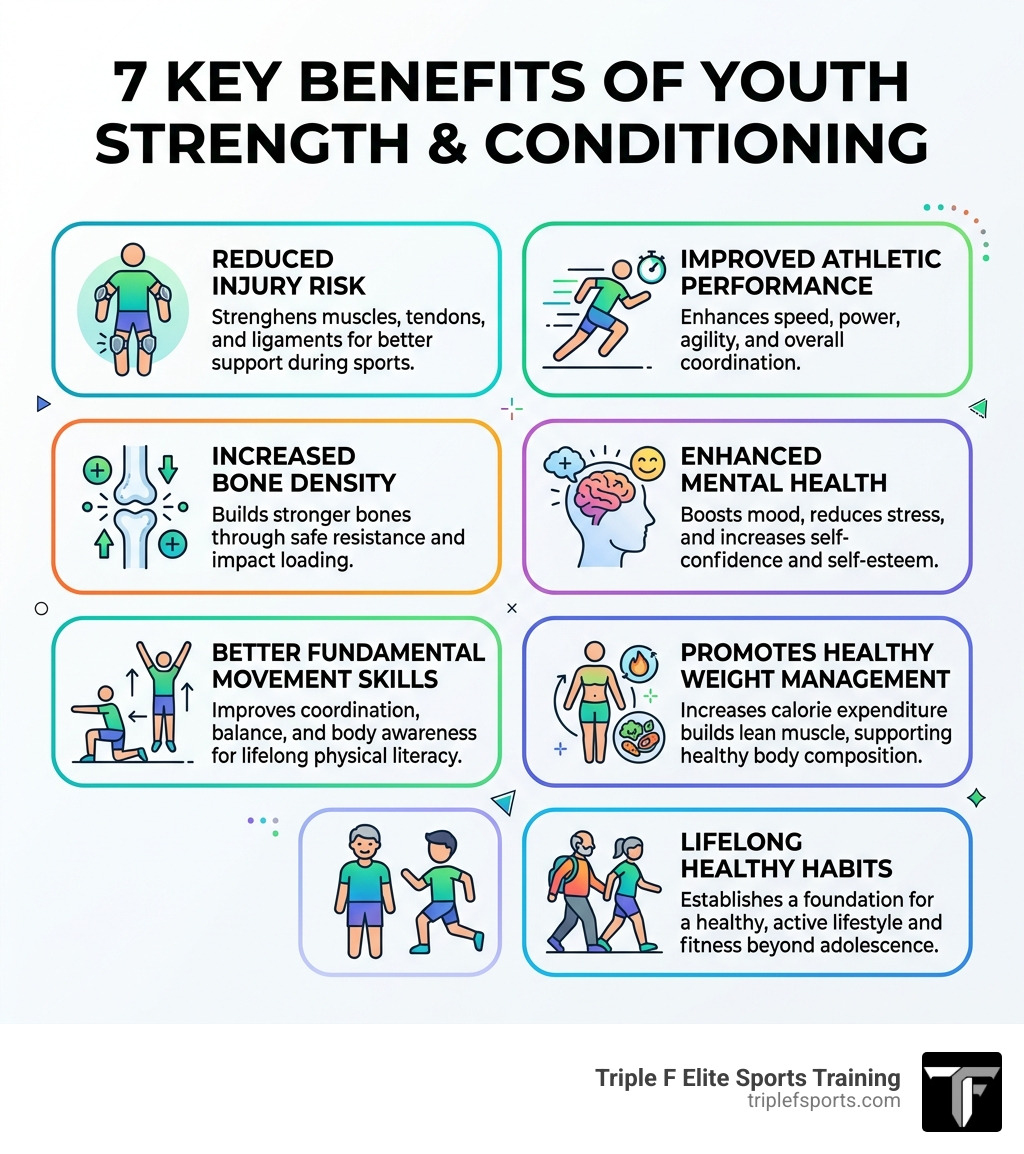
- Biggest benefit? Stronger muscles, better bones, lower injury risk, and improved mental health.
- What to avoid? One-rep max attempts, performance supplements, and training without supervision.
Teen athletes today are under more pressure than ever. Sports are more competitive. Injuries are rising. And the window to build a strong athletic foundation is shorter than most people realize.
At the same time, one in five young people aged 14 are classified as obese, and many teens spend more time on screens than moving their bodies. The NHS recommends at least 60 minutes of moderate to vigorous physical activity every day — yet most teens fall well short of that.
The good news? A well-designed strength and conditioning program doesn’t just build muscle. It builds confidence, resilience, and lifelong habits that carry far beyond the playing field.
I’m Kevin O’Shea, a Certified Strength and Conditioning Specialist and high school football coach with years of experience developing young athletes. My background in both athletic performance and behavioral health gives me a unique perspective on strength and conditioning for teens — because the mental and physical sides of development are deeply connected.
Strength and conditioning for teens terms to know:
- resistance training for teens
- strength training for youth wrestlers
- youth strength training
Is Strength and Conditioning for Teens Safe? Debunking the Myths

One of the most persistent hurdles we face in Knoxville is the myth that lifting weights will “stunt a child’s growth.” Let’s set the record straight: there is no scientific evidence that a supervised strength program damages growth plates or stops a teen from reaching their full height. In fact, the opposite is true.
Research shows that weight-bearing exercise is critical for building bone mineral density. During the teenage years, the skeleton is incredibly responsive to loading. By engaging in strength and conditioning for teens, young athletes are essentially “banking” bone mass that will protect them from fractures and osteoporosis later in life.
The real danger isn’t the weight room; it’s a lack of preparation. High-impact sports like football, soccer, and gymnastics place far more stress on a teen’s joints than a controlled goblet squat ever will. To ensure your athlete is ready, we recommend Youth Assessments to identify movement gaps before they become injuries.
When we talk about resistance training efficacy, we are looking at more than just bigger muscles. We are looking at a 66-68% reduction in sports-related injuries. However, this safety is entirely dependent on professional supervision. A teen scrolling through social media and trying to mimic a professional bodybuilder’s “max out” day is a recipe for disaster. At Triple F, we invite families to see the difference with a Youth Free Session where technique always takes precedence over the weight on the bar.
The Science of Growth: LTAD and Peak Height Velocity
Understanding strength and conditioning for teens requires looking at the “biological clock” rather than just the calendar. This is where the Long-Term Athletic Development (LTAD) model comes in. LTAD is a framework that prioritizes the right type of training at the right stage of a child’s physical maturity.
A critical milestone in this journey is Peak Height Velocity (PHV)—the period where a teenager experiences their fastest upward growth. For girls, this usually happens between ages 11 and 13; for boys, it’s typically between 13 and 15. During this time, bones often grow faster than muscles and tendons can adapt. This can lead to a temporary “clumsiness” as the athlete’s center of mass shifts and their coordination recalibrates.
This phase is actually a “window of opportunity.” Because of heightened neural plasticity, teens can “hardwire” athletic movements more efficiently than adults. We leverage this in our Future Pros Program, focusing on:
- Neural Adaptations: Teaching the brain to recruit motor units more effectively.
- Hormonal Surges: Capitalizing on the natural increase in growth hormone and testosterone (especially in males) to build lean tissue safely.
- Stability Training: Helping athletes regain control of their “new” longer limbs to prevent the awkwardness that often leads to injury.
By Nurturing Young Athletes for Long-Term Success, we ensure they don’t just peak at age 14, but continue to develop into their collegiate years and beyond.
Designing an Effective Strength and Conditioning for Teens Program
A “workout” is just a list of exercises; a “program” is a strategic plan. For teens, we follow the RAMP protocol to ensure every session is productive and safe:
- Raise: Increase body temperature and heart rate.
- Activate: Engage key muscle groups (glutes, core, scapula).
- Mobilize: Move joints through their full range of motion.
- Potentiate: Wake up the central nervous system with explosive movements.
We focus on Skilled Based Training, which means we treat lifting like a sport itself. You wouldn’t ask a kid to pitch in a game before they learned to throw; we don’t ask them to load a barbell before they can perform a perfect bodyweight squat.
A balanced program for a beginner usually involves 2-3 sessions per week on non-consecutive days. This allows 48 hours for the “engine room” (the muscles and nervous system) to recover.
| Training Element | Home Bodyweight Routine | Gym-Based Routine |
|---|---|---|
| Primary Goal | Master mechanics & control | Progressive overload & force |
| Equipment | Chairs, bands, floor | Racks, cables, machines |
| Progression | Add reps or slow the tempo | Add weight or vary tools |
| Supervision | Parent/Self-monitored | Certified Coach/Trainer |
Essential Exercises and Workout Structure
The foundation of our Youth Training 12 to 18 is built on six foundational movement patterns:
- Squat: Goblet squats or box squats to build lower body power.
- Hinge: Romanian deadlifts (RDLs) to strengthen the hamstrings and protect the knees.
- Push: Push-ups or overhead presses for shoulder stability.
- Pull: Inverted rows or pull-ups to counter the “slouch” from school desks.
- Core Bracing: Planks and “dead bugs” to create a rigid torso for force transfer.
- Unilateral Training: Single-leg lunges and step-ups to fix imbalances between the left and right sides.
We also place a massive emphasis on landing mechanics. Most ACL tears happen during deceleration or landing from a jump. By teaching a teen how to “stick” a landing with soft knees and hips, we are giving them a suit of armor against the most common season-ending injuries. This is a core part of developing true Sport Skill.
Sample 4-Week Strength and Conditioning for Teens Plan
For those just starting, we focus on “time under tension.” This means moving slowly and with control.
Weeks 1-2: Foundation & Control
- Focus: Isometric holds (holding the bottom of a squat or the top of a push-up for 20 seconds) to build tendon strength.
- Volume: 2 sets of 10-12 reps with light resistance.
- Drills: Linear speed work (sprinting in a straight line) and basic Plyometric box jumps to a low box.
Weeks 3-4: Strength & Power
- Focus: Increasing the load slightly (5-10%) while maintaining perfect form.
- Volume: 3 sets of 8-10 reps.
- Drills: Sled pushes (10-15 yards) to mimic sprinting posture and lateral agility ladder drills to improve footwork.
If you want to see how this looks in action, you can always grab a Future Pro Free Session to get a personalized roadmap.
Maximizing Results: Nutrition, Recovery, and Supervision
You can have the best strength and conditioning for teens program in the world, but if the athlete is sleeping five hours a night and eating nothing but fast food, they won’t see results. In fact, they might get hurt.
Sleep is the Ultimate Performance Enhancer Teens need 9 to 9.5 hours of sleep. This is when the body releases the growth hormones necessary to repair the micro-tears in muscle tissue caused by training. If they are chronically sleep-deprived, their reaction times slow down, and their injury risk skyrockets.
Fueling the Machine Teens don’t need fancy performance supplements or “pre-workout” drinks loaded with caffeine. They need:
- Hydration: Water throughout the day, not just during practice.
- Protein: Roughly 1.5g per kg of body weight to support muscle growth. Think chicken, Greek yogurt, beans, and lean beef.
- Carbohydrates: The “gasoline” for their workouts. Whole grains and fruits are best.
Our Youth Memberships include guidance on how to balance a busy school and sports schedule. We teach athletes to “listen to their body”—distinguishing between the healthy “soreness” of a good workout and the “sharp pain” that signals a potential injury. Check our Current Training Schedule to find a time that allows for consistent recovery between school and gym sessions.
Frequently Asked Questions about Youth Training
At what age can my teen safely start strength training?
There is no “magic number,” but most experts agree that age 7 or 8 is a safe starting point for basic bodyweight movements. The real indicator is readiness. Can the teen follow a multi-step instruction? Do they have the self-control to stay focused for 30-40 minutes? If they can play organized soccer or baseball, they are usually ready for a supervised Future Pros Program.
How can strength training prevent sports injuries like ACL tears?
The statistics are staggering: ACL injuries in youth have increased nearly 29-fold since the late 90s. This is largely due to early sports specialization and a lack of general physical literacy. Strength training fixes this by improving “neuromuscular control”—essentially teaching the muscles to fire in the right order to stabilize the knee during sudden stops and turns.
Should teens attempt one-rep max (1RM) lifts?
In a word: No. At Triple F, we believe in training to “technical failure,” not absolute exhaustion. A one-rep max requires a level of spinal stability and central nervous system maturity that most teens haven’t reached yet. We focus on submaximal loading (lifting a weight they can handle for 8-12 reps) to build a massive “engine” without the risk of a catastrophic breakdown. Our Coaching Secrets for Rapid Sports Skill Development prioritize long-term health over a one-time ego lift.
Conclusion
Strength and conditioning for teens is about so much more than the weight on the bar. It’s about the 14-year-old who finally feels confident enough to try out for the varsity team. It’s about the athlete who avoids a season-ending injury because their hamstrings were strong enough to protect their ACL. It’s about building a foundation of health that lasts 50 years, not just one season.
At Triple F Elite Sports Training in Knoxville, we are proud to offer a professional, Christ-centered environment where your teen is seen as an individual, not just a number on a roster. Whether they are a beginner looking to get off the couch or an elite prospect aiming for the pros, we have the tools, the tech, and the heart to help them get there.
Ready to unlock your teen’s full potential? Start your journey with professional Youth Training 12 to 18 and book your free session today.