
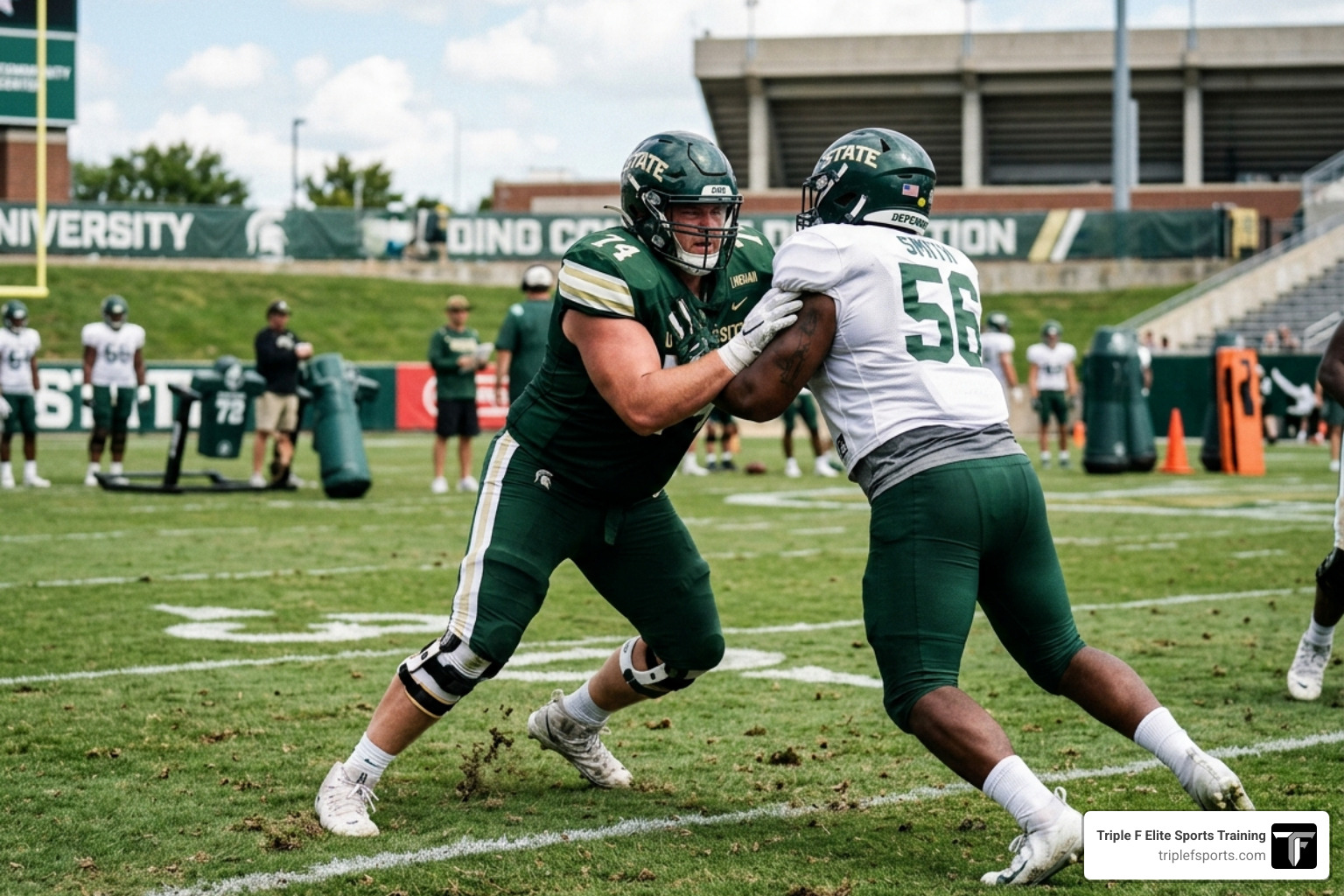
Why the Drive Blocking Drill Is the Foundation of Every Winning Run Game
A drive blocking drill is a football training exercise where an offensive lineman fires out of his stance, makes contact with a defender or dummy, and drives that target backward — maintaining the block for a sustained distance (typically 10 yards) rather than just delivering a single hit.
Here is a quick breakdown of what you need to know:
| Element | Key Detail |
|---|---|
| Purpose | Drive defenders off the ball and create running lanes |
| Standard distance | Maintain the block for at least 10 yards |
| Key technique | Low pad level, 6-8 inch power steps, hands inside |
| Equipment needed | Tackling dummy, blocking shield, or sled |
| Who needs it | All offensive linemen, especially youth players |
Blocking is not just about the initial hit. It is about engaging, maintaining, and driving a defender completely out of the hole. That is the lesson every lineman must learn — and the drive blocking drill is how they learn it.
The drill is widely considered the single most important blocking technique for offensive linemen to master, particularly at the youth level where fundamentals set the ceiling for everything that follows.
My name is Kevin O’Shea, and as a Wide Receiver Coach and Passing Game Coordinator with experience coaching high school football, I have seen how a well-executed drive blocking drill up front is what separates an offense that moves the ball from one that stalls at the line. I am excited to break this down for you in a way that is simple, practical, and ready to apply at your next practice.
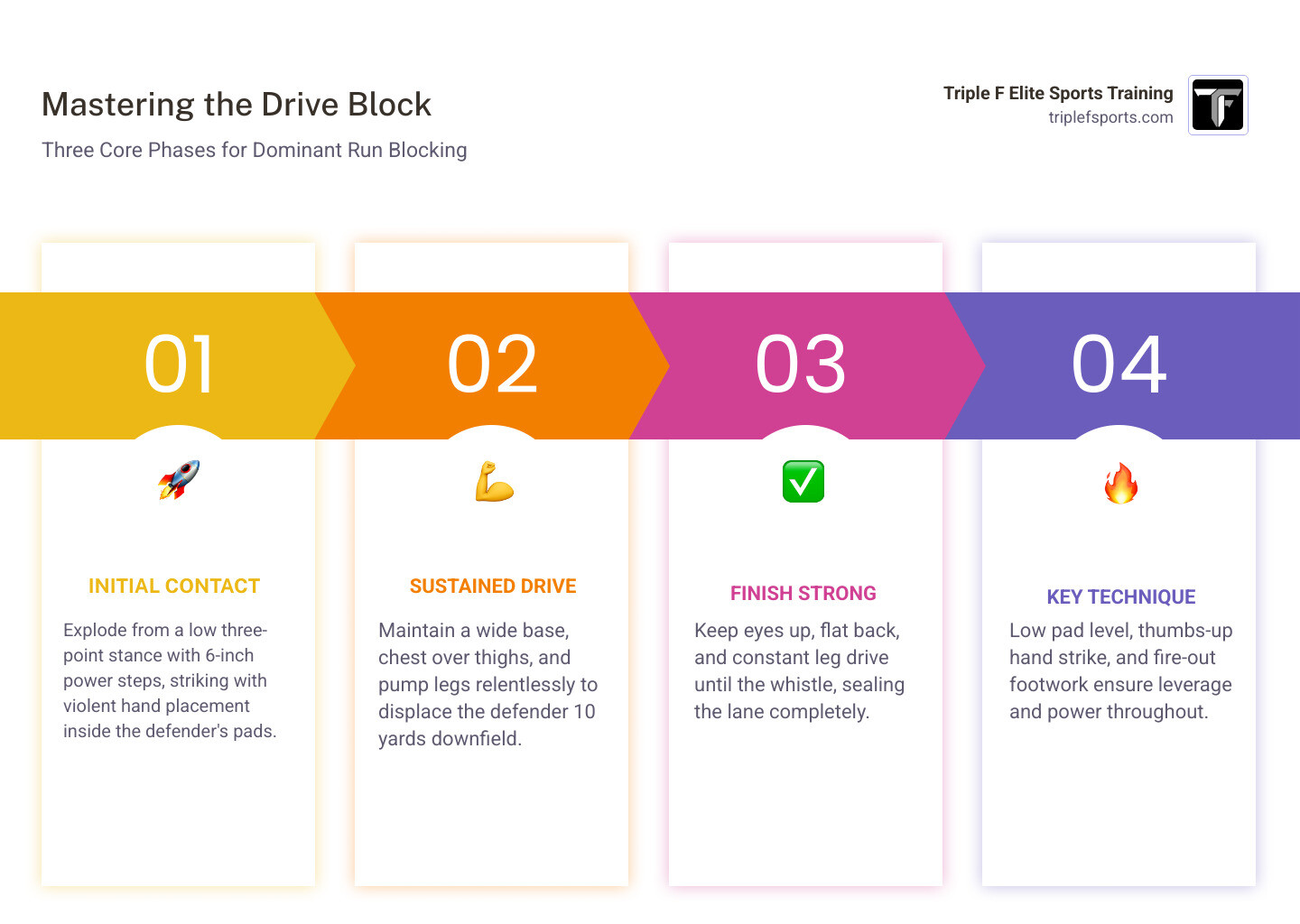
Drive blocking drill terms at a glance:
The Fundamentals of the Drive Block
At its core, the drive block is about “moving a man from point A to point B against his will.” It sounds simple, but in the trenches of April 2026 football, it requires a precise blend of leverage, explosive power, and relentless footwork. To master this, we focus on Offensive Line Sports Training that prioritizes the “ground-up” approach.
The drive block is most effective when the lineman stays low. We often tell our athletes that “the low man wins.” By keeping a flat back and your chest over your thighs, you create a natural wedge that gets underneath the defender’s pads. When you combine this body position with a Drive blocking drill, you develop the muscle memory needed to displace even the heaviest nose guards.
Primary Purpose and Benefits
The primary purpose of a drive block is to create a vertical entry point for the ball carrier. Unlike a reach block, which aims to seal a defender to the inside, the drive block is a North-South movement. For our athletes in Youth Training 12 to 18, mastering this technique builds incredible confidence.
When an offensive line can consistently execute drive blocks, it establishes a physical rhythm. It tells the defense, “We are going to run exactly where we want, and you can’t stop us.” This physical dominance wears down opponents over four quarters, making it the bedrock of a successful offense.
Essential Equipment for Training
You don’t need a million dollars’ worth of gear to run a great drive blocking drill, but the right tools help accelerate the learning curve. Based on recent Tennessee football practice observations, elite programs rely on a mix of static and mobile equipment:
- Tackling Dummies and Blocking Shields: Perfect for initial contact drills and partner work.
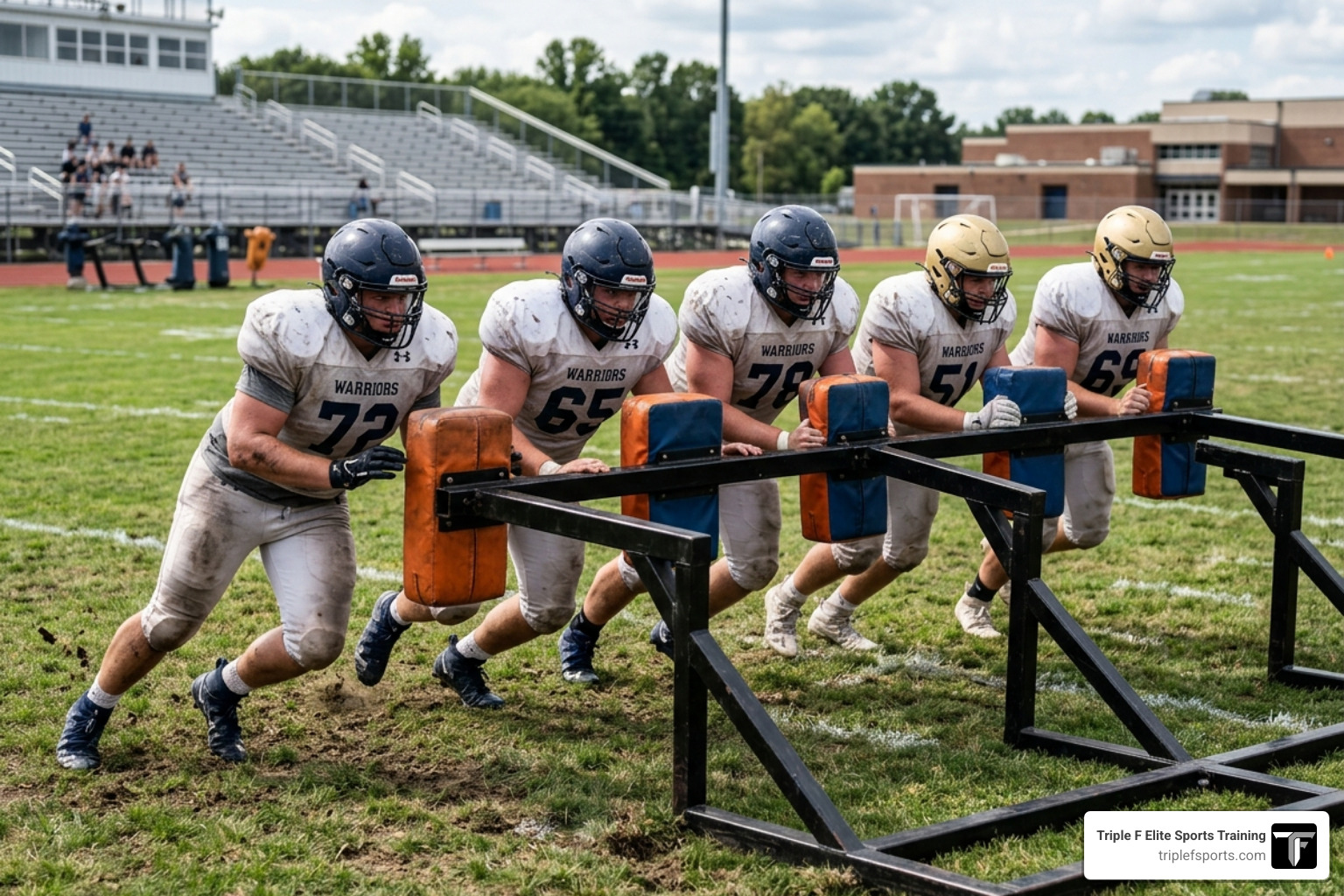
- Single-man or Two-man Sleds: These are vital for teaching linemen to drive through the ground. Sleds provide consistent resistance that forces the player to maintain a low pad level.
- Five-man Sleds: Used to coordinate the entire unit’s timing and “fire-out.”
Step-by-Step Execution of the Drive Blocking Drill
To execute a drive blocking drill like a pro, you have to break the movement down into manageable parts. We don’t just tell a kid to “hit the bag.” We teach them how to explode, engage, and finish.
Setting Up Your Drive Blocking Drill
Start by organizing your linemen into huddle lines. This keeps the energy high and ensures everyone gets plenty of reps. We like to use varied snap counts to keep the players disciplined—there’s nothing worse than a great block that starts with a five-yard penalty for a false start.
If you are working with a partner, pair players of similar size and strength. One player acts as the blocker, while the other holds a shield or dummy. For those looking for elite-level prep, our Offensive Line Training by Jon Feliciano emphasizes the importance of a professional setup to mirror game-day intensity.
Initial Contact and Footwork
The first step is the most important. It should be a powerful, six- to eight-inch “power step.” This isn’t a long stride; it’s a quick, violent jab into the ground that projects your force forward.
- The Fire-Out: On the snap, explode from your three-point stance.
- Wide Base: Keep your feet at least shoulder-width apart. A narrow base is a weak base.
- Short Steps: After the initial power step, follow up with rapid, choppy steps. As we see in the Shoulder Blocking Drill progression, keeping your feet moving is what allows you to sustain the block.
Hand Placement and Body Position
Where you put your hands determines who controls the fight. You want your hands “inside”—specifically, tucked under the defender’s shoulder pads or on the chest plate.
- Thumbs Up: This keeps your elbows tucked in (at about a 45-degree angle), which maximizes your strength.
- Sky Eyes: Keep your head up and eyes forward. If you look at the ground, your weight shifts forward, and a savvy defender will simply pull you down.
- Flat Back: Maintain a “big chest, big butt” posture. This is a key coaching point from the Press Drill, ensuring you stay balanced throughout the drive.
Advanced Progressions and Variations
Once you’ve mastered the basics, it’s time to turn up the heat. In our NFL Pre-Draft Training, we use variations that simulate the chaos of a real game.
The 10-Yard Drive Challenge
This is the gold standard for offensive line drills. In the 10-Yard Drive Challenge, the lineman doesn’t stop after the first hit. He must engage the dummy and drive it a full 10 yards downfield before letting go.
This builds the “finish” mentality. It teaches the player that the block isn’t over until the whistle blows. For athletes in our Future Pros Program, this drill is a staple for building the leg drive and cardiovascular endurance required for long drives.
Variations of the Drive Blocking Drill for Elite Performance
To keep players engaged and challenged, we use several variations:
- Drive with Pressure: A coach or teammate applies downward or lateral pressure on the blocker’s head or shoulders, forcing them to maintain their base and leverage.
- Machine Gun Drill: The lineman must hit and shed multiple blockers in quick succession, simulating a linebacker scraping over the top.
- Red Zone 1-on-1s: Practicing the drive block in a Red Zone Drill adds the pressure of scoring, where every inch of displacement matters.
Simulating Defensive Resistance
A static bag doesn’t fight back, but a defensive tackle certainly does. To make a drive blocking drill more realistic, the person holding the bag should provide active resistance. They should lean into the blocker, try to “juke” left or right, or even attempt to pull the blocker’s hands off. This forces the lineman to use block recognition skills to adjust their feet and maintain their “HOHO” (Hands On, Head Out) position.
Common Mistakes and Coaching Corrections
Even the best players can fall into bad habits. Recognizing these early is the key to effective coaching.
Correcting High Pad Level
The most common mistake, especially in youth football, is standing up too straight. When a lineman has a high pad level, they lose all their leverage. The defender can easily get under their chest and drive them backward.
To fix this, we emphasize “sinking the hips.” We often use the Triple F Spring Break Combine to measure an athlete’s flexibility. If a player can’t stay low, it’s often a mobility issue in the hips or ankles. We work on “chest-on-thigh” posture to ensure they stay in a powerful, coiled position.
Fixing Improper Hand Placement
If your hands migrate to the outside of the defender’s arms, you are going to get flagged for holding. It’s that simple. Furthermore, outside hand placement allows the defender to “rip” or “swim” past you.
We use Youth Flag Football Drills to teach even our youngest players to keep their hands “inside the frame.” If the elbows flare out, the power is lost. We coach “thumbs up, elbows in” to ensure the force from the legs travels directly through the arms and into the opponent.
Frequently Asked Questions about Drive Blocking
How does a drive block differ from a zone block?
The main difference is the aiming point and the intent. In a drive block, you are targeting a defender directly in front of you (or slightly shaded) with the intent of moving them vertically off the ball. In a zone block, you are often stepping laterally to “reach” a defender or working in tandem with another lineman to “seal” an area. Zone blocking is more about displacement and creating angles, whereas drive blocking is about pure power and vertical push.
How long should a lineman maintain a drive during a drill?
The standard for a high-quality drive blocking drill is 10 yards. In a real game, the play might only last 4 to 6 seconds, but we train for 10 yards to build “over-capacity.” If a player can drive a bag 10 yards in practice, they will have no problem finishing a block through the whistle on Friday night.
Why is the drive block considered the most important youth technique?
It teaches the three pillars of football: Stance, Start, and Finish. It builds the necessary leg strength and explosive “fire-out” that applies to every other type of block. If a youth player can’t drive block, they will struggle with pass protection and more complex pulling schemes later on. It is the foundation of their confidence.
Conclusion
Mastering the drive blocking drill is a journey of a thousand reps. At Triple F Elite Sports Training in Knoxville, we are dedicated to helping athletes at every level—from youth beginners to NFL hopefuls—perfect these essential techniques. Whether you are joining us for a Knoxville Football Camp or looking for year-round development, we provide the Christ-centered, professional environment you need to succeed.
| Feature | Drive Block | Reach Block |
|---|---|---|
| Primary Goal | Vertical Displacement | Sealing the Edge |
| Footwork | 6-8 inch Power Steps | Lateral Bucket Step |
| Contact Point | Direct Chest/Shoulders | Play-side Shoulder |
| Best Used For | Power Runs, Dives | Tosses, Outside Zone |
If you’re ready to take your game to the next level and start driving defenders off the ball like a pro, come see us in Knoxville. We offer a free first session to all new athletes to show you exactly how our offensive line services can transform your performance on the field. Let’s get to work!