
Why Every Serious Athlete Needs a Sports Medicine & Training Center
A sports medicine & training center is a facility that combines injury treatment, physical rehabilitation, and athletic performance training under one roof. Here’s what you need to know at a glance:
| What It Does | Who It Serves |
|---|---|
| Treats and prevents sports injuries | Youth to professional athletes |
| Combines medical care with performance training | Recreational and competitive athletes |
| Offers rehab, nutrition, and mental performance support | Post-injury and healthy athletes alike |
| Uses advanced technology for diagnosis and recovery | All fitness levels |
The best centers don’t just fix injuries — they help athletes perform better than before.
Think about the last time an injury slowed you down. Or the feeling of hitting a wall in your training, unsure why your body won’t respond the way it used to. These are exactly the problems a sports medicine and training center is built to solve.
The field has grown far beyond simple injury treatment. Today’s top facilities — from the 116,000-square-foot Jameson Crane Sports Medicine Institute in the Midwest to Olympic-level programs at Lake Placid — bring together physicians, physical therapists, athletic trainers, sports psychologists, and nutritionists in one coordinated system. The goal is simple: get athletes healthy, keep them healthy, and help them perform at their peak.
Whether you’re a competitive high schooler in Knoxville or an adult athlete training for your next race, access to this kind of integrated care can be the difference between grinding through pain and actually reaching your potential.
I’m Kevin O’Shea, a Certified Strength and Conditioning Specialist with a background in athletic development and behavioral health, and my experience working with athletes at every level has shown me how critical the right sports medicine & training center environment is to long-term athletic success. That foundation shapes everything we do at Triple F Elite Sports Training.
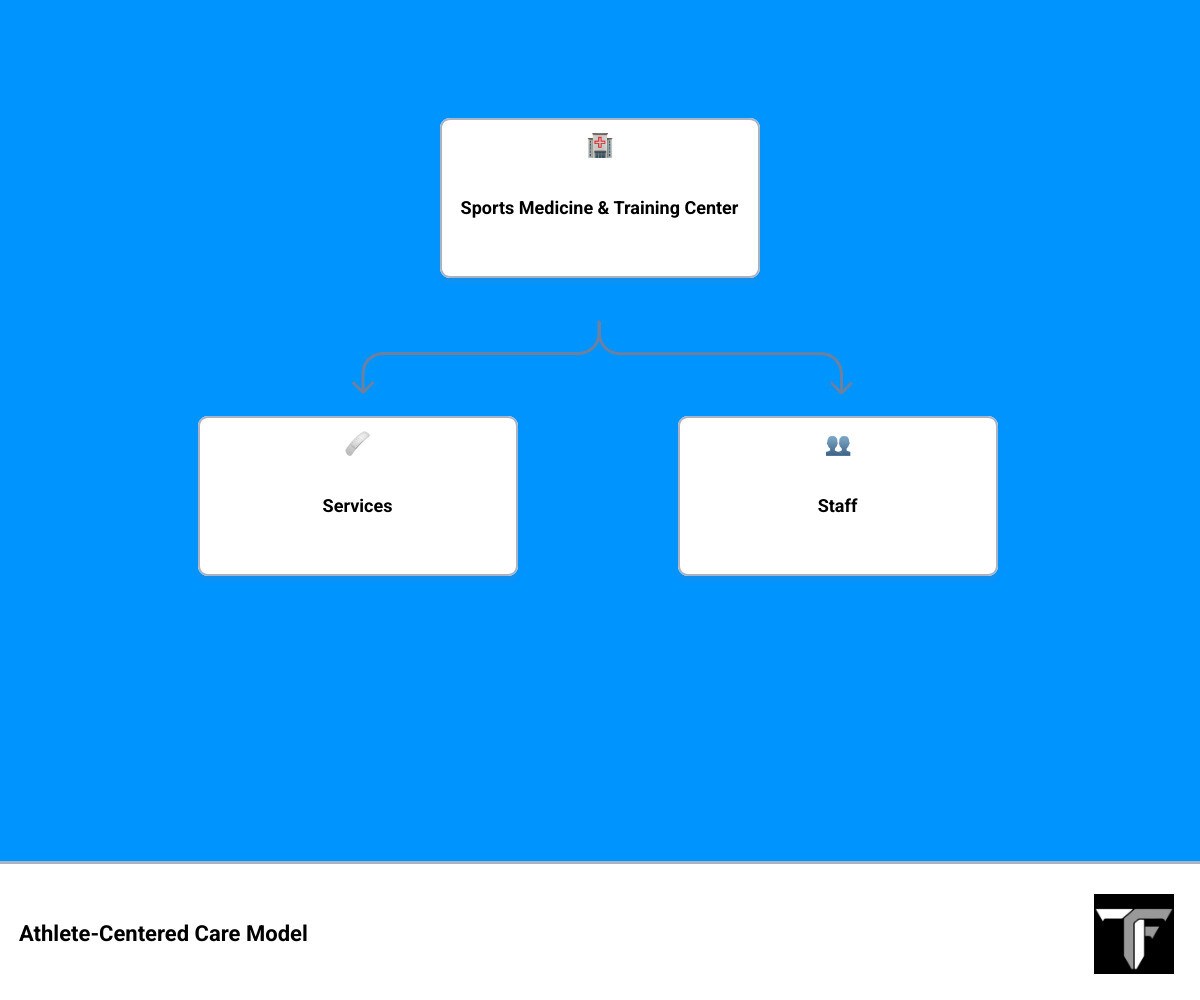
Sports medicine & training center terms made easy:
The Comprehensive Services of a Modern Sports Medicine & Training Center
In April 2026, the standard for athletic care has shifted from reactive to proactive. A modern sports medicine & training center is no longer just a place you visit when something snaps or pops. It is a hub for total athletic evolution. These facilities provide a bridge between the clinical world of medicine and the high-intensity world of sports performance.
One of the most significant advantages of an integrated center is the breadth of sports medicine services available. This includes everything from initial medical evaluations to complex non-surgical treatments like Platelet-Rich Plasma (PRP) therapy or stem cell treatments. For injuries that do require a more intensive approach, many elite centers are affiliated with orthopedic surgery departments, ensuring a seamless transition from the operating room back to the training floor.
Beyond surgery, these centers specialize in concussion management, using objective data to determine when an athlete’s brain is truly ready for contact. They also provide “return-to-sport” testing—a rigorous battery of physical challenges that prove an athlete has regained the symmetry and strength needed to compete safely.
Access and Cost Transparency
Accessing these services has become more streamlined. Many top-tier facilities, such as the Sports Medicine Center at Stanford Medicine, offer comprehensive health services for both athletic and non-athletic injuries. In Knoxville, we emphasize getting athletes in quickly—often within 48 hours—because we know that for a serious competitor, every day on the sidelines feels like a year.
| Service Tier | Focus Area | Typical Equipment Used |
|---|---|---|
| Recreational | Pain management & longevity | Digital X-ray, basic PT tools |
| Competitive Youth | Developmental skills & safety | 3D Motion capture, power racks |
| Professional/Elite | Peak optimization & prediction | AlterG, VALD sensors, Metabolic carts |
Staffing Your Sports Medicine & Training Center
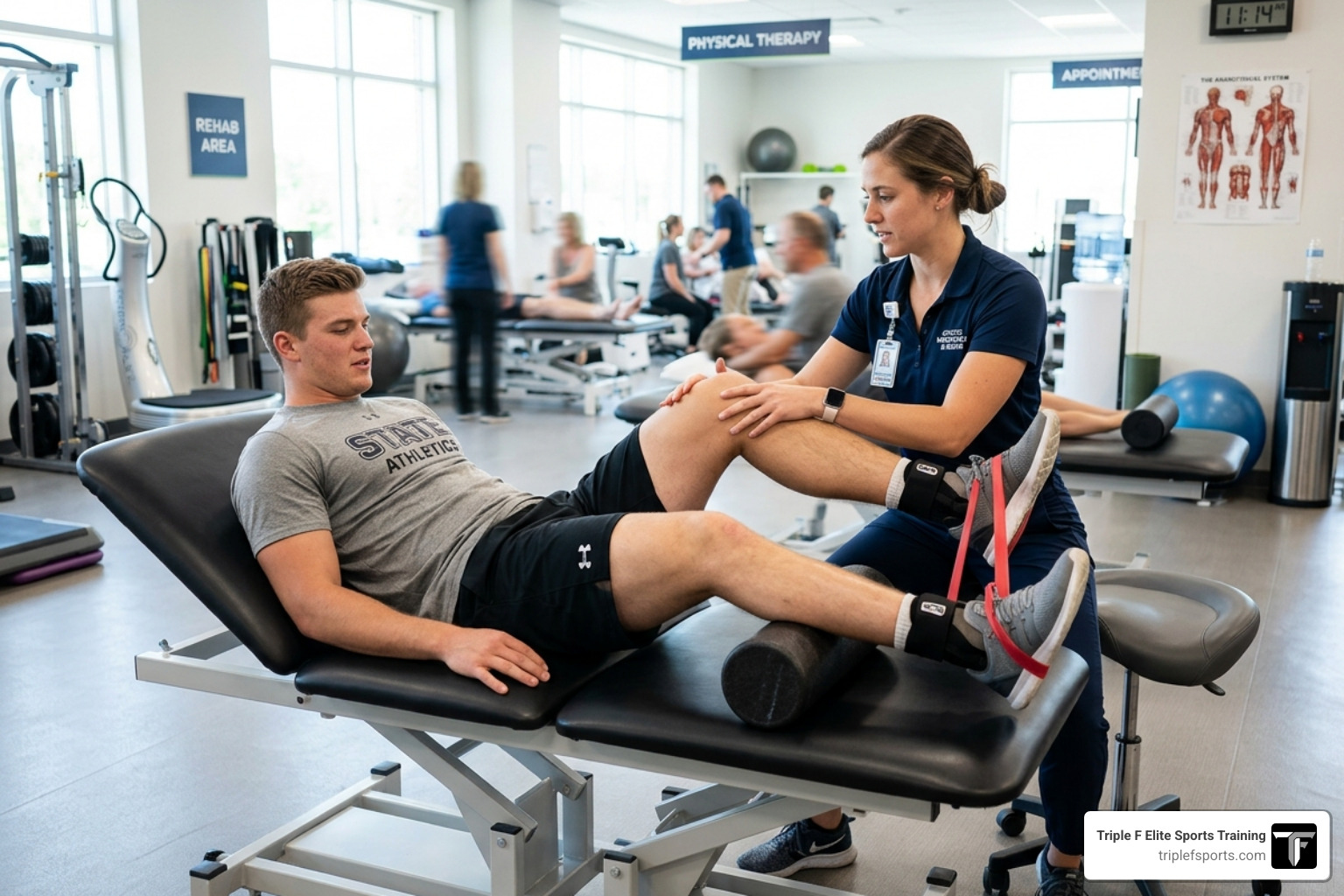
The “secret sauce” of a high-level facility is the interdisciplinary team. In a traditional setting, you might see a doctor who tells you to rest, then a physical therapist who works on your range of motion, and finally a coach who wants you to lift heavy. Often, these three people never speak to each other.
In a dedicated sports medicine & training center, that communication gap is closed. The staff typically includes:
- Orthopedic Surgeons & Sports Physicians: Specialists who diagnose the structural issues.
- Physical Therapists: Experts in physical therapy who guide the initial stages of healing and movement restoration.
- Athletic Trainers: The “boots on the ground” who bridge the gap between the clinic and the field.
- Chiropractors: Specialists who focus on body mechanics and spinal health to prevent overuse injuries.
- Sport Scientists: Professionals who use data to track fatigue and performance metrics.
This interdisciplinary collaboration ensures that your adult training or youth program is perfectly aligned with your medical needs.
Advanced Technology and Equipment in Elite Facilities
To get elite results, you need elite tools. The Jameson Crane Sports Medicine Institute, one of the largest facilities in the Midwest at 116,000 square feet, has set a massive precedent for what a sports medicine & training center should look like.
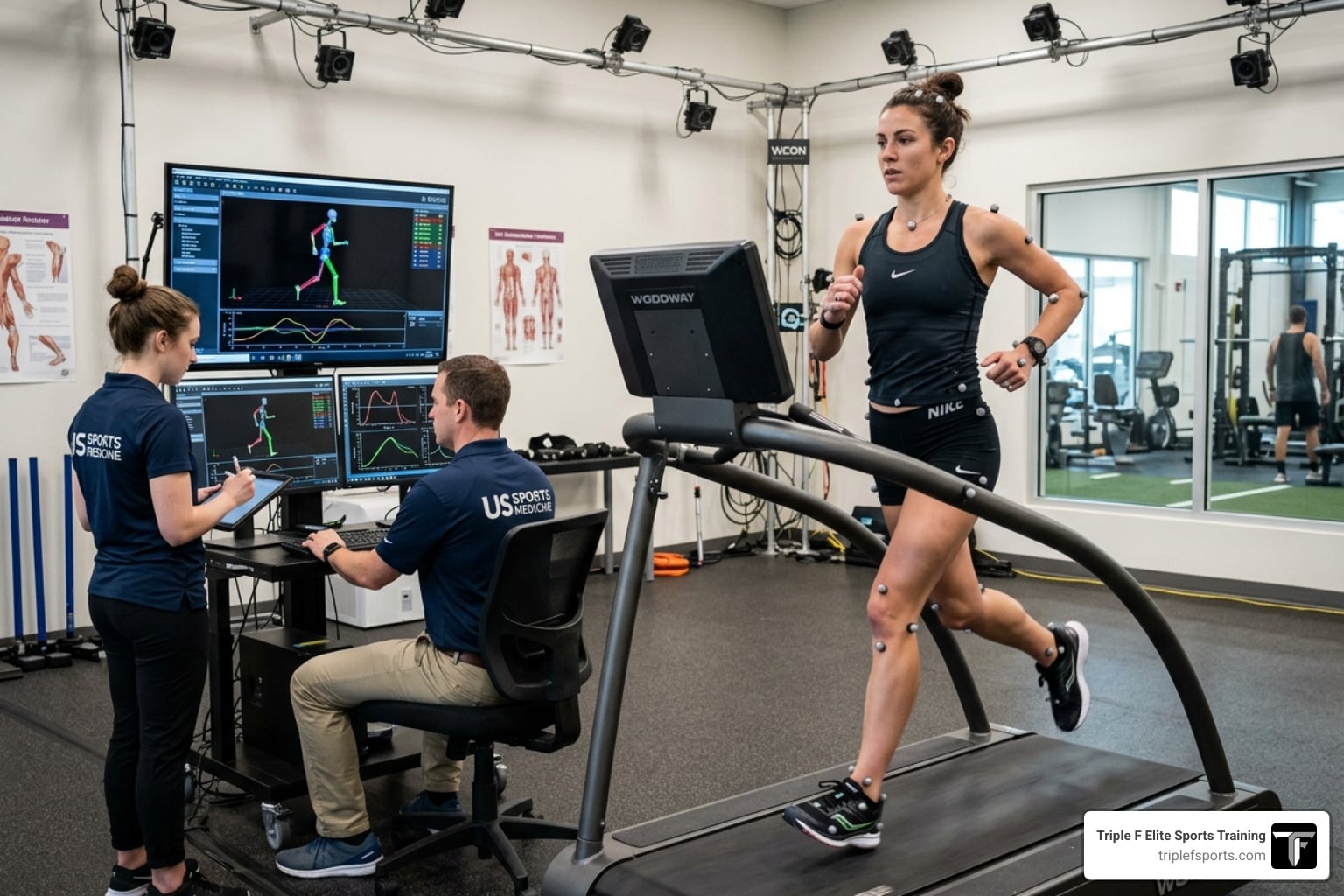
One of the most transformative pieces of equipment found in these facilities is the AlterG Anti-Gravity Treadmill. By using air pressure to “unweight” the athlete, it allows a runner with a stress fracture or a post-op ACL patient to maintain cardiovascular fitness and gait mechanics without putting full impact on their joints.
Other high-tech staples include:
- 3D Motion Capture (DARI): This technology uses cameras to analyze an athlete’s movement in real-time, identifying “energy leaks” or movement patterns that put them at risk for injury.
- Biodex Isokinetic Systems: These machines measure muscle strength and balance with extreme precision, ensuring that an athlete’s left leg is just as strong as their right before they return to play.
- Blood Flow Restriction (BFR): By using specialized cuffs to limit blood flow during exercise, therapists can help athletes gain muscle strength using very light weights—perfect for the early stages of rehab.
- SwimEx Aquatic Pools: These provide variable-current resistance for low-impact conditioning and specialized aquatic therapy.
- VALD Technology: Systems like ForceDecks and NordBord provide instant feedback on an athlete’s explosive power and eccentric strength.
These tools aren’t just for “cool factor.” They provide the objective data needed to make informed decisions about an athlete’s career. When we look at nfl pre draft training, for example, these metrics can be the difference between a high draft pick and going undrafted.
Integrating Rehabilitation and Performance Training
The old model of “finish PT, then go back to practice” is broken. It’s the reason why re-injury rates are so high in sports like soccer and football. A modern sports medicine & training center uses a “continuum of care” model.
This starts with a comprehensive biomechanical assessment. Whether you are coming in for youth training 12 to 18 or seeking help for a nagging shoulder, we have to understand how you move. We look for the root cause—perhaps that knee pain is actually coming from a weak hip or a stiff ankle.
From Rehab to Peak Performance
For an athlete recovering from an ACL tear or rotator cuff surgery, the transition looks like this:
- Acute Phase: Reducing pain and swelling through therapeutic exercise.
- Functional Phase: Restoring normal movement patterns and beginning light resistance work.
- Performance Phase: Integrating skilled based training and high-intensity conditioning.
- Return to Play: Passing rigorous symmetry and power tests.
This integrated approach is why athletes who utilize a premier sports injury PT in Knoxville often report feeling stronger after their injury than they did before it happened. By addressing the underlying weaknesses that led to the injury in the first place, we create a more resilient athlete.
Holistic Wellness: Nutrition and Mental Performance
You cannot out-train a bad diet, and you cannot perform if your mind isn’t in the game. Elite sports medicine & training centers have realized that the “physical” is only one piece of the puzzle.
The Fueling Station
Proper nutrition is the foundation of recovery. Many centers now employ registered sports dietitians who provide personalized meal planning. This isn’t just about weight loss; it’s about:
- Inflammation Control: Using foods to help the body heal faster after surgery or hard training.
- Hydration Strategies: Understanding that fluid and electrolyte replacement is a complex science involving sweat rates and mineral balance.
- Metabolic Capacity: Using tools like Parvo Metabolic Carts to measure exactly how many calories an athlete burns and what fuel source (fats vs. carbs) they use most efficiently.
The Mental Edge
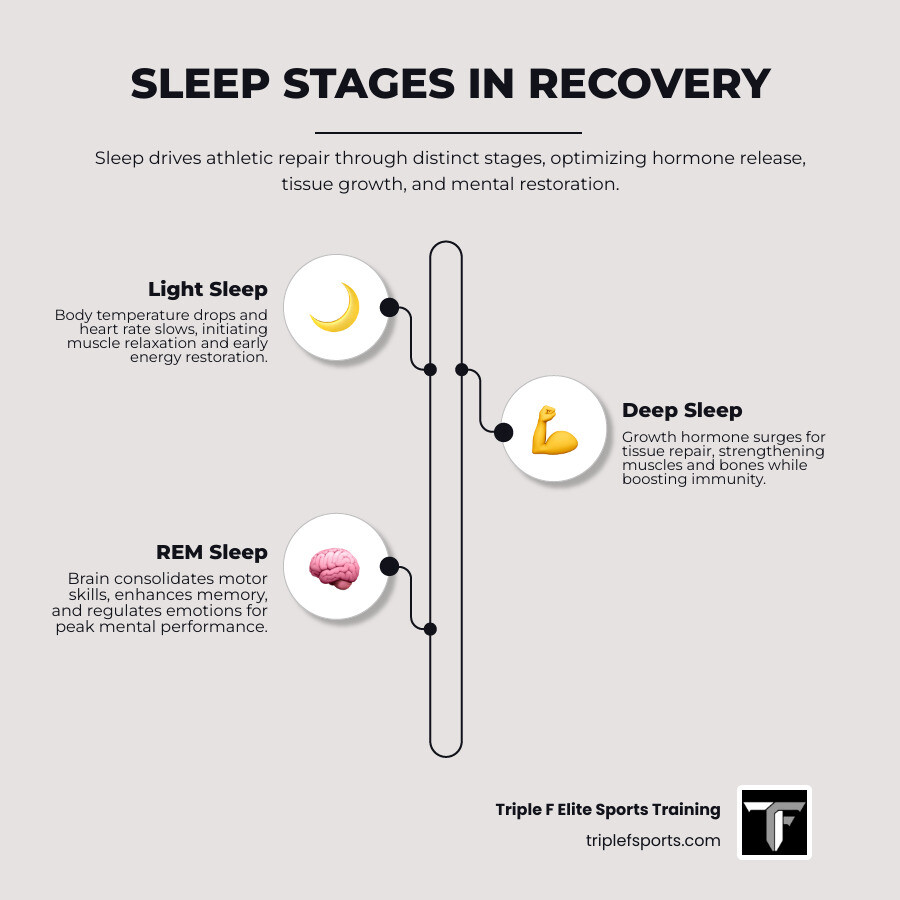
Mental performance is the newest frontier in sports medicine. Facilities like the USOPC Lake Placid center provide psychological services and mental performance providers to all athletes. This includes:
- Concussion Recovery: Addressing the anxiety and depression that can follow head injuries.
- Pressure Management: Teaching athletes how to maintain focus during high-stakes competitions.
- Longevity and Wellness: Supporting athletes through life transitions, including specialized programs for perimenopause and menopause, which focus on building resilience and maintaining bone density through changing hormonal profiles.
The Future of Athletic Excellence
As we look toward 2027 and beyond, the sports medicine & training center of the future will be driven by “Big Data.” Facilities like the upcoming Global Peak Performance Center are being designed to collect massive amounts of data to not just treat injuries, but predict them.
Imagine a system that alerts a coach that a player’s jump height has decreased by 5% and their heart rate variability is low, indicating they are at high risk for a hamstring strain in the next 48 hours. This is the level of “injury forecasting” that is becoming a reality.
Future Innovations in the Sports Medicine & Training Center
We are already seeing the emergence of:
- Motion Analysis Labs: Where every joint angle is measured during a sprint or a pitch to find the most efficient (and safest) way to move.
- Esports Medicine: Specialized programs for competitive gamers to prevent carpal tunnel, neck strain, and mental burnout.
- Digital X-Ray Integration: Allowing for immediate diagnostic imaging right on the training floor.
- Virtual Second Opinions: Allowing athletes in Knoxville to consult with world-leading specialists across the globe via high-definition video.
This evolution ensures that sport skill development is always backed by the latest in medical science. Whether you’re working on offensive line training or refining your defensive line linebacker sports training, the future is about precision.
Frequently Asked Questions about Sports Medicine
What is the difference between a training gym and a sports medicine center?
A standard training gym focuses primarily on general fitness, weight loss, or muscle gain. A sports medicine & training center integrates medical professionals (like PTs and doctors) with performance coaches. This means every exercise is screened for safety and efficacy based on your specific medical history and biomechanics.
How do interdisciplinary teams improve athlete recovery times?
When your physical therapist and your strength coach are on the same page, there is no “dead time” in your recovery. You don’t have to wait for a doctor’s appointment to know if you can increase your weight on squats; the team communicates daily to adjust your program in real-time, often shaving weeks off the standard recovery timeline.
Can recreational athletes access the same technology as professionals?
Absolutely. While these centers often serve as the official providers for professional teams (like the Atlanta Braves or Cleveland Cavaliers), the vast majority are open to the public. In fact, recreational athletes—who may not have the “natural” mechanics of a pro—often benefit the most from things like gait analysis and youth assessments.
Conclusion
The journey to peak performance is rarely a straight line. It’s filled with setbacks, plateaus, and the occasional injury. But you don’t have to navigate that path alone. A sports medicine & training center provides the map, the tools, and the expert guides to ensure you reach your destination.
At Triple F Elite Sports Training in Knoxville, we take this responsibility seriously. We offer professional, Christ-centered athletic development designed to unlock your full potential. Whether you are a young athlete joining our volleyball club, a high schooler preparing for college ball, or an adult looking to reclaim your edge, we provide the integrated care you need.
Don’t wait until you’re injured to start training like a pro. Your peak performance starts here—come see the difference that an elite facility can make. We invite you to experience our approach with a free first session. Let’s build a stronger, faster, and more resilient version of you, together.