
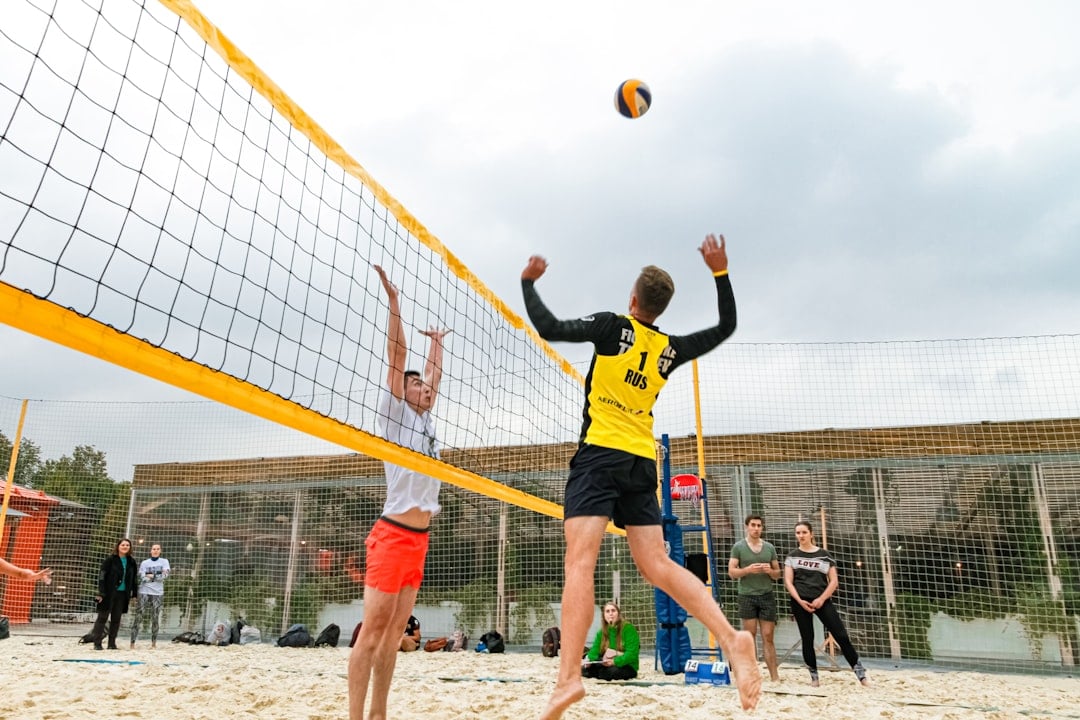
Is a Competitive Volleyball League Right for You?
A competitive volleyball league is an organized program where players compete in structured divisions based on skill level — going beyond casual play to focus on winning, improvement, and advancement.
Here’s a quick look at what separates competitive leagues from recreational ones:
| Feature | Recreational League | Competitive League |
|---|---|---|
| Skill requirement | Any level | Intermediate to advanced |
| Structure | Casual, social | Divisions, standings, playoffs |
| Training focus | Fun and participation | Skill development and performance |
| Advancement path | None | Regional and national tournaments |
| Age range | Open | Often 18+, up to 80-plus |
Volleyball is one of the few sports you can play competitively well into your later years. The USA Volleyball Open National Championship — held every year since 1928 — features players ranging from age 18 to over 80. That alone says something powerful about the sport’s longevity and depth.
But getting to that level — or even to your local competitive league — takes more than just showing up. It takes the right training, the right environment, and the right information.
Whether you’re a teenager eyeing club tryouts or an adult ready to get back on the court at a higher level, this guide breaks down everything you need to know about finding, joining, and thriving in a competitive volleyball league in the Knoxville area and beyond.
I’m Kevin O’Shea, a Certified Strength and Conditioning Specialist at Triple F Elite Sports Training, and while my background spans football and athletic performance, I’ve worked with athletes at every stage of development — including those preparing for the demands of a competitive volleyball league. My goal here is simple: give you a clear, honest roadmap so you can make the best decision for your game.
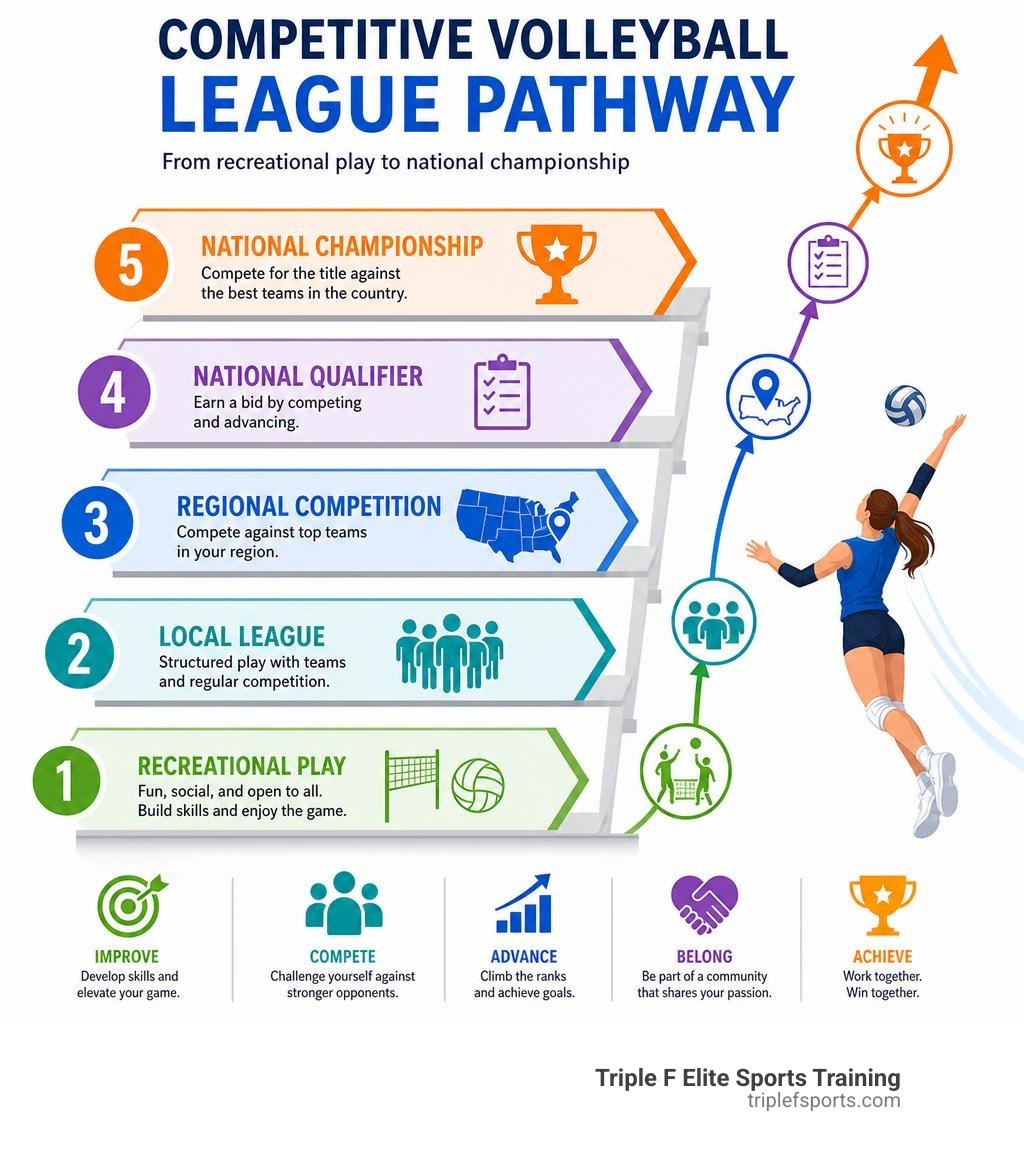
Understanding the Landscape of a Competitive Volleyball League
When you step into a competitive volleyball league, you are entering a structured, tiered environment designed to challenge your skills. Unlike backyard pick-up games, these leagues follow strict USA Volleyball (USAV) rules, utilize certified officials, and maintain official division standings.
In the United States, competitive adult and youth volleyball is highly organized. At the professional level, leagues like the Volleyball League of America – The professional league we’ve all been waiting for. and League One Volleyball (LOVB) | LOVB showcase elite domestic talent. On the global stage, organizations such as the PVL – Premier Volleyball League , the Lega Pallavolo Serie A | Italian Volleyball League – National Championships , the Prime Volleyball League | Official Website , and various European Leagues | CEV represent the absolute pinnacle of professional club play.
For most athletes, however, the ultimate competitive destination is the USA Volleyball Open National Championship. This massive tournament has been held annually since 1928 (with exceptions only in 1943, 1944, and 2020), making it one of the longest-running national championship events in American sports history. The upcoming 2026 Open National Championship, scheduled for May 22-27 in Orlando, Florida, will bring together thousands of players across multiple adult divisions.
To help you understand where you might fit, competitive leagues typically categorize teams into distinct skill brackets:
| Division | Skill Level Description | Key Technical Requirements |
|---|---|---|
| Open / AA | Collegiate, professional, or elite club experience. | Highly advanced offensive systems (5-1, 6-2), rapid transition play, and aggressive jump serving. |
| A | Strong high school or club background. | Consistent positional setting, structured perimeter or rotation defense, and targeted attacking. |
| BB | Intermediate players with solid fundamentals. | Basic understanding of offensive systems, consistent passing to the target, and controlled blocking. |
| B | Developing players transitioning from recreational play. | Fundamental bump-set-spike execution, basic serving consistency, and designated player positions. |
Key Benefits of Joining a Competitive League
Transitioning from casual pick-up games to a structured competitive volleyball league offers far more than just a higher level of play. It changes how you approach the sport, how you train, and how you connect with other athletes.
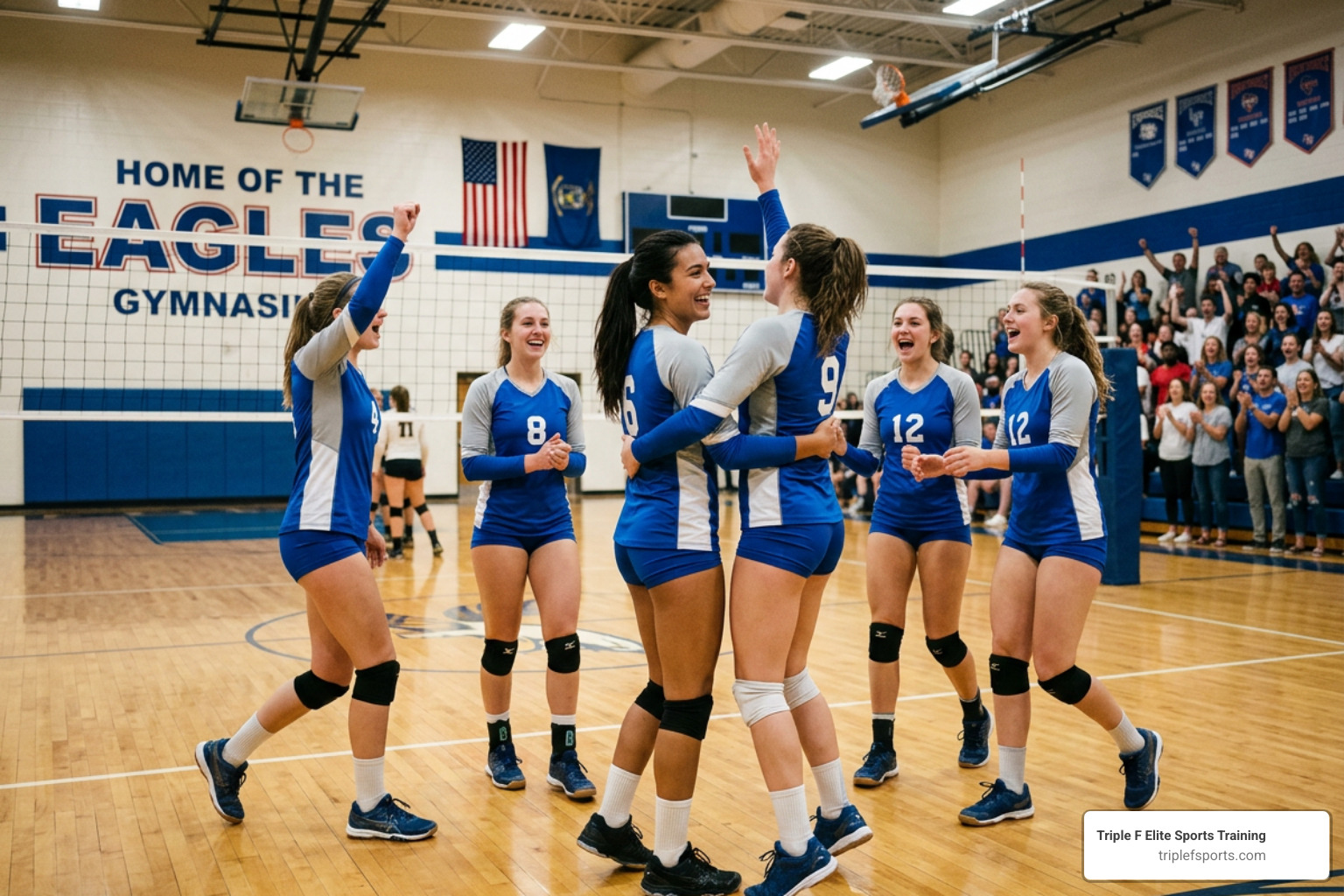
Elevating Your Game in a Competitive Volleyball League
In a competitive setting, you cannot rely on athletic instinct alone. You must develop advanced mechanics, master spatial awareness, and understand position-specific responsibilities.
- Setters must refine their first-ball location, hand speed, and tempo range.
- Pins (Outside and Right-Side Hitters) must perfect their approach acceleration, transition footwork, and terminal contact.
- Middles must master read-step timing, lateral closing speed, and quick-set transition.
- Liberos and Defensive Specialists must develop precise platform angles, emergency pursuit mechanics, and serve-receive consistency.
To truly elevate your skills to meet these demands, participating on a structured Volleyball Club Team provides the high-repetition, technical environment required to excel under pressure.
Building Lifelong Connections and Community
Volleyball is inherently a high-communication sport. In a competitive league, team chemistry is just as important as individual skill. You learn to trust your teammates to cover their zones, communicate transition plays in split seconds, and lift each other up after tough rallies.
This shared intensity builds deep, lasting social networks. Beyond the indoor court, many competitive players carry these bonds to outdoor formats, participating in local tournaments or joining a Grass League during the warmer months.
How to Choose and Prepare for the Right League
Choosing the right league is about balancing your current skill level with your athletic goals. Joining a league that is too advanced can lead to frustration and injury, while joining one that is too casual won’t provide the challenge you crave.

Finding a Competitive Volleyball League Near You
If you are located in the Knoxville, TN area, you have excellent local resources to explore. For structured adult leagues, the Volleyball Programs – City of Knoxville offer seasonal indoor and outdoor divisions tailored to various skill levels.
For youth athletes looking to climb the competitive ladder, joining a dedicated club is the most direct path to regional and national exposure. To compare your local options and find the perfect fit, take a look at our comprehensive breakdown of the Top Tennessee Girls Volleyball Clubs to Join This Season.
Preparing Physically and Mentally for Tryouts
Entering a competitive league or club team requires preparation. You cannot step onto the court cold and expect to perform your best. A successful tryout requires a balance of on-court skill, physical conditioning, and mental resilience.
As you prepare for the upcoming Tryouts 2026-27 Season, we recommend focusing on a few athletic priorities:
- Master Your First Step: Volleyball is a game of micro-seconds. Focus on explosive acceleration over the first 5 to 10 feet.
- Build Rotational Power: Your hitting velocity relies heavily on thoracic mobility and core rotation, not just arm strength.
- Condition for Lateral Speed: Work on lateral shuffle efficiency and reactive change-of-direction drills to ensure you can close blocks and dig tips effectively.
To ensure you make a well-informed decision for your athletic future, read our guide on how to Don’t Get Served by Joining the Wrong Elite Volleyball Clubs.
The Role of Professional Coaching and Elite Facilities
Behind every great league and high-performing athlete is a foundation of quality coaching and professional facilities. The right coaching staff doesn’t just call plays; they analyze movement patterns, correct mechanical inefficiencies, and build a positive, accountable team culture.
Advanced Training Protocols and Injury Prevention
Volleyball is a highly repetitive, high-impact sport. The constant jumping, landing, and overhead swinging place unique demands on an athlete’s body. Professional athletic development must prioritize durability alongside performance.
At Triple F Elite Sports Training, we integrate science-based sports performance protocols designed specifically for volleyball mechanics:
- Concussion Awareness: While volleyball is a non-contact sport, collisions with teammates, floor impacts, and high-velocity ball strikes still occur. Because 70% of sports-related traumatic brain injuries (TBIs) occur in athletes under 18, we maintain strict concussion awareness and baseline testing protocols to protect our youth players.
- Shoulder Health and Prehab: The repetitive overhead hitting motion can easily lead to rotator cuff imbalances and shoulder impingement. We pair heavy jump training with targeted shoulder prehab, thoracic spine mobility, and scapular stabilization exercises.
- Load Management: Overuse injuries are the most common setback for competitive players. We track training volume (jump counts, intensity) and teach athletes how to regulate their weekly load, ensuring they recover properly between tournament cycles.
Frequently Asked Questions about Competitive Volleyball
What is the difference between recreational and competitive volleyball leagues?
Recreational leagues focus on social interaction, general fitness, and casual play. Rules like net touches, double contacts, and rotational order are often loosely enforced. In contrast, a competitive volleyball league enforces strict USAV rules, utilizes certified referees, requires structured offensive/defensive systems, and features athletes with formal training or club experience.
How do adult competitive leagues connect to national championships?
Most highly competitive adult leagues are sanctioned by USA Volleyball or regional sporting bodies. Teams compete in local and regional qualifying tournaments throughout the year to earn bids to major national events, such as the USA Volleyball Open National Championship.
What age groups can participate in competitive volleyball?
Volleyball is truly a lifelong sport. Youth competitive divisions begin as early as under-10 (U10) and extend through high school club teams. For adults, competitive age-group divisions at national events range from 18-and-over all the way to 80-plus, allowing athletes to maintain their competitive edge for decades. To find your place on a structured team, check out our Volleyball Teams page.
Conclusion
Stepping up to a competitive volleyball league is an exciting, challenging decision. It requires a commitment to refining your physical mechanics, understanding advanced team systems, and pushing your athletic limits. But the reward — a deep sense of community, improved physical fitness, and the thrill of high-level competition — is unmatched.
At Triple F Elite Sports Training in Knoxville, TN, we offer professional, Christ-centered athletic development designed to unlock your full potential. Whether you are a youth athlete preparing for club tryouts or an adult looking to build the strength, power, and durability needed for elite league play, we provide the comprehensive performance training, physical therapy, and volleyball-specific coaching you need to succeed.
Ready to take your game to the next level? Come train with us. Unlock your potential with Triple F Elite Sports Training and claim your free first session today!