
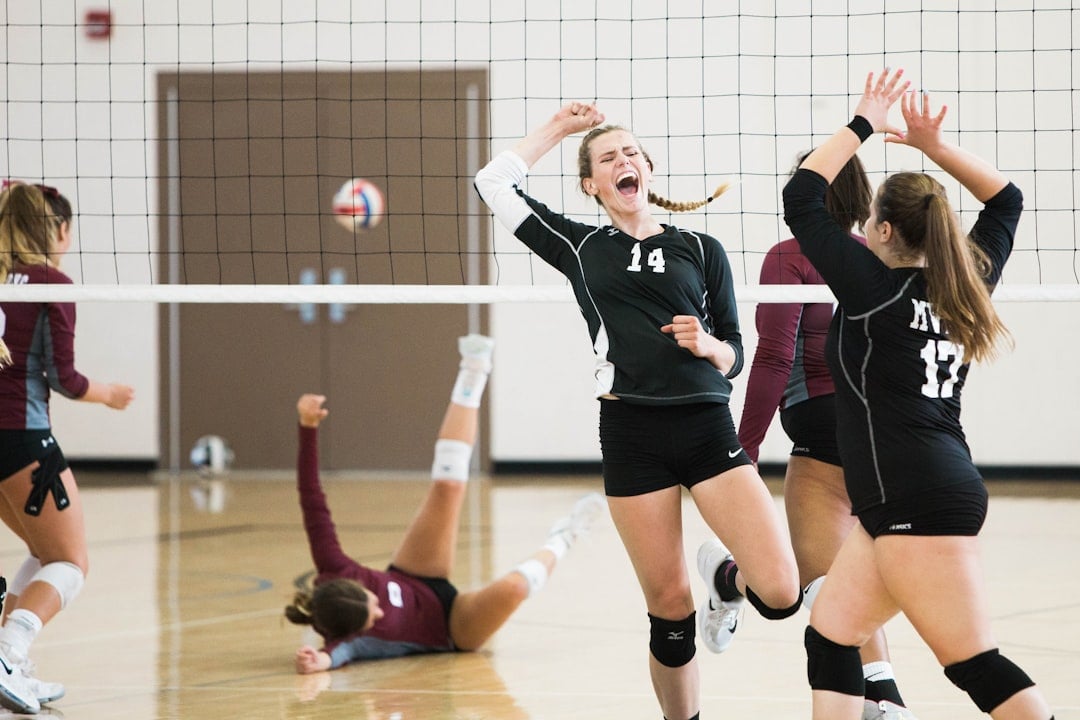
Why Every High School Volleyball Player Needs a Strength Program
High school volleyball strength training is one of the most direct ways to jump higher, hit harder, serve faster, and stay on the court longer. Here is what the research shows it delivers:
- Injury reduction: Strength training cuts sports injuries by one-third or more and reduces overuse injuries by 50%
- Vertical jump gains: A structured program can add 2 to 6 inches to your vertical — and your 1RM squat is one of the strongest predictors of how high you jump
- Hitting and serving power: More strength in the legs, core, and upper body means more force transferred through every swing and serve
- Shoulder and ankle protection: Targeted training builds the muscle support that guards the joints most at risk in volleyball
The bottom line: time in the weight room directly translates to better performance and fewer missed matches.
Most athletes think volleyball success is all about reps on the court. But the players who make the biggest leaps — in every sense — are the ones who also put in consistent work in the weight room. A freshman who weighs 92 pounds and stands 5’4″ should not be able to rip off thirty-plus jump serves in a row without a miss. But that is exactly what can happen when strength training is taken seriously from day one.
I am Kevin O’Shea, a Certified Strength and Conditioning Specialist at Triple F Elite Sports Training, and my background in athletic development — from coaching high school wide receivers to working with youth athletes across multiple sports — gives me a clear view of how high school volleyball strength training transforms raw potential into real, measurable performance. In the sections below, we will break down exactly how to build that foundation.
Why High School Volleyball Strength Training is Non-Negotiable
In high school athletics, the “off-season” is becoming a myth. Between school seasons and club volleyball, athletes are jumping, landing, and swinging year-round. This constant repetition makes Building a Dominant Volleyball-Specific Strength and Conditioning Program a requirement rather than a luxury.
Without a strength base, the body eventually breaks. Statistics show that ankle sprains are the most common injury in the sport, followed closely by knee and shoulder issues. When we talk about the complete playbook for girls high school volleyball, the first chapter should always be about durability. Strength training acts as an internal armor, reducing sports injuries by over 30%. It’s about more than just looking strong; it’s about stabilizing the ankle during a chaotic landing at the net and ensuring the shoulder can decelerate the arm after a 60 mph spike.
Furthermore, the data is clear: your one-rep max (1RM) in the barbell squat is a primary predictor of your vertical jump. If you want to touch higher, you have to be able to produce more force against the ground. At our facility in Knoxville, we see it every day—athletes who focus on their performance foundation quickly move from the end of the bench to the starting rotation.
Lower Body Power and Vertical Jump Mechanics in High School Volleyball Strength Training
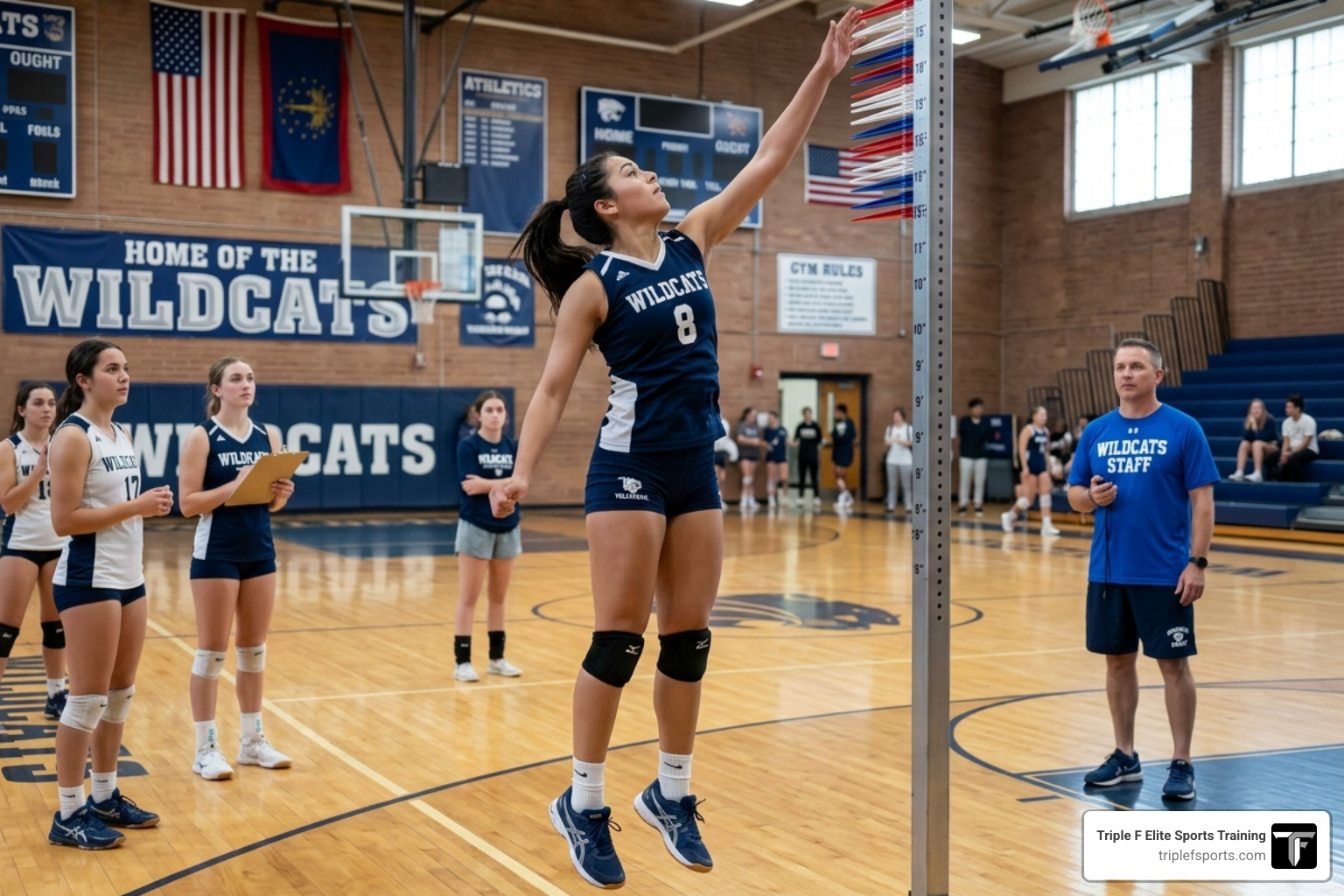
To jump higher, you must master “triple extension”—the simultaneous extension of the hips, knees, and ankles. Exercises like the barbell squat and the trap bar deadlift are the gold standards for building this raw force. However, for volleyball players, we also need to focus on the glutes and hamstrings to protect the knees.
- Good Mornings: Often called the “ideal” glute exercise, these help develop the posterior chain strength needed for an explosive takeoff.
- Bulgarian Split Squats: These are essential for correcting single-leg imbalances. Since many volleyball movements involve jumping or landing off-balance, unilateral strength is a key part of unlocking athletic potential a deep dive into sport specific training.
- Landing Mechanics: We teach athletes to land “softly” by absorbing force through the hips and glutes rather than the knees. This is the single best way to provide ACL protection.
According to the Strength Training for Volleyball: Guide & Training Program – StrengthLog, a focus on eccentric control (the lowering phase of a lift) builds the tendon stiffness required to prevent “Jumper’s Knee” (patellar tendinitis).
Upper Body Stability and Hitting Power
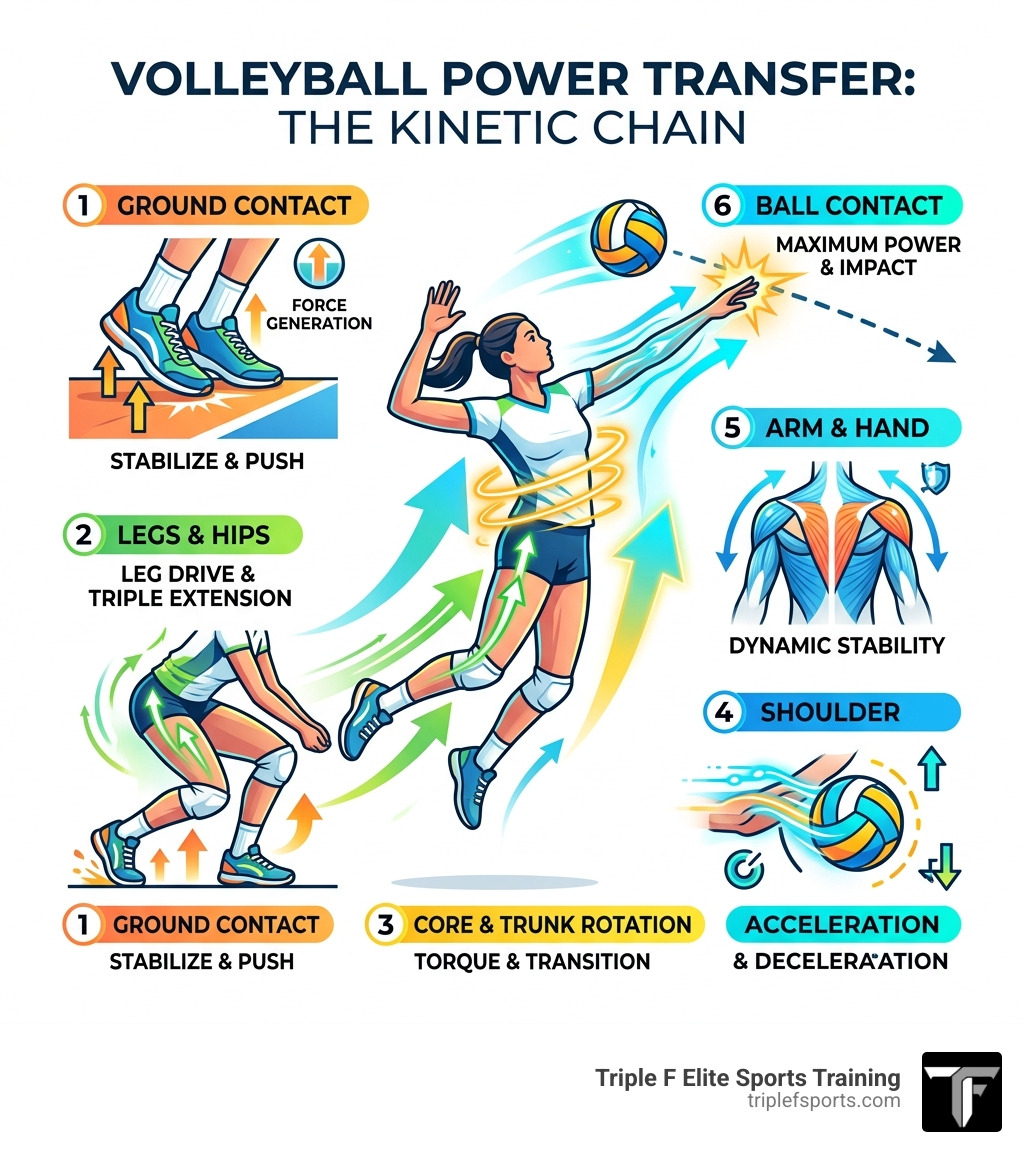
Hitting power isn’t just about big biceps; it’s about how efficiently you can transfer energy from your feet, through your core, and into your hand. This is where teen strength a guide to resistance training for young athletes focuses on the “secondary movers” of the shoulder.
Many shoulder injuries occur not because the athlete can’t swing fast, but because they can’t stop their arm after the hit. Exercises like “10-and-2 drops” and dumbbell pullovers train the muscles around the rotator cuff to decelerate the limb safely. We also emphasize pull-ups to build the lats and upper back, which provide the stability needed for a powerful overhand serve. By strengthening the core-to-upper-body transfer, we ensure that the power generated by the legs isn’t lost before it reaches the ball.
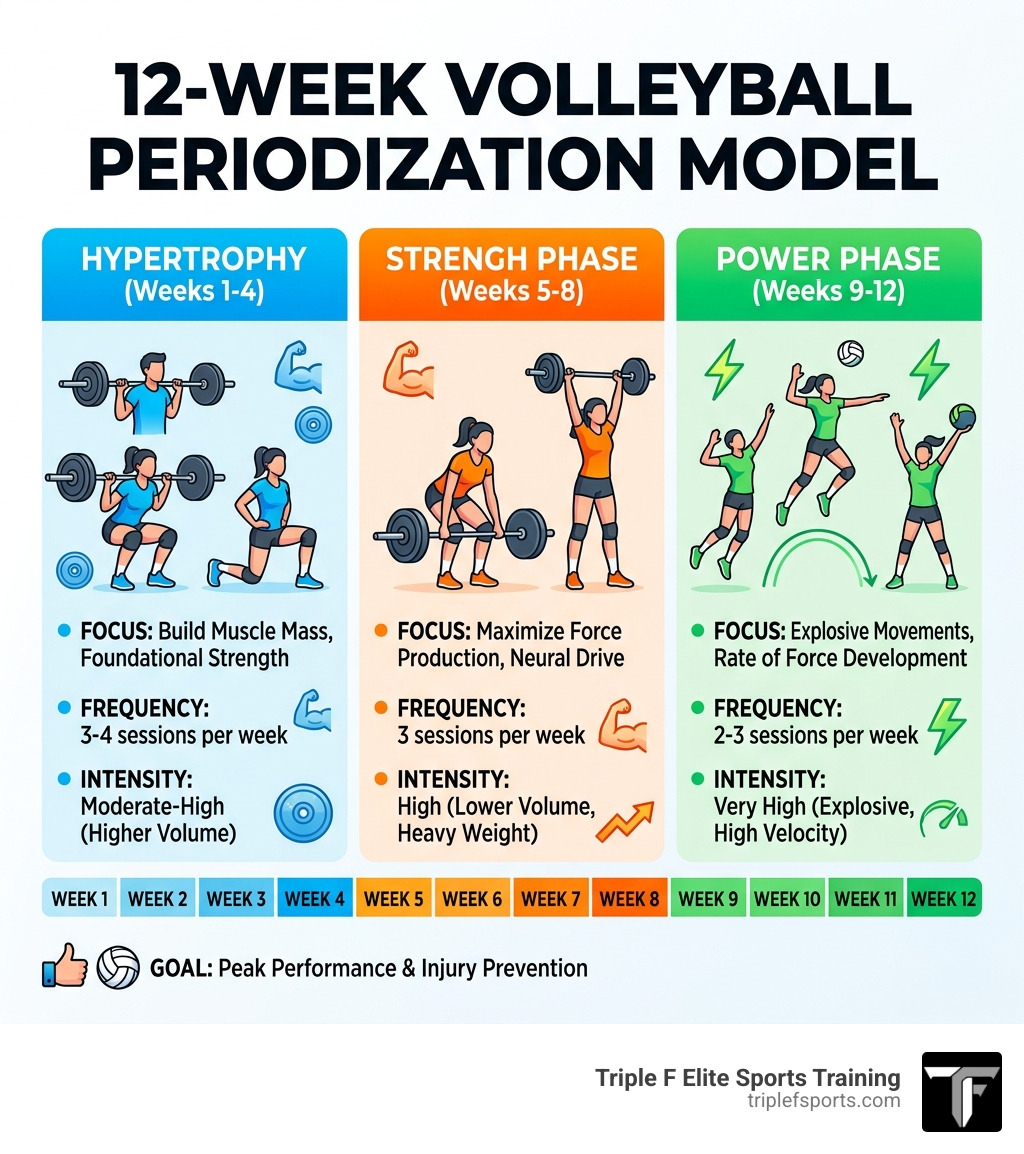
Periodization: Programming Around the Club and School Calendar
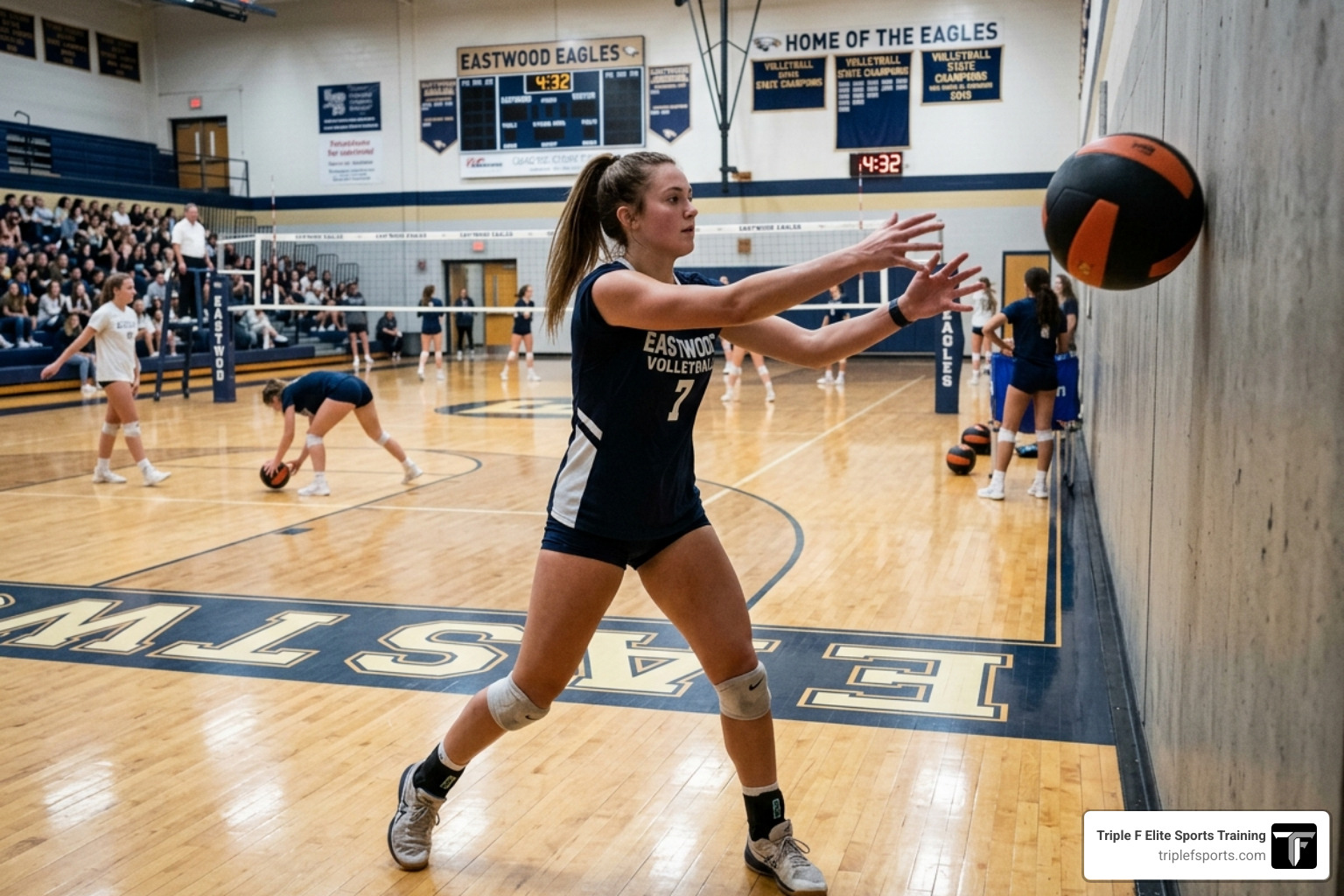
One of the biggest mistakes high school athletes make is trying to hit “personal bests” every single week of the year. In Knoxville, the volleyball calendar is packed. You have the school season from August to November, followed immediately by club season from December through June.
Effective in-depth guide to youth strength training requires periodization—the systematic planning of athletic training. We view the athlete’s total stress load like an oven; if the heat is too high (too many matches + too much heavy lifting), the athlete will burn out or get injured. Our goal is the “minimum effective dose”: 30-45 minute sessions that maintain health without causing excessive neural fatigue. This philosophy is central to beyond the gym mastering athletic strength training.
Off-Season vs. In-Season High School Volleyball Strength Training
The goals change depending on where you are in the calendar.
| Phase | Focus | Frequency | Intensity |
|---|---|---|---|
| Off-Season (Summer) | Hypertrophy & Base Strength | 3-4 days/week | High |
| Pre-Season (July) | Power & Speed-Strength | 2-3 days/week | Very High (Low Volume) |
| In-Season (Aug-Nov) | Maintenance & Recovery | 1-2 days/week | Moderate |
During the off-season, we focus on building muscle mass and raw strength. As we move into volleyball clinics camps knoxville, we transition that strength into power using plyometrics and Olympic lift variations like hang cleans. Once the season starts, we pivot to “maintenance lifting.” This keeps the gains you made in the summer without making your legs feel like lead during a Tuesday night match. Level up your game with advanced athletic training by learning when to push and when to taper.
Position-Specific Training and Injury Prevention
While every player needs a foundation of strength, a volleyball training program should eventually address the unique demands of each position.
- Liberos and Defensive Specialists: These athletes need elite lateral agility and reaction time. Their training focuses on “low-to-high” explosive movements and core stability to handle digs and dives.
- Middle Blockers: Blockers perform the most jumps per match. Their program prioritizes “stiffness” in the ankles and knees to handle repetitive jumping, along with upper body power for quick attacks.
- Setters: Setters require incredible core endurance to maintain stability while moving to out-of-system balls. We also work on hand and wrist strength to ensure clean, consistent sets.
Regardless of position, we use knoxville volleyball clinics your guide to local training to emphasize proprioception—the body’s ability to sense its position in space. This is critical for preventing ankle sprains, which often happen when a player lands on a teammate’s foot.
Frequently Asked Questions about Volleyball Strength
How often should a high school player lift during the season?
During the competitive season, 1 to 2 sessions per week is plenty. These sessions should be short (30-45 minutes) and focused on maintaining strength and joint health. The goal is to stay “crisp,” not “crushed.”
Will lifting weights make me slower or decrease my vertical?
This is a common myth! Unless you are training like a bodybuilder and gaining excessive non-functional weight, strength training will make you faster. By improving your power-to-weight ratio, you will actually increase your vertical jump and your first-step quickness on the court.
What is the best exercise to increase hitting power?
There isn’t just one, but the combination of a rotational medicine ball slam and a pull-up is hard to beat. The slam trains the core to rotate explosively, while the pull-up builds the back strength needed to stabilize the shoulder during the swing.
Conclusion
At Triple F Elite Sports Training in Knoxville, we believe that every athlete has a higher gear they haven’t reached yet. Our Christ-centered approach to athletic development ensures that we aren’t just building better players, but more resilient young men and women. Whether you are looking for a comprehensive volleyball training program or want to sharpen your skills at our top summer volleyball camps for high schoolers near you, we have the expertise to help you dominate the net.
Ready to see what a professional high school volleyball strength training program can do for your game? Come visit us for a performance evaluation and claim your free first session today.