
Why Preventative Ankle Taping Belongs in Every Athlete’s Routine
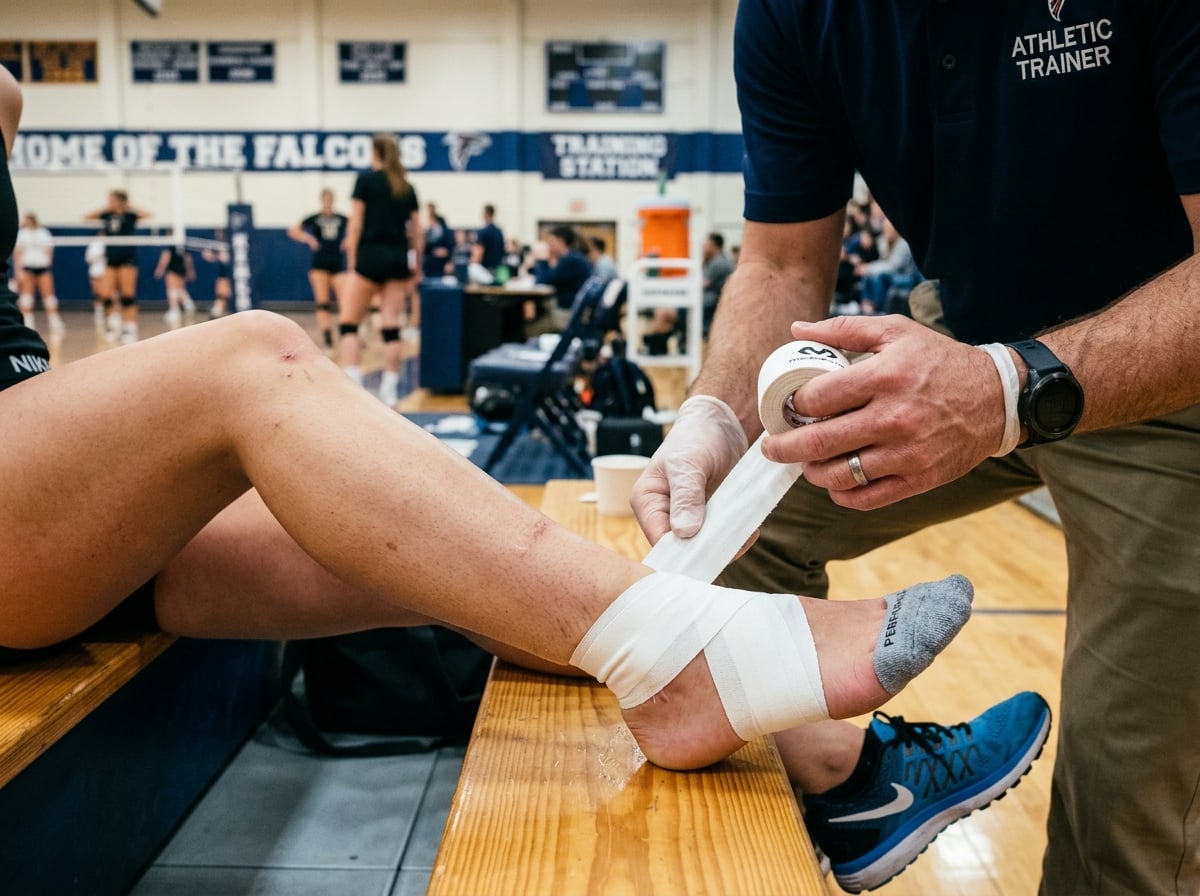
Preventative ankle taping is the practice of wrapping adhesive tape around a healthy ankle before activity to reduce the risk of sprains and ligament injuries during sports.
Quick answer — what does preventative ankle taping do?
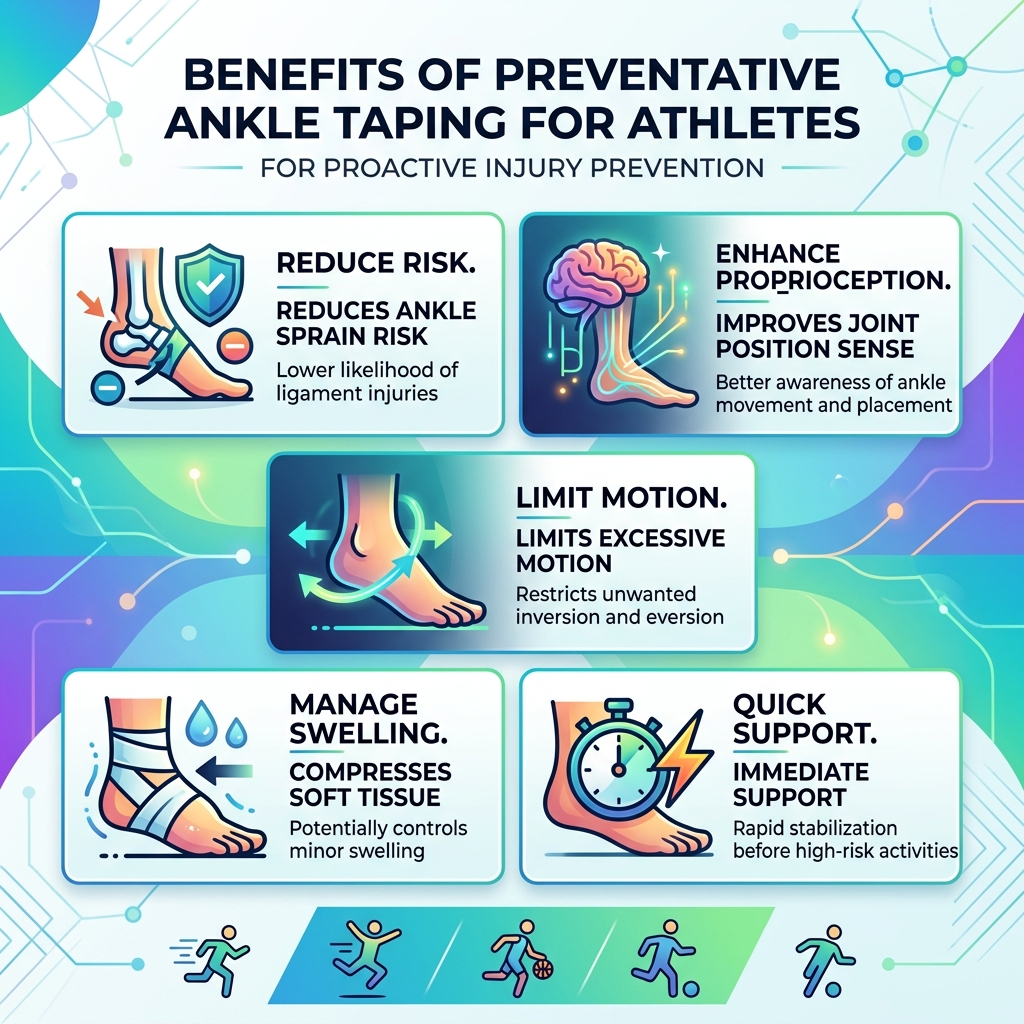
- Limits excessive side-to-side ankle motion
- Enhances proprioception (your body’s sense of joint position)
- Compresses soft tissue to reduce swelling risk
- Reduces ankle sprain risk by 50–70% in athletes with a history of sprains
- Provides immediate support before high-risk activities like basketball, soccer, and volleyball
Ankle sprains make up 15–20% of all sports injuries — and up to 30% of those sprains can lead to chronic instability if not properly managed. That’s not a small number. Whether you’re a high school athlete competing for a starting spot or a seasoned adult player, one bad ankle roll can sideline you for weeks.
You’ve probably seen it without realizing it. Watch any professional game or Olympic event closely — when athletes pull off their cleats, their ankles are almost always wrapped in white athletic tape. No visible injury. No recent sprain. Just smart, proactive protection.
That’s exactly what this guide is about.
I’m Kevin O’Shea, Certified Strength and Conditioning Specialist and former collegiate wide receiver, and my experience in athletic development has shown me how preventative ankle taping can be the difference between staying on the field and sitting on the sidelines. Let’s break down everything you need to know to use it effectively.
Explore more about preventative ankle taping:
The Science of Preventative Ankle Taping
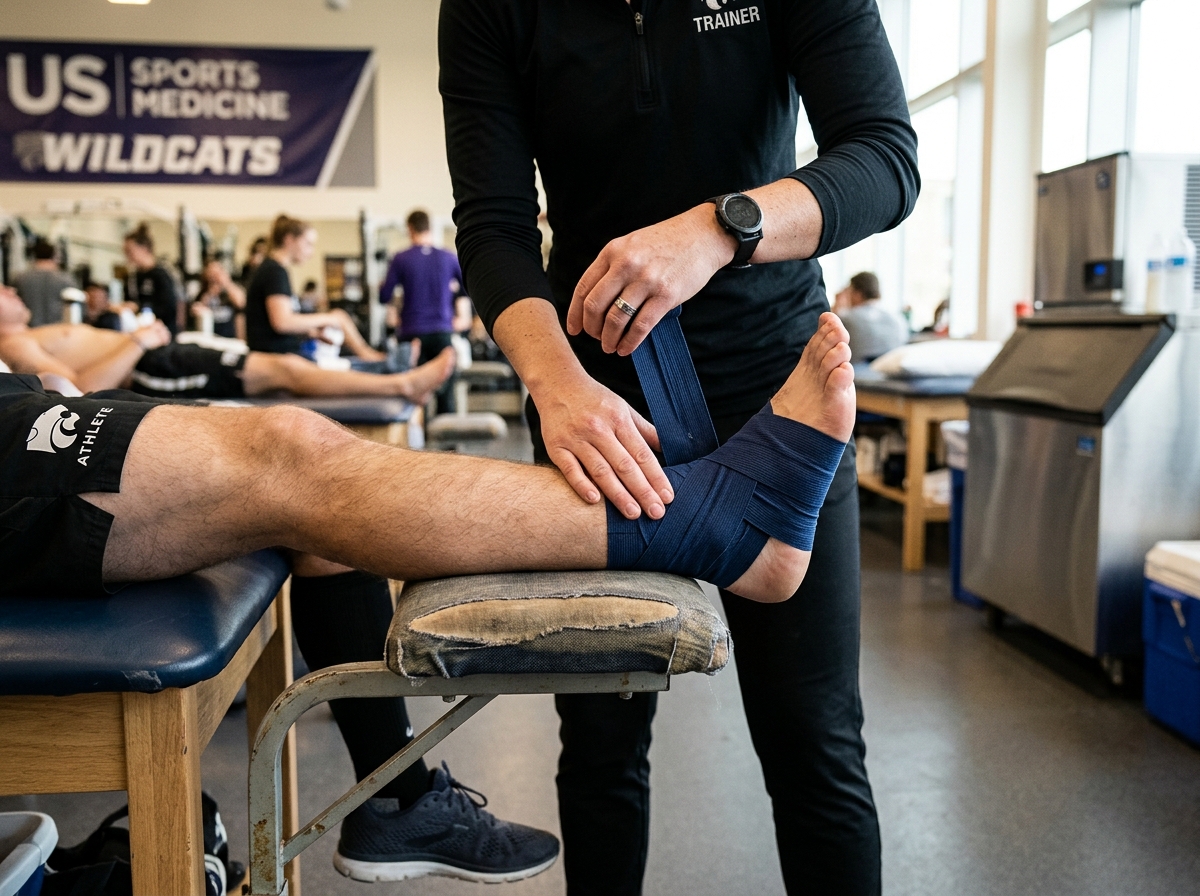
At its core, preventative ankle taping isn’t just about wrapping a sticky bandage around your foot. It is a calculated application designed to alter the mechanics of the joint. When we talk about How Athletic Taping Can Help Cut Your Risk of Foot Injury, we are looking at three primary pillars: mechanical support, neuromuscular effects, and psychological confidence.
Mechanically, tape acts as an external ligament. It restricts the range of motion (ROM) to prevent the ankle from rolling too far inward (inversion) or outward (eversion). While it doesn’t “lock” the ankle—which would be detrimental to performance—it provides a physical barrier against the extreme movements that cause ligament tears.
Beyond the physical “stop,” there is a fascinating neuromuscular component. The tape pulls on the skin, providing constant sensory feedback to the brain. This heightened awareness helps your body “feel” where the joint is in space, allowing for faster corrective muscle firing if you start to stumble. This is especially vital for athletes dealing with chronic instability or those recovering through Sports Medicine protocols.
| Feature | Inelastic (Rigid/McConnell) Tape | Elastic (Kinesio/Stretch) Tape |
|---|---|---|
| Primary Goal | Maximum stability and ROM restriction | Comfort, swelling reduction, and mobility |
| Support Level | High (acts like a “mobile boot”) | Moderate (focuses on proprioception) |
| Breathability | Lower | Higher |
| Best For | High-impact sports (Football, Basketball) | Recovery and endurance sports |
Understanding the Mechanisms of Preventative Ankle Taping
The secret sauce of preventative ankle taping is often called our “sixth sense”—proprioception. Research suggests that the traction of the tape on the skin stimulates cutaneous receptors. According to Ankle Taping and Bracing, this stimulation can actually decrease the latency of the peroneal muscles—the muscles on the side of your leg that pull your foot back to safety when you start to roll your ankle.
Essentially, the tape tells your brain, “Hey, we’re tilting!” a split second faster than your nerves would on their own. This tiny window of time is often the difference between a “close call” and a Grade II sprain.
Evidence-Based Results for Primary and Recurrent Sprains
Does it actually work? The numbers say yes, but with a caveat. Statistics show that the “Number Needed to Treat” (NNT) to prevent one sprain is much lower for athletes with a history of injury. For those with previous sprains, taping or bracing can reduce the risk of a repeat injury by 50–70%.
Specifically, the primary ankle sprain rate in some studies was 10.9 with tape versus 17.9 without. However, for recurrent sprains, the gap is massive: 22.1 with tape versus 140 without. This suggests that while everyone can benefit, those who have already “stretched out” their ligaments need this support the most. If you are currently in Physical Therapy, your therapist likely uses taping to bridge the gap between clinical rehab and full-speed play.
Step-by-Step Guide: Applying Effective Ankle Support
To get the most out of preventative ankle taping, the application must be precise. Slapping tape on haphazardly can lead to skin irritation or, worse, a false sense of security.
- Skin Preparation: Start with clean, dry skin. If you have hairy legs, shaving the area or using a quick-drying adhesive spray is highly recommended to ensure the tape stays put once the sweat starts pouring.
- Pre-wrap: Apply a thin layer of foam pre-wrap from the mid-foot up to the lower calf. This protects the skin from the adhesive and prevents blisters. For extra protection, place non-adhesive pads over the friction points at the front of the ankle and the Achilles tendon.
- Anchor Strips: Apply two strips of 1.5-inch athletic tape at the top of the pre-wrap (bottom of the calf) and one around the mid-foot. These serve as the “foundation” for the rest of the job.
- Stirrup Strips: According to Proper Ankle Taping Techniques: A Step-by-Step Guide for Injury, you should apply three stirrups. Start on the medial (inside) anchor, run the tape under the heel, and pull up firmly to the lateral (outside) anchor. Always pull from inside to outside to pull the ankle into a slightly everted, safer position.
- Figure-Eight Patterns: Start at the top of the foot, go under the arch, come back up over the top, and wrap around the ankle. This stabilizes the “subtalar” joint.
- Heel Locks: This is the hardest part to master but the most important for stability. Wrap the tape around the heel, under the foot, and back up to the side of the ankle. Do this twice on each side.
- Closing Strips: Finish by “tidying up.” Apply horizontal strips from the bottom up to cover any exposed pre-wrap and secure the ends of your stirrups and heel locks.
Best Practices for Preventative Ankle Taping
The most critical rule: The foot must be in a “toes up” (dorsiflexed) position at a 90-degree angle. If you tape the ankle while the toes are pointed down, the tape will be too loose the moment you start running, rendering it useless.
Check the tension by squeezing the athlete’s toes; the color should return quickly. If the toes turn blue or feel numb, the tape is too tight. We always emphasize these safety checks in our Bounce Back Stronger: Premier Sports Injury PT in Knoxville programs to ensure athletes are protected, not constricted.
Common Mistakes to Avoid During Application
- Tape Wrinkles: Any wrinkle in the tape is a potential blister. Smooth the tape as you go, following the natural contours of the leg.
- Gaps (Windows): Leaving small patches of skin exposed between strips of tape can cause “tape cuts” or localized swelling (edema) in the gap.
- Improper Anchoring: If your anchors aren’t secure, the “bridge” of the stirrups will collapse as soon as you start cutting on the field.
- Excessive Tightness: More tape does not always mean more support. Too much tension can restrict blood flow and lead to early fatigue.
Taping vs. Bracing: Which is Right for You?
This is the age-old debate in the locker room. Both have their place, but they serve different needs. According to the Ankle Taping and Bracing Technique literature, the choice often comes down to cost, convenience, and the specific demands of your sport.
The Case for Bracing: Braces are a one-time investment. They are reusable, self-applicable, and generally maintain their support longer during a long practice. A lace-up brace can be retightened during a halftime break, whereas tape must be cut off and reapplied. Braces are also significantly more cost-effective over a full season—taping can cost three times as much when you factor in the rolls of tape used daily.
The Case for Taping: Taping offers a “custom fit” that a brace simply can’t match. It is lower profile, meaning it fits better inside tight-fitting cleats or volleyball shoes. For many elite athletes, the “feel” of tape is superior because it moves more naturally with the foot while still providing that “sixth sense” proprioceptive boost. If you’re working on How to Prevent Groin Pulls: Stretches, Exercises, and Smart Habits, you know that keeping your equipment streamlined is key to maintaining agility.
When to Choose Preventative Ankle Taping Over Braces
Choose preventative ankle taping if:
- You play a sport requiring extreme agility and a low-profile shoe (like soccer or dance).
- You have a unique ankle shape that standard braces don’t fit comfortably.
- You need immediate, high-tension support for a short, high-intensity event (like a 100m sprint or a specific game).
- You prefer the psychological “locked-in” feeling that adhesive tape provides.
Limitations and Longevity of Tape Support
Tape has one major weakness: it loosens. Studies show that tape can lose up to 40–50% of its restrictive support after just 20 minutes of exercise. Sweat, movement, and the natural “give” of the adhesive mean that by the fourth quarter, the mechanical support is significantly diminished.
This is why professional trainers often re-tape athletes at halftime. However, even when the mechanical support fades, the neuromuscular benefits (that skin-pulling feedback) remain, which is why it still helps prevent injuries late in the game.
Maximizing Performance and Safety
A common concern among athletes is that preventative ankle taping will make them slower or less agile. Research shows that while there might be a very slight reduction in sprint speed (around 3.5%) or vertical jump height (up to 5.4%), the trade-off for injury prevention is almost always worth it.
However, tape should never be your only line of defense. At Triple F Elite Sports Training, we believe in a “belt and suspenders” approach. This includes:
- Neuromuscular Training: Programs like the FIFA 11+ have been shown to reduce injury rates by 50% through specific warm-ups and balance drills.
- Strength Programming: Building strong calves and peroneal muscles ensures your body has the internal strength to support the joint.
- Balance Training: Using wobble boards or foam pads to challenge your stability in a controlled environment.
Taping is a tool, but a strong, well-trained ankle is the ultimate goal.
Frequently Asked Questions about Ankle Taping
Does preventative taping weaken the ankle over time?
This is a common myth. There is no evidence that routine taping causes muscle atrophy or “weakens” the ligaments. Because sports involve dynamic movement, your muscles are still firing and working. However, we always recommend pairing taping with a solid strength and conditioning program to ensure you aren’t relying solely on the tape for stability.
How long does the support from athletic tape last during a game?
As mentioned, the mechanical “stiffness” of the tape begins to drop after about 20 minutes of vigorous activity. By the end of an hour, it may only retain about 10–15% of its original restrictive ROM. However, the proprioceptive (sensory) benefits last as long as the tape is stuck to your skin.
Can I apply preventative tape myself or do I need a professional?
While you can learn to tape yourself, it is difficult to get the correct angles and tension while reaching down at your own foot. If you’re a serious athlete, having a coach, athletic trainer, or physical therapist do it—or at least teach you the proper technique—is highly recommended. Poorly applied tape is often worse than no tape at all.
Conclusion
Preventative ankle taping is one of the most effective, time-tested strategies for keeping athletes on the field and out of the clinic. By providing mechanical support and sharpening your body’s natural reflexes, it acts as an essential “insurance policy” for your joints.
Whether you’re looking to protect a previously injured ankle or simply want to stay proactive during a high-stakes season, understanding the “how” and “why” behind the wrap is key. At Triple F Elite Sports Training in Knoxville, we are dedicated to helping you reach your peak performance through expert coaching, physical therapy, and evidence-based injury prevention.
Don’t wait for a pop or a snap to start thinking about your ankle health. Unlock your potential with expert guidance at Triple F Elite Sports Training and let us help you build a foundation that lasts. Come see us in Knoxville for a free first session and let’s get to work!