
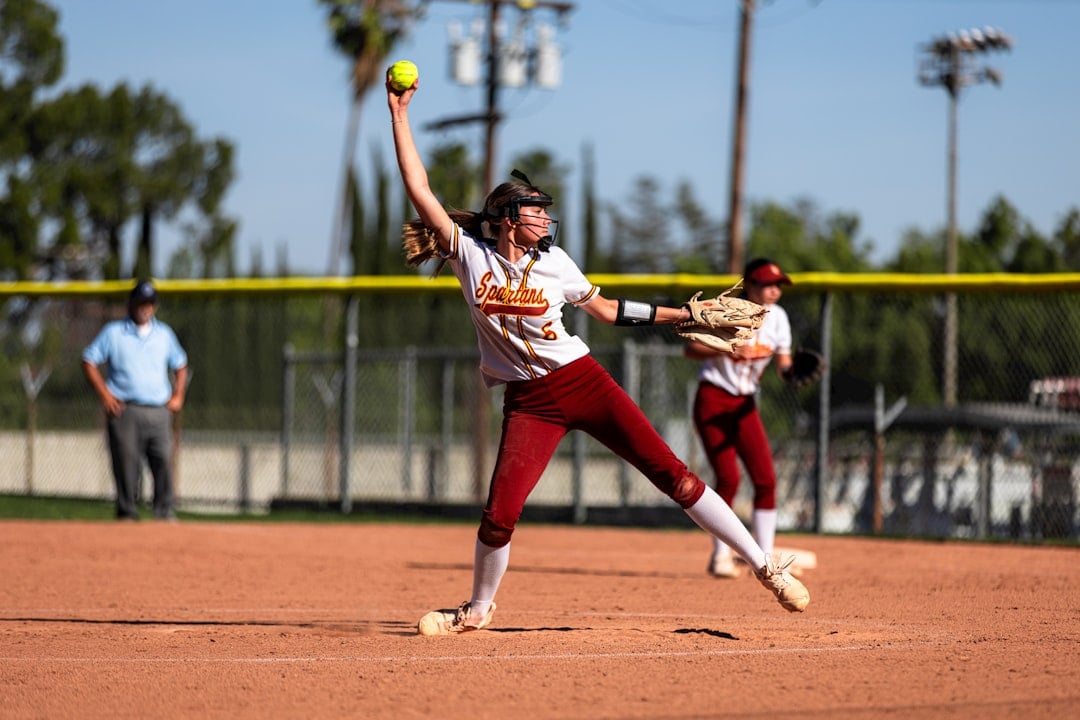
Mastering Female Athlete Training: Your Path to Peak Performance
To truly optimize female athletic performance, focus on these critical areas:
- Physiological Insights: Understand the unique biological differences that impact training.
- Injury Prevention: Implement specific strategies to reduce risks like ACL tears.
- Life Cycle Adaptation: Tailor training to menstrual cycles, pregnancy, and menopause.
- Fueling & Recovery: Prioritize nutrition and rest to support demanding physical activity.
- Smart Monitoring: Use data to guide training adjustments and prevent burnout.
For too long, female athlete training was seen as just a scaled-down version of male programs. This outdated view ignored the unique strengths and challenges women face in sports. Today, we know that understanding female physiology is key to unlocking an athlete’s full potential. It’s about moving past old ideas and embracing a science-backed approach.
This guide will show you how. We will give you the tools and knowledge to train smarter, reduce injuries, and achieve peak performance.
Kevin O’Shea, a Certified Strength and Conditioning Specialist and Co-Founder of Triple F Elite Sports Training, brings years of experience in athletic development to female athlete training. He is dedicated to empowering athletes with mental, emotional, and spiritual fitness alongside elite physical conditioning.
Similar topics to female athlete training:
Physiological Foundations of Female Athlete Training
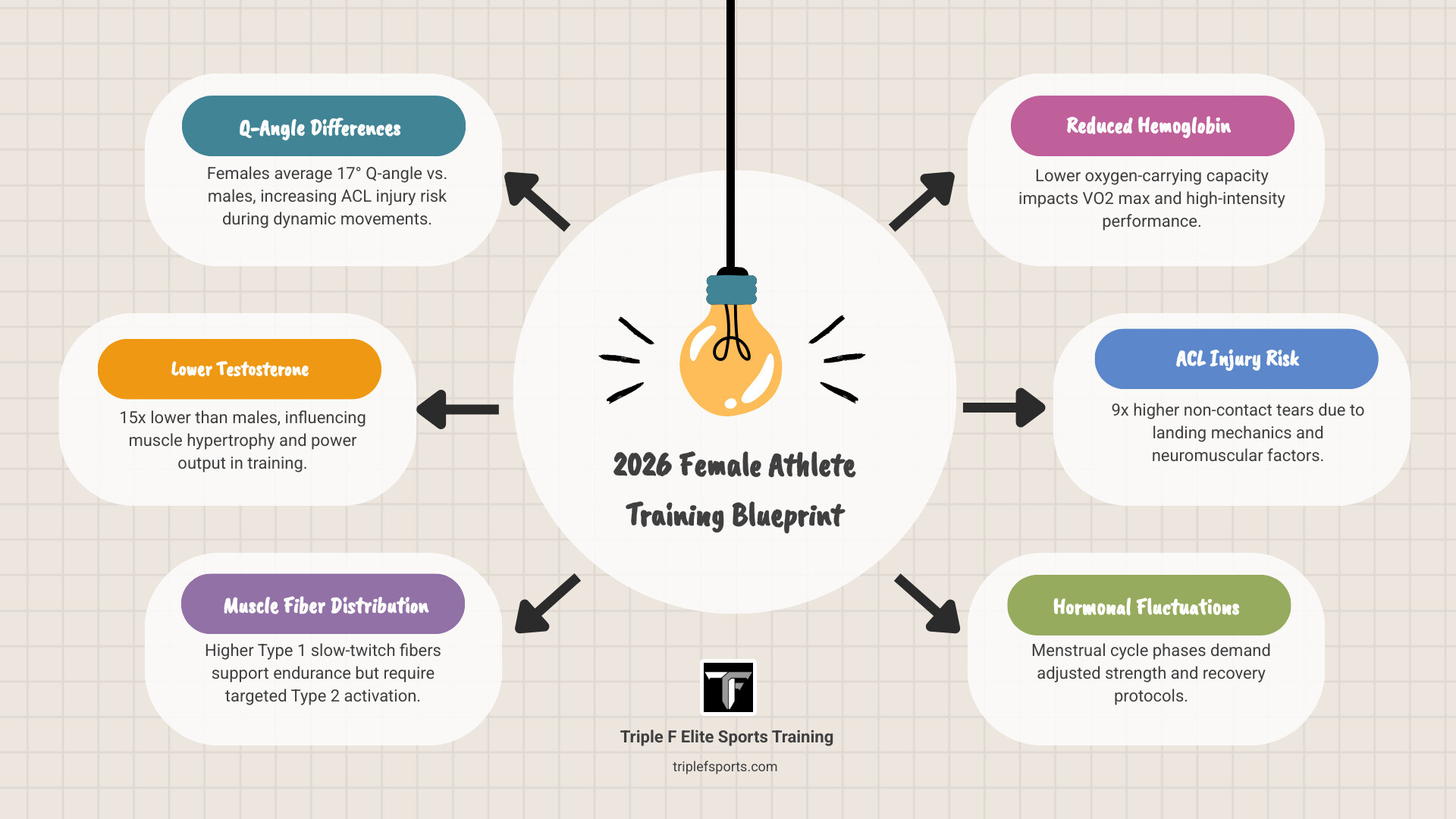
Understanding the “why” behind female athlete training begins with biology. We often hear the phrase “women are not small men,” and in sports science, this is a fundamental truth. As of April 2026, the industry has fully embraced the necessity of tailoring strength training programs for elite female athletes rather than applying a one-size-fits-all male model.
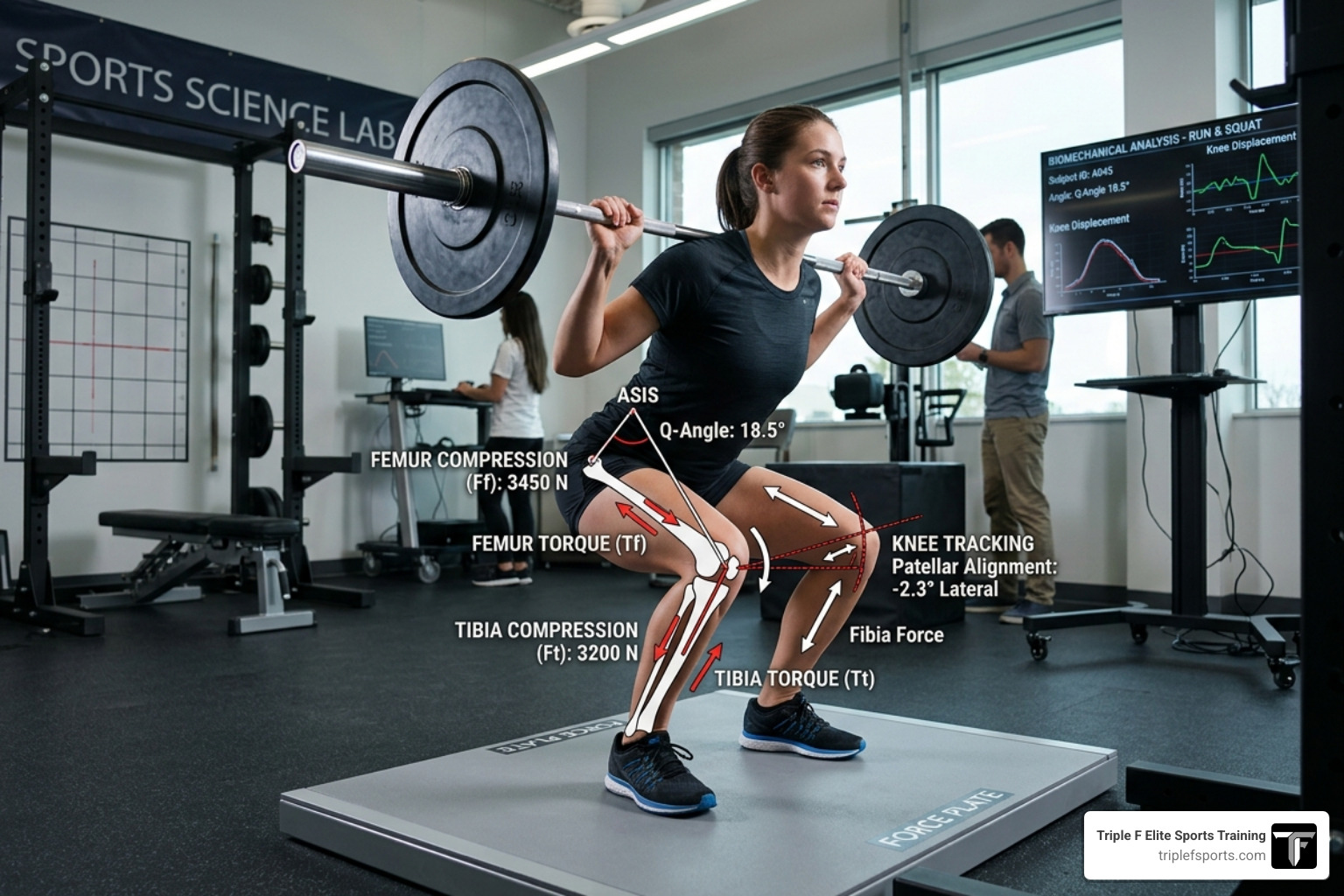
One of the most significant biomechanical differences is the Q-angle. This is the angle at which the femur (thigh bone) meets the tibia (shin bone). On average, females have a 17-degree Q-angle, while males average around 12 degrees. This wider angle, necessitated by a wider pelvis for childbirth, changes how the knee tracks and absorbs force, which has massive implications for injury prevention.
Hormonally, the differences are just as stark. Males typically have about 15 times more testosterone than females. This hormone is a primary driver of muscle hypertrophy (growth) and explosive power. However, this doesn’t mean women can’t be incredibly strong; it simply means the path to strength looks different. Females actually tend to have a higher distribution of Type 1 (slow-twitch) muscle fibers compared to males, making them exceptionally resilient to fatigue and faster at recovering between sets.
| Physiological Marker | Female Athlete Average | Male Athlete Average |
|---|---|---|
| Q-Angle | 17 Degrees | 12 Degrees |
| Testosterone Levels | 1x (Baseline) | ~15x Higher |
| Hemoglobin Capacity | 10-16% Less than males | Higher oxygen carrying capacity |
| Upper Body Strength | ~50% of male strength | Higher baseline |
| Lower Body Strength | ~70% of male strength | Higher baseline |
Furthermore, females generally have smaller lung capacities and lower hemoglobin levels—about 10% to 16% less than their male counterparts. This affects VO2 max and oxygen delivery to the muscles. Understanding these markers allows us at Triple F Elite Sports Training to design programs that play to a female athlete’s natural endurance and recovery strengths while specifically targeting areas like upper body power that may need more focused development.
Reducing Injury Risk: The Science of ACL Prevention
If there is one statistic that keeps coaches up at night, it is this: female athletes are up to 9 times more likely to suffer an ACL tear than males. Even more concerning is that 70% of these ACL tears are non-contact injuries. This means the injury didn’t happen because of a collision, but because of how the athlete moved, landed, or cut on the field.
The risk is driven by several modifiable factors. Female athletes often display “quadriceps dominance,” meaning they rely more on the muscles at the front of the leg than the hamstrings and glutes at the back. When landing from a jump, this can lead to “knee abduction” (the knees caving inward) and hip internal rotation. Without proper neuromuscular control, the ACL is forced to take the brunt of the force that the muscles should be absorbing.
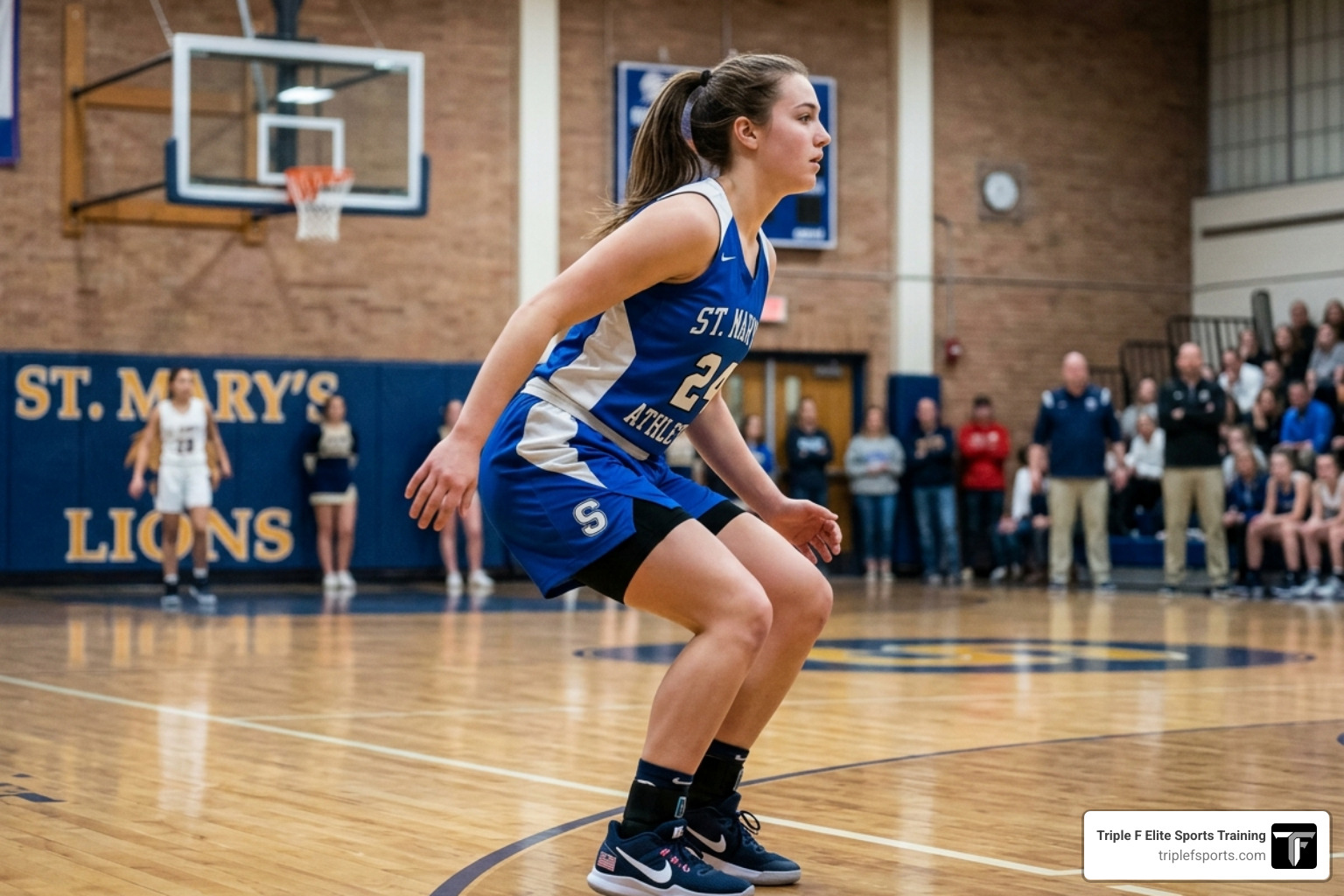
At Triple F, we believe these injuries are not inevitable. By following the complete playbook for girls high school volleyball, coaches and athletes can implement “prehab” strategies that “bulletproof” the joints.
Effective prevention focuses on:
- Deceleration Mechanics: Teaching athletes how to slow down and stop with control.
- Posterior Chain Strength: Building powerful glutes and hamstrings to support the knee.
- Landing Patterns: Training the “soft landing” where the hips and knees bend together to dissipate force.
- Neuromuscular Training: Using balance and stability drills to improve the brain-to-muscle connection.
Building an Effective Female Athlete Training System
A comprehensive female athlete training system is more than just a list of exercises; it is a periodized blueprint. We start with assessments to identify movement gaps and then build a foundation of quality. Whether you are following a HYROX training plan for women or preparing for a collegiate season, the structure remains consistent.
Our youth training for ages 12 to 18 focuses on a systematic progression:
- Dynamic Warm-ups: Moving beyond static stretching to include linear and lateral movements that “wake up” the nervous system.
- Medicine Ball Power: Developing explosive core and upper body power without the technical strain of heavy olympic lifting for beginners.
- Explosive Jumping: Progressing from landing mechanics to low-level plyometrics, and finally to high-velocity jumps.
Strength Training Progressions for Female Athletes
There is a persistent myth that lifting heavy will make female athletes “bulky.” The reality is quite the opposite. Strength training improves running economy, bone density, and metabolic health. Take the famous case study of Allyson Felix: through a targeted Allyson Felix strength routine, she increased her deadlift from 125 lbs to 270 lbs in just seven months. During that time, her body weight only increased by 2 lbs, but her 200-meter sprint time dropped significantly.
We focus on compound movements like squats, deadlifts, and presses. We use progressive overload—gradually increasing the weight, reps, or intensity—to ensure the body continues to adapt. For our athletes in Knoxville, we emphasize relative strength: the ability to move one’s own body weight with power and grace.
Speed and Agility in Female Athlete Training
Speed is often the “X-factor” in sports. In female athlete training, we prioritize the first 10 steps. Most team sports, like volleyball or soccer, are won in short bursts of 5 to 10 yards. We utilize volleyball clinics and camps in Knoxville to teach reactive Change of Direction (COD) drills that mimic game-time decisions.
We also focus on hamstring recruitment. Sprinting at max velocity is actually one of the best ways to train the hamstrings, which in turn protects the ACL. By mastering acceleration mechanics—like the “wall drive” or “falling starts”—athletes learn to apply force into the ground efficiently, resulting in “crossover speed” that leaves opponents behind.
Periodization Across the Female Life Cycle
One of the most overlooked aspects of female athlete training is the impact of hormonal shifts. We are not “flat-line” physiological beings. Our hormones fluctuate daily, weekly, and across decades.
The Menstrual Cycle
Training should be adjusted based on the phases of the cycle:
- Follicular Phase (Days 1-14): Estrogen rises, making this an ideal time for heavy strength training and high-intensity work. The body is more efficient at using carbohydrates for fuel and building muscle.
- Luteal Phase (Days 15-28): Progesterone rises, which can increase body temperature and heart rate. This is a time to focus on recovery, hydration, and perhaps lower-intensity steady-state work.
Pregnancy and Postpartum
During pregnancy, the hormone relaxin increases ligamentous laxity, making joints less stable. Training must be modified to avoid supine (lying on back) positions after the first trimester and to focus on pelvic floor health. Postpartum, we see that 60% of women experience Diastasis Recti (abdominal separation). A slow, guided return to sport is essential to rebuild the core from the inside out.
Perimenopause and Menopause
As estrogen drops, females can lose approximately half a pound of muscle annually. This makes running and strength training even more critical for masters athletes. Heavy resistance training is the best tool we have to combat bone density loss (osteoporosis) and maintain metabolic health.
Nutrition, Monitoring, and Mental Toughness
You cannot out-train a poor diet or a lack of sleep. Fueling for the female athlete requires a specific focus on micronutrients. Iron deficiency is incredibly common and is often mistaken for “being out of shape.” Without enough iron, the blood cannot carry oxygen efficiently, leading to chronic fatigue.
We also watch closely for RED-S (Relative Energy Deficiency in Sport). This occurs when an athlete’s energy intake doesn’t match their expenditure, leading to hormonal disruptions and bone stress fractures. To support muscle repair, we recommend a protein intake of 1.6–2.2 g/kg of body weight, distributed evenly throughout the day.
Monitoring and Recovery
In 2026, we have incredible tools at our disposal. We encourage our athletes to track:
- RPE (Rate of Perceived Exertion): How hard did the session feel on a scale of 1-10?
- HRV (Heart Rate Variability): A measure of how well the nervous system is recovering.
- Sleep Hygiene: Aiming for 8–9 hours of quality sleep in a dark, cool room.
Finally, we integrate mental toughness through womens only personal training. This includes structured mental rehearsal—visualizing success on the court or field—and practicing “giving oneself grace” during high-stress periods of work or school.
Frequently Asked Questions about Female Athlete Training
Why are female athletes more prone to ACL tears?
The primary reasons include the wider Q-angle (17 degrees), which creates more inward pressure on the knee, and a tendency toward quadriceps dominance. Additionally, hormonal fluctuations can cause temporary ligamentous laxity, making the joint less stable during certain times of the month.
How should training be adjusted for the menstrual cycle?
During the Follicular phase, focus on hitting your heaviest lifts and highest volumes. During the Luteal phase, prioritize recovery, increase your protein and healthy fat intake, and be mindful of hydration, as your body temperature is naturally higher.
Can strength training make female athletes too bulky?
No. Because females have roughly 15 times less testosterone than males, building significant “bulk” requires an extreme, specialized caloric surplus and years of bodybuilding-specific training. For most athletes, strength training simply leads to a leaner, more powerful, and more injury-resilient physique.
Conclusion
At Triple F Elite Sports Training in Knoxville, we are committed to a Christ-centered approach to athletic development. Our mission is to see every athlete thrive—not just as a competitor, but as a whole person. Whether you are a high school star looking to join our volleyball club team or an adult looking to reclaim your fitness, our facility offers the expert coaching and community support you need.
Mastering female athlete training isn’t about doing “less” than the guys; it’s about doing what is right for your body. By honoring your unique physiology and training with intention, you can reach heights you never thought possible. Come see us in Knoxville for a free first session and let’s start your journey to peak performance today.