
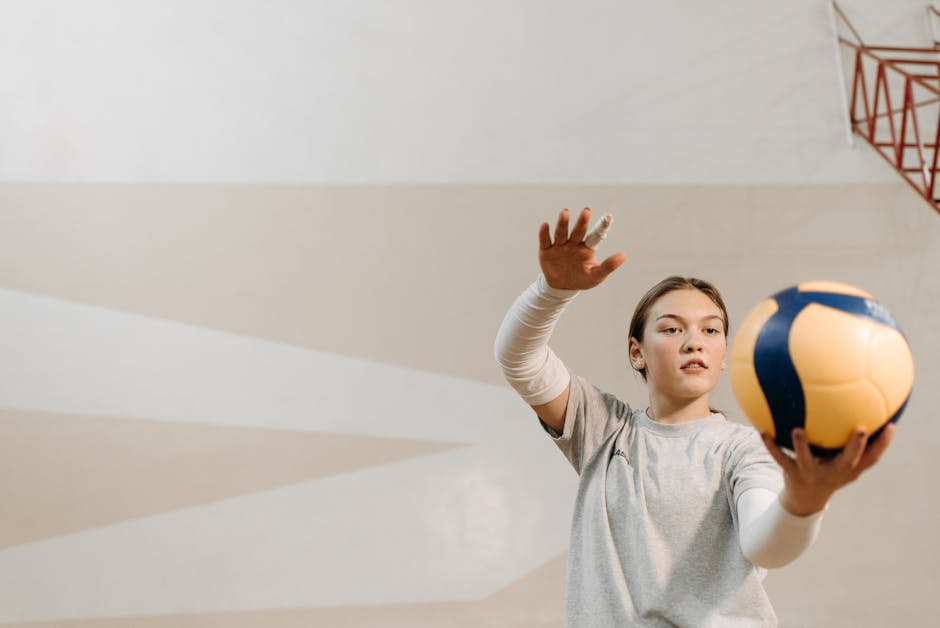
Why the Right Volleyball Drills for Beginners Make All the Difference
Volleyball drills for beginners should focus on six core skills, practiced in a simple, progressive order:
- Passing (bumping) – forming a flat platform and controlling the ball
- Setting – overhead passing with fingertips to a target
- Serving – starting with the standing float serve
- Hitting/attacking – a basic 4-step approach and arm swing
- Defense/digging – reading the play and moving to the ball
- The three-touch rule – pass, set, hit as the foundation of every rally
Start with ball control before power. Most beginners win or lose rallies based on who can keep the ball in play, not who hits the hardest.
Volleyball is one of the most team-driven sports you can play. But teamwork only works when individuals have solid fundamentals. That’s what these drills build.
I’m Kevin O’Shea, Certified Strength and Conditioning Specialist and athletic development coach, and I’ve worked with athletes at every level to build the physical and mental foundation needed to master volleyball drills for beginners and beyond. The drills and structure in this guide are built on coach-tested principles that prioritize simplicity, ball control, and real game application from day one.
Glossary for volleyball drills for beginners:
Essential Skills and Equipment for New Players
Before we dive into the drills, we need to talk about the “volleyball engine”—the basic athletic movements that make everything else possible. For a beginner, the most important physical trait isn’t height or vertical leap; it’s hand-eye coordination and the ability to maintain an athletic stance.
An athletic stance in volleyball means feet are slightly wider than shoulder-width apart, knees are bent, and weight is on the balls of the feet. We want our players “loaded” and ready to move in any direction. This is the starting point for every skill on the court.
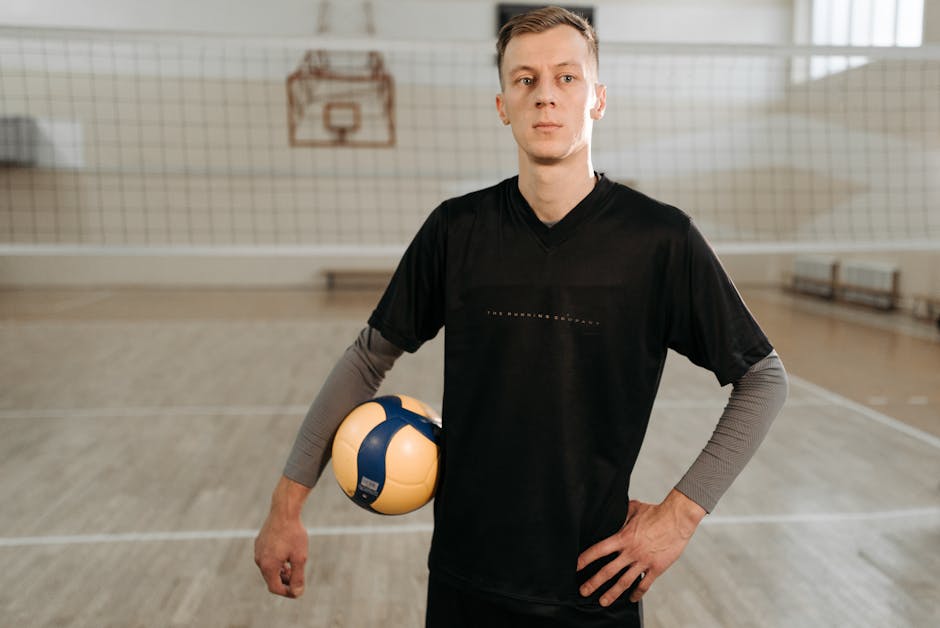
In terms of equipment, you don’t need much to get started with volleyball drills for beginners, but having the right ball makes a huge difference. Youth players should often use a “lite” ball, which is the same size as a standard ball but lighter to prevent “red arms” and build confidence without the sting.
| Feature | Indoor Volleyball | Beach Volleyball |
|---|---|---|
| Ball Type | Heavier, higher pressure | Lighter, lower pressure, slightly larger |
| Footwear | Rubber-soled court shoes | Barefoot (or sand socks) |
| Court Surface | Hardwood / Sport Court | Sand |
| Players | 6 vs. 6 | 2 vs. 2 |
At Triple F, we emphasize Volleyball Training that builds “physical literacy.” This means teaching kids how to jump, land, shuffle, and throw properly before we even worry about the scoreboard. If you can move your body efficiently, the volleyball skills will follow much faster.
Mastering the Platform: Passing and Defense Drills
Passing (often called bumping) is the most critical skill for any beginner. If you can’t pass, you can’t play. The goal is to create a “platform” with your forearms that acts like a flat board for the ball to bounce off of.
To build a proper platform:
- Wrist-to-wrist connection: Place the back of one hand in the palm of the other and tuck your thumbs together side-by-side.
- Straight elbows: This is non-negotiable. If you bend your elbows, the ball will go backward or hit you in the face. Lock them out!
- Shoulder shrugging: Instead of swinging your arms, we want to “shrug” our shoulders toward our ears to provide power.
- Angle control: The ball knows physics. If you want the ball to go to the setter, you must angle your platform toward the target before the ball hits you.
One of the biggest mistakes we see in volleyball drills for beginners is “arm swinging.” Beginners love to swing their arms like a golf club. We teach them to let the angles do the work. If you provide a solid, tilted platform, the ball will go where it’s supposed to without you having to “hit” it.
Simple Passing volleyball drills for beginners to Build Control
To turn these mechanics into muscle memory, we use specific progressions. You can find more structured ideas in USA Volleyball Lesson Plans, but here are our favorites:
- Toss-to-Pass: This is the “blocked” training phase. A partner tosses a perfect ball, and the passer focuses only on their platform and finishing toward the target.
- “W” Passing Drill: We place five markers on the court in a “W” shape. The player starts at the base, moves to a marker, passes a tossed ball, and returns. This teaches court coverage and moving to the ball rather than reaching for it.
- Shuttle Passing: This is a fantastic warm-up. Split a group into two lines facing each other across the net. Player A passes to Player B and then runs to the end of the opposite line. It keeps everyone moving and builds consistency.
- Low Catch Drill: To emphasize staying low, have players catch a tossed ball between their knees or at waist height before progressing to an actual pass.
Defensive Progression and Digging Basics
Defense is simply passing under pressure. For beginners, the “Read Sequence” is vital: Ball-Setter-Ball-Hitter. We want our players watching the ball as it’s served, watching the setter to see where the play is going, and finally watching the hitter’s arm to predict the shot.
In our Volleyball Club Team sessions, we teach mid-line passing. This means trying to get your belly button behind the ball whenever possible. However, if the ball is far away, we use lateral movement (shuffling) and “sprawling.” Sprawling for beginners isn’t a fancy dive; it’s a controlled move to the floor where we land on our bellies, not our butts, to keep the ball alive.
Setting and Hitting: Building the Offensive Foundation
Once the ball is passed, it’s time for the set. Setting is the “overhead pass.” Instead of using our forearms, we use the finger pads of both hands to push the ball upward.
The key mechanics for setting are:
- Hands up early: Your hands should form a “window” or a diamond shape above your forehead before the ball arrives.
- Contact point: Use only your finger pads, never your palms. It should be quiet!
- Squaring to the target: Your hips and shoulders must face exactly where you want the ball to go.
- Using the legs: Most of the power in a set comes from the legs, not just the wrists.
When it comes to hitting (attacking), we focus on the 4-step approach: Right, Left, Right-Left (for right-handed hitters). It’s a “slow-to-fast” rhythm. As the player jumps, they use a “bow-and-arrow” arm swing—drawing the hitting hand back past the ear and then rotating the torso (torque) to snap onto the ball at the highest point possible.
Effective Setting volleyball drills for beginners
To master the overhead pass, try these volleyball drills for beginners:
- Triangle Setting: Three players stand in a triangle about 10 feet apart. They set continuously in a circle. To make it fun, see how many they can get in a row without the ball touching the ground. View our volleyball skills and drills video for a visual of this in action!
- Line Setting: Players straddle a line on the court. This forces them to keep their feet straight and square their bodies to their partner.
- Set and Switch: After setting the ball, the player follows their ball to the next position. This simulates the transition from being a passer to becoming an attacker.
- Self-Toss to Set: A simple solo drill where the player tosses the ball to themselves and focuses on catching it with “setting hands” before progressing to a full push.
Hitting Drills for Novice Attackers
We don’t expect beginners to bounce balls off the floor like pros. We want consistency.
- Self-Toss Hitting: The player tosses the ball up, performs a standing “bow-and-arrow” swing, and hits it over the net. This removes the timing difficulty of a setter.
- Down Ball Practice: Teaching players to hit the ball while standing on the ground helps them learn the “snap” of the wrist and the contact point before they try to do it mid-air.
- 10 to Kill: A cooperative drill where the team must have 10 successful passes and sets before anyone is allowed to try a “kill” or a hard hit. This emphasizes that you can’t hit if you don’t control the ball first.
For a deeper dive into these techniques, check out The Complete Playbook for Girls High School Volleyball.
Serving for Success: Accuracy and Confidence Drills
Serving is the only time in volleyball where a player has total control over the ball. For beginners, we recommend starting with the standing float serve. Statistically, a float serve (which has no spin and “dances” in the air) is the hardest serve to receive.
The rhythm we teach is “Place, Step, Hit.”
- Place: Hold the ball in your non-hitting hand and “place” it into the air. Don’t toss it 10 feet high—just a small, consistent lift.
- Step: Step forward with your opposite foot.
- Hit: Contact the ball with a flat, firm hand (like a high-five) and stop your hand immediately after contact. This creates the “float” effect.
For younger kids who struggle with strength, the underhand serve is a great way to get the game started. The mechanics are similar to bowling: a step forward and a “punch” through the bottom of the ball with a closed fist or flat palm. Serve Up Success: Fun Drills for 10-13 Year Olds offers great variations for this age group.
Serving Drills to Build Muscle Memory
- Deliver and Pop: Players stand close to the net and focus only on the contact. As they get 5 in a row over, they take two steps back.
- Overhead Floater Drill: Focus on the “dead hand” contact. If the ball spins, the contact wasn’t flat. We want zero spin! You can see a demonstration in this volleyball skills and drill video.
- Around the World: Place markers (like hula hoops or towels) in different zones of the opponent’s court. Players must hit each zone to move to the next “country.”
- Serving Progression: Start at the 10-foot line, move to the middle of the court, and finally move behind the baseline as strength increases.
How to Structure a 60-Minute Practice with volleyball drills for beginners
A common mistake for new coaches is spending too much time talking and not enough time touching the ball. Beginners need “touches” more than anything else. We recommend a “variable training” approach—switching drills every 10-15 minutes to keep engagement high.
Communication is the “glue” of a good practice. We insist that every player calls “Mine!” or “Got it!” on every single touch. If two players go for the ball and neither calls it, that’s a “silent error,” and it’s the hardest mistake to fix later on.
Sample 60-Minute Practice Plan:
- 0-10 Min: Dynamic Warm-up & Physical Literacy. Shuffling, high knees, and “Hot Potato” (throwing and catching over the net).
- 10-25 Min: Ball Control (Passing/Setting). Shuttle passing and Triangle setting. Focus on “quiet hands” and “straight elbows.”
- 25-40 Min: Skill Focus (Serving/Hitting). Serving progression followed by self-toss hitting.
- 40-55 Min: Game-Like Drills. “3 and Over” or “Queen of the Court.”
- 55-60 Min: Energy Check & Wrap-up. A quick fun game like “Popcorn” to end on a high note.
If you’re looking for professional guidance, our Volleyball Clinics & Camps Knoxville are designed exactly around this high-touch, high-energy structure.
Fun and Game-Like Drills for Motivation
Keeping beginners motivated is all about making the “grind” of fundamentals feel like a game.
- Hot Potato: Players stand on opposite sides of the net and must catch and immediately throw the ball back. It builds reaction time and gets them used to the net.
- 3 and Over: A simplified game where players must use three touches (even if they are catches and throws at first) before the ball goes over.
- Queen of the Court: A game where the winning team stays on the court and challengers cycle in. It’s high energy and teaches players to value every point.
- Popcorn: A ball control game where players try to keep as many balls in the air as possible at once. It’s chaotic, loud, and fun!
Frequently Asked Questions about Beginner Volleyball
How do these drills differ for indoor vs. beach volleyball?
The fundamentals of passing and hitting are similar, but the “environment” changes everything. In the sand, you can’t “shuffle” as easily, so you have to take smaller, more explosive steps. Wind also becomes a factor in serving and setting, requiring players to keep their tosses lower and more controlled. Beach volleyball is almost always 2v2, which means you have to be a “jack of all trades”—you must be able to pass, set, and hit every single rally. For those interested in outdoor play, our Grass League is a great way to transition these skills.
What are the most common mistakes beginners make?
- Arm Swinging: We can’t say it enough—stop swinging! Let the platform do the work.
- Crossing Feet: Beginners often “braid” their legs when moving. We want a shuffle (step-together-step) to keep the base stable.
- Tossing Too High: In serving, a high toss leads to bad timing. Keep it just above the hitting shoulder.
- Bending Elbows: This kills the platform and sends the ball into the rafters.
- Lack of Communication: Silence on the court leads to collisions and dropped balls.
Where can I find video demonstrations of these drills?
Visual learning is huge for beginners. We highly recommend the Youth Volleyball Drill Book for a library of over 120 drills. Additionally, YouTube channels like “The Art of Coaching Volleyball” and “USA Volleyball” provide excellent slow-motion breakdowns of the mechanics we’ve discussed here.
Conclusion
Mastering volleyball drills for beginners is a journey of a thousand touches. It starts with a solid platform, a consistent serve, and the willingness to communicate with your teammates. At Triple F Elite Sports Training in Knoxville, we believe in more than just sports skills. Our Christ-centered coaching aims to build the whole athlete—mind, body, and spirit.
Whether you are just picking up a ball for the first time or looking to sharpen your skills for school tryouts, we are here to help you unlock your full potential. We invite you to come experience our facility and our culture with a free first session. Let’s stop dropping the ball and start building a foundation for success on and off the court.
Ready to take the next step? Learn more about our Volleyball programs and join the Triple F family today!