
Pain Is Talking — Are You Listening? What Every Athlete Needs to Know
Athlete pain management is the process of identifying, treating, and recovering from pain caused by sports injuries or intense training — so athletes can return to peak performance safely and without long-term damage.
Here’s a quick overview of what effective athlete pain management looks like:
- Recognize the pain type — Is it normal training soreness or a signal of real injury?
- Apply immediate first aid — Use the RICE protocol (Rest, Ice, Compression, Elevation) within the first 24–48 hours of acute injury.
- Seek professional evaluation — When pain is sharp, persistent, or comes with swelling, numbness, or instability.
- Follow a treatment plan — Which may include medications, physical therapy, injections, or other interventions depending on severity.
- Rebuild progressively — Restore strength, mobility, and mechanics before returning to full sport participation.
Every athlete knows the feeling. You push hard in practice, feel something sharp or wrong, and then face a decision: shake it off, or stop? That choice — made in a split second — can define weeks or even months of your season.
Pain is one of the most misunderstood signals in sport. Research from the International Olympic Committee makes this point clearly: pain can exist without injury, and injury can exist without pain. That’s what makes managing it so complex — and so important to get right.
Sports injuries affect roughly 2.6 million children and teenagers every year in the United States alone. From weekend athletes to varsity standouts to professional players, no competitor is immune.
I’m Kevin O’Shea, a Certified Strength and Conditioning Specialist, behavioral health professional, and football coach who has worked with athletes across multiple levels of competition — and athlete pain management is something I’ve seen impact performance and long-term health in very real ways. Understanding how to respond to pain, not just push through it, is one of the most important skills any athlete can develop.
Important Athlete pain management terms:
- Rehab for athletes
- Sports specific conditioning
- Volleyball strength training
Common Sports Injuries and the Physiology of Pain
To manage pain effectively, we first have to understand what it actually is. Pain is not just a physical sensation; it is a complex warning system coordinated by your brain and nervous system. When we talk about sports injuries, we generally categorize them into acute trauma and overuse injuries.
Acute trauma includes sudden-onset events such as:
- Sprains: Stretching or tearing of ligaments (the tissues connecting bone to bone).
- Strains: Stretching or tearing of muscles or tendons (the tissues connecting muscle to bone).
- Fractures: Cracks or breaks in the bone, often accompanied by severe localized pain and swelling.
- Dislocations: Joints forced out of their normal positions (with shoulder dislocations representing 54.9% of all sports dislocations).
- Tendon or Ligament Tears: Severe structural failures, such as an ACL tear or an Achilles rupture, which often present with an audible “pop.”
- Contusions: Deep bruises caused by direct impact, leading to pooled blood and localized tenderness.
From a physiological standpoint, these injuries trigger different pathways of pain. Understanding these pathways is key to choosing the right interventional strategies:
- Nociceptive Pain: This is the most common pain type in sports. It occurs when specialized nerve endings (nociceptors) detect actual tissue damage, such as a rolled ankle or a torn muscle. The damaged tissues release inflammatory chemicals that sensitize these nerve endings, sending warning signals straight to the spinal cord and brain.
- Neuropathic Pain: This occurs when there is direct damage or compression to the nervous system itself. In the athletic world, we see this as pinched nerves, herniated discs, or nerve impingement syndromes. Interestingly, neuropathic pain is highly prevalent in adaptive sports; central neuropathic pain following spinal cord injuries affects roughly 53% of athletes at the level of the lesion and 27% below it.
- Nociplastic Pain: This is a more complex state where pain occurs despite no clear evidence of ongoing tissue damage or nerve irritation. The nervous system becomes hypersensitive, essentially “winding up” and amplifying normal sensations into painful ones. This is often seen in chronic pain conditions that linger long after an initial sports injury has structurally healed.
Differentiating “Good Pain” from “Bad Pain” in Athlete Pain Management
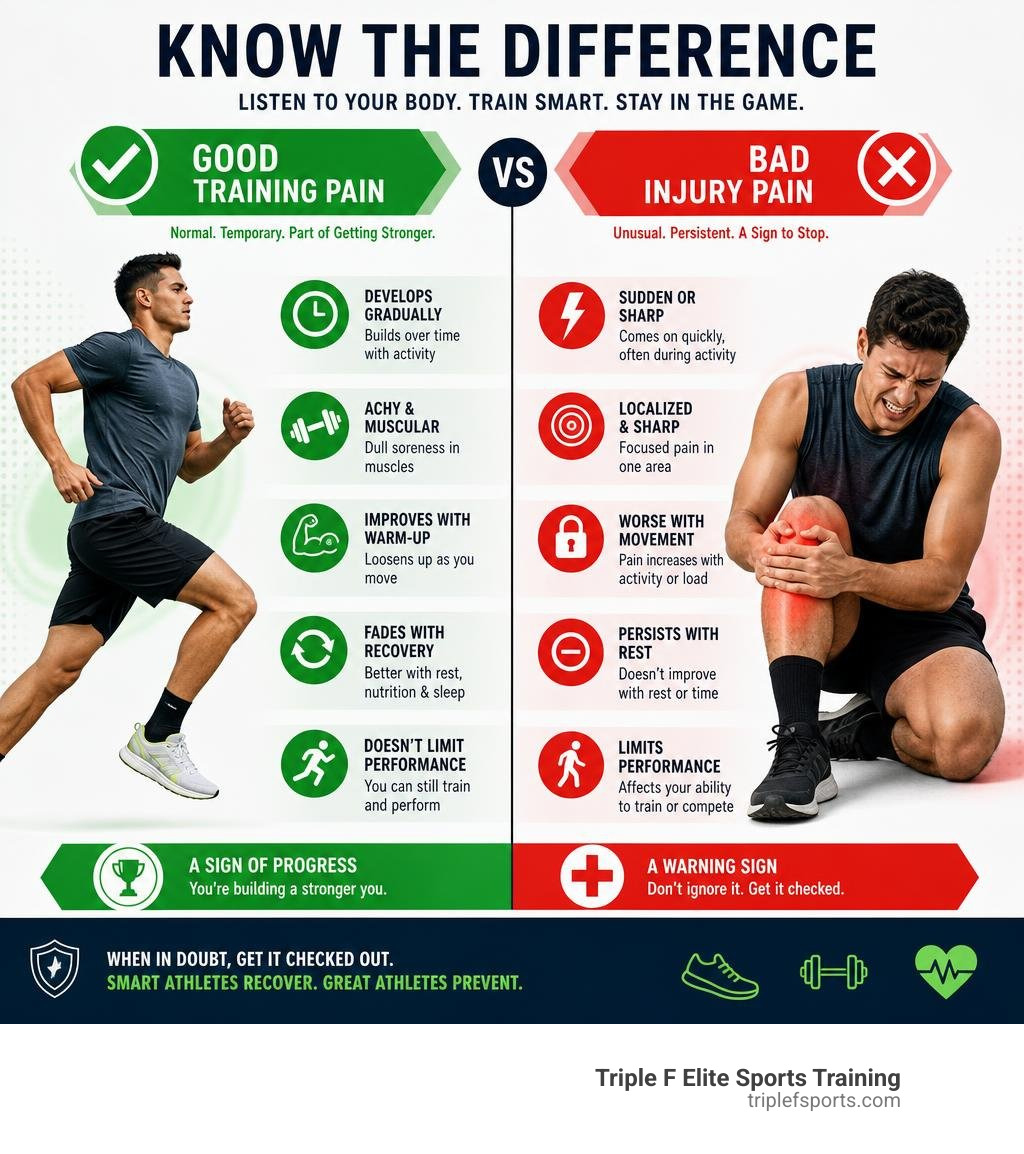
As athletes, we are practically conditioned to believe that pain is simply weakness leaving the body. But pushing through the wrong kind of pain can lead to catastrophic structural damage. We must learn to differentiate between “good pain” (safe training discomfort) and “bad pain” (injury signals).
“Good pain” typically refers to Delayed Onset Muscle Soreness (DOMS). This is caused by microscopic tears in the muscle fibers during intense training, leading to a dull, aching soreness that peaks 24 to 48 hours later. It is symmetrical, improves with light movement, and resolves within a few days.
“Bad pain,” on the other hand, is your body’s red alert. It is usually sharp, localized, or stabbing. It is often accompanied by swelling, joint redness, warmth, or a restricted range of motion. If you feel pain that worsens as you continue to play, causes you to limp, or is accompanied by joint instability, you are dealing with a structural injury that requires professional sports medicine services. Ignoring these signs can turn a minor three-week strain into a chronic, season-ending issue.
The First Line of Defense: Acute Injury Care and the RICE Protocol
When an acute injury occurs on the field or in the gym, the immediate actions you take during the first 24 to 48 hours can heavily dictate your overall recovery timeline. The gold standard for initial, conservative management is the classic RICE protocol:
- Rest: Protect the injured area from further stress. Stop the activity immediately. Continuing to play on an injured limb increases tissue damage and bleeding.
- Ice: Apply cold packs wrapped in a thin towel to the affected area for 15 to 20 minutes every 2 to 3 hours. This constricts blood vessels, limits excessive swelling, and provides a natural numbing effect to ease acute nociceptive pain.
- Compression: Wrap the injured area with an elastic bandage (like an ACE wrap) to help limit swelling and support the joint. Be careful not to wrap it so tightly that you cut off circulation.
- Elevation: Whenever possible, prop the injured limb up above the level of your heart. This uses gravity to assist lymphatic drainage, helping to reduce localized swelling and pressure.
While the RICE protocol is excellent for mild-to-moderate sprains and contusions, it is not a substitute for professional medical care. You must seek an immediate medical evaluation if you experience any of the following “red flag” symptoms:
- An inability to bear weight on the injured limb.
- Extreme pain that cannot be managed with basic over-the-counter measures.
- Visible joint deformity or abnormal bone alignment.
- Numbness, tingling, or a “cold” feeling below the injury site (indicating potential nerve or vascular compromise).
- Significant joint instability or a feeling that the limb is “giving out.”
When to Seek Professional Athlete Pain Management
It is common for athletes to try to wait out an injury, hoping a few extra days of rest will magically fix the problem. However, delaying professional care can lead to compensatory movement patterns. When you favor an injured joint, your body alters its mechanics, putting abnormal stress on other muscles and joints. This often leads to secondary injuries elsewhere.
You should consult a specialized pain management or physical therapy provider if your pain persists beyond a few days without improvement, if you experience recurring injuries in the same joint, or if you notice lingering joint instability. Addressing these issues early through dedicated sports medicine services ensures that you heal with correct biomechanics rather than built-up scar tissue and compensations.
Modern Athlete Pain Management: Pharmacological and Interventional Services
When conservative measures like the RICE protocol are not enough, modern medicine offers a wide array of pharmacological and interventional tools. Today, the medical community champions multimodal analgesia — a strategy that combines different types of treatments to target pain from multiple angles, reducing the reliance on any single medication.
In the pharmacological realm, options range from basic over-the-counter pills to highly targeted prescriptions:
- Paracetamol (Acetaminophen): Often recommended as a first-line treatment for mild-to-moderate pain. It works primarily in the central nervous system to block pain signals. Because it lacks anti-inflammatory properties, it carries a much lower risk of gastrointestinal irritation compared to NSAIDs.
- NSAIDs (Non-Steroidal Anti-Inflammatory Drugs): Medications like ibuprofen, naproxen, or prescription-strength diclofenac are highly effective at reducing both pain and swelling. However, emerging research suggests using NSAIDs cautiously in the first 72 hours after an acute injury, as some level of inflammation is actually necessary to trigger the body’s natural tissue-healing processes.
- Opioids: These strong pain relievers carry a high risk of dependency and side effects. According to modern athletic guidelines, opioid prescriptions should be strictly limited to severe, acute post-surgical pain and should rarely exceed a 5-day supply. They have no place in same-day return-to-play decisions due to their cognitive-dampening and reaction-time-delaying effects.
- Local Anesthetics: Often used for diagnostic blocks or minor procedures to temporarily numb a specific nerve pathway.
When oral medications fall short, interventional pain management provides highly targeted relief directly at the source of the pain:
- Nerve Blocks: Temporary injections of local anesthetics around specific nerves to disrupt pain signals.
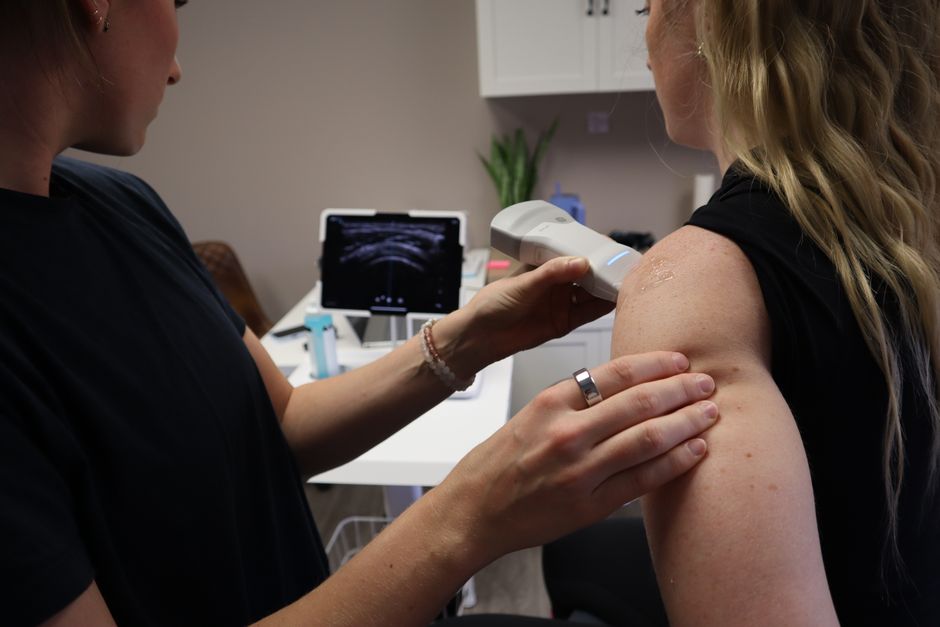
- PRP Injections (Platelet-Rich Plasma): A regenerative therapy where a small sample of the athlete’s own blood is spun in a centrifuge to concentrate platelets, which are then injected under ultrasound guidance into damaged tendons or joints to accelerate natural healing.
- Cortisone Injections: Powerful anti-inflammatory steroid injections that offer rapid, localized pain relief for severe joint inflammation, bursitis, or tendinitis. These must be carefully coordinated with physical therapy, as repeated cortisone injections can temporarily weaken local connective tissues.
- Radiofrequency Ablation (RFA): Utilizing heat to temporarily disable pain-transmitting nerves. This is typically reserved for retired athletes dealing with chronic, degenerative joint pain rather than acute, active injuries.
It is crucial to note that elite athletes must navigate these options while strictly adhering to the World Anti-Doping Agency (WADA) regulations. Many common medications and injection therapies require a formal Therapeutic Use Exemption (TUE) before competition. For a deeper, evidence-based look at these clinical guidelines, refer to the International Olympic Committee consensus statement on pain management in elite athletes as well as the comprehensive review on Pharmacological Treatment for Acute Traumatic Musculoskeletal Pain in Athletes.
Non-Opioid Innovations and Elite Athlete Case Studies
The sports world has seen a massive shift away from opioids due to the high risk of addiction, physical dependence, and performance-dampening side effects. Elite athletes are increasingly vocal about seeking non-opioid alternatives that target the peripheral nervous system rather than altering brain chemistry.
A prime example is NBA star Jayson Tatum on Why He Switched to Non-Opioid Meds After His Injury. Tatum shared his experience recovering from a severe injury, explaining how traditional opioids left him feeling nauseous, disoriented, and disconnected. By switching to targeted non-opioid medications that blocked pain signals in the peripheral nerves before they reached his brain, he was able to manage his pain effectively while staying mentally sharp and fully engaged in his physical therapy.
Similarly, other elite competitors are looking at “extreme wellness” and proactive recovery. In the feature Karl-Anthony Towns Reveals the “Extreme Wellness” Tools That Give Him a Competitive Edge, the All-Star big man discussed how he manages the physical toll of an 82-game season. While he utilizes tools like infrared saunas and cold therapy for systemic recovery and mental clarity, he emphasizes that targeted, proactive strength training remains the absolute foundation for preventing joint inflammation and keeping pain at bay.
Why Prompt Pain Management is Critical for Young Athletes
When treating young athletes, the stakes are incredibly high. Children and teenagers are not just miniature adults; their skeletal systems are still actively developing.
The presence of open growth plates (epiphyseal plates) makes youth athletes highly vulnerable to unique injuries, such as avulsion fractures, where a tendon pulls away a small piece of bone. Left unmanaged, severe pain can cause a young athlete to alter their movement patterns, leading to uneven joint loading that can permanently damage these delicate growth zones and lead to early-onset osteoarthritis.

Furthermore, we cannot ignore the psychological and social impact of sports injuries on young people. Being suddenly sidelined can cause significant emotional stress, anxiety, and a feeling of isolation from their peer group and school activities.
Prompt, professional pain management and structured rehabilitation help young athletes maintain a sense of progress and control. By utilizing specialized sports physical therapy, we can keep youth athletes safely moving, preserve their cardiovascular fitness, and support both their physical and mental well-being throughout the recovery process.
Structuring Rehabilitation and Return-to-Play Criteria
True recovery is not merely the absence of pain; it is the restoration of complete physical function. A structured, evidence-based rehabilitation program must progress through clear, objective phases rather than relying on a calendar timeline.
Key pillars of a successful return-to-play protocol include:
- Progressive Loading: Gradually exposing the healing tissue to controlled physical stress to stimulate tissue remodeling without causing re-injury.
- Strength Symmetry: Ensuring that the injured limb has regained at least 90% of the strength of the uninjured side.
- Full Range of Motion: Restoring complete, pain-free joint mobility.
- Optimized Biomechanics: Correcting any movement compensations in running, jumping, or throwing mechanics.
- Sleep Hygiene and Nutrition: Prioritizing 8 to 9 hours of quality sleep (as poor sleep directly amplifies pain sensitivity) and consuming adequate protein and micronutrients to fuel cellular repair.
To optimize this journey, we must balance active recovery strategies with passive modalities:
| Active Recovery Modalities | Passive Modalities |
|---|---|
| Progressive resistance training | Ice and heat therapy |
| Isometric exercises (excellent for tendon pain) | Ultrasound and TENS unit stimulation |
| Blood Flow Restriction (BFR) training | Manual massage and soft-tissue mobilization |
| Sport-specific agility and drills | Joint immobilization (bracing/splinting) |
To design a program that covers all of these bases, athletes benefit immensely from reading about mastering athlete recovery and rehab and understanding comprehensive sports therapy.
Personalizing the Recovery Journey
No two athletes are identical, which means no two recovery plans should be the same. A highly personalized approach must take into account the sport context (a volleyball player needs different shoulder and vertical jump mechanics than a football lineman), season timing (managing an injury in the off-season versus weeks before a championship), the athlete’s age, growth stage, and their specific long-term athletic goals.
By utilizing targeted, sports-specific therapeutic exercise, we can tailor every movement to rebuild the exact physical qualities required for an athlete’s specific position and style of play.
Frequently Asked Questions about Athlete Pain Management
How does acute pain management support sports recovery?
Effective acute pain management prevents you from developing harmful compensatory movement patterns that stress other joints. It also helps control excessive, runaway inflammation and lowers the risk of central sensitization, which can turn an acute injury into a chronic pain condition. By keeping your pain under control, you also protect your mental health and maintain the confidence needed to actively participate in your rehab. If you are in the East Tennessee area, utilizing premier sports injury PT in Knoxville is a fantastic way to ensure your recovery is handled by specialists who understand these exact principles.
What are the most common sports injuries that cause acute pain?
The most frequent culprits include lateral ankle sprains, hamstring or groin muscle strains, ACL or meniscus tears in the knee, and acute shoulder dislocations. Each of these injuries requires a distinct diagnostic approach and a tailored rehabilitation plan. For those recovering from joint-specific issues, unlocking professional sprain recovery secrets can make a massive difference in restoring joint stability and preventing future roll-overs.
When should an athlete consult an interventional pain specialist?
An athlete should consult an interventional specialist if conservative treatments (such as rest, standard physical therapy, and oral medications) have failed to provide relief after several weeks. It is also highly beneficial for athletes dealing with chronic, stubborn tendinopathies, severe nerve impingements (like sciatica), or lingering joint pain that prevents them from progressing through their rehabilitation. Seeking advanced sports medicine services early can provide the targeted relief needed to kickstart your active recovery.
Conclusion
At Triple F Elite Sports Training in Knoxville, Tennessee, we believe in a comprehensive, personalized approach to athletic development and recovery. We offer professional, Christ-centered athletic training for both youth and adult athletes, combining elite performance training, sports-specific physical therapy, and a dedicated volleyball club all under one roof.
Our mission is to help you unlock your full athletic potential, manage pain safely, and build a body that is resilient to injury. Whether you are recovering from an acute setback or looking to elevate your game, we invite you to experience our state-of-the-art facility and expert team firsthand.
Ready to take the first step toward pain-free, peak performance? Schedule your free first session at Triple F Elite Sports Training today, and let’s build your custom path to victory!