
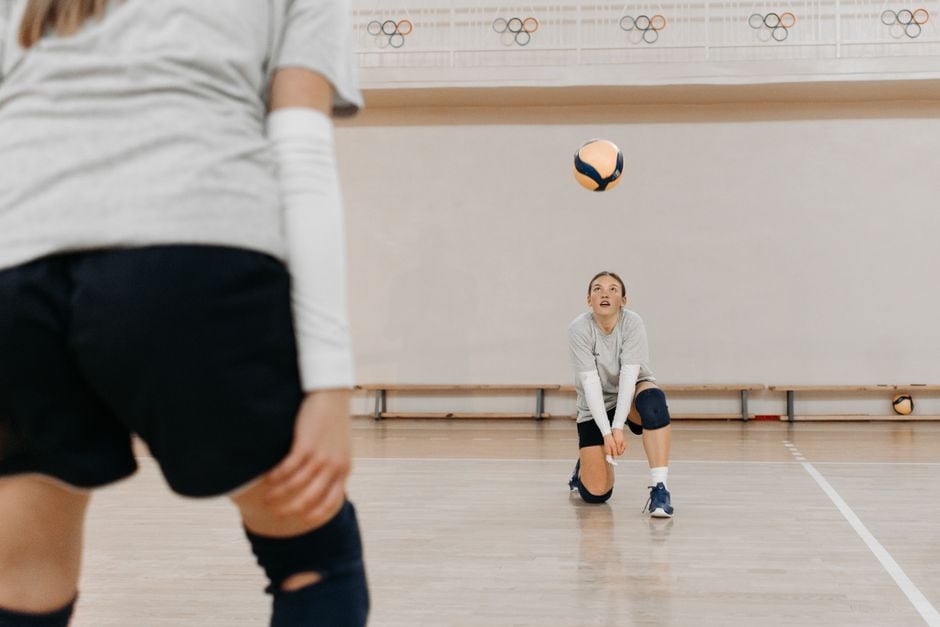
Why Volleyball Training Is the Foundation of Every Great Player’s Game
Volleyball training covers a lot of ground — from mastering your first pass to preparing for college recruiting. Here is a quick look at what it involves:
| Area | What It Covers |
|---|---|
| Session Types | Private lessons, small group, camps, clinics |
| Skill Levels | Beginner (101) through elite/national level |
| Physical Development | Strength, jumping, speed, agility, injury prevention |
| Technical Skills | Passing, setting, attacking, serving, blocking, defense |
| Mental Training | Focus, pressure performance, team communication |
| Solo Training | Wall serves, corner passing, self-setting drills |
| College Prep | Exposure clinics, recruiting plans, coach visibility |
Whether you are just starting out or chasing a college roster spot, a structured training plan is what separates players who plateau from players who keep climbing.
Volleyball is a fast, explosive sport. A single play lasts about 3 seconds. Rallies run anywhere from 5 to 30 seconds. And in a single match, a player performs roughly 50 attacks. That means the game demands short bursts of maximum effort, repeated over and over for 60 to 120 minutes.
Without the right training, those demands break players down instead of building them up.
The good news? A smart, progressive training program — built around your position, your level, and your goals — can develop every part of your game while keeping you healthy and confident on the court.
I’m Kevin O’Shea, a Certified Strength and Conditioning Specialist at Triple F Elite Sports Training in Knoxville, where I help athletes of all ages build the physical and mental foundation they need to excel in volleyball training and beyond. In this guide, I’ll walk you through everything — from choosing the right session type and pricing, to building elite physical conditioning, to training smart when you don’t have a court or a partner.
Types of Volleyball Training Sessions and Pricing Structures

To get the most out of your training, you need to understand the different formats available. Every player has unique needs. Some require microscopic technical adjustments, while others need high-repetition game-like scenarios or structured team play.
Private vs. Small Group Volleyball Training
When it comes to court training, you generally choose between individual attention and group dynamics. Both have distinct advantages and price points:
- Private 1-on-1 Training: This is the gold standard for rapid technical development. If you need to rebuild your arm swing or fix a hitch in your setting hands, private lessons provide undivided coaching attention. At local facilities, high-quality private 1-on-1 sessions typically run around $59.99 per session.
- Small Group Training: Sharing the court with a few other players introduces game-like variables (such as reading a real passer or hitting against an active block). Small group training is highly cost-effective, with tiered pricing models that reward larger groups:
- 2 Players: $45.00 per player
- 3 Players: $40.00 per player
- 4 Players: $35.00 per player
- 5+ Players: $30.00 per player
To find the perfect balance between personal coaching and live-play feedback, check out our Cheat Sheet to Youth Volleyball Training Options and read our Volleyball Private Lessons: Your Survival Guide to set yourself up for success.
Camps, Clinics, and Registration Policies
Camps and clinics offer structured environments to develop specific skills over a condensed period.
- Camps: Typically held during summer or school breaks, these programs run daily. High-quality summer camps generally cost $49.99 per day or $175.00 per week. They focus on high-volume repetitions, team concepts, and competitive tournament play.
- Clinics: Shorter, focused sessions (often 1 to 2 hours) designed to isolate single skills, such as serving, attacking, or defensive tracking.
Because court space and coach-to-player ratios are strictly managed, reputable programs enforce clear registration and cancellation policies:
- 7-Day Notice: Guarantees a full reschedule or credit transfer.
- Emergency Notice (<24 Hours): Only considered under extreme circumstances (like a medical emergency accompanied by a doctor’s note).
- No-Show or Late Cancellation: Results in forfeiture of the session fee with no refund.
- Transfer Fees: A flat fee (often around $15.00) is standard for processing credit transfers to future camps or clinics.
To lock in your spot and avoid registration headaches, read our guide on Serve Up Your Spot: A Guide to Easy Volleyball Camp Registration. For local opportunities in our community, you can also explore the Volleyball Programs – City of Knoxville .
Choosing the Right Level for Your Volleyball Training
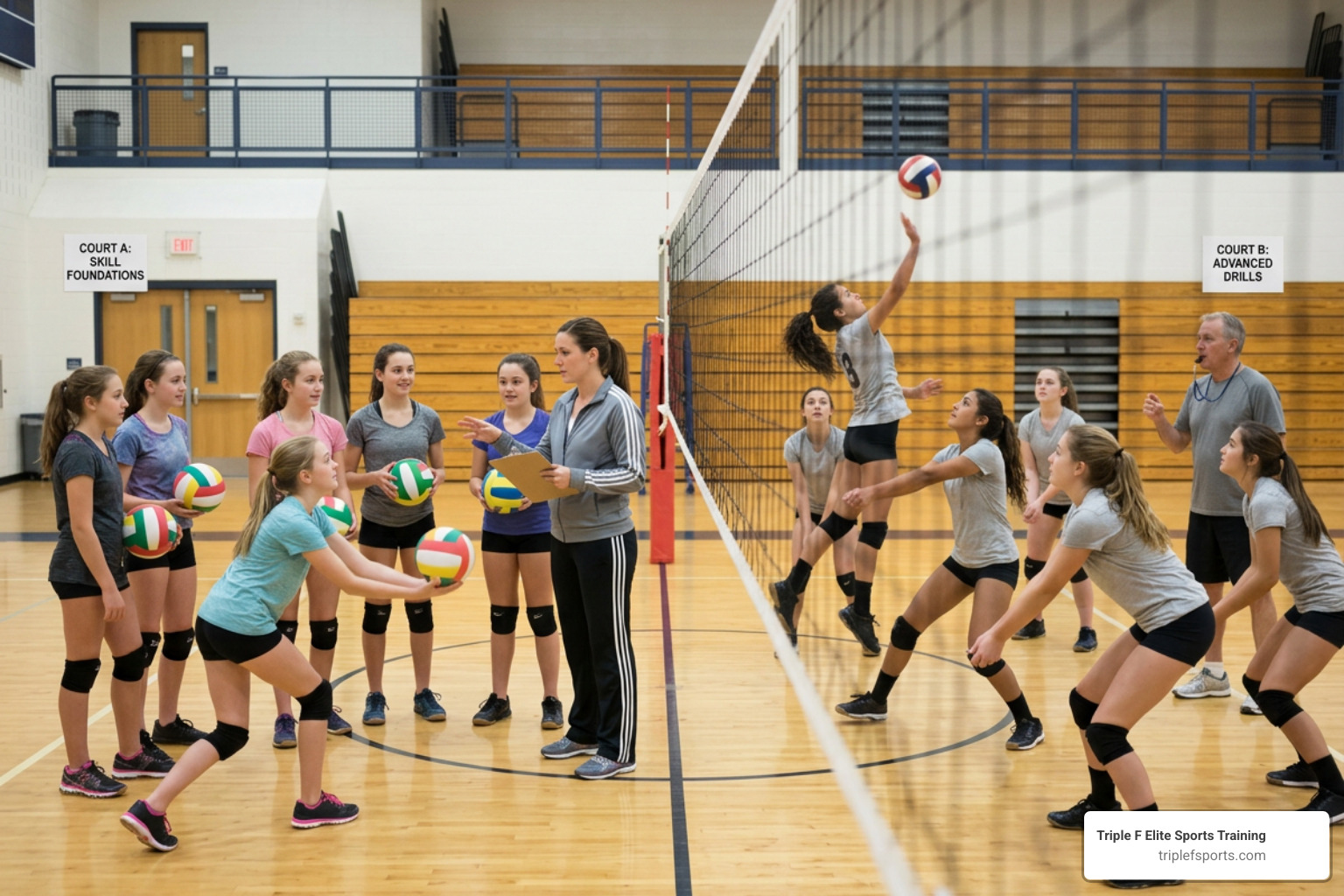
Placing an athlete in the wrong training bracket is a recipe for frustration. If a session is too advanced, the player develops poor habits trying to keep up. If it is too basic, they check out mentally.
Beginner to Elite Volleyball Training Progressions
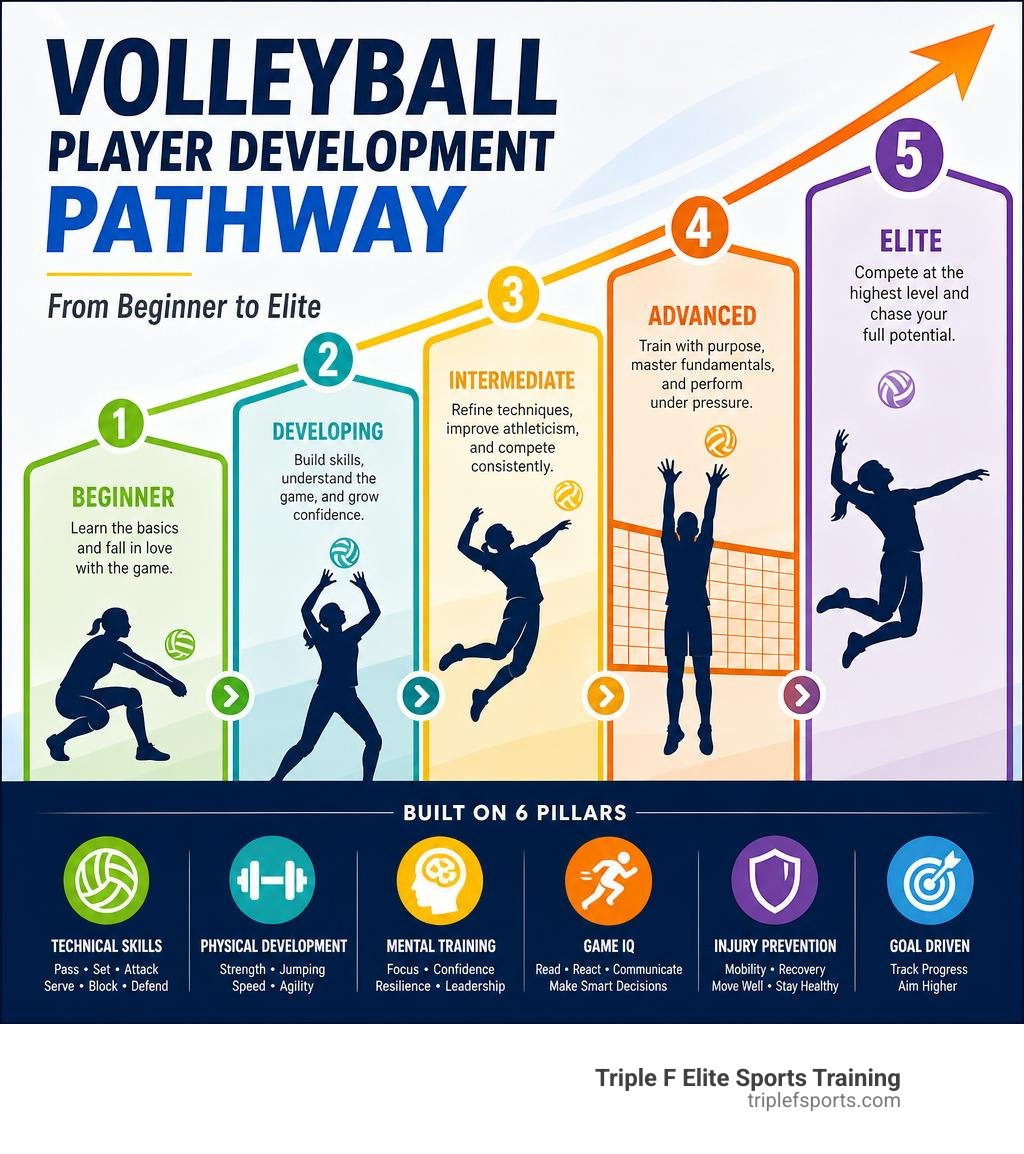
A structured development pathway ensures that players are grouped by similar skill levels to maintain an appropriate level of challenge:
- Beginner (Level 101 / Youth): Designed for players starting out. The focus is entirely on fundamental mechanics: establishing a clean passing platform, consistent hand position for setting, and proper footwork patterns. If you are just starting, we suggest reading Stop Dropping the Ball with These Beginner Volleyball Drills and The Best Way to Start Youth Volleyball Lessons Today.
- Intermediate / Junior: Players understand the rules and can maintain a basic rally. Training focuses on combining skills (e.g., pass-to-attack transitions) and introducing basic defensive positioning.
- Advanced: Designed for high school and regional club players. Sessions feature , high-repetition drills with position-specific training (setters, middles, pins, and liberos training separately before coming together).
- Elite / National Level: For athletes aiming for collegiate play. These sessions require prerequisite competitive experience. The focus shifts to tactical decision-making under extreme physical fatigue and high-pressure game simulation. Learn what to expect by reading Everything You Need to Know About Elite Volleyball and protect your journey with our guide on Don’t Get Served by Joining the Wrong Elite Volleyball Clubs.
Key Components of an Effective Volleyball Training Program
An elite volleyball player is a blend of technical precision, physical power, and tactical intelligence. Your training program must reflect all three.
Technical Skills and Tactical Development
To build a complete player, training must address the six major skills of the sport. Each serves a distinct tactical role:
| Skill | Primary Tactical Objective | Key Technical Focus |
|---|---|---|
| Serving | Break the opponent’s offense; score direct aces | Consistent toss, high contact point, clean follow-through |
| Passing | Deliver a perfect ball to the setter to run the offense | Angle the platform early, quiet upper body, beat the ball with feet |
| Setting | Locate the ball to give attackers a single-block option | Square hips to target, soft hand contact, quick wrist extension |
| Attacking | Score points by hitting around or through the block | Dynamic four-step approach, high double-arm lift, fast arm swing |
| Blocking | Stop the ball at the net or channel it to defenders | Penetrate the net with hands, strong core, read the hitter’s shoulders |
| Defense | Keep the ball alive from opponent attacks | Low athletic posture, read the hitter’s contact, play the ball up and in |
To dive deeper into the drills that build these skills, explore our guide on Volleyball Skill Development Drills and Strategies for Success.
Periodization and Annual Planning Cycles
You cannot train at 100% intensity year-round without burning out or getting hurt. Elite performance requires periodization, which divides the training year into distinct cycles:
- Macrocycle (The Annual Plan): Outlines the entire year, balancing club season, high school season, off-season, and rest.
- Mezocycle (3–6 Weeks): Focuses on a specific physical or technical block. For example, a pre-season mezocycle might focus on explosive power and jump volume, while an in-season mezocycle focuses on maintenance and recovery.
- Microcycle (1 Week): The daily schedule. In-season microcycles must place heavy physical loading days immediately after matches or light technical practices to allow adequate recovery before the next competition.
According to the LEVEL II coaching manual, coaches must manage training loads using “wave-like fluctuation” rather than linear progression. This protects “sport form” — the temporary state of optimal readiness that allows athletes to peak for major tournaments.
Psychological Conditioning and Team-Building
Volleyball is a momentum-based sport. If your mental game falters, your physical skills go with it. Effective training incorporates:
- Pressure Performance: Running drills with game-point stakes (e.g., starting a scrimmage at 24-24 where every error loses the set).
- The 3-Breath Reset: Teaching athletes to take three deep, controlled breaths immediately after an error to clear cortisol and refocus before the next serve.
- Group Cohesion: Designing drills that require constant verbal communication and mutual support, helping teammates read each other’s body language.
For a deeper look at building these mental habits on and off the court, check out The Complete Playbook for Girls High School Volleyball.
Physical Conditioning and Injury Prevention
To express your technical skills on the court, you have to build the physical engine first. Volleyball players require a high level of explosive power, short-sprint speed, and joint durability. Learn how to balance these demands in our guide, How to Build Volleyball Strength Without Burning Out.
Resistance Training and Jump Mechanics
To jump higher and protect your joints, your strength program should focus on three key areas:
- The Overload Principle: To build true athletic strength, resistance training must utilize loads greater than 60% of your one-repetition maximum (1RM). This stimulates the neuromuscular adaptations required for explosive power.
- Landing Mechanics: You cannot jump high safely if you do not know how to land. Training must teach “quiet landings” — absorbing force through the hips, knees, and ankles with proper alignment, rather than letting the knees collapse inward (valgus collapse).
- Shoulder Health and Trunk Stiffness: Spiking requires high-velocity overhead rotation. To prevent shoulder overuse injuries, players must train thoracic mobility, scapular control, and rotator cuff stability. A strong core transfers force from the legs through the torso, reducing the stress placed directly on the shoulder joint.
Refer to the LEVEL II manual to learn more about the scientific principles behind volleyball-specific physical preparation.
Solo Drills: Training Without a Court or Partner
You don’t need a full gym, a net, or even teammates to improve your skills. In fact, training alone is one of the best ways to build clean, automatic habits.
However, traditional “two-person pepper” can actually build bad habits — like hitting the ball directly at your partner, stopping your arm swing, or digging the ball low and flat. To build real, game-like habits at home, try these solo variations:
- Wall Serves: Stand 9+ meters away from a wall. Mark a line at net height. Practice serving with full speed and intent, focusing on a consistent toss and solid contact.
- Corner Passing: Throw a ball high off a wall and practice passing it into a corner. The dual-angle rebound forces you to move your feet quickly and adjust your platform angle to control the ball.
- Self-Setting and Tracking: Set the ball to yourself continuously while moving forward, backward, and laterally. Focus on high, clean sets and soft hand contact.
- Slanted Roof Digging: If you have access to a slanted roof (or a basketball hoop), toss the ball onto it and practice digging the unpredictable rebound straight up. This simulates digging tipped balls or deflections off a block.
For a complete breakdown of solo training strategies, read our guide on Solo Success: The Ultimate Guide to Private Volleyball Training Without a Team.
Preparing for College Recruiting and Exposure Events
For high school athletes, training isn’t just about winning the next match — it’s about catching the eye of college recruiters.
To stand out at exposure camps and clinics, you need to prepare both physically and strategically:
- Position-Specific Mastery: College coaches look for specialized skills. Setters must show consistent decision-making under fatigue, middles must display fast lateral footwork to close blocks, and liberos must command the backcourt.
- Recruiting Plans: Don’t wait for coaches to find you. Build a highlight video showing clean technical repetitions and live gameplay. Research colleges that match your academic and athletic goals, and contact coaches directly before attending their camps.
Prepare for your next big opportunity by exploring the Top Summer Volleyball Camps for High Schoolers Near You and our guide on 2026-2026 Libero Camps: Unearthing Top Volleyball Training in Your Area.
Gear, Attire, and Preparation Checklist
Before you step onto the court for a camp, clinic, or training session, make sure you have the right gear to perform safely and comfortably:
- Athletic Shoes: Look for court-specific shoes with excellent lateral support and non-marking rubber outsoles for traction.
- Kneepads: Choose low-profile, high-impact foam kneepads that protect your patella without restricting your movement.
- Attire: Wear comfortable athletic shorts (or spandex) and a breathable T-shirt. Keep your hair tied back and remove all jewelry.
- Hydration: Bring a large, insulated water bottle. Staying hydrated is crucial for maintaining muscle performance and cognitive focus.
- Mental Prep: Arrive 15 minutes early to stretch, warm up your joints, and set a specific focus for the session (e.g., “Today I am focusing on keeping my hands high when blocking”).
To get fully prepared for your next session, read more about how to Unlock your potential with Triple F Elite Sports Training.
Frequently Asked Questions about Player Development
What is the average cost of private volleyball lessons?
Private 1-on-1 lessons with high-quality coaching typically cost around $59.99 per session. If you want to lower the cost while keeping repetitions high, small group training (5+ players) is a great alternative at $30.00 per player. For a detailed breakdown of your options, check out our Cheat Sheet to Youth Volleyball Training Options.
How do I train for volleyball at home without a net?
You can build excellent ball control using a solid wall or a slanted roof. Focus on wall serves from 9 meters away, corner passing drills, and continuous self-setting. These drills build hand-eye coordination and footwork without requiring a court. For step-by-step instructions, read our guide on Solo Success: The Ultimate Guide to Private Volleyball Training Without a Team.
What should I wear to my first volleyball camp?
Wear athletic shorts or spandex, a comfortable T-shirt, court sneakers, and properly fitted kneepads. Bring a large water bottle and a positive attitude. For more preparation tips, check out Serve Up Your Spot: A Guide to Easy Volleyball Camp Registration.
Conclusion
Great volleyball players aren’t born on the court — they are built through consistent, science-based training, smart injury prevention, and mental toughness.
At Triple F Elite Sports Training in Knoxville, we provide professional, Christ-centered athletic development designed to unlock your full potential. Whether you are a beginner learning the basics or an elite athlete preparing for college recruiting, our comprehensive performance training, physical therapy resources, and volleyball programs are here to guide you every step of the way.
Ready to take your game to the next level? We invite you to join us for a free first session at our Knoxville facility.
Unlock your potential with Triple F Elite Sports Training and start your journey toward volleyball excellence today!