
Why Elite Youth Sports Training Is the Smartest Investment in Your Child’s Athletic Future
Elite youth sports training is a structured, science-based approach to athletic development for young athletes — going far beyond what a typical recreational program offers.
Here’s a quick breakdown of what sets it apart:
| Feature | Standard Youth Program | Elite Youth Sports Training |
|---|---|---|
| Training focus | Basic skill practice | Speed, strength, agility, power, and injury prevention |
| Coaching | General volunteers or coaches | Certified strength and conditioning specialists |
| Tracking | Minimal | Data-driven performance testing and baselines |
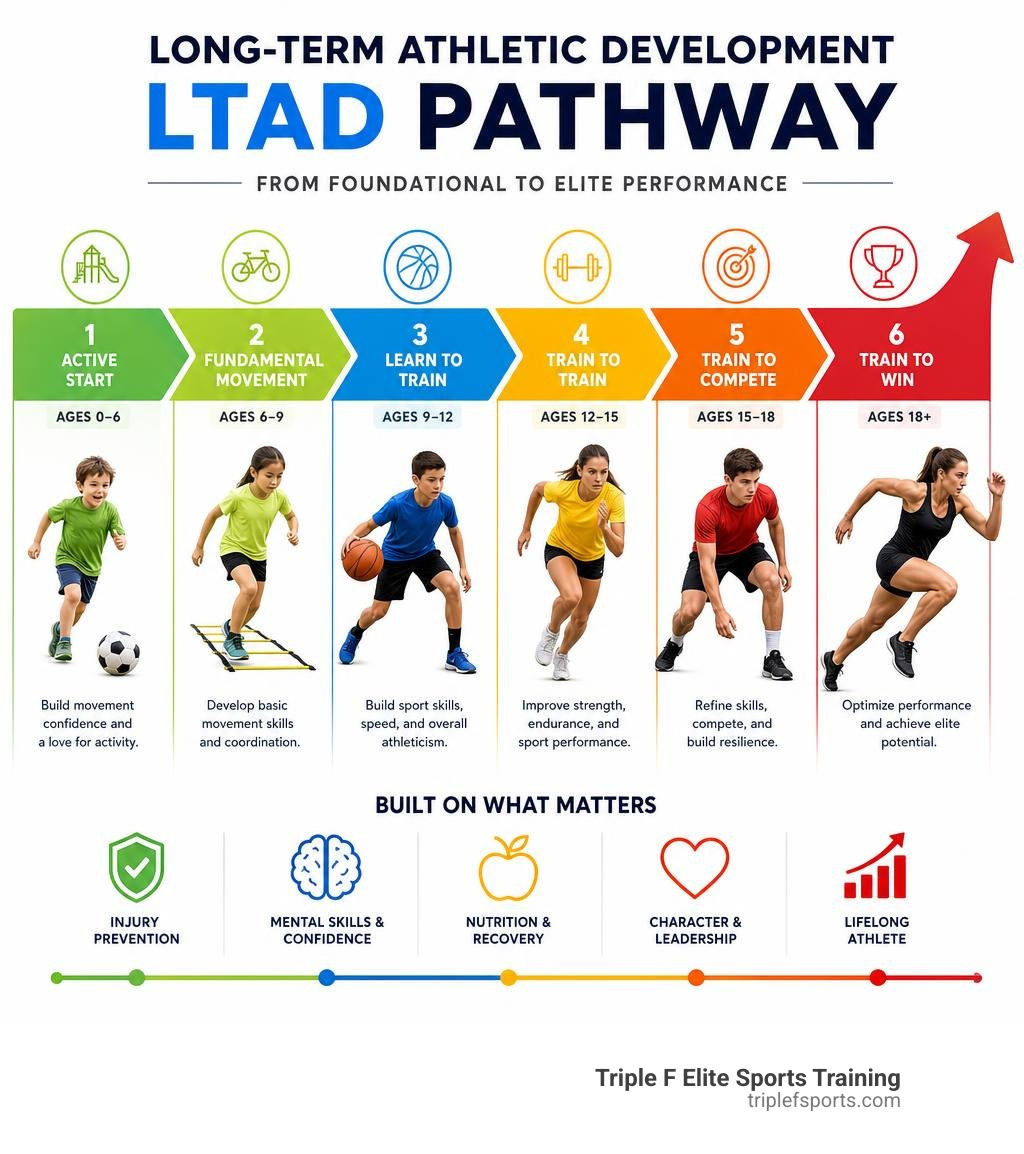
| Development model | Season-to-season | Long-term athlete development (LTAD) |
| Holistic support | Rarely included | Mental skills, nutrition, and character development |
Youth sports have changed dramatically. What was once a casual after-school activity is now a year-round commitment for millions of young athletes across the country. Parents and athletes are looking for programs that don’t just build winners this season — they want programs that build healthy, well-rounded athletes for life.
That’s a big ask. And the truth is, not every program delivers.
The best elite training programs combine age-appropriate physical conditioning, expert coaching, and holistic development to help young athletes reach their potential without sacrificing their long-term health.
I’m Kevin O’Shea, a Certified Strength and Conditioning Specialist and co-founder of Triple F Elite Sports Training in Knoxville — and my entire career has been built around helping athletes understand what elite youth sports training actually looks like in practice. Having played college football and coached at the high school level, I’ve seen what separates athletes who reach their potential from those who burn out before they get there.
Elite youth sports training terms made easy:
What is Elite Youth Sports Training?
At its core, elite youth sports training is not about treating a ten-year-old like a miniature professional athlete. Instead, it is a systematic, scientifically backed methodology designed to maximize a young person’s athletic potential while safeguarding their growing body.
While recreational programs focus primarily on sport-specific rules and immediate game play, elite training prioritizes the development of general physical literacy. Physical literacy refers to the mastering of fundamental movement skills—such as running, jumping, throwing, catching, gliding, and balancing—and the confidence to use these skills across various physical activities.
When young athletes jump straight into high-intensity, year-round sport specialization without this foundation, the risks skyrocket. We see a massive surge in overuse injuries, mental burnout, and muscular imbalances. True high-performance training acts as an insurance policy against these setbacks. By focusing on From Playground to Podium: Nurturing Young Athletes for Long-Term Success, we help kids build a broad, resilient athletic base. This foundation ensures that when they do choose to specialize in high school, their bodies are structurally prepared to handle the intense physical demands of competitive sports, leading to long-term health and success.
Core Components of Elite Youth Sports Training
To build a high-performing athlete, you cannot rely on guesswork. An effective elite training program must target several interconnected physical pillars:
- Speed Development: True speed is a skill. It involves teaching the nervous system to fire rapidly and efficiently. We break speed down into acceleration mechanics (the first 10 yards), top-end linear velocity, and deceleration (learning how to stop safely).
- Agility and Change of Direction: Agility is not just about running through plastic ladders. It is the ability to change direction explosively in response to a stimulus (like an opponent’s movement). We teach proper footwork, low centers of gravity, and energy transfer.
- Strength Building: Strength is the foundation of power and speed. For younger athletes, this begins with bodyweight mastery, core stability, and resistance band work, eventually progressing to free weights as they mature.
- Injury Prevention: This is the non-negotiable anchor of our philosophy. By incorporating mobility work, joint stabilization, and targeted strength training to address common muscular imbalances, we drastically reduce the risk of non-contact injuries like ACL tears and ankle sprains.
For a deeper look into how resistance training should be safely integrated into a young athlete’s routine, explore our In-Depth Guide to Youth Strength Training.
How to Structure Elite Youth Sports Training by Age Group
A major mistake in youth athletics is applying a “one-size-fits-all” approach to different age brackets. Children mature at different rates, and their training must adapt to their biological development, not just their chronological age. Our structured progressions for Youth Training 12 to 18 ensure that every athlete receives the exact stimulus they need at their specific stage of growth.
- Foundational Stage (Ages 8–11): At this stage, the nervous system is highly adaptable. We focus heavily on coordination, balance, basic sprint mechanics, and light plyometrics (jumping and landing safely). The goal is to make movement fun while building a rich “movement vocabulary.”
- Developmental Stage (Ages 12–14): As athletes enter puberty and experience rapid growth spurts, their coordination can temporarily decline. We focus on rebuilding core stability, joint mobility, and introducing structured, age-appropriate strength progressions. This is highly relevant across sports; for example, we detail these adaptations in our guide on Building Future Champions: Age-Appropriate Strength Training for Youth Wrestlers.
- Advanced Stage (Ages 15–18): Once the skeletal system matures, we transition athletes into advanced strength and conditioning. This includes Olympic lifting progressions, high-intensity plyometrics, and sport-specific energy system conditioning to prepare them for collegiate or professional environments.
| Age Group | Primary Training Focus | Key Modalities Used | Primary Goal |
|---|---|---|---|
| Ages 8–11 | Coordination & Physical Literacy | Bodyweight movement, games, basic jump mechanics | Build a movement foundation |
| Ages 12–14 | Structural Balance & Technique | Core stability, resistance bands, light strength work | Manage growth spurts & prevent injury |
| Ages 15–18 | Power, Strength & Conditioning | Barbell training, advanced plyometrics, energy systems | Maximize performance & prepare for next level |
The Role of Data-Driven Testing and Performance Tracking
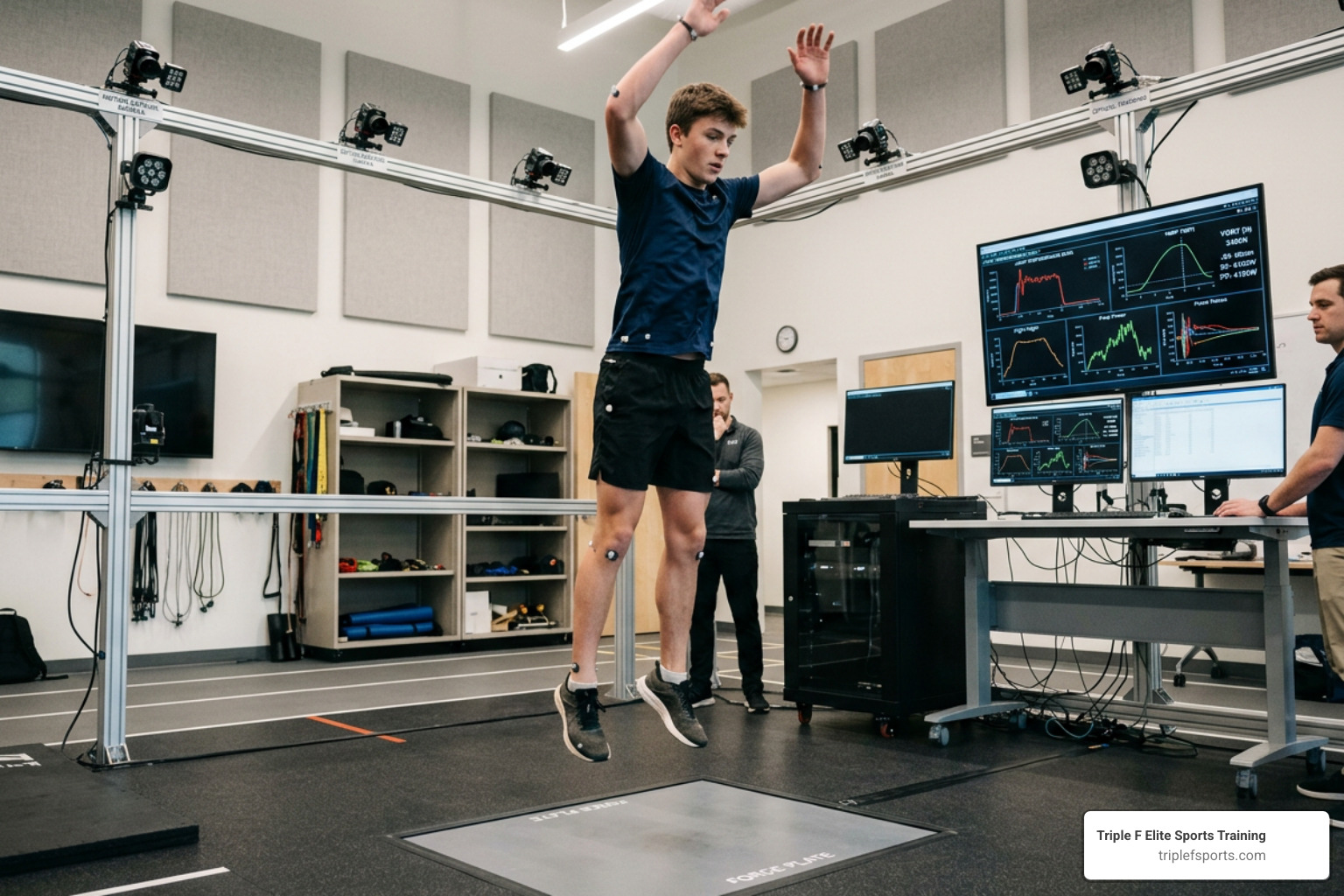
In the modern landscape of sports science, if you are not testing, you are guessing. High-performance programs rely heavily on objective data to guide training decisions. Every athlete who walks through our doors begins with comprehensive Youth Assessments.
These assessments utilize advanced technology—such as 3D markerless motion analysis and force plate testing—to identify movement inefficiencies, joint restrictions, and muscular asymmetries. By establishing these precise baselines, we can customize our training programs to target an athlete’s exact weaknesses.
Furthermore, regular re-testing every 90 days allows us to track progress objectively. If the data shows an athlete’s power output has increased by 15% while their deceleration force has stabilized, we know the program is working safely and effectively.
Balancing Performance with Long-Term Health and Life Skills
While physical development is crucial, elite training should never come at the cost of a child’s mental well-being or character. True athletic excellence is holistic. It requires a delicate balance of physical load management, proper recovery, and the intentional teaching of life skills.
We emphasize that recovery is just as important as the workout itself. Without adequate sleep, hydration, and targeted nutrition, a young body cannot rebuild. Moreover, we use the training floor as a classroom for life. Through hard workouts, athletes learn perseverance, integrity, leadership, and how to handle failure constructively. For parents navigating this intense environment, we highly recommend reading The Parents Guide to Safe and Effective Youth Athletic Development.
Integrating Mental and Physical Conditioning in Elite Youth Sports Training
The brain is the most important muscle in the body. Under high-pressure game situations, physical skill means very little if an athlete cannot manage their anxiety, focus their attention, or maintain confidence.
Modern elite programs integrate cognitive training and sports psychology directly into physical drills. This might include reaction-time training using light-board systems, decision-making drills under physical fatigue, or visualization techniques before heavy lifts. To understand the deeper philosophy of how we approach this integrated development, check out our resource on Youth Athletic Development: What Every Parent and Coach Needs to Know.
For a real-world look at how we build these elite mindsets and competitive habits daily in our facility, watch this behind-the-scenes video on our Triple F Elite Sports Training | Facebook page.
Elite Pathways: From Local Development to Professional Recruitment
For many families, the ultimate goal of high-performance training is to open doors to collegiate scholarships or professional opportunities. Navigating this pathway requires more than just talent; it requires exposure and preparation for the next level of competition.
Elite training programs often act as direct pipelines to scout networks, collegiate coaches, and professional academies. By training in a high-performance environment, athletes become accustomed to the structure, terminology, and expectations of college-level programs. For soccer players seeking international exposure, platforms like Serie A Elite – Soccer Player Recruitment Platform & Training Academy showcase how structured talent identification and elite training pathways can bridge the gap between local youth development and professional European academies.
Locally, participating in structured, competitive events is a fantastic way to build exposure. Parents can find these opportunities by looking into the Top Youth Athletic Camps in Knoxville to Keep Your Kids Active, which provide excellent environments for skill refinement and talent identification.

How Parents Can Choose the Right High-Performance Program
Selecting the right program for your child is a major decision. With so many facilities claiming to offer “elite” training, parents must look past the marketing hype and evaluate programs based on safety, credentials, and culture.
We recommend using a strict set of criteria when researching local options, beginning with discovering what is available through resources like Unleash Potential: Discovering Youth Athletic Training in Knoxville. Once you have a list of facilities, look into their specific program structures and Youth Memberships to ensure they fit your family’s needs.
Here is a checklist of key selection criteria to guide your search:
- Coaching Credentials: Are the coaches certified by accredited organizations? Look for credentials like CSCS (Certified Strength and Conditioning Specialist) or USAW (USA Weightlifting).
- Assessment Process: Does the facility require a comprehensive physical assessment before training begins, or do they put every child into the same generic class?
- On-Site Sports Medicine: Do they have direct access to physical therapists or athletic trainers who can immediately address pain or movement dysfunctions?
- Values and Culture: Does the facility’s culture align with your family’s values? Look for programs that actively teach character, leadership, and respect.
Frequently Asked Questions About Youth Athletic Development
What is the ideal age to start structured athletic performance training?
The ideal age to begin structured performance training is generally around 8 to 9 years old. However, at this early stage, “training” should focus almost entirely on physical literacy, fundamental motor skills, coordination, and bodyweight balance. Heavy resistance training should be delayed until the athlete demonstrates physical maturity and proper movement mechanics, typically around age 12 or 13.
How do elite programs prevent overtraining and burnout in young athletes?
Top-tier programs prevent overtraining through strict load management, scheduled recovery weeks, and close communication with parents regarding the athlete’s total weekly sports volume. We also strongly advocate for multi-sport participation rather than early specialization, which helps distribute physical stress across different muscle groups and keeps sports mentally engaging and fun.
What is the difference between general fitness and sport-specific training?
General fitness training builds overall strength, aerobic capacity, and general health. Sport-specific training, on the other hand, isolates the specific movement mechanics, energy systems, and muscular patterns required for a particular sport (e.g., rotational power for baseball, or vertical power for volleyball). Elite programs always build a strong base of general athleticism before layering sport-specific training on top.
Conclusion
The journey from the playground to the podium is rarely a straight line. It is a path filled with hard work, growth spurts, setbacks, and triumphs. To navigate it successfully, young athletes need more than just a passion for the game—they need a supportive environment that prioritizes their physical, mental, and spiritual development.
At Triple F Elite Sports Training in Knoxville, we are proud to offer a professional, Christ-centered athletic development experience. By housing performance training, on-site physical therapy, and our elite volleyball club under one roof, we provide the comprehensive care your child needs to unlock their ultimate athletic potential.
Are you ready to see the difference that professional, data-driven coaching can make? We invite you to visit our Knoxville facility and experience our community firsthand. Contact us today to schedule your athlete’s free first session and take the first step toward building a champion for life.