

Why Nutritional Supplements for Athletes Matter More Than Ever
Nutritional supplements for athletes are one of the most searched — and most misunderstood — topics in sports performance today. With so many products on the market, it can be hard to know what actually works, what’s safe, and what’s just clever marketing.
Here’s a quick answer to get you started:
The most evidence-backed supplements for athletic performance are:
| Supplement | Primary Benefit | Best For |
|---|---|---|
| Creatine monohydrate | Power and strength output | Strength and power athletes |
| Caffeine | Endurance and focus | Endurance and team sport athletes |
| Beta-alanine | Muscular endurance | High-intensity training |
| BCAAs | Muscle repair and recovery | All athletes |
| Vitamin D | Immune function, muscle health | Athletes with low sun exposure |
| Magnesium | Muscle function, sleep quality | All athletes |
| Electrolytes | Hydration and performance | Endurance athletes |
The bottom line: No supplement replaces a solid diet and smart training. But the right ones — used correctly — can give you a real, measurable edge.
Research published in the Nutrients journal confirms that most athletes use at least one supplement, with usage running as high as 75% among college athletes and close to 100% among bodybuilders. Yet the science is clear: supplements work best as a complement to good nutrition, not a shortcut around it.
I’m Kevin O’Shea, a Certified Strength and Conditioning Specialist with a background in athletic development at both the high school and adult performance levels, and understanding nutritional supplements for athletes has been a core part of helping the athletes I train reach their potential. In the guide below, I’ll break down exactly what the research says — so you can make smart, safe choices that support your training at Triple F Elite Sports Training and beyond.
The Role of Nutritional Supplements for Athletes in Modern Training
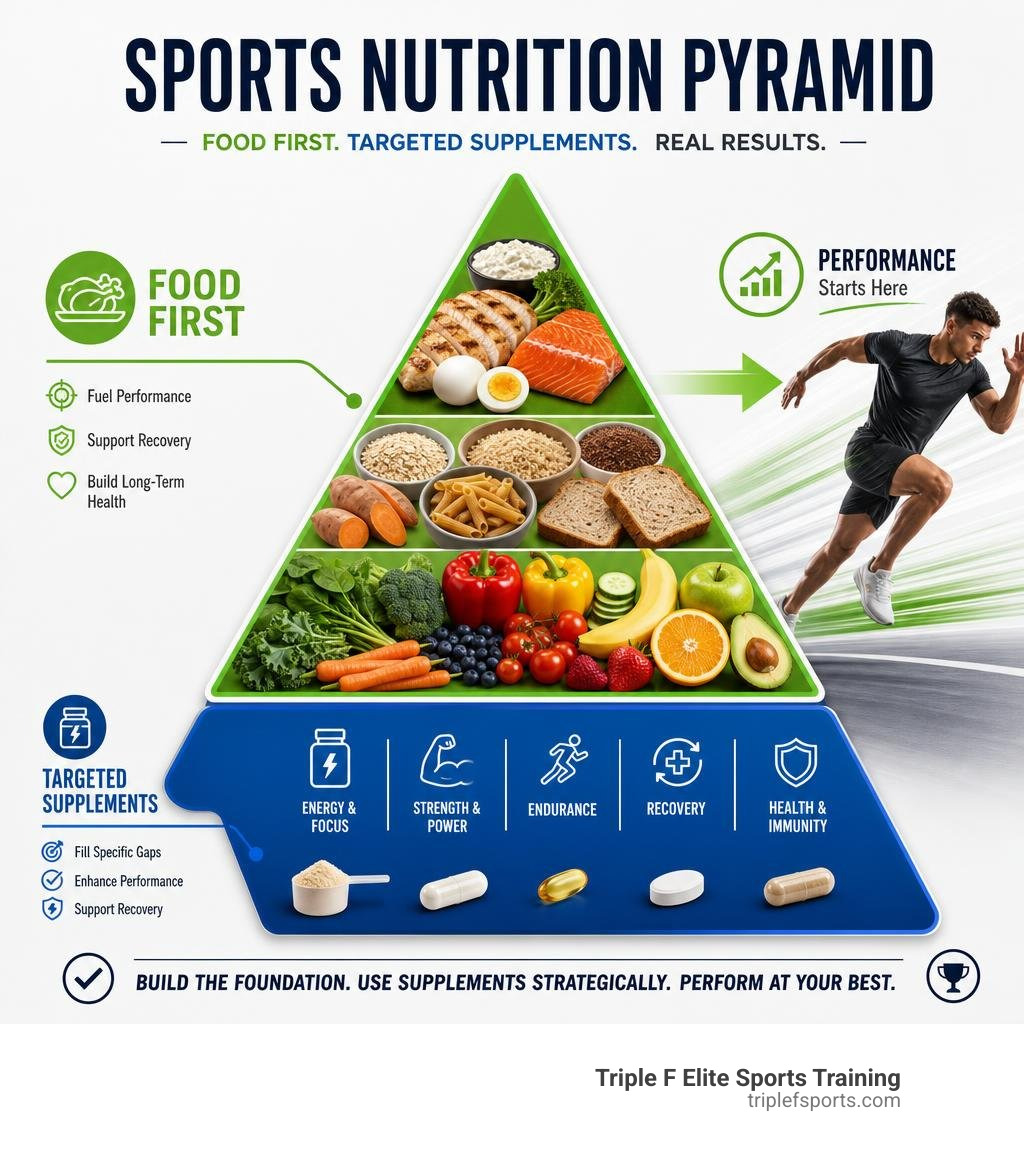
In high-performance athletic development, we often talk about building a solid foundation. You wouldn’t build a house on sand, and you shouldn’t build your athletic career on a diet of fast food and pre-workout powders. In our training programs at Triple F Elite Sports Training in Knoxville, TN, we emphasize that sports supplements should only enter the conversation once your baseline nutrition, sleep, and training are dialed in.
To truly understand how your body processes energy and where your nutritional gaps lie, advanced tools like metabolic testing can be incredibly eye-opening. Resting Metabolic Rate (RMR) testing and VO2 Max testing help us look under the hood to see exactly how many calories you burn and whether your body prefers utilizing fats or carbohydrates at various training intensities.
Once we have this precise baseline, we can structure your nutrient timing to match your training phases. If you want to dive deeper into how specific foods fuel your body, you can Learn more about athlete superfoods to build a plate that naturally elevates your performance. If you are looking for a complete roadmap to structure your eating habits, you can Explore sports nutrition programs online to guide your daily meal prep.
Food-First Philosophy and Nutrient Timing
A “food-first” philosophy means we prioritize whole, nutrient-dense foods to meet your daily caloric and macronutrient needs. Carbohydrates are your body’s primary high-intensity fuel source; they are stored in your muscles and liver as glycogen. During intense training, these glycogen stores are depleted.
Replenishing glycogen through high-quality carbohydrates post-workout is essential for maintaining performance day after day. Similarly, consuming high-quality protein triggers muscle protein synthesis, helping repair the micro-tears created in your muscle fibers during heavy lifting or sprinting.
While supplements can streamline this process—such as a convenient whey protein shake right after a session—they cannot replicate the complex matrix of vitamins, minerals, fiber, and phytonutrients found in whole foods. For those interested in the deep academic science behind this balance, the University of Tennessee offers an excellent curriculum through the UTK Sports Nutrition Course, which explores how exercise alters human metabolism and nutrient requirements.
Vitamins and Minerals in Nutritional Supplements for Athletes
While macronutrients (carbs, protein, and fat) grab all the headlines, micronutrients (vitamins and minerals) are the unsung heroes of athletic performance. Intense physical activity increases your energy expenditure and accelerates B-vitamin turnover. Sweating also drains your body of crucial minerals like magnesium, zinc, and potassium.
- Vitamin D: Essential for bone health, immune function, and muscle contraction. Athletes training indoors or living in areas with seasonal sun changes are highly susceptible to deficiencies.
- Magnesium: Plays a critical role in muscle relaxation, ATP (energy) production, and sleep quality.
- Zinc: Vital for immune support, cell growth, and tissue repair.
- B-Vitamins: Act as cofactors that help your body convert food into usable cellular energy.
To prevent deficiencies, many athletes utilize comprehensive daily formulas. For male athletes looking to cover their baseline needs, the ESN Athlete Stack: Men provides a tailored combination of essential vitamins, minerals, and trace elements specifically dosed for active individuals. If you are local to the Knoxville area and want to explore high-quality micronutrient options in person, you can visit Vitamin Shoppe Knoxville to speak with a specialist about your daily vitamin needs.
Evidence-Based Ergogenic Aids and Micronutrients for Performance

When we move past daily health vitamins, we enter the realm of ergogenic aids—substances directly intended to enhance physical performance, stamina, or recovery. Let’s look at the heavy hitters that have withstood decades of rigorous scientific testing.
Creatine, Caffeine, and BCAAs
If you are looking for supplements that deliver undeniable, research-backed results, the list is relatively short. Creatine monohydrate, caffeine, and branched-chain amino acids (BCAAs) are at the top of that list.
- Creatine Monohydrate: This is the most thoroughly researched sports supplement in existence. It works by increasing your muscles’ phosphocreatine stores, allowing you to rapidly produce ATP during short, explosive bursts of activity (like sprinting or heavy lifting). Beyond power, newer research shows it also plays a key role in brain health and recovery from head impacts.
- Caffeine Anhydrous: A powerful central nervous system stimulant, caffeine reduces your perception of effort, delays fatigue, and improves endurance by encouraging your body to burn fat for fuel, sparing muscle glycogen.
- Beta-Alanine: This amino acid combines with histidine in your body to form carnosine, which acts as an intracellular buffer against lactic acid buildup. If you’ve ever felt that “tingling” sensation after a pre-workout, that’s the beta-alanine going to work to help you squeeze out those last few reps.
- BCAAs (Leucine, Isoleucine, and Valine): These essential amino acids are unique because they are metabolized directly in the muscle rather than the liver. They help jumpstart recovery, reduce muscle soreness, and prevent muscle breakdown during long training sessions.
To see these ingredients in action, many athletes turn to pre-formulated options. For a pre-workout boost, Cellucor C4 Sport® Pre-Workout combines caffeine and CarnoSyn beta-alanine in an NSF Certified for Sport formula. For intra-workout or post-workout recovery, XTEND® Original BCAA Powder offers a clinically supported ratio of BCAAs to support muscle repair and hydration.
| Supplement | Active Compound | Key Benefit | Typical Protocol |
|---|---|---|---|
| Creatine | Creatine Monohydrate | Increased power, ATP production, muscle volume | 3–5g daily (no loading phase strictly required) |
| Caffeine | Caffeine Anhydrous | Central nervous system stimulation, delayed fatigue | 200–400mg taken 30–60 minutes before training |
| BCAAs | L-Leucine, Isoleucine, Valine | Reduced muscle breakdown, faster recovery | 5–7g during or immediately after exercise |
Electrolytes and Hydration Strategies
Hydration is about far more than just drinking water. When you sweat, you lose water along with key minerals called electrolytes—primarily sodium and potassium. If you only replenish with plain water during a long, intense workout, you risk diluting your blood’s sodium levels, which can lead to cramping, decreased performance, and in severe cases, hyponatremia.
To maintain cellular hydration and blood volume, athletes need structured electrolyte strategies. For standard training sessions, XTEND Sport BCAA Powder provides a clean blend of BCAAs and essential electrolytes to replace what is lost in sweat.
For endurance athletes pushing through extreme conditions, advanced hydration formulas like the XCEED Elite Endurance Hydrator utilize specialized ingredients like Carb10 (a low-glycemic carb derived from pea starch), glycerol (which pulls water into muscle cells for hyper-hydration), and premium mushroom blends to maximize oxygen uptake. In clinical trials, athletes taking just one of XCEED’s key ingredients during high-intensity training experienced an impressive 98% endurance boost compared to a placebo group.
Tailoring Protocols and Ensuring Safety

A track sprinter and a marathon runner have vastly different physiological demands, meaning their supplement protocols should look completely different. One-size-fits-all plans do not work for elite athletic development.
Strength vs. Endurance Athlete Protocols
Strength and power athletes focus on muscle hypertrophy, explosive power, and rapid recovery between heavy sets. Their protocols lean heavily on creatine monohydrate, high-quality protein powders, and beta-alanine.
Endurance athletes, on the other hand, are focused on VO2 max, glycogen sparing, mitochondrial function, and maintaining fluid balance over several hours of continuous movement. They benefit greatly from dietary nitrates (which improve blood flow and oxygen efficiency), caffeine, and complex carbohydrate-electrolyte blends.
For athletes looking to maximize their aerobic capacity and power output in one go, the S-C-Nutrition Endurance Formula features a complex “Krebs Cycle Accelerator” designed to support ATP production and oxygen utilization. To help you map out these strategies based on your sport, you can Download free athlete plans designed to take the guesswork out of your weekly preparation.
The Risks of Unregulated Nutritional Supplements for Athletes
Because dietary supplements are not regulated by the FDA in the same strict manner as prescription medications, the supplement industry can sometimes feel like the Wild West. Some companies hide behind “proprietary blends,” which allow them to list ingredients without revealing the actual dosages—often leaving you with nothing more than cheap fillers and trace amounts of active compounds.
Worse yet, unregulated supplements carry a genuine risk of being contaminated with heavy metals, unlisted stimulants, or banned substances. For competitive high school, collegiate, or professional athletes, consuming a contaminated supplement can lead to a failed drug test and a ruined career.
To protect yourself, always look for third-party testing certifications. The NSF Certified for Sport mark is the gold standard; it guarantees that the product contains exactly what is on the label, has been tested for over 280 banned substances, and is manufactured in a safe facility. If you are shopping locally in Knoxville, we highly recommend visiting Eddie’s Health Shoppe, a trusted local health food store known for carrying clean, reputable brands and helping local athletes find safe, high-quality options.
Frequently Asked Questions about Sports Nutrition
Can supplements replace a balanced diet?
Absolutely not. Whole foods provide a complex matrix of fiber, vitamins, minerals, and healthy fats that work synergistically. Supplements are designed to fill specific dietary gaps, not act as a foundation. Think of your diet as the engine of a sports car—supplements are simply the premium fuel additive.
What are the risks of contamination in sports supplements?
The primary risks include cross-contamination in manufacturing facilities, the presence of heavy metals (like lead or mercury), and the intentional spiking of products with unlisted stimulants or anabolic agents to make the product feel “more powerful.” This is why choosing third-party tested brands is non-negotiable for serious athletes.
How do I know if a supplement is safe for drug-tested competitions?
Look for independent, third-party testing seals on the packaging. The most reputable certification organizations are NSF Certified for Sport, Informed-Choice, and Informed-Sport. If a product does not carry one of these verified seals, do not take it if you are subject to drug testing.
Conclusion
Navigating nutritional supplements for athletes doesn’t have to be overwhelming. By keeping a “food-first” mindset, focusing on evidence-based ingredients like creatine, caffeine, and electrolytes, and insisting on third-party tested products, you can safely unlock new levels of performance.
At Triple F Elite Sports Training in Knoxville, TN, we believe in a holistic, Christ-centered approach to athletic development. We design complete training, recovery, and nutrition strategies tailored to your unique physiology. If you are ready to stop guessing and start training with precision, we invite you to book a free first session with us. Explore our professional Triple F Sports Nutrition Coaching to build a personalized plan that fuels your journey to the podium.