Why Agility Training for Sports Is the Edge Most Athletes Are Missing
Agility training for sports is one of the most powerful tools an athlete can use to gain a competitive edge — and one of the most misunderstood.
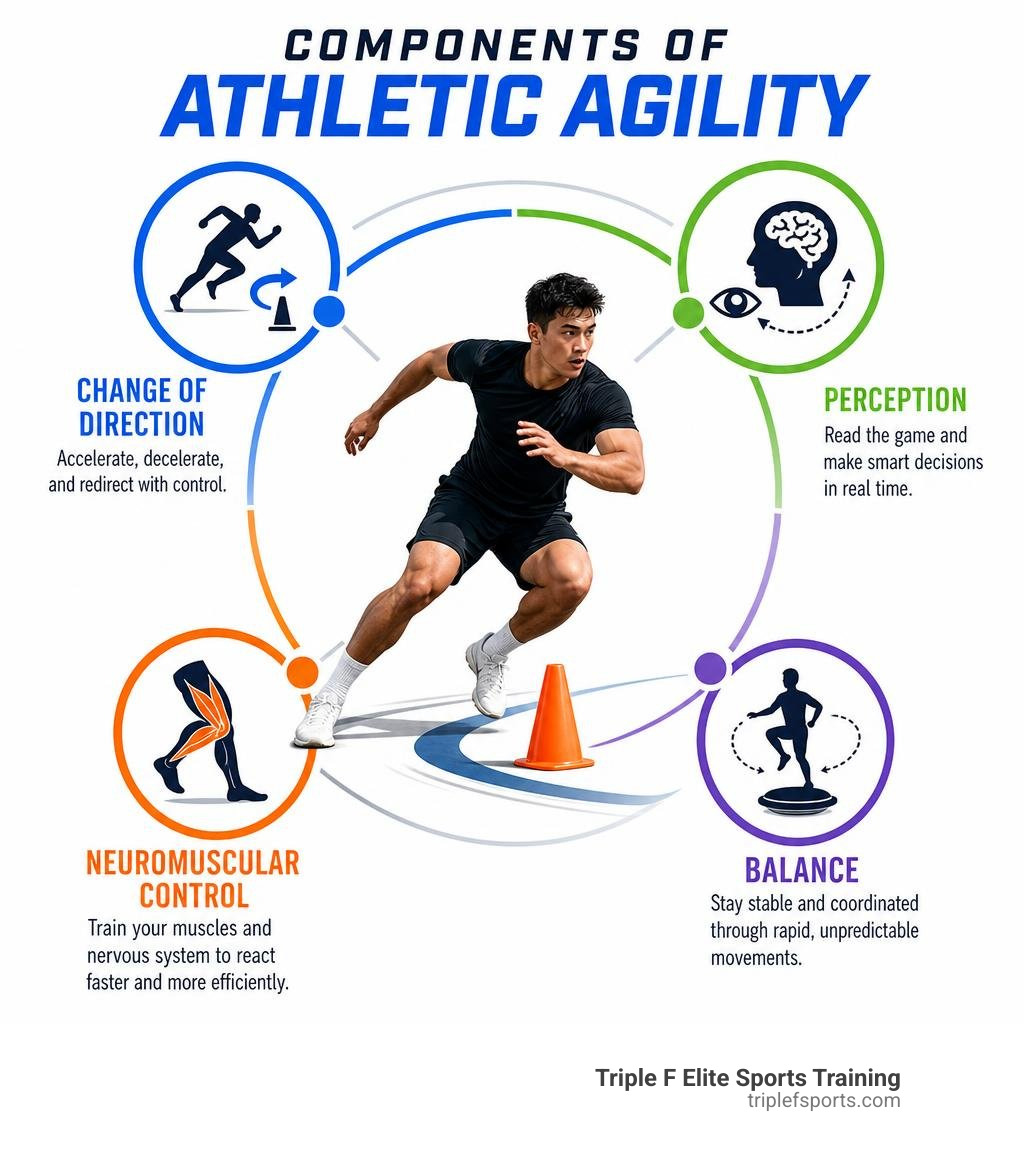
Here’s a quick breakdown of what agility training actually involves:
- Change of direction — accelerating, decelerating, and redirecting your body under control
- Neuromuscular control — training your muscles and nervous system to react faster and more efficiently
- Perception and decision-making — reading the game and responding to what’s happening around you
- Balance and coordination — staying stable through rapid, unpredictable movements
- Force absorption — landing and braking safely to protect joints and prevent injury
Agility isn’t just about moving fast. It’s about moving smart — reading your environment and responding with precision. Professional soccer players, for example, run change of direction drills constantly, not because they can’t already do it, but because staying sharp in that skill keeps them one step ahead in every game situation.
Research backs this up, too. Studies show agility training doesn’t just improve on-field performance — it also boosts cognitive function by stimulating different regions of the brain, and reduces injury risk by improving balance and proprioception.
My name is Kevin O’Shea, and as a Certified Strength and Conditioning Specialist and former college wide receiver, I’ve built my coaching philosophy around agility training for sports at every level — from youth development to competitive athletes. Let’s walk through everything you need to know to move like a pro.
Must-know Agility training for sports terms:
- Advanced athletic training
- Sports specific conditioning
- Volleyball strength training
The Science of Agility Training for Sports
To build a truly elite athlete, we have to look past the surface. True agility is not merely the physical act of changing direction; it is a complex, split-second loop of perception, decision-making, and physical execution. In the sports science community, we refer to this as perception-action coupling. You see a stimulus (a defender’s hip shift, a ball deflection), you process that information, and your body executes an athletic response.
When you train only pre-planned pathways, you miss out on the cognitive processing that actually dictates on-field success. By incorporating true agility training for sports, we enhance neuromuscular control and proprioception—your brain’s subconscious awareness of where your limbs are in space.
This neural sharpening translates directly to safety. When your neuromuscular pathways are highly active, your reaction times improve, making you far less likely to suffer non-contact injuries. If you want to dive deeper into how this works on a physical level, check out our Stop Tripping Over Your Own Feet with This Agility Guide.
Understanding the Mechanics of Agility Training for Sports
Before we can ask an athlete to make a sharp 180-degree cut at full speed, we must ensure their body can handle the extreme forces involved. Every rapid change of direction requires a massive amount of force absorption. This is where eccentric strength—the ability of your muscles to lengthen under load—becomes the ultimate limiting factor.
Deceleration is the foundation of acceleration. If your brakes are weak, your brain will subconsciously prevent you from reaching top speed because it knows you cannot stop safely. By focusing on eccentric control and dynamic balance, we teach the body to absorb kinetic energy through the hips and knees rather than putting destructive shear stress on the ligaments. To master the art of staying centered and stable during these high-force moments, take a look at our Stay on Your Toes with These Pro Balance Drills.
Cognitive Demands and Decision-Making in Competition
There is a massive psychological difference between “closed” and “open” drills. In a closed drill (like a standard cone drill), the path is pre-determined. The cognitive load is practically zero.
In contrast, open drills introduce a chaotic element—like a teammate waving a hand, a flashing light, or an opponent trying to tag you. Players themselves consistently report that open agility drills carry a significantly higher cognitive demand.
According to a Research on reactive vs planned agility, training programs that utilize reactive, stimulus-driven agility drills result in vastly superior on-field transfer and higher athlete enjoyment compared to rigid, planned drills. When we force the brain to make decisions under pressure, we are training the exact cognitive pathways needed to blow past a defender on Friday night.
Foundational Movements and Lower Limb Agility
At Triple F Elite Sports Training in Knoxville, we see many athletes try to jump straight into advanced, flashy agility drills before they have built basic lower limb stability. That is a recipe for ankle sprains and plateaued performance.
We believe that traditional warm-up drills can become powerful agility builders if they are performed with real intent, high volume, and game-speed intensity, rather than treated as mindless, throwaway movements.
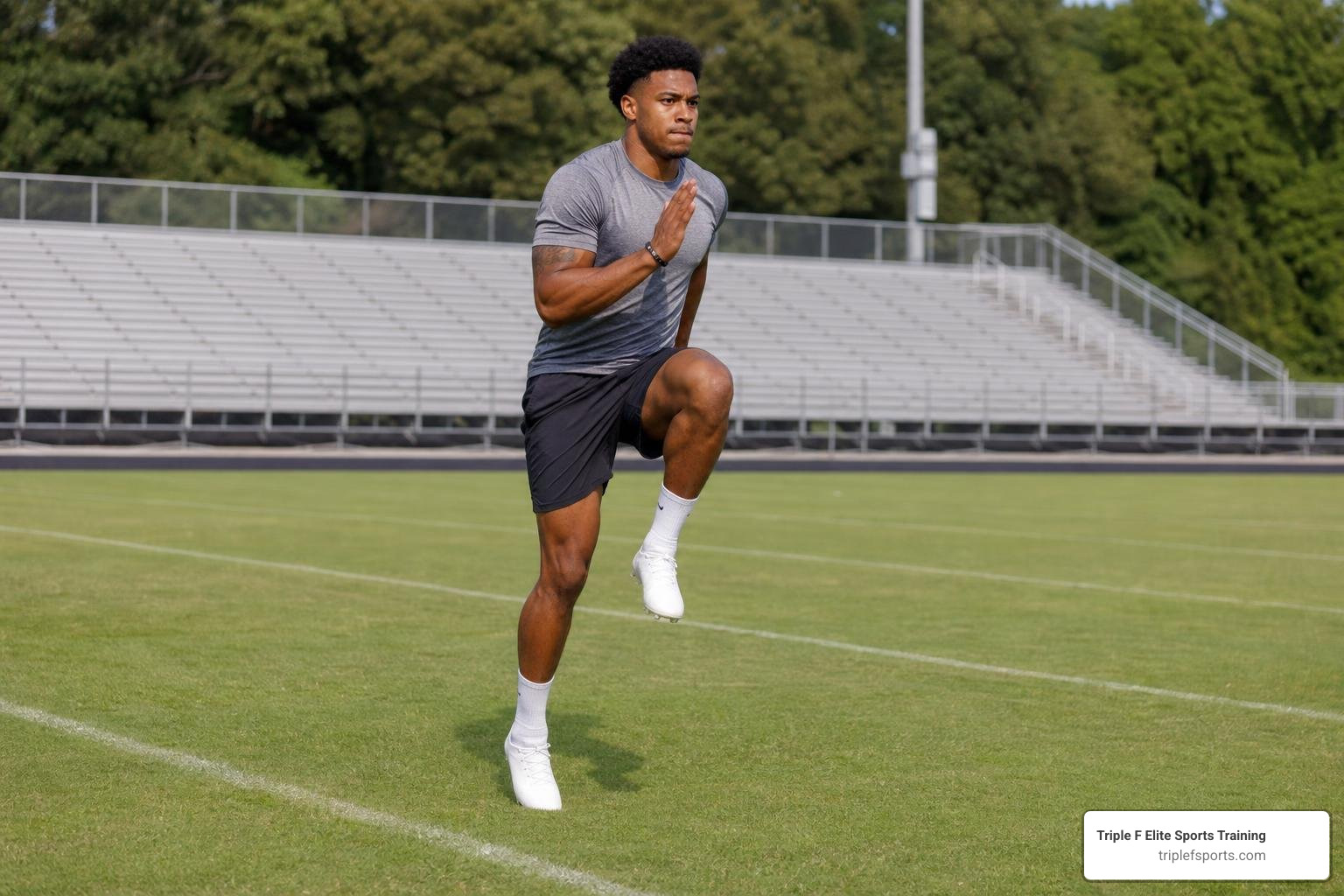
To build bulletproof ankles and explosive feet, we start with foot isolation. Exercises like double-leg and single-leg pogo hops build stiffness in the Achilles tendon and calf complex, allowing for rapid elastic energy return. Line hops (performed both forward-and-back and side-to-side) train the feet to absorb force rapidly and transition immediately into the next movement. If you want to protect your lower limbs from painful tweaks, read our guide on How to Stop Getting Your Ankles Broken with Agility Drills.
Hip Agility and Lateral Movement Techniques
The hips are the powerhouse of multi-directional speed. To move laterally with explosive power, we must master the lateral shuffle and the power shuffle. The secret lies in hip abduction and maintaining a wide, low stance.
When performing a lateral shuffle:
- Drop your hips into a athletic half-squat.
- Keep your feet wider than shoulder-width apart to keep the outer hips engaged.
- Push violently off the inside of your trailing foot rather than reaching with your lead foot.
- Keep your chest up and shoulders squared.
To transition from lateral movement to a dead sprint, we use crossover footwork and the carioca quickstep. The key to the crossover is arm swing synchronization. Your arms drive your hips; if your upper body is stiff and frozen, your footwork will be slow and clunky. By driving your trailing arm across your body in sync with your hips, you generate the rotational torque needed to explode out of a lateral stance.
Neuromuscular Training for Injury Risk Reduction
Non-contact ACL injuries are one of the most devastating setbacks an athlete can face. Fortunately, sports science has shown that systematic neuromuscular training can dramatically reduce these kinematic risk factors. By introducing variability in movement patterns, we teach the nervous system to handle awkward, off-balance positions safely.
A landmark Study on neuromuscular training in soccer demonstrated that a 6-week progressive neuromuscular program (performed just twice a week for 30 minutes in place of a standard warm-up) significantly improved reactive agility times in elite players. More importantly, it helped eliminate laterality—the common issue where an athlete can cut sharply to their dominant side but struggles or moves awkwardly when forced to turn to their non-dominant side. By training both turning directions equally, we create balanced, resilient athletes.
Effective Agility Exercises and Progression Frameworks
How do we take these foundational movements and turn them into a structured program? We use a systematic progression framework. We start with simple, closed-loop patterns to build the physical capacity, and then quickly progress to complex, open-loop scenarios that mirror the chaos of actual competition.
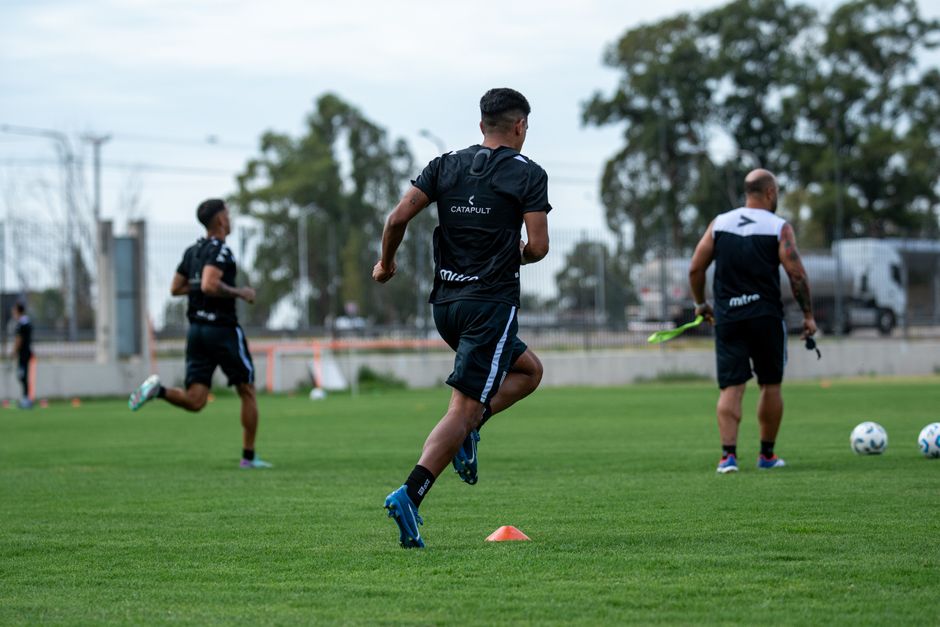
Here are four classic drills we use as the starting point for our physical progressions:
- The T-Drill: Set up four cones in a “T” shape. Sprint forward 10 yards to the center cone, side-shuffle 5 yards to the left, shuffle 10 yards to the far right, shuffle 5 yards back to the center, and backpedal through the start.
- The Zig-Zag Drill: Place 5 to 6 cones in a zigzag pattern, spaced 3 to 5 yards apart. Focus on planting with the outside foot, dropping your center of gravity, and exploding toward the next cone.
- Shuttle Runs (5-10-5): Start in a three-point stance. Explode 5 yards to your right, touch the line, sprint 10 yards back to the far left, touch the line, and sprint 5 yards back through the center starting point.
- Ladder Drills: Excellent for developing rapid foot-to-eye coordination and rhythm. For a complete library of patterns, check out Unlock Your Speed: Top Agility Ladder Drills for All Levels.
Closed vs. Open Loop Progressions
Once an athlete can run a perfect T-Drill or 5-10-5 shuttle, it is time to break the pattern. If they always know where they are turning next, they aren’t training their brain.
To transition from closed (planned) to open (reactive) loop training, we introduce spatial and temporal uncertainty.
- Spatial Uncertainty: The athlete does not know where they will have to move. (e.g., Sprinting toward a coach who points left or right at the last microsecond).
- Temporal Uncertainty: The athlete does not know when they will have to move. (e.g., Reacting to a sudden auditory cue or a whistle).
By shifting the focus from a plastic cone to a dynamic, changing stimulus, we force the athlete to couple their perception with their physical action.
Implementing Agility Training for Sports in Youth Athletes
When working with youth athletes, safety and long-term athletic development are our primary goals. We want to build strong, coordinated bodies while keeping the training highly engaging. To understand our overarching philosophy on training younger players, read The Parents Guide to Safe and Effective Youth Athletic Development.
One highly effective tool for youth development is suspension training. A Study on TRX training in youth football tracked young athletes (ages 12–15) over an 8-week TRX-based functional training program. The researchers found that the TRX group achieved a highly significant 1.08% improvement in the Arrowhead agility test, a 2.74% boost in 20-meter sprint times, and massive increases in dynamic balance across all directions of the Y-Balance Test.
By using bodyweight suspension training, youth athletes can build the core stability, joint integrity, and relative strength required to safely execute high-speed agility maneuvers.
Representative Learning Design: Adding “Noise” to Practice
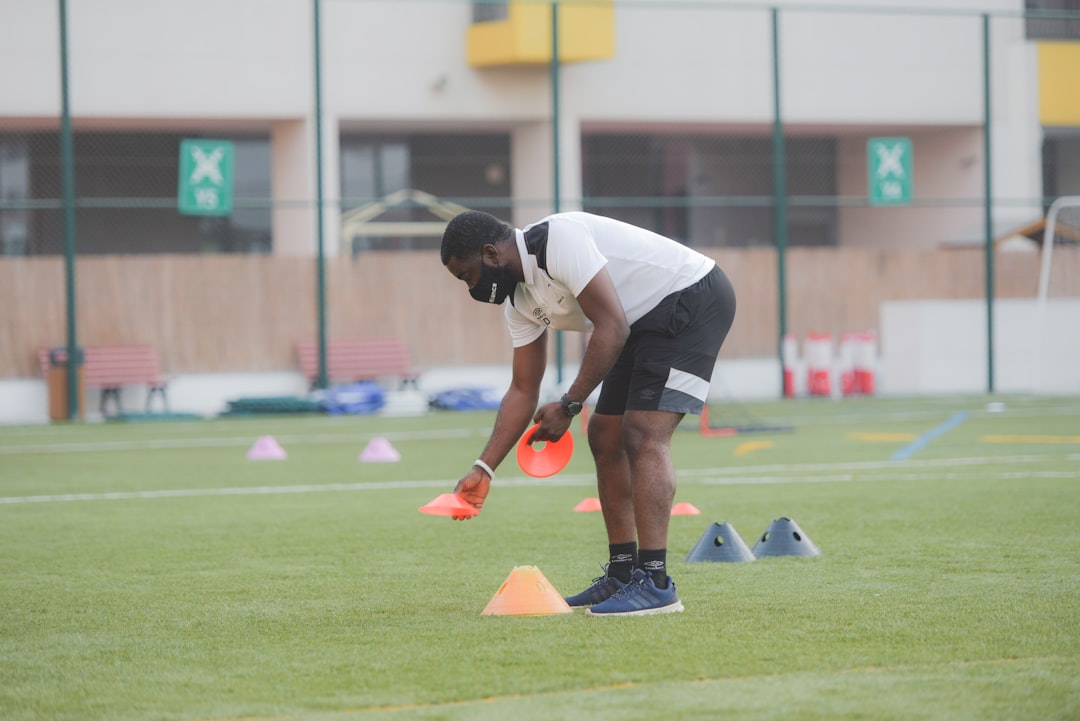
In modern coaching science, there is a growing movement away from clinical, sterile training environments. If your agility sessions consist entirely of athletes running around orange cones in an empty field, you are not preparing them for the reality of their sport.
This is where Representative Learning Design (RLD) comes in. RLD states that the conditions of your practice should closely match the information-rich environment of actual competition.
To do this, we must add “noise” to our drills. Noise refers to the visual, auditory, and physical distractions that exist in a real game—opponents screaming, defenders flashing in your peripheral vision, changing ball trajectories, and shifting defensive schemes.
Decontextualized Drills vs. Game-Like Scenarios
Let’s be honest: cones do not hit back, and ladders do not play defense. While decontextualized drills have a minor place in early-stage rehab or basic coordination warm-ups, they do not transfer well to actual game performance.
In fact, sports science has revealed some eye-opening truths about traditional testing. Outside of sprint times for running backs, there is no statistical correlation between standard NFL Combine tests (which are highly decontextualized) and actual on-field NFL performance. An athlete can look like a superstar dancing through plastic ladders in their underwear, but if they cannot read a defensive coverage or react to a live lateral cut, that physical “tool” is useless.
By replacing passive cones with active training partners, we preserve the action fidelity of the sport. The athlete learns to read biological cues—such as an opponent’s hip angle or shoulder tilt—rather than staring down at a plastic cone.
How Coaches Can Systematically Add Complexity
As coaches, we like to think of ourselves as “DJs” controlling the volume of complexity in our training sessions. If the drill is too simple, the athlete gets bored and stops developing. If the drill is too chaotic, form breaks down and frustration sets in.
We can systematically add “noise” in layers using several key strategies:
- Vary Starting Positions: Have athletes start lying down, facing backward, or recovering from a simulated stumble before reacting to a stimulus.
- Opponent Mirroring: Set up a 5×5 yard box. One athlete is the “evader” and must try to cross the opposite line; the other is the “defender” who must mirror their movements and tag them.
- Task Constraints: Add sport-specific equipment. Force a basketball player to maintain their dribble, or a soccer player to keep control of a ball, while reacting to defensive cues.
- Adjust the Space: Shrink the playing area to force faster decision-making, or expand it to emphasize high-speed acceleration and deceleration.
Integrating Speed, Strength, and Agility into a Comprehensive Program
To build a truly complete athlete, we cannot train speed, strength, and agility in isolated silos. They are deeply interconnected physical qualities that support one another.
Strength provides the raw force-production capacity; speed training refines linear acceleration and top-end velocity; and agility training teaches you how to apply that power in multi-directional space. To see how we structure these elements into a cohesive plan, read Building Better Athletes One Program at a Time.
| Training Method | Focus Area | Impact on Pro-Agility / COD Performance | Per-Session Effect Size (ES) |
|---|---|---|---|
| Sprint Training | Linear acceleration, top-end speed, incline sprinting | Enhances the entry and exit velocity of cuts | 0.108 |
| Plyometric Training | Stretch-shortening cycle, multiplanar jumps, elastic power | Improves rapid force redirection and foot speed | 0.092 |
| Resistance Training | Maximum strength, eccentric control, unilateral load | Builds the braking power needed for sharp deceleration | 0.087 |
| Combined Training | Simultaneous speed, strength, and plyometric work | Develops a well-rounded athletic foundation | 0.078 |
Specific vs. Non-Specific Training for Pro-Agility Performance
When we look at improving pro-agility performance (such as the 5-10-5 shuttle), we have to balance specific and non-specific training methods. Non-specific methods are typically gym-based, uniplanar, high-load, and low-velocity (like heavy bilateral squats). Specific methods are multiplanar, high-velocity, and look like the actual movement patterns of the sport.
A comprehensive Systematic review on pro-agility performance analyzed 20 different studies to find the most efficient training interventions. The researchers discovered several key insights:
- Unilateral Strength is King: Unilateral resistance training (like heavy single-leg split squats at 75-92% 1RM) produced larger per-session improvements in change-of-direction performance than traditional bilateral squats. This is because cutting is inherently a single-leg, unilateral action.
- Incline Sprints Build Acceleration: Incline sprint training (at roughly a 7% gradient) showed the highest per-session effect size among all sprint methods, helping athletes develop the explosive piston-like leg drive needed to accelerate out of a turn.
- Multiplanar Plyometrics: Single-plane forward jumps have limited transfer to lateral cutting. To maximize agility, plyometric programs must include lateral, diagonal, and rotational jumps (90-to-180-degree jump turns) to train the stretch-shortening cycle across all force vectors.
Periodization and Session Design
When designing an agility session, timing and fatigue management are everything. Because agility training has a massive neural component, it should never be performed in a state of high fatigue. If your nervous system is fried, your reaction times slow down, your movement quality degrades, and your risk of injury skyrockets.
We recommend integrating brief, high-intensity agility blocks immediately after your warm-up, when your energy levels and neurological focus are at their absolute peak.
Keep the sessions concise—research indicates that the most favorable adaptations occur with sessions lasting 20 to 25 minutes. To optimize your weekly schedule and ensure proper recovery between intense sessions, explore our strategies for Level Up Your Game with Advanced Athletic Training.
Frequently Asked Questions about Agility Training
What is the difference between change of direction and agility?
Change of direction (COD) is a pre-planned physical movement where you know exactly where and when you are going to turn (such as running around a cone). Agility is a rapid whole-body movement in response to an unpredictable external stimulus. Agility requires perception-action coupling, spatial and temporal decision-making, and physical execution all happening at once.
How often should athletes perform agility drills?
For optimal results, we recommend performing high-quality agility training 2 to 3 times per week. Each session should be kept relatively short (20 to 25 minutes of high-intensity work) to prevent central nervous system fatigue. Studies show that a training block of 7 to 8 weeks is the sweet spot for seeing major, lasting improvements in reactive agility performance.
Can strength training alone improve my agility on the field?
While heavy strength training is fantastic for building maximum force production and eccentric braking power, it is not enough on its own. Strength training builds the physical “engine,” but agility training teaches you how to steer the car. Without specific multiplanar coordination, reactive decision-making, and speed training, your gym strength will not fully transfer to the field.
Conclusion
At the end of the day, agility training for sports is what separates the good athletes from the truly exceptional ones. It is the bridge that connects raw, weightroom strength to dominant, game-winning plays on the court or field. By building a rock-solid physical foundation, mastering eccentric force absorption, and systematically adding “noise” and decision-making to your training, you can unlock a level of speed and reactivity you didn’t know you had.
At Triple F Elite Sports Training in Knoxville, TN, we are dedicated to helping athletes of all ages and skill levels unlock their ultimate athletic potential. Our professional, Christ-centered facility offers world-class performance training, physical therapy, and specialized sports programs designed to build resilient, explosive, and highly skilled competitors.
Ready to stop tripping over your own feet and start moving like a seasoned pro? Contact us today to claim your free first session and Unlock Your Athletic Potential with our elite coaching team!